Estádio do Dragão, Porto. Sunday night, 16 November 2025. Sixth matchday of Group F in European qualifying for the 2026 World Cup. Portugal were hosting Armenia.
On the pitch, eleven Portuguese players wearing various squad numbers. None of them wearing number 7. The number 7 shirt was in the stands, worn by a suspended Cristiano Ronaldo — banned after a direct red card three days earlier in Dublin, for elbowing Dara O’Shea in the back during a 2-0 defeat to the Republic of Ireland.
Portugal won 9-1.
João Neves scored a hat-trick. Bruno Fernandes scored another one. Rafael Leão scored. Gonçalo Ramos scored. The nine Portuguese goals were distributed across six different players — none of them named Cristiano.
After the match, Ronaldo posted on X a message that contained exactly seven words: “We’re at the World Cup. Let’s go, Portugal.”
Technically it was a celebration of qualification. It was also the shortest reaction Ronaldo has ever given to a major Portugal national team achievement in more than a decade.
Three months later, in January 2026, head coach Roberto Martínez gave an interview to beIN Sports. On Ronaldo’s place in the starting eleven at the World Cup, he said one sentence that the Portuguese press spent the following days pulling apart: “We evaluate him the same way we evaluate everyone else.”
There are no guaranteed places. Not even for the man with 143 international goals.
The qualifying campaign that ended on 16 November
Portugal entered Group F of European qualifying as seeded team, alongside Hungary, Republic of Ireland, and Armenia.
Four matchdays went cleanly. Wins against Armenia (5-0 in Yerevan), Hungary (3-2 at home), Ireland (1-0 in Dublin), and a 2-2 draw with Hungary in Budapest (a game in which Ronaldo scored both Portugal goals).
Two matchdays remained. Any win in either would seal first place and direct qualification.
Thursday, 13 November. Aviva Stadium, Dublin. Portugal lost 2-0.
Around the 60th minute, Ronaldo was tussling with O’Shea on the edge of the area. The Irish defender’s shove irritated the Portuguese captain, who retaliated with an elbow to O’Shea’s back. Swedish referee Glenn Nyberg showed yellow initially, but VAR called him to the monitor. The decision was corrected — straight red. Cristiano Ronaldo’s first ever red card for Portugal, in 226 senior international appearances.
The expulsion cost him Sunday’s match against Armenia. It could have cost him more — FIFA’s disciplinary body had the option to impose one, two, or three games of suspension depending on the classification. If ruled “violent conduct”, it was three.
For four days, between the Dublin defeat and the Sunday match at the Dragão, Portugal lived with a very concrete question — can this team function without Cristiano Ronaldo?
By the 90th minute of Sunday night, the answer was 9-1. And Ronaldo was watching from the sofa.
The conversation Portugal has been avoiding for a decade
Cristiano Ronaldo turns 41 in February. At the 2026 World Cup in June, he will be 41 years and four months old.
Older, at any previous World Cup, there has been only Essam El-Hadary, the Egyptian goalkeeper who played at age 45 at Russia 2018. Outside the goalkeeper position, Ronaldo will be the oldest outfield player in World Cup history.
He knows it. Everyone knows it. But in Portugal, the conversation about “what to do with Cristiano” carries a weight that no other country with an ageing superstar has had to bear.
Because Ronaldo is not only the leading scorer in the history of the Portugal national team. He is the all-time top scorer in men’s international football — 143 goals in 226 appearances is a total that no player, in any country, has come anywhere close to. Before him, the record-holder was Ali Daei of Iran with 109. Ronaldo left Daei in the rear-view mirror five years ago.
If Portugal play their opening match at the 2026 World Cup on 17 June without Cristiano Ronaldo in the starting eleven, it will be the first time in 22 years — since Euro 2004, when a 19-year-old Ronaldo was still a substitute to Luís Figo and Pauleta.
Twenty-two years. Nearly half the history of the modern Portugal national team.
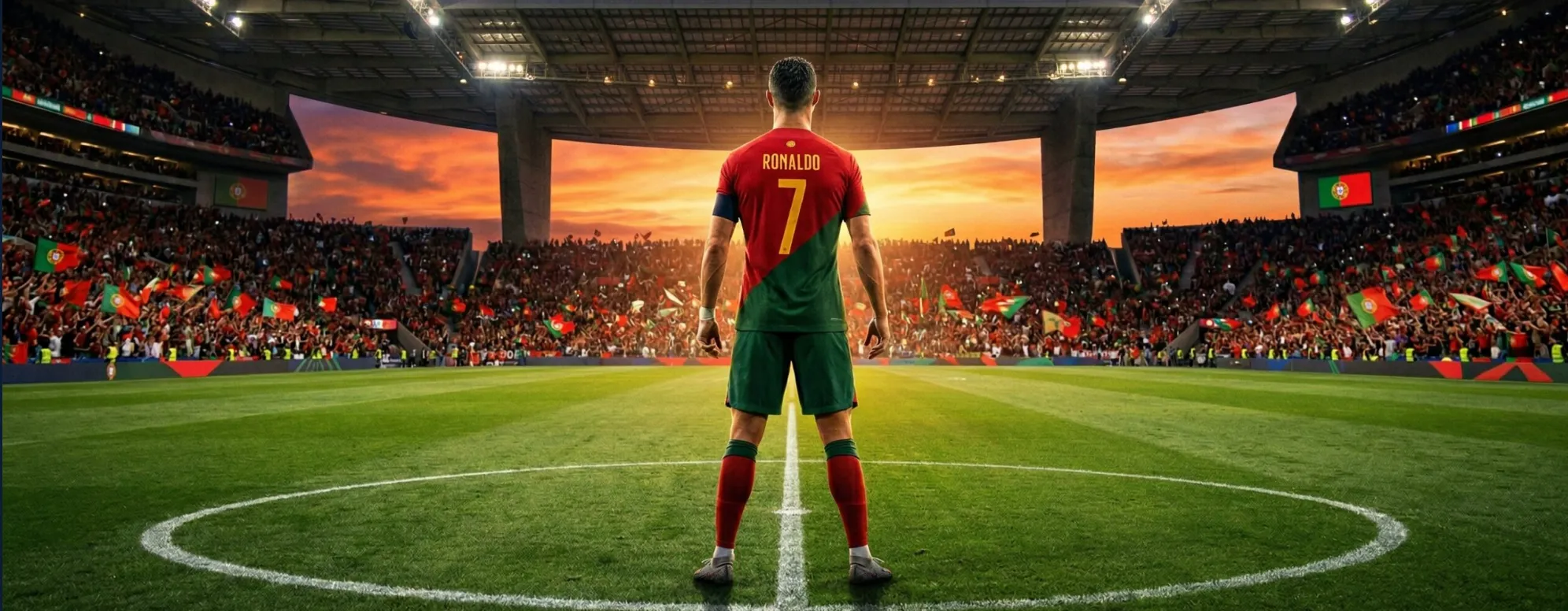
Martínez and the problem he inherited
Roberto Martínez is Spanish, Catalan. He took over Portugal in January 2023, after Fernando Santos departed following the Qatar quarter-final loss to Morocco.
At the 2022 World Cup, Santos had benched Ronaldo against Switzerland in the round of 16. Portugal won 6-1, with Gonçalo Ramos starting and scoring a hat-trick. The week that followed was one of the biggest off-pitch dramas in Portugal national team memory. Ronaldo came off the bench in the quarter-final against Morocco. Portugal lost 1-0.
Santos left. Martínez arrived. And he inherited a weighty legacy — a 38-year-old Ronaldo, still wanting to play every minute, simultaneously the team’s biggest asset and its biggest tactical problem.
Martínez has never tackled the issue openly. Since 2023, Ronaldo has been a starter in practically every match he was available for. He has scored, but not as often — 5 goals in 5 qualifying appearances for 2026 (which was enough to reinforce his status as the all-time top scorer in World Cup qualifying rounds, with 41 total).
In return, Portugal has been more productive without him. The two biggest scorelines of Martínez’s tenure — 9-0 against Luxembourg in September 2023, during Euro 2024 qualifying, and 9-1 against Armenia in November 2025 — both came with Ronaldo absent.
Former Luxembourg international Maxime Chanot, who played centre-back in the 9-0 defeat in 2023, later told the After Foot programme on French radio RMC about a particular moment. After conceding the sixth goal, he approached Diogo Jota — the Liverpool forward who died in a car accident in Spain in July 2025 — and asked him to rein in the onslaught. According to Chanot, Jota’s response was:
“This is the one game without Cristiano. We have to prove we can play without him.”
Group K
At the draw on 5 December 2025 in Washington, D.C., Portugal fell into Group K. As seeded team, the draw could have been worse, but they got:
- Colombia (FIFA 14): James Rodríguez (Minnesota United, 34, captain), Luis Díaz (Bayern Munich), Luis Suárez (the Colombian, not the Uruguayan, of Sporting Portugal), and Richard Ríos (Benfica);
- Uzbekistan (FIFA 59): first ever World Cup appearance, a country of 36 million east of Kazakhstan that will play its first serious match on American soil;
- DR Congo (FIFA 51): the Leopards return to the World Cup for the first time since 1974, after a 119th-minute goal from substitute Axel Tuanzebe against Jamaica in Guadalajara sealed the intercontinental playoff.
Portugal is favoured to finish first. Opta gives them a 58.4% probability of topping the group. But the group feel is different from Portugal’s in 2022 and 2018 — Colombia is a tough side, and Uzbekistan and DR Congo are teams with players scattered across Europe but not showing up in the regular scouting reports.
First match: 17 June in Houston, against DR Congo. Second match: 22 June in Houston, against Uzbekistan. Third match: 28 June in Miami, against Colombia.
The 17 June opener is late — three days after the World Cup itself begins. Portugal is the last team to play on the first matchday.
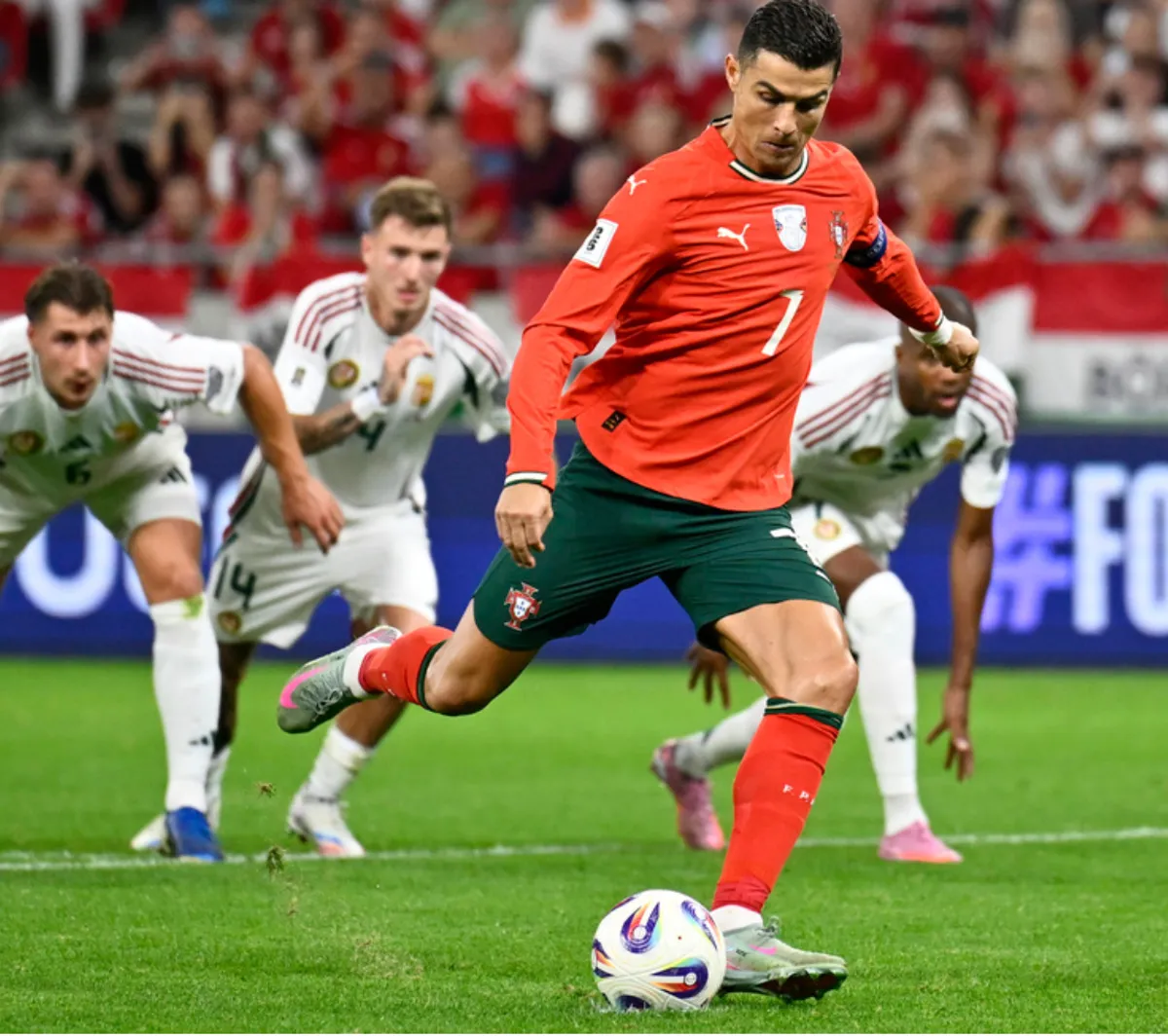
The squad Martínez will take
The 26-man squad will likely be built around this core:
Goalkeepers. Diogo Costa (FC Porto, 26) — undisputed starter. José Sá and Rui Silva as backup.
Defence. One of the strongest blocks in Europe. Rúben Dias (Manchester City) and António Silva (Benfica) as centre-backs. Nuno Mendes (PSG), Diogo Dalot (Manchester United), and João Cancelo (Al-Hilal, in rotation) at full-back. Gonçalo Inácio as reserve.
Midfield. This is Portugal’s strongest argument for the World Cup. Vitinha (PSG, 25, Champions League winner with his club in 2025) is the fulcrum. João Neves (also PSG, 21) scored the hat-trick against Armenia and is probably the in-form player in the squad. Bruno Fernandes (Manchester United, 31) as the number 10. Bernardo Silva (Manchester City, 31) as the versatile creator. Rúben Neves (Al-Hilal, 29) and João Palhinha (Tottenham, 30) as defensive balance options.
Attack. This is where the question lives. The core is Cristiano Ronaldo, Rafael Leão (Milan, 26), Gonçalo Ramos (PSG, 24), João Félix (26, in an uncertain career phase), Francisco Conceição (Juventus, 22), and Pedro Neto (Chelsea, 25). Young players are around — Rodrigo Mora (FC Porto, 19) and Carlos Forbs (Wolfsburg, 22) have been in recent squads.
The issue — and Martínez knows it — is that Gonçalo Ramos scores more goals as a starter than Ronaldo does. The stat is unforgiving: since 2022, in 18 starts for the national team, Ramos has 11 goals; Ronaldo has 14 in 27 starts. Ramos’s rate is higher.
No Portuguese fan wants to see Ronaldo on the bench at his sixth World Cup. No honest coach can ignore that the team works better without him in certain tactical scenarios.
What has to be decided between 8 and 17 June
Portugal arrives in the United States in the week of 8 June, with a base camp likely to be in Houston (not yet confirmed by the Portuguese federation). They have nine days before the first match.
In those nine days, Martínez will have to make the decision he has avoided for three years. If Ronaldo is in form — and Martínez is right that the Al-Nassr striker is still scoring at an impressive rate at 41 — he will start against DR Congo.
If he’s not at 100%, if the Houston summer heat (June averages 33°C in the afternoon) is a problem for Ronaldo’s legs, Martínez will have to make the choice no Portuguese coach has yet dared to make at a World Cup.
In 2022, Fernando Santos made it against Switzerland in the round of 16. Won 6-1. And lost the next match, and his job.
Martínez has one advantage over Santos — Ronaldo is three years older. The biological argument is stronger. But the pressure is the same.
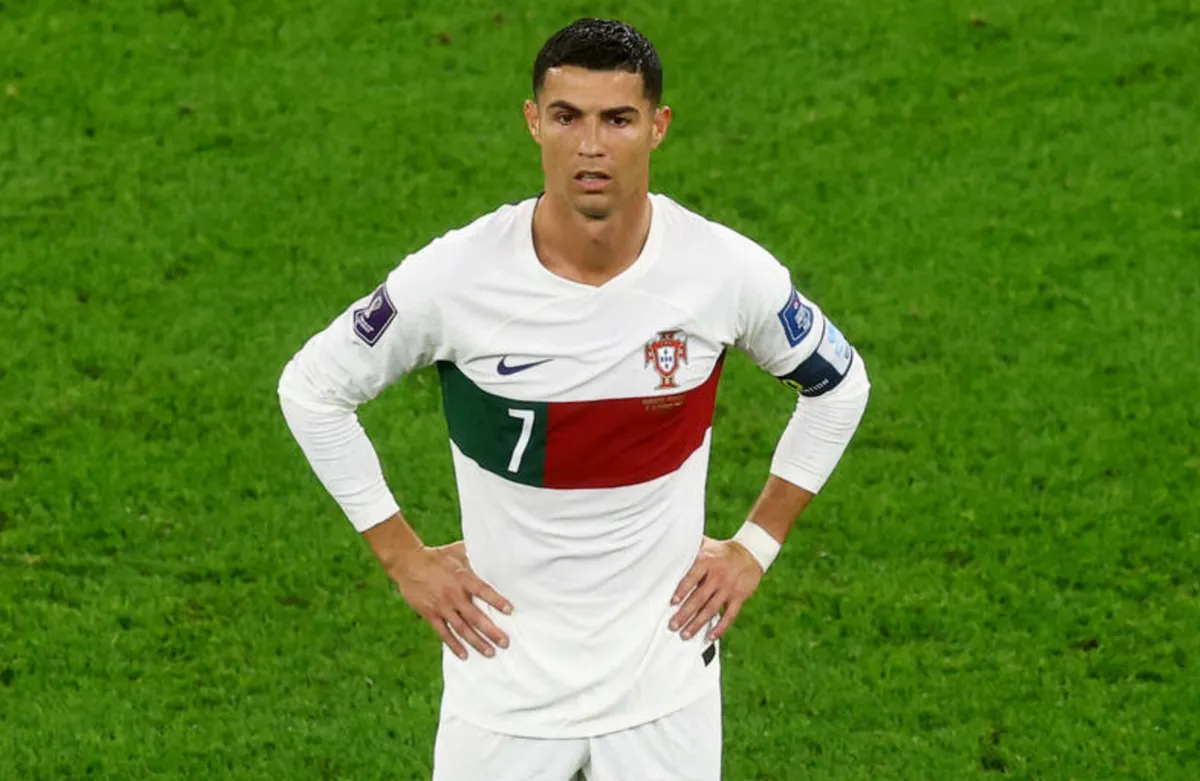
51 days
Cristiano Ronaldo has scored 953 career goals. He needs 47 more to reach 1,000. He has said in recent interviews that he expects to get there before retiring.
If he scores in any of Portugal’s three group-stage matches, he will become the first player in history to score at six different World Cups. He already has that distinction for five (2006, 2010, 2014, 2018, 2022). Miroslav Klose, Uwe Seeler, and Pelé all scored at four.
The Portuguese federation confirmed in February that Martínez’s contract runs to the end of the World Cup. No public conversation about what comes after.
In the stands at the Dragão on the night of 16 November, there were several banners bearing the number 7. None of them pointed to a player on the pitch.
That shirt was empty. And Portugal scored nine.
Whether that is good news or bad news — for the national team, for Ronaldo, for Martínez — the answer comes between 17 June and 28 June.
There isn’t much more time to think.
Sources: Observador (“Portugal no Mundial 2026: Grupo, Jogos e Prognósticos”); Record (“A reação de Cristiano Ronaldo ao apuramento”); Sportinforma (16 November 2025); SAPO Notícias ao Minuto (“Portugal apurou-se para o Mundial’2026”, 14 and 16 November); Mais Futebol (“Portugal é muito mais do que Ronaldo”); beIN Sports (“Roberto Martinez Sends Message to Cristiano Ronaldo”, 20 January 2026); Correio da Manhã (16 November 2025); Maxime Chanot on the After Foot programme, French radio RMC; FPF.pt; FIFA Men’s World Ranking, 1 April 2026; Opta Analyst (“World Cup 2026 Predictions”, April update).