









Quick Reference
| Detail | Information |
|---|---|
| Stadium | NRG Stadium / Houston Stadium (tournament name) |
| Capacity (WC) | 68,311 (NFL config: 72,220) |
| Matches hosted | 7 (5 group stage + 1 Round of 32 + Round of 16, July 4) |
| Location | NRG Park, 12 km / 8 miles south of downtown Houston |
| Nearest airport | George Bush Intercontinental (IAH) — 37 km / 23 mi |
| Recommended days | 4 nights |
| Budget level | Mid (most affordable major US 2026 host city) |
| Best neighborhoods | Montrose, Museum District, Downtown, Heights, EaDo |
| Avoid | Walking outside in midday heat; assuming “central” hotels are walkable |
| Currency | US Dollar (USD) |
| Tap water | Safe to drink. |
The retractable-roof venue. Six tournament matches plus a July 4 Round of 16 — Independence Day week shared with Philadelphia. Curaçao plays its first-ever World Cup match here on June 14, one of the four debut nations of the 2026 cycle. Portugal (June 17 + June 23), Germany (June 20), and Netherlands (June 26) bring some of the strongest European fanbases in the United States to NRG Park. The stadium is air-conditioned — essential, because June Houston averages 32°C with 75% humidity. The pitch where, on June 21, 2016, Lionel Messi scored two goals and assisted another to break Argentina’s all-time scoring record, surpassing Gabriel Batistuta. Ten years and five days later, Messi will be 740 miles north at Arrowhead Stadium, Kansas City, opening Argentina’s title defense in his last World Cup. Here is how to land in Houston for June 14, 2026, and understand the most underrated soccer city in America.
The Stadium
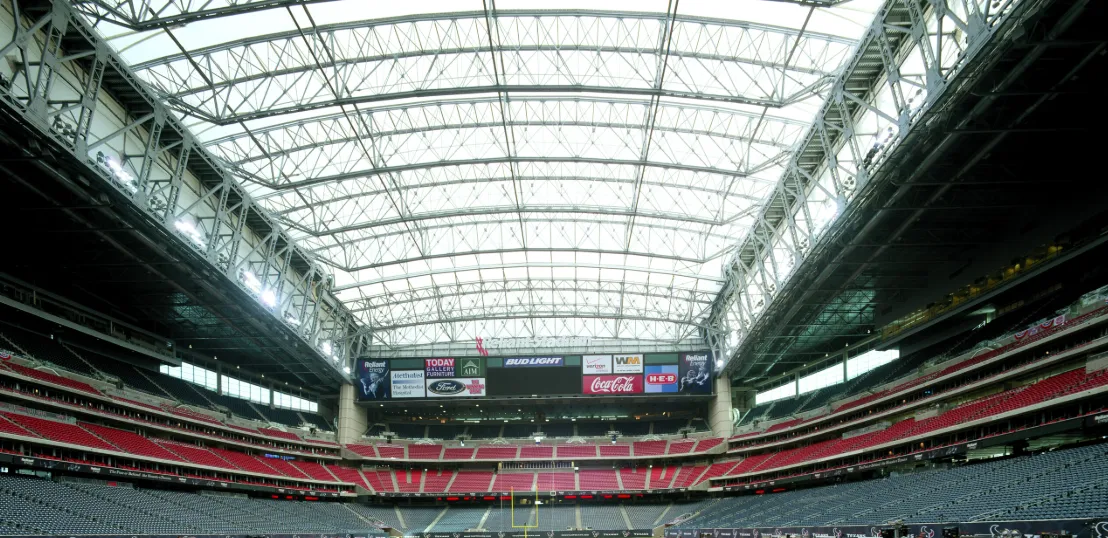
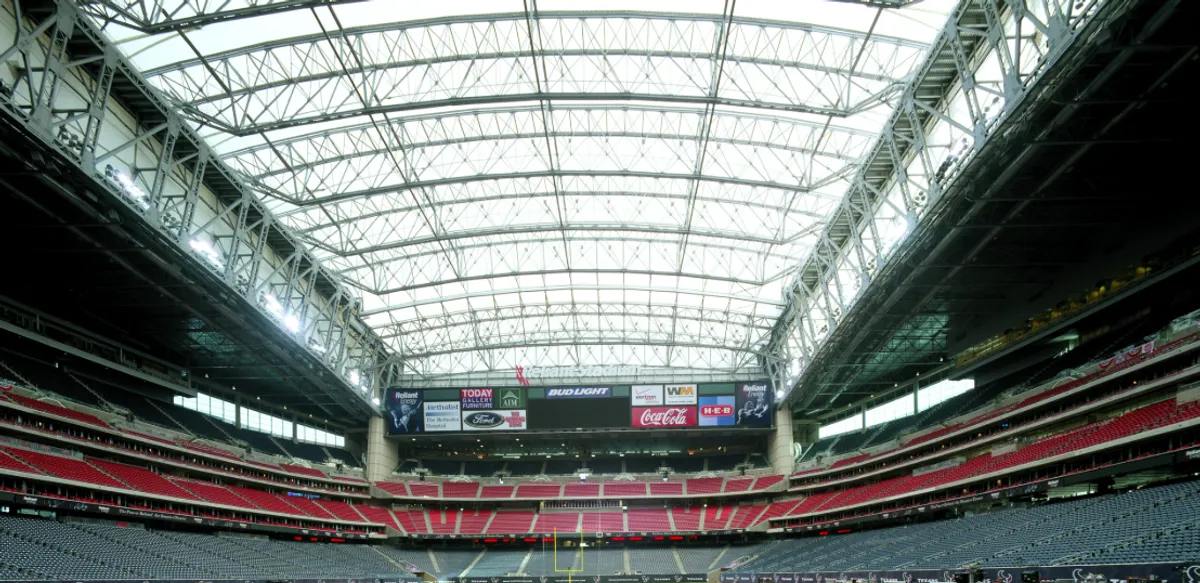
NRG Stadium opened on August 24, 2002 as Reliant Stadium, later renamed in 2014 after the Houston Texans’ new sponsor, NRG Energy. Construction cost approximately $352 million. It was the first NFL stadium ever built with a retractable roof — a Texas necessity, given that 100°F summer afternoons are unsurvivable for outdoor football.
For 2026, FIFA renames the venue Houston Stadium for the duration of the tournament. The retractable roof and full air conditioning make Houston one of the most heat-resilient venues of the entire tournament — critical, since June outdoor temperatures here average 32°C / 89°F with 75% humidity. Matches scheduled for early afternoon (12:00 and 15:00 local) are confirmed indoor with closed roof and AC. Evening kickoffs (18:00 and 21:00) may be played roof-open if conditions permit.
The grass field — a permanent installation since the 2002 opening — was upgraded for World Cup 2026 with new drainage and lighting systems. Behind both goalposts sit the venue’s distinctive twin video boards covering 1,352 m² each — installed 2013, the largest of their kind in any stadium worldwide.
The stadium is part of NRG Park, an 86-hectare sports complex that also includes the Astrodome — the iconic 1965 domed stadium next door, the world’s first multi-purpose enclosed sports venue, nicknamed “the Eighth Wonder of the World.” The Astrodome closed in 2008 and remains undemolished, a strange concrete UFO shadowing its replacement.
The seven matches scheduled here:
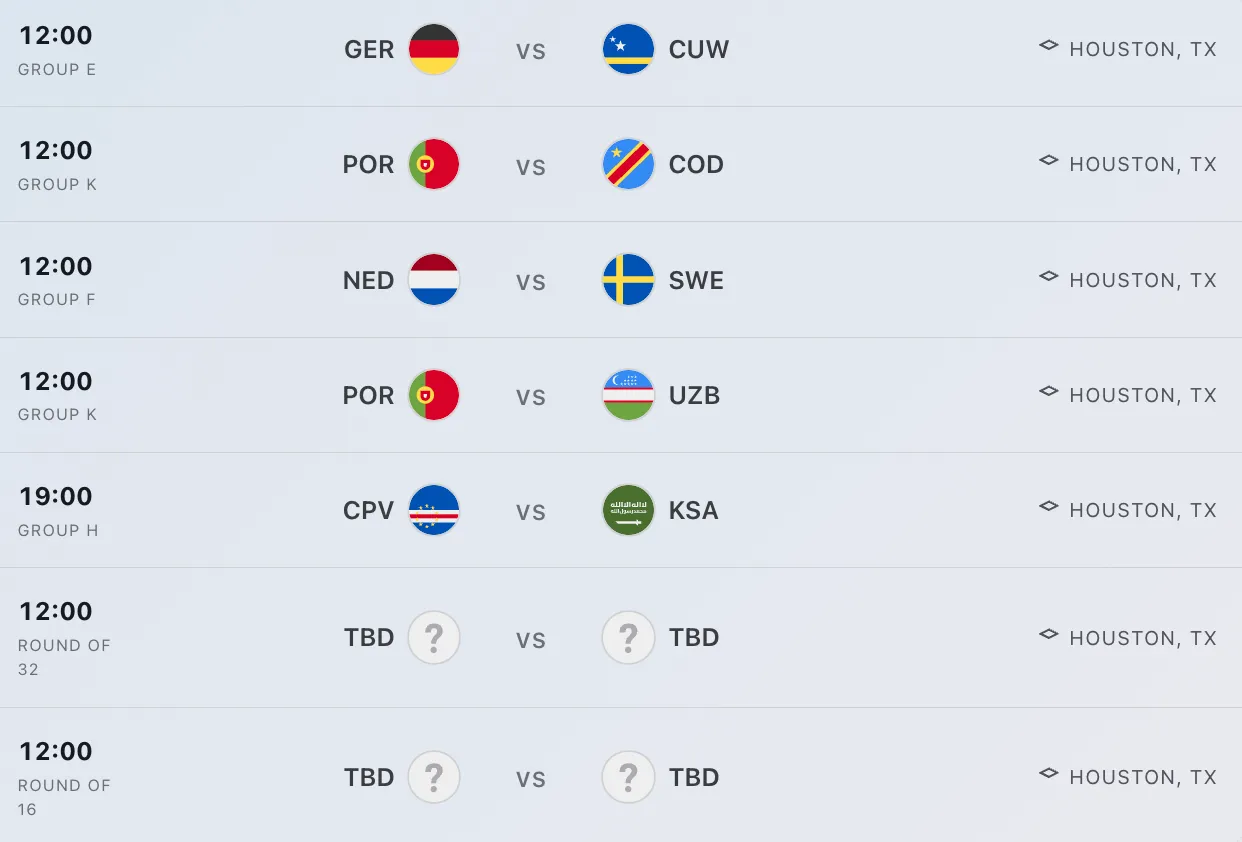
- June 14 — Curaçao vs. Asia/CAF playoff winner — Curaçao’s first-ever World Cup match
- June 17 — Portugal vs. Group F third-seed
- June 20 — Germany vs. Group A third-seed (15:00 local, indoor)
- June 23 — Portugal vs. Group F runner-up
- June 26 — Netherlands vs. Group F top-seed
- June 30 — Round of 32
- July 4 — ROUND OF 16 — shared with Philadelphia on Independence Day
Curaçao’s June 14 debut is the venue’s most historic moment. The 155,000-population Dutch Caribbean territory is the smallest nation by population ever to qualify for a World Cup. Their qualifying campaign closed in November 2025 with a 2-1 win at Jamaica. The Curaçaoan-American community in the United States is concentrated in New York, Miami, and Houston — and a chartered Boeing 787 will fly direct from Curaçao’s Hato Airport on June 13.
Portugal plays twice in Houston — June 17 and June 23 — making this the only US venue Cristiano Ronaldo will visit twice at the 2026 World Cup. Tickets for both matches resold for $1,800-3,200 within a week of the schedule release.
Getting There
From George Bush Intercontinental Airport (IAH) to the Stadium
IAH is 37 km / 23 mi north of NRG Stadium. Travel time is 35-50 minutes in normal traffic, 60-90 minutes on match days.
There is no direct rail link from IAH to the stadium. The recommended option is:
- METRORail Red Line from downtown Houston (Main Street/Memorial Hermann Hospital station) to NRG Park / Astrodome station — 6-minute frequency during World Cup, 25 minutes from downtown
- From IAH, take the METRO 102 Bush IAH Express bus to downtown ($4.50, 50-70 minutes), then transfer to the Red Line south
- Total time IAH to stadium: 90-120 minutes via public transport
- Total cost: ~$8 round trip
By rideshare (Uber/Lyft): $45-65 from IAH in normal traffic, $80-150 on match days. For families and groups of three or more, rideshare beats public transport on time and effort.
By driving: NRG Park has on-site parking ($25 + tax, no in-and-out), but it sells out fast. Off-site private lots within walking distance run $100-175 on World Cup match days. Strongly recommend the METRORail Red Line if your hotel is in Downtown, Midtown, or the Museum District.
The smaller airport option: William P. Hobby Airport (HOU) — 23 km / 14 mi from NRG. Closer than IAH but smaller, mostly Southwest Airlines domestic. International arrivals route through IAH.
Visa & Entry
Standard US rules. VWP countries: ESTA required. Visa-required countries (Brazil, China, India, Russia, Mexico, Argentina) should apply 6+ months in advance.
IAH handles 50+ million passengers annually and is a United Airlines hub. Immigration lines on match days will run 40-90 minutes for non-Global Entry holders. Note the direct Sydney-Houston nonstop on United UA100 — one of the few direct routes from Australia to a non-California World Cup venue.
Where to Stay
| Neighborhood | Train/Drive to Stadium | Double Room/Night | Vibe | Best For |
|---|---|---|---|---|
| Downtown | 25 min by Red Line | $180-320 | Skyscrapers, Discovery Green park, Toyota Center | Best public-transport access to stadium |
| Midtown | 15 min by Red Line | $160-280 | Bars, restaurants, between Downtown and Museum District | Younger travelers, foodies |
| Museum District | 10 min by Red Line | $200-350 | Hermann Park, Museum of Fine Arts, walkable | Families, culture-focused |
| Montrose | 20 min via Red Line + walk | $180-320 | LGBTQ+ heart, indie restaurants, Rothko Chapel | Foodies, art-lovers |
| The Heights | 30 min by Uber | $200-380 | Restored Victorian, walkable, James Beard restaurants | Boutique hotels, food destination |
| Galleria/Uptown | 35 min by Uber | $180-320 | Shopping, business hotels, far from city core | Shopping, business travelers |
| Stadium District / Reliant (matchday only) | 5-10 min walk | $140-260 | Sports complex, chain hotels | Match-only stays |
Downtown is the smartest default for World Cup visitors — the only neighborhood with direct rail link to the stadium and walking distance to the FIFA Fan Festival, restaurants, and the Houston aquarium. Hotels: Hyatt Regency ($240), Hilton Americas ($260), Marriott Marquis Houston ($290), Hampton Inn Houston Downtown ($160).
Museum District offers the strongest cultural value. Hermann Park, the Museum of Fine Arts, the Houston Zoo, and the Texas Medical Center are all walking distance. The Red Line takes 10 minutes to NRG. Hotels: Hotel ZaZa Houston Museum District ($320), Holiday Inn Houston Downtown ($180).
Montrose is the underrated pick. The cultural heart of Houston — independent restaurants, the Menil Collection (modern art, free entry), the Rothko Chapel (free), the Pit Room BBQ, indie bookshops. 20 minutes by transit + walk to the stadium. Hotels: La Colombe d’Or ($340, 21-room boutique in a 1930s mansion), Wellesley Inn ($140).
The Heights is the best food destination. Restored 1880s Victorian neighborhood with the most active James Beard semifinalist scene in Houston. Distance from stadium is the trade-off (30 min by Uber); for foodies who’ll eat their way through every match-day evening, worth it. Hotels: Hotel Sterling ($280), Allegro Hotel ($200).
What to avoid: Hotels in Galleria/Uptown marketed as “Houston” — they’re actually 18 km west, no rail connection, and the area is a shopping mall surrounded by surface parking. Read addresses carefully.
Stadium-district hotels (Hilton Houston NRG, Holiday Inn NRG) are convenient on match day but isolating for the rest of the trip. Limited dining; you’ll Uber to Downtown for every meal.
Book by April 30. Houston is the most affordable major host city by a wide margin — Downtown rates are 30-40% below comparable Dallas, Atlanta, or Miami options for the same week. The Portugal-week (June 17-23) and July 4 Round of 16 week are tightest; group-stage off-Portugal nights have availability through May.
Beyond the Stadium
NASA Space Center Houston
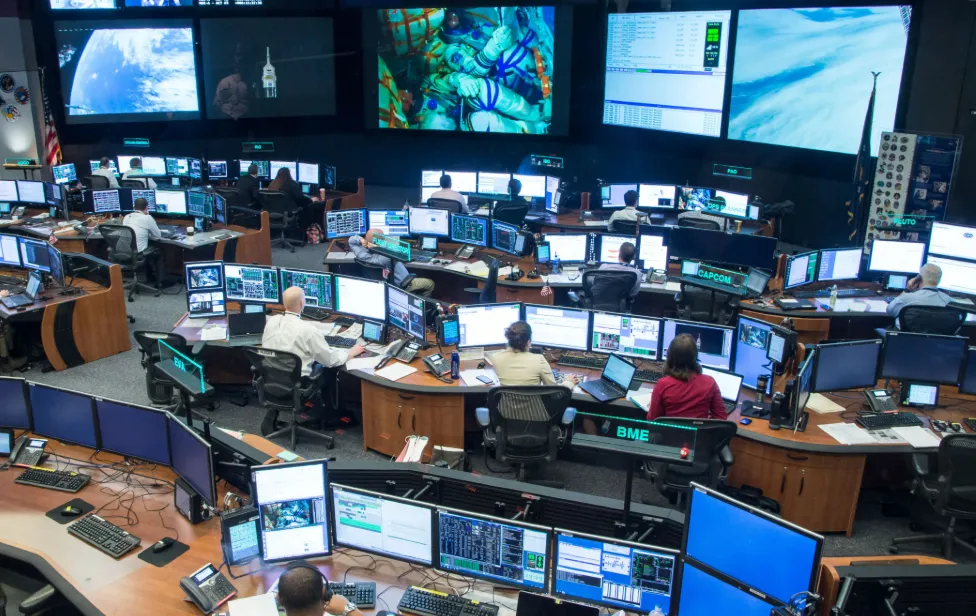
45 minutes south of downtown by car. The official visitor center for NASA’s Johnson Space Center — the home of Mission Control, where Apollo 11 was guided to the moon and where every American astronaut has trained since 1961. Walk through the actual Mission Control room (designated National Historic Landmark in 1985), see the Saturn V rocket (one of three remaining in the world), and meet retired astronauts. $30 entry. Allow 4-6 hours.
Museum of Fine Arts, Houston (MFAH)
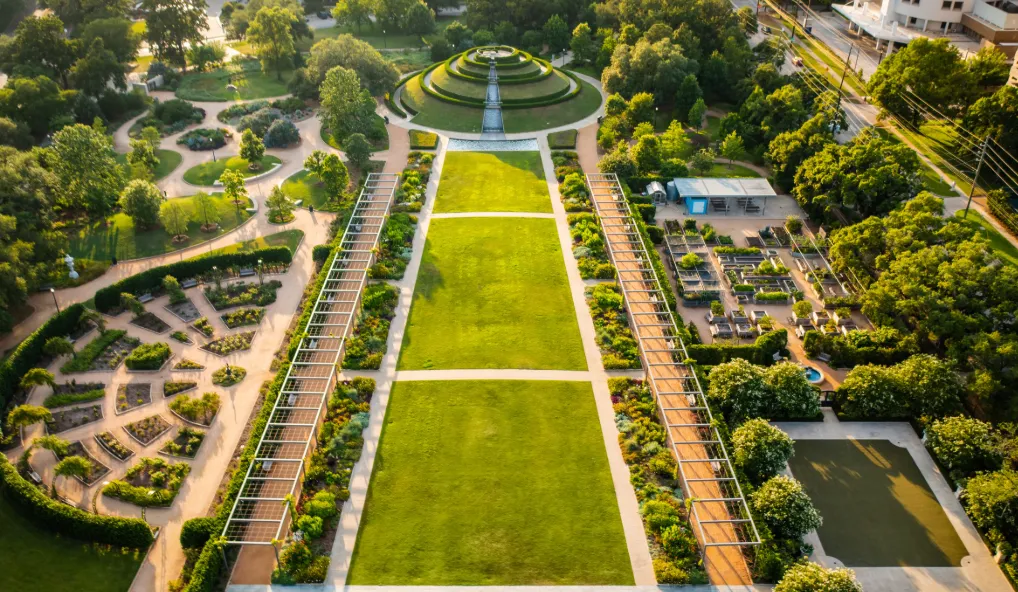
The largest art museum in the southern United States. Strong in European Renaissance, Latin American art (a regional specialty), and the Bayou Bend Collection — American decorative arts in a 1920s mansion across town. $25 entry; free Thursdays.
The Menil Collection (Montrose)
Free admission. Surrealism, Byzantine icons, Pacific tribal art. The Rothko Chapel next door (also free) is a non-denominational meditation space — 14 monumental Mark Rothko panels — one of the most important sites of 20th century American modernism.
Houston Zoo
Inside Hermann Park, walkable from Museum District. Strong reptile and African collection. $30 entry.
The Galleria
Shopping mall with 400+ stores including a Tiffany, Gucci, and Louis Vuitton. Indoor ice rink in the center. Useful as AC refuge during midday heat if your itinerary lands you in Uptown.
Houston Livestock Show and Rodeo (Reliant Park)
Not running during World Cup (it runs in March), but the Houston Livestock Show museum is open year-round inside NRG Park — interesting historical context for an indoor stadium that hosts the world’s largest rodeo for one month each year.
Day Trips
Galveston (50 minutes south): Gulf Coast beach town. The 1900 hurricane destroyed the city; the Strand district preserves the rebuilt Victorian downtown. Pleasure Pier amusement park.
San Antonio (3 hours west): The Alamo, River Walk. Worth a full day.
Where to Eat and Drink
Texas BBQ (the religion)
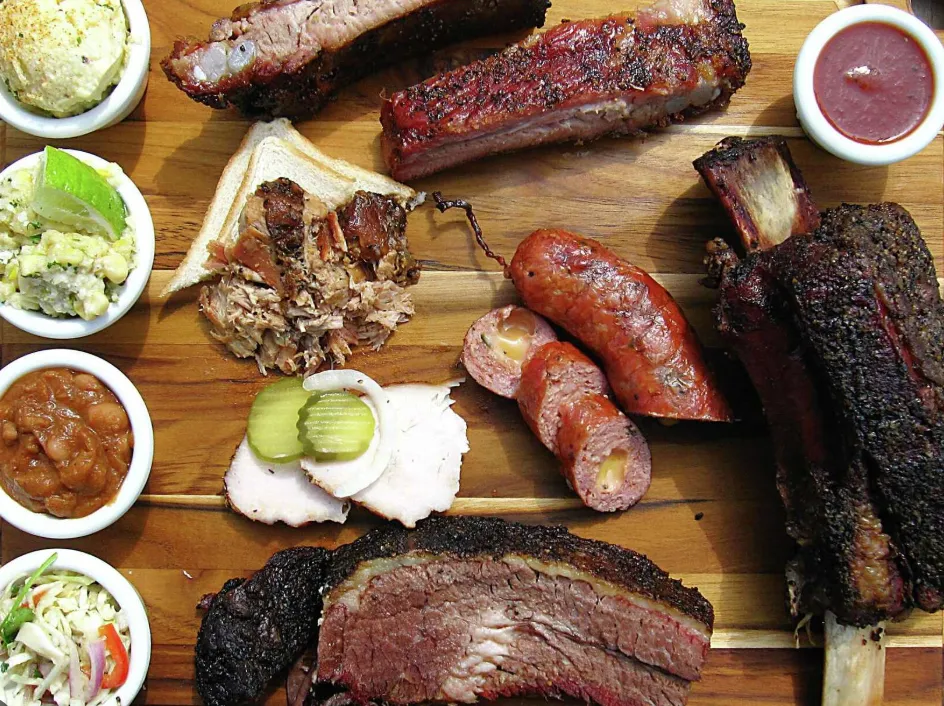
Houston’s BBQ scene rivals Austin’s, with three Texas Monthly Top 50 entries within metro limits.
Killen’s Barbecue (Pearland, 25 min south of NRG). Texas Monthly’s perennial honorable mention. The brisket and beef rib are the pilgrimage. Lines start before 11 AM. Cash plus card. $25-50 per person.
Pinkerton’s Barbecue (Heights + new 2026 second location). Michelin Bib Gourmand 2024. The pulled pork sandwich and sausage are signature. $20-35.
The Pit Room (Montrose / Museum District). Top-ranked Yelp Houston BBQ April 2026. Brisket tacos are the unique twist. $15-30.
Tex-Mex (the inheritance)
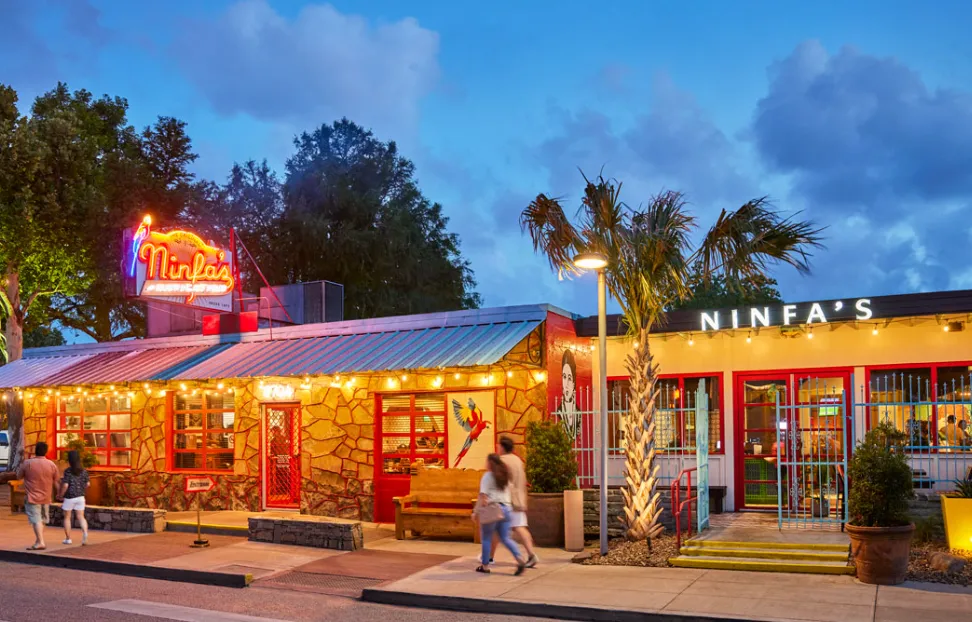
The Original Ninfa’s on Navigation (East End, since 1973). The birthplace of the fajita — Mama Ninfa Laurenzo invented the dish here in July 1973. James Beard Award semifinalist 2019. Beef fajitas, fresh tortillas, the green sauce (“salsa verde Ninfa”). $25-45.
El Tiempo Cantina (multiple locations). Family-run by Ninfa’s descendants — 25-year Tex-Mex institution. Margaritas. Carne asada. $30-50.
Hugo’s (Montrose). Hugo Ortega’s flagship — interior Mexican (not Tex-Mex). Mole, sopa azteca, hand-formed tortillas. $40-60.
Vietnamese-Cajun Crawfish (the local original)
A Houston cuisine invention from the 1980s — Vietnamese refugees adapted Louisiana-style crawfish boils with garlic-butter and Asian aromatics. The result is a uniquely Houston dish.
Crawfish & Noodles (Bellaire, Asiatown). James Beard award recognition 2019. $30-45.
Cajun Kitchen (multiple locations). Casual chain, lower price. $20-30.
Modern Houston
Pappas Bros. Steakhouse (Galleria + Downtown). Wine Spectator Grand Award. Dry-aged ribeye, lobster bisque. $80-120.
Underbelly Hospitality / UB Preserv (Lower Westheimer). Chef Chris Shepherd’s flagship celebrates Houston’s multicultural fabric — Korean, Vietnamese, Mexican, Cajun all on one menu. James Beard Award winner. $60-90.
Squable (Heights). New American small plates. Reservations 30+ days out. $50-80.
Coffee and Beer
Blacksmith Coffee (Montrose). Houston’s third-wave coffee origin point.
Saint Arnold Brewing Company (Northside). Texas’s oldest craft brewery (1994). Weekend brewery tours, beer hall on Saturday. Family-friendly.
The Fan Experience
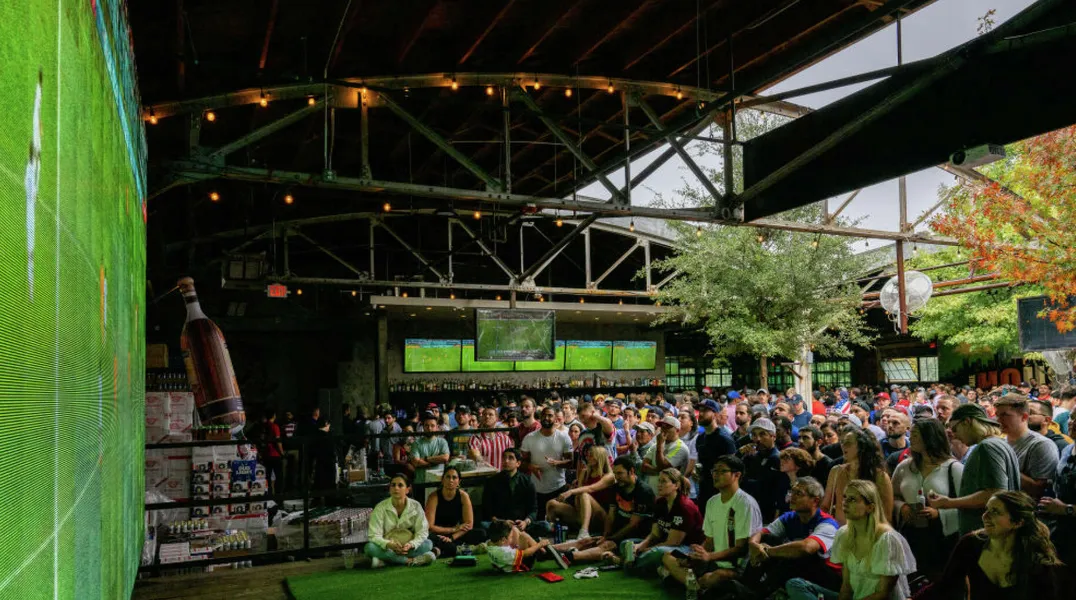
FIFA Fan Festival — Houston: Confirmed at Discovery Green in downtown — 5-hectare urban park, walking distance from the convention district. Big screens, food trucks, live music. Free entry. Open match days only.
Pitch 25 Beer Park (EaDo, near Minute Maid Park). The Houston soccer headquarters — 25,000 sq ft venue with an indoor soccer field (rentable), 45+ TVs, beer garden. Owned by Brian Ching, Houston Dynamo legend. The most authentic World Cup viewing experience in the city for any nation. Cited by international fan groups as Houston’s #1 watching destination.
Velvet Oak Tavern (Heights). The Houston Gooners (Arsenal) and Houston Bavarians (Bayern Munich). 1,000 fans attended a 2024 Bayern watch event — record for the Texas chapter.
Johnny McElroy’s Irish Pub (Montrose). The Houston Blues (Chelsea). Match-day blue takeover.
Houston Dynamo’s El Batallón: Houston’s MLS supporters group is the most influential Latino-rooted supporter culture in MLS history. Drum-heavy, Spanish-language chants, organized tailgates at every Dynamo home match. During World Cup 2026, expect El Batallón to host watching parties at Pitch 25 for every Latin American nation’s group game (Brazil, Argentina, Uruguay, Colombia, Paraguay, Ecuador, Mexico).
Houston’s Latino soccer demographics: Houston’s population is 44.5% Latino/Hispanic, the highest of any 2026 US host city. The Dynamo’s fanbase is 60% Latino/Hispanic — the most heavily Latino MLS fanbase in the United States. This isn’t background — it’s the city’s defining soccer identity. Spanish chants, regional Mexican music, drum sections at every game. For the World Cup, all 7 Houston matches will reflect this culture, especially when Latin American nations play here. Mexico plays in Mexico City, Guadalajara, Monterrey, but Houston fans will pack stadiums for any El Tri-supportive watch party.
The Story
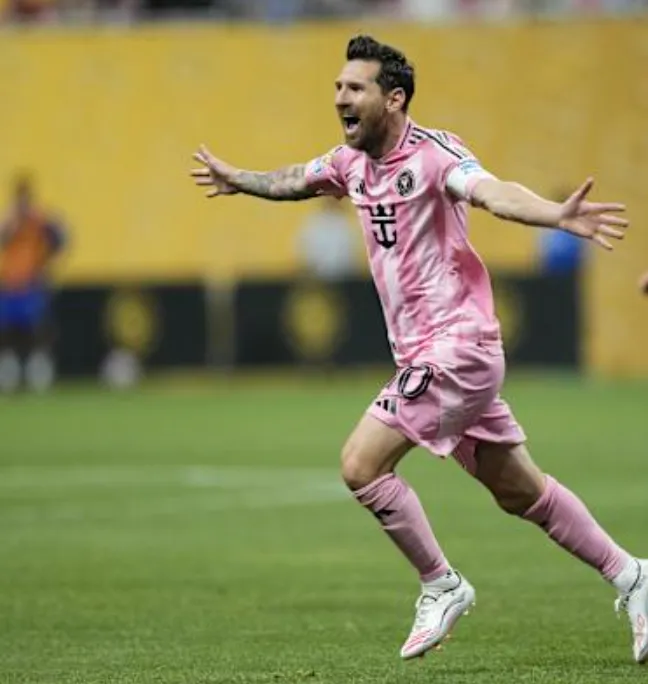
June 21, 2016. NRG Stadium, Houston. Argentina 4-0 United States. 2016 Copa América Centenario, semifinal.
Lionel Messi was 28 years old. He had not yet won an international trophy with Argentina — the great criticism of his career. The 2014 World Cup final loss to Germany. The 2015 Copa América final loss to Chile. Penalty shootouts in 2007. He was, in the eyes of Argentine media, a generational genius who could not quite finish.
The Copa América Centenario was the special 100-year-anniversary edition of South America’s continental championship — held for the first time in the United States, with 16 teams, North America joining South America. Argentina, USA, Mexico, Brazil — the marquee draws.
Argentina dominated the tournament. The semifinal against the United States was set for June 21, 2016 at NRG Stadium. Houston filled the stadium with a 70,858 crowd — predominantly Argentine and Mexican supporters. The Stars and Stripes section was a small minority, even in the home country.
Messi opened the scoring in the 32nd minute. A 23-meter free kick, curled over the wall into the top right corner. Tim Howard, the US goalkeeper, did not move — could not move. The ball was unsavable. The TV graphics displayed: Messi 55. With that goal, he had broken Gabriel Batistuta’s all-time Argentina scoring record. 56 years old, retired, watching from Buenos Aires, Batistuta tweeted: “El mejor de todos. Felicidades, Leo.”
Messi assisted Ezequiel Lavezzi for the second goal (3rd minute, before the free kick). He played 20 of the most beautiful minutes in his Argentina career. Houston watched a player at the absolute height of his powers — and watched the moment a national team scoring record passed.
Argentina lost the final to Chile four days later in New Jersey, again on penalties. Messi missed his penalty. He retired from international football the same evening. He came back. He won the 2021 Copa América. He won the 2022 World Cup in Qatar.
Now, in 2026, Lionel Messi at 39 will play his last World Cup. Argentina opens June 16 at Arrowhead Stadium, Kansas City — 740 miles north of Houston, exactly 10 years minus 5 days after the Houston night. Messi will not play at NRG Stadium during the 2026 World Cup. But the only US venue where Messi has scored a continental-tournament goal — the only US venue where his name sits in the Argentina record books — is here, in Houston.
The Argentine fans in NRG Park will know. The El Batallón members at Pitch 25 will know. Every Latino household in Houston watching their televisions will know. Messi’s American legacy began in Houston on a June Tuesday in 2016, and his last American chapter will be written 740 miles north in Kansas City this June.
The free kick is on YouTube. 11 million views. Type “Messi 55 Houston” — the second result is the goal, the first result is the FIFA top-10 free kicks of the decade list. The stadium where it happened is the same NRG Stadium where Curaçao will play its first World Cup match, where Portugal will play twice, and where on July 4, a Round of 16 match will be played on the day America turns 250.
Houston’s 2026 World Cup begins with a debut nation, ends with a knockout match, and remembers a free kick from one decade ago — the way American soccer cities remember everything: by the player who came through, scored, and changed the record book.