Some matches get lost and forgotten. Some get lost and move into a country for good.
Maturín was one of the second kind.
Estadio Monumental de Maturín, Monagas state, Venezuela. Tuesday, 9 September 2025, 6:30 in the evening. The final matchday of South American qualifying for the 2026 World Cup. La Vinotinto were hosting Colombia with a single objective: win, and hope Bolivia didn’t beat Brazil in El Alto.
If both things happened, Venezuela went to the intercontinental playoff. From there, a single match stood between them and the World Cup. Their first World Cup ever.
Three minutes after kickoff, Telasco Segovia — the 21-year-old Venezuelan midfielder who shares a dressing room with Lionel Messi at Inter Miami — received a pass from Salomón Rondón, cut inside, dragged a left-footed shot into the top-right corner past goalkeeper Kevin Mier and put Venezuela ahead.
The Monumental came apart. People were crying before the fourth minute.
Three hours later, the stadium was silent. Colombia had won 6-3. Bolivia had beaten Brazil 1-0 in El Alto. Venezuela were eighth in the table, out of the playoff, out of the World Cup.
For the ninth consecutive qualifying campaign.
The only one
Venezuela joined FIFA in 1952. They began playing South American qualifying in the 1960s.
Since then, every other country on the continent has been to at least one World Cup. Uruguay, 14 times. Argentina, 18. Brazil in all 22 editions. Even Bolivia, Ecuador, Peru, Paraguay, Colombia, and Chile have at least one appearance each.
La Vinotinto, never.
They are the only CONMEBOL member never to have played at a men’s World Cup. The only one of ten. Since 1930.
And the expansion to 48 teams had given them room. Six direct slots for South America, plus one intercontinental playoff spot. Qualifying from CONMEBOL had never been this accessible. For a country that had spent decades fighting for a single ticket against Argentina, Brazil, and Uruguay, the new format was the closest they’d ever come to the dream.
For eighteen matches, it looked possible. By matchday six, Venezuela were fourth in the table — above Brazil. They had drawn 1-1 at the Maracanã in October 2023. They had beaten Chile 3-0 four days later.
At the 2024 Copa América, they won their group with a perfect record — something only Argentina and Uruguay also managed, the two giants of the continent.
Fernando Batista, the Argentine coach who had taken charge in March 2023 after working with Messi in Argentina’s youth sides, had built something real. A team that pressed high, played short, wasn’t afraid of anyone.
Then 2025 happened.
The final stretch
Of the last ten matchdays, Venezuela won only two. They lost 3-0 to Argentina in March. Lost 2-0 to Uruguay in Montevideo. Drew 0-0 with Peru when they needed to win.
They came into the last round seventh in the table — right on the playoff line — with 18 points. Bolivia, who had been dead in the water halfway through qualifying, had produced an improbable run: five points from their last three matches. They sat eighth with 17.
Venezuela beat Colombia and Bolivia didn’t beat Brazil, Venezuela went to the playoff. Any other combination, they were out.
Colombia arrived already qualified, playing without pressure. They had thrashed Bolivia 3-0 four days earlier, with a four-goal performance by Luis Suárez — not the Uruguayan, but the Colombian, the striker from Samaria who plays for Sporting Lisbon and had already scored four goals in qualifying.
Bolivia had to play in El Alto. Against Brazil, yes, but in El Alto. 4,150 metres above sea level. The place the Brazilians never figure out how to breathe.
For three minutes in Maturín, everything went according to plan. Segovia scored the 1-0. The stadium started to believe.
For the next eight minutes, everything fell apart.
10th minute: corner from James Rodríguez, header from Yerry Mina, 1-1.
11th minute: Josef Martínez — Venezuelan, former MLS MVP, now at San Jose Earthquakes — bundled in a loose ball Mier had failed to hold. Venezuela ahead again, 2-1.
42nd minute: the Colombian Luis Suárez finished at the near post, a shot that Venezuela goalkeeper Rafael Romo couldn’t move for. 2-2.
Half-time. Still a game. Still a chance.
In the dressing room, Batista later said, the only thing he told the players was one sentence: “Bolivia is 0-0. Win here and we’re in.”
The second forty-five
The second half lasted exactly as long as it takes an illusion to come apart when you don’t want to accept it.
47th minute: Suárez, from the edge of the area, picked his spot. 3-2 Colombia.
60th minute: devastating counter. Luis Díaz fed Suárez. 4-2.
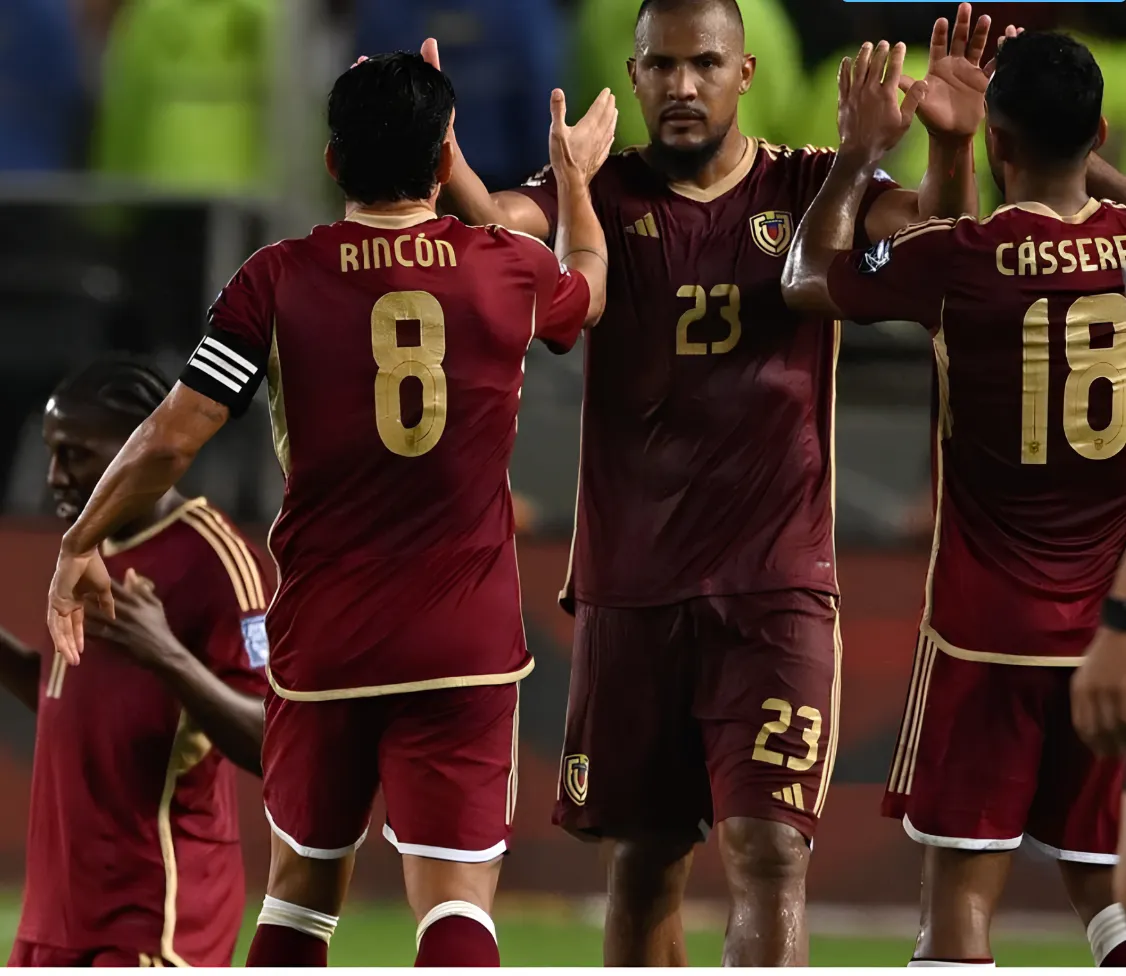
72nd minute: Rondón pulled one back. 4-3. The stadium flared for thirty seconds.
75th minute: Suárez completed his hat-trick-plus — a póker, as they say in Spanish — from a free kick. 5-3.
88th minute: Jhon Córdoba, the substitute striker, made it six. 6-3.
Meanwhile, in El Alto, Bolivia were winning 1-0 through a goal from Miguel Terceros. Brazil — without Vinícius, without Rodrygo, without intent — didn’t respond.
When Uruguayan referee Andrés Matonte blew the final whistle in Maturín, the Monumental already knew. Every phone in the stadium had buzzed with the same news from La Paz: Bolivia 1, Brazil 0.
La Vinotinto stood on the grass not moving. José Martínez — the Venezuelan midfielder at Columbus Crew — sat straight down on the turf, hands on his head. The image circled the continent that night. It’s probably the most shared photo of South American football in 2025.
Batista walked to the centre of the pitch. Stood there for a while. Then went to the press zone, gave a seven-minute conference, and said one sentence that mattered: “It wasn’t enough. I have nothing left but thanks.”
The next day, he was fired. His entire technical staff with him.
Infobae reported, citing sources inside the Venezuelan Football Federation, that the order came directly from President Nicolás Maduro, who demanded “a complete restructuring” of the national team project after what he described as “a painful defeat.”
Batista left without saying goodbye publicly to the players.
What Venezuela doesn’t have
Some countries lose a World Cup and move on. Venezuela doesn’t have a World Cup to move on from.
The problem isn’t only footballing. The problem is that football in Venezuela was never the first sport. Baseball was. Baseball still is, although football has eaten into its territory over the last fifteen years. Venezuela has sent hundreds of players to Major League Baseball. To the football World Cup, none.
Salomón Rondón, 35, the country’s all-time top scorer with 45 goals. He has never played a World Cup. He probably won’t make the next one.
Tomás Rincón, 37, the most-capped Venezuelan in history with 139 appearances. He has never played a World Cup. He won’t play one.
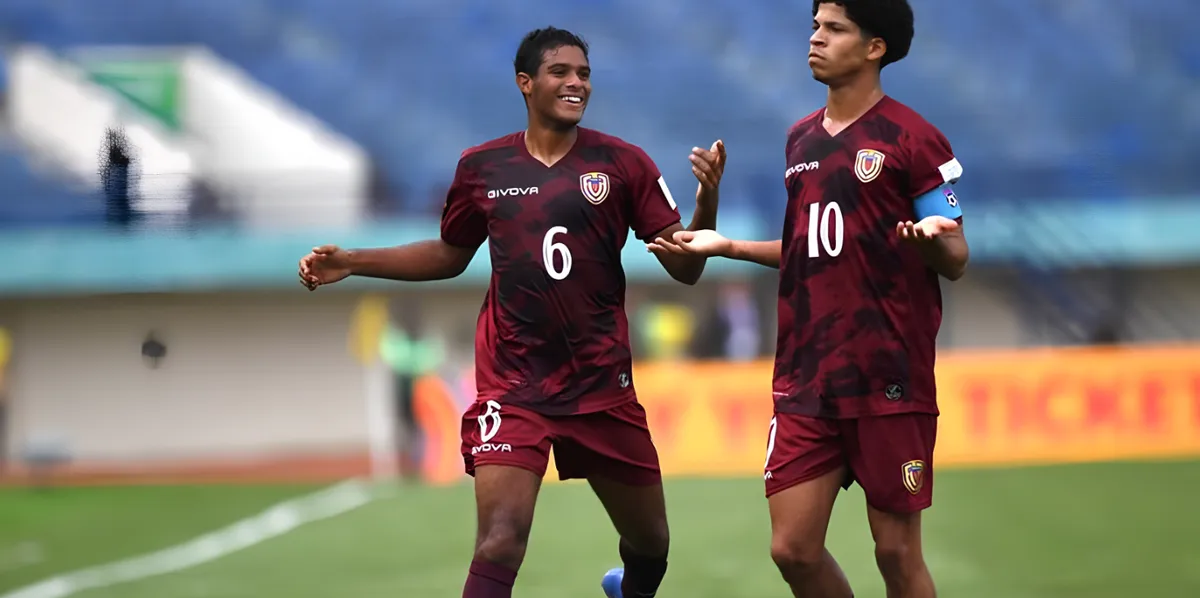
Yordan Osorio, Yangel Herrera, Wuilker Faríñez, Jefferson Savarino. The generation that finished second at the 2017 FIFA U-20 World Cup — the “golden generation” of Venezuelan football — arrived at 2025 with their best historical chance and finished eighth.
Josef Martínez posted a single line on Instagram three days after Maturín: “One day this will change. I don’t know when. I don’t know if it’ll be my turn. But it will change.”
The post has a million and a half likes. It’s the most-shared post in the account’s history.
Bolivia, the other ending
Five thousand two hundred kilometres to the southwest, Bolivia were celebrating.
Bolivia hadn’t really won anything either. What they had achieved was seventh place — the intercontinental playoff, a single-match tournament against an opponent from another confederation in March 2026.
They beat Suriname 2-1 on 26 March in Monterrey, with goals from Moisés Paniagua and Miguel Terceros. Five days later, on 31 March, at the Estadio BBVA in Guadalupe, Bolivia lost 2-1 to Iraq. Ali Al-Hamadi opened the scoring in the 10th minute with a header from a corner; Paniagua levelled in the 38th; Aymen Hussein finished for 2-1 in the 53rd. Bolivia dominated possession the rest of the way — 67.9% of the ball, according to official FIFA statistics — but couldn’t equalise.
Iraq, coached by the Australian Graham Arnold, returned to the World Cup for the first time since Mexico 1986. Bolivia went home too.
But that’s a different story. For the average Venezuelan, what happened in El Alto, or later in Guadalupe, barely registered. What mattered was that, once again, the Bolivians had been handed something La Vinotinto hadn’t: at least the chance to fight for it.
52 days
There are 52 days left until the 2026 World Cup.
Venezuela won’t be there.
The new coach is Oswaldo Vizcarrondo, a former Vinotinto defender appointed by the federation after Batista’s dismissal. Vizcarrondo ran his first official matches during the late-March FIFA Series, against Trinidad and Tobago and Uzbekistan — two low-pressure friendlies with small crowds, the first of a cycle that had nothing left to play for in 2025.
Nobody is expecting a grand press conference. Nobody is asking for promises. Venezuela has learned, through practice, not to ask too much of the next name on the list.
The next qualifying cycle starts in September 2027.
For the 2030 World Cup — the centenary, shared between Spain, Portugal, Morocco, Uruguay, Argentina, and Paraguay — Venezuela will have another chance.
It’ll be their seventeenth attempt.
Rondón will be 41 by then. Rincón, 42. Segovia, 26. Josef Martínez, 37. The 2017 Under-20 golden generation will have walked through.
Others will come. Others will try again.
Maturín will keep waiting.
Sources: Infobae (“Colombia dictó sentencia sobre Venezuela,” 9 September 2025); El Observador (“Venezuela 3-6 Colombia: impactante goleada”); El Colombiano (“Colombia aplastó a Venezuela”); Al Jazeera (“Venezuela sacks coach Batista,” 11 September 2025); Wikipedia (“Fernando Batista”); ESPN (“Iraq 2-1 Bolivia,” 31 March 2026); Al Jazeera (“Iraq defeat Bolivia 2-1 to qualify for World Cup 2026”); Sports Illustrated (“Are Venezuela Playing at the 2026 World Cup?,” January 2026); ESPN (“How Venezuela became surprise Copa América quarterfinalists”); World Soccer (“Venezuelan football: a brief history”); official FVF and CONMEBOL sites; Josef Martínez Instagram account.