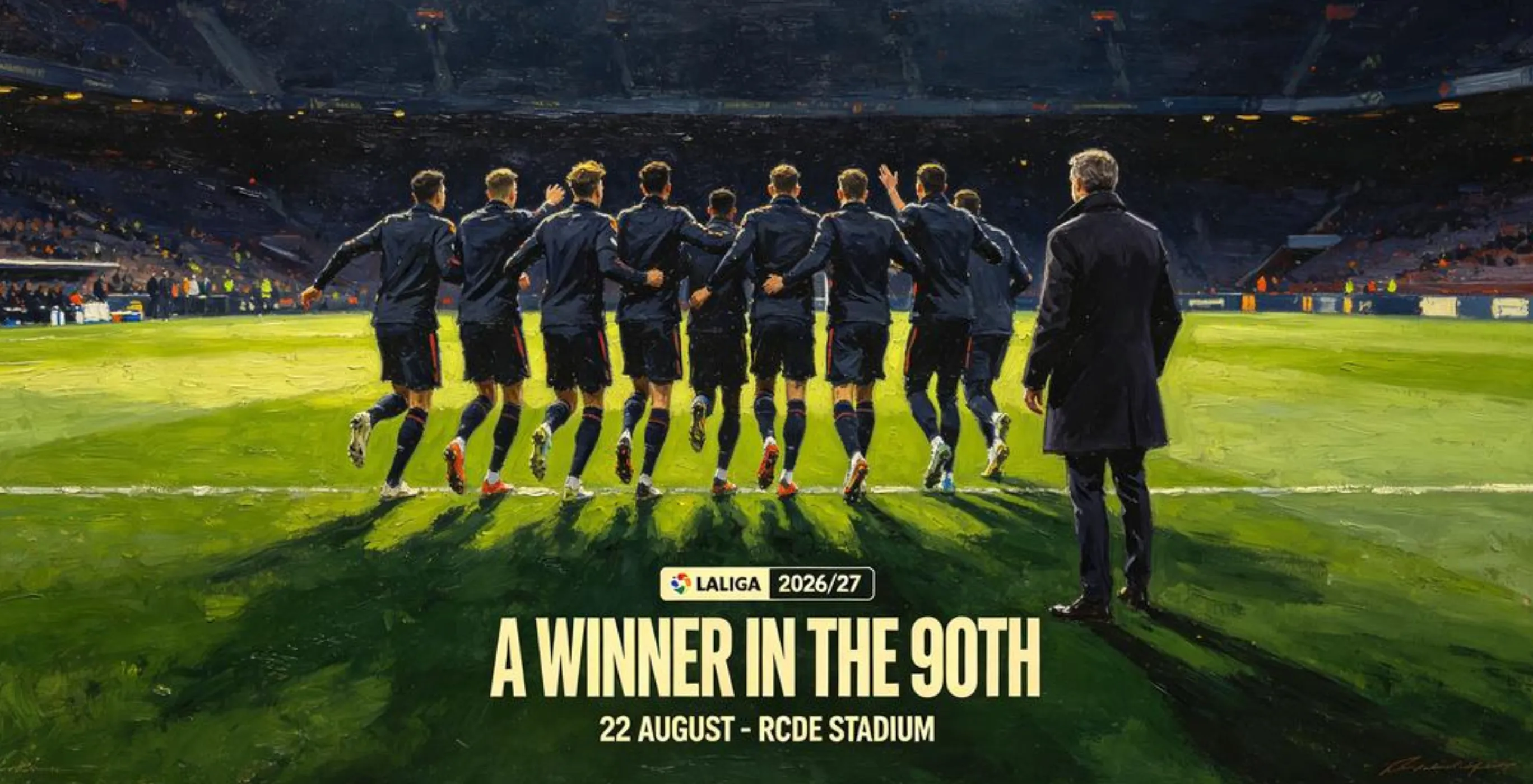
The 2026 World Cup draw confirmed what the region had hoped for: the six South American sides that qualified — Argentina, Brazil, Uruguay, Colombia, Paraguay, and Ecuador — were spread across brackets that promise three weeks of Latin American football on North American soil.
Thirty-five days from the opening match at Estadio Azteca, the entire continent converges on a single question that exceeds any of the six teams: is this the last image world football will see of Lionel Messi? The Argentine captain confirmed in an April 12 interview with TyC Sports that the 2026 World Cup will be his final tournament with La Albiceleste. He turns 39 on June 24, during the group stage.
Argentina’s Defense: A Two-Generation Project
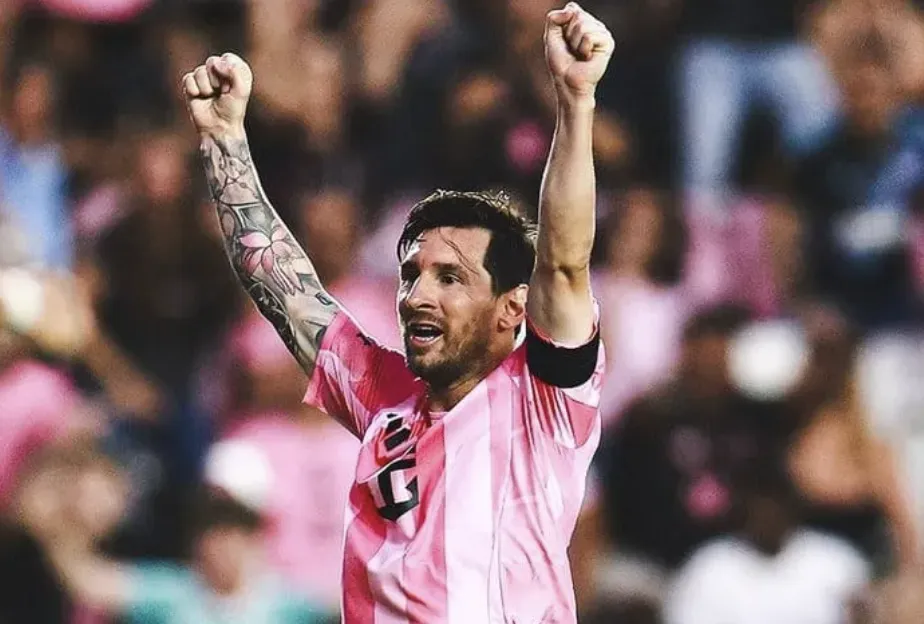
Argentina arrives as back-to-back champions — World Cup 2022 plus two consecutive Copa América titles (2021 and 2024). Lionel Scaloni, the head coach who built the squad from 2018, has kept the spine intact while integrating a new generation into the pool.
Group J, Argentina’s group, includes Algeria, Bolivia, and a European playoff winner. Group matches will be played at AT&T Stadium in Arlington, Texas — where the team opens June 14 against Algeria. The second group fixture is at Mercedes-Benz Stadium in Atlanta. The third returns to Arlington.
Scaloni’s confirmed roster mixes the 2022 winners with six new faces. The backbone is unchanged: Emiliano Martínez in goal, Cristian Romero and Nicolás Otamendi in defense, Rodrigo De Paul and Enzo Fernández in midfield, Lautaro Martínez at center forward. The new arrivals — Franco Mastantuono, the 18-year-old signed by Real Madrid; Alejandro Garnacho of Manchester United; Valentín Carboni of Inter — point to the generational refresh the AFA has been preparing since the 2024 Copa América.
Mastantuono is the name generating the most interest in Buenos Aires. First called up to the senior team in March 2025 while still at River Plate, Scaloni placed him on the World Cup roster despite only 14 caps from qualifying and senior matches combined. The bet is unambiguous: Messi’s natural successor is Mastantuono, not anyone in the current generation.
Messi has played 262 matches for Argentina, scored 115 goals, and won every available title. The only one he can repeat is the World Cup. He said as much in July 2024 at the Hard Rock Stadium in Miami, when he limped off the Copa América final with a destroyed right ankle, in tears: “I thought my World Cup story had ended in 2022. I didn’t know I was going to have one more chapter.”
That chapter begins on June 14.
Brazil Without Neymar, with Ancelotti
The Seleção arrives at the 2026 World Cup without Neymar — ruled out by a fresh injury in April — and managed by Carlo Ancelotti, the first European head coach in the Brazilian national team’s history. Ancelotti took over in May 2025 after the 2024 Copa América failure (quarter-final exit on penalties to Uruguay).
Brazil sits in Group C alongside Morocco, Cape Verde, and an inter-confederation playoff winner. They open June 13 against Morocco at MetLife Stadium — a rematch of the 2022 World Cup quarter-final, where Brazil lost on penalties to Croatia after a match defined by physical exhaustion. The Moroccans, semifinalists in Qatar, are favored against the classic predictions.
Ancelotti’s squad is built around Vinicius Jr (25, Real Madrid), Rodrygo (25, Real Madrid), and Endrick (19, Real Madrid). The three Brazilian forwards play at the same club, which critics see as a tactical strength and others as a weakness: Brazil is betting everything on the most expensive front line in the world without a world-class creative midfielder behind. Casemiro, the engine of 2022, is left out by age (34) and by Ancelotti’s tactical decision to play with a younger midfield.
The most-anticipated match in Brazil’s group is June 24 against Scotland at Hard Rock Stadium in Miami. Brazil has not played Scotland since 1998. The Scots, in their first World Cup in 28 years, hope for a clash of tradition.
Uruguay: Bielsa’s Generation
Marcelo Bielsa’s Celeste qualified third in CONMEBOL, behind Argentina and Colombia. Bielsa took charge in May 2023 with the explicit mission of renewing a national team that had crashed out in the group stage at Qatar 2022 — Uruguay’s first first-round exit in 16 years.
Group H places Uruguay alongside Saudi Arabia, Cape Verde, and Spain. The Uruguayan opener is June 15 at Hard Rock Stadium in Miami against Saudi Arabia.
Bielsa has done what he promised: the 2026 Uruguay squad is the youngest in decades. Federico Valverde (27, Real Madrid) is the captain. Darwin Núñez (26, Liverpool) leads the line. Maximiliano Araújo (25, Sporting CP) covers the flank. The surprise is Facundo Pellistri (24, Granada), who went from Manchester United reject to indisputable starter under Bielsa. Luis Suárez (39) and Edinson Cavani (39) are not in; both retired from the national team in 2024.
Uruguay realistically aspires to the Round of 16. Bielsa’s stated goal at a press conference in Montevideo was “to compete with anyone for 90 minutes.” A Bielsa quote, a manual of football: no promises, all process.
Colombia Returns: James’s Generation
Colombia missed qualification for the 2022 World Cup and returns to the top tournament after eight years. The team that finished third in CONMEBOL plays its first match on June 17 at SoFi Stadium in Los Angeles against a European playoff winner.
James Rodríguez, 2014 Golden Boot winner with six goals and MVP of the 2024 Copa América, arrives at the World Cup at age 35. It is his last shot at a major tournament with La Tricolor. At Qatar 2022, without him, Colombia did not even qualify. In 2026, his form is the difference between Round of 16 and elimination. Luis Díaz (29, Liverpool) and Luis Sinisterra (26, Bournemouth) lead the attack from the wings. Jhon Durán (22, Aston Villa) is the center forward.
Colombia’s Group F includes Portugal and Egypt — a tough but navigable group. The biggest story is June 27 against Portugal at Hard Rock Stadium in Miami. Cristiano Ronaldo has confirmed this will be his final World Cup; Portugal seeks its first title. Colombia seeks to return to a quarter-final for the first time since 2014.
Paraguay and Ecuador: The Stable Surprises
Paraguay qualifies for the World Cup for the first time since 2010, a 16-year absence. Gustavo Alfaro’s squad — the Argentine head coach who has led Paraguay since 2024 — was the second-most defensively solid team in all of South American qualifying, behind only Argentina. Veteran goalkeeper Antony Silva remains in goal at age 41, setting a Paraguayan record. Miguel Almirón, ex-Newcastle, is the offensive figure.
Ecuador reaches its fifth World Cup in six cycles. The generation of Moisés Caicedo (24, Chelsea), Piero Hincapié (24, Bayer Leverkusen), and Kendry Páez (19, Chelsea) is the most-valued in Ecuadorian history on the European market. Coach Sebastián Beccacece’s stated goal: advance past the group stage for the first time since 2006.
Bolivia: The Lost Opportunity
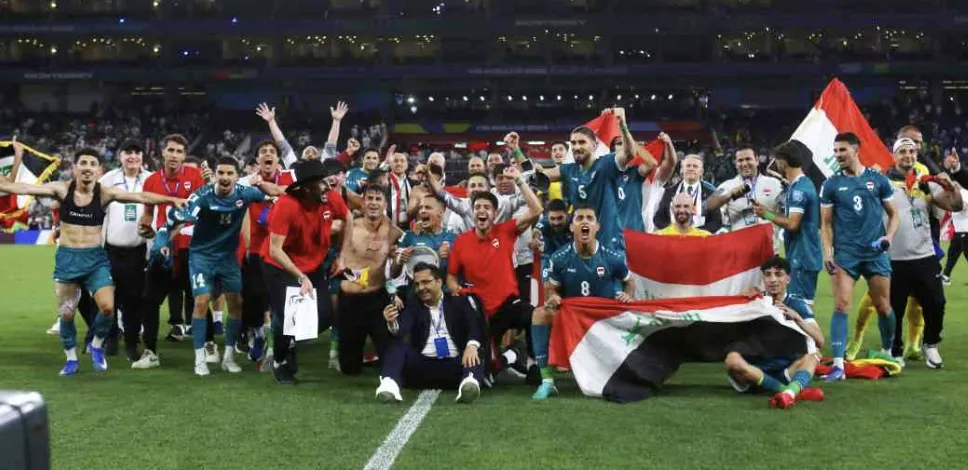
Bolivia reached the inter-confederation playoff in Guadalajara. They lost 2-1 to Iraq on March 31 at Estadio Akron — a goal conceded in the 89th minute, a stopped ball that wasn’t controlled, and the last chance to return to the World Cup after 32 years of absence. The green-shirted national team has not played a World Cup since United States 1994.
The match was the most-watched in the history of Bolivian football. La Paz emptied during the 90 minutes. The terraces of Avenida 16 de Julio showed the match on screens mounted on the street. When Swiss referee Sandro Schärer blew the final whistle, the silence in La Paz lasted four hours, according to the report from the newspaper Página Siete.
What Is Still to Come
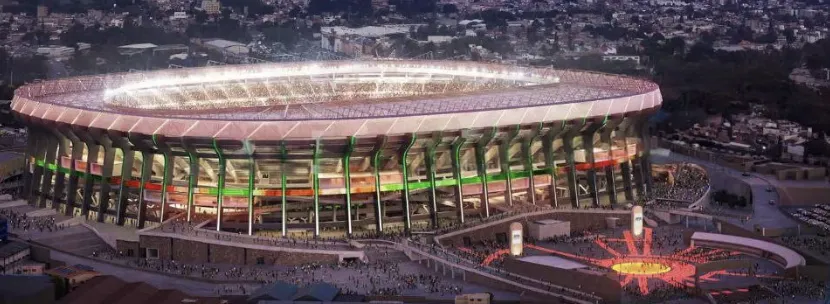
The complete final draw took place in December 2025 in Las Vegas, but the brackets of the tournament depend on how group standings finish. The most-anticipated cross-bracket possibilities:
- Argentina vs Brazil: impossible before the final (they cannot fall on the same side of the bracket). If both advance to the final, it would be the first Argentina vs Brazil World Cup final in history.
- Argentina vs Uruguay: possible in the quarter-finals if both win their groups.
- Brazil vs Colombia: possible in the Round of 16.
- Argentina vs Spain: possible in the semifinals — the cross that generates the most expectation outside South America.
The two host cities most concentrated with South American fan bases are Miami (with the largest Argentine and Brazilian populations gathered) and Mexico City (host of the opening match and natural connection point for fans across all of Latin America). Airlines report 180% increases in flights from Buenos Aires to Atlanta for the week of June 12-16, dates that coincide with Argentina’s first two matches.
Thirty-five days remain. The defense of the cup begins on June 14.