



Quick Reference
| Detail | Information |
|---|---|
| Stadium | AT&T Stadium / Dallas Stadium (tournament name) |
| Capacity (WC) | 70,122 (official FIFA figure); 80,000+ regular, expandable to 105,000 |
| Matches hosted | 9 (5 group stage + 2 Round of 32 + 1 Round of 16 + Semifinal, July 14) |
| Location | Arlington, Texas — between Dallas and Fort Worth |
| Nearest airport | Dallas/Fort Worth International (DFW) |
| Recommended days | 4 nights |
| Budget level | Mid-high |
| Best neighborhoods | Downtown Dallas, Uptown, Bishop Arts (Dallas); Sundance Square (Fort Worth); Arlington (matchday only) |
| Avoid | Driving without GPS — DFW Metroplex sprawl is unforgiving |
| Currency | US Dollar (USD) |
| Tap water | Safe to drink. |
The semifinal city. Argentina plays here twice, and 9 matches total — tied with MetLife for most of any 2026 venue. A retractable-roof stadium so vast that the Statue of Liberty would fit inside with the roof closed. The Texas city built on cattle, oil, and football — though “football” used to mean something different here. The Cotton Bowl across town is where Saudi Arabia’s Saeed Al-Owairan ran 70 yards through five Belgian defenders in 1994 and scored what is still considered the greatest individual goal in World Cup history. Here is how to land in Dallas-Fort Worth for June 14, 2026, and understand a place that thinks bigger than any other host city.
The Stadium
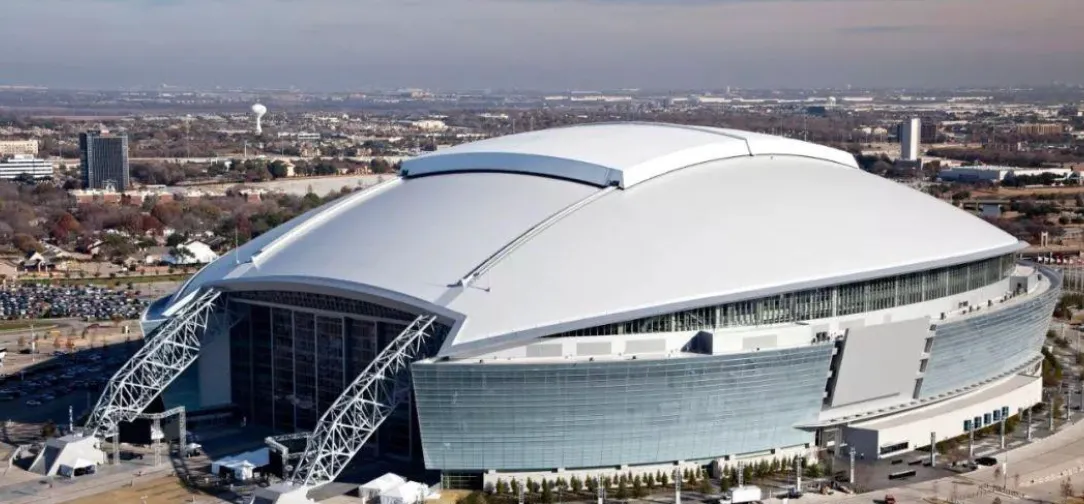
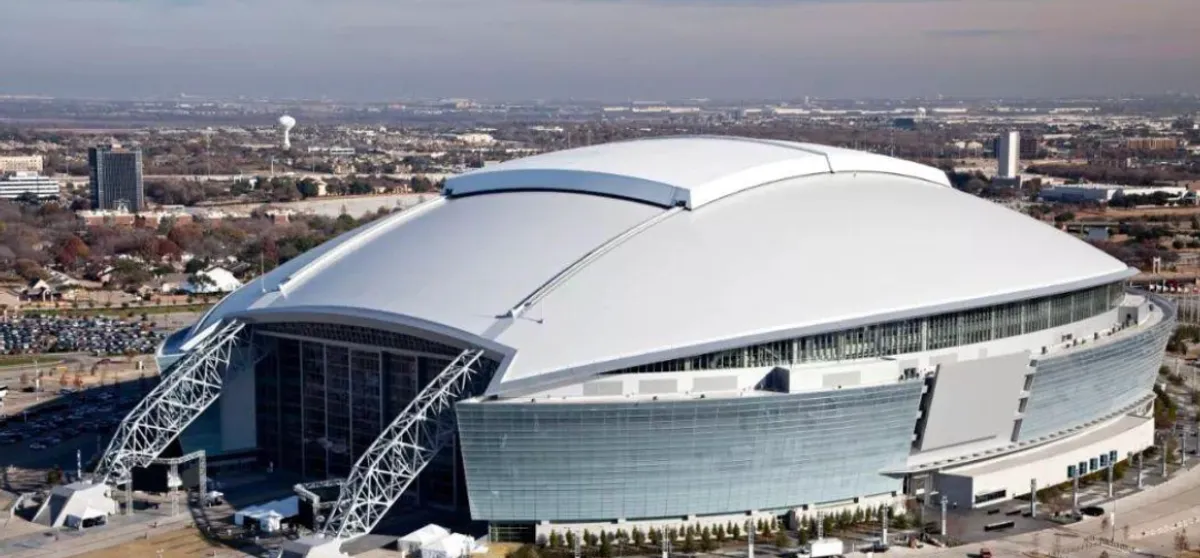
AT&T Stadium opened on May 27, 2009, replacing the older Texas Stadium as home of the Dallas Cowboys. Construction cost approximately $1.15 billion — among the most expensive stadiums in the world at the time. It is owned by the City of Arlington and operated by Cowboys ownership; the universal nickname is “Jerry’s World”, after Cowboys owner Jerry Jones, who personally drove the design.
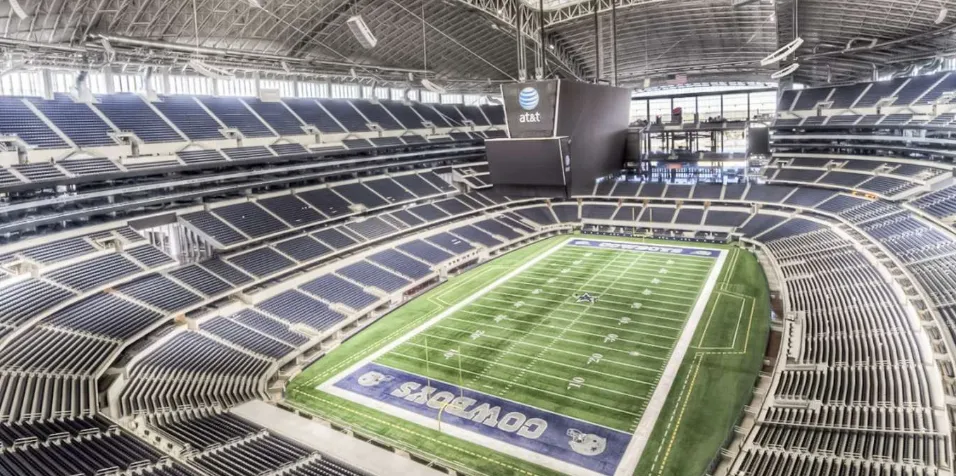
The numbers are absurd. The retractable roof opens or closes in 12 minutes. The stadium contains 3 million square feet of space — the Statue of Liberty (93 meters) would fit inside upright, with the roof closed. The center-hung video boards (originally a single Mitsubishi panel, now Panasonic) were the largest in the world for over a decade. 120-foot operable glass walls at each end zone open onto outdoor plazas. The interior holds one of the largest contemporary art collections in any sports venue, featuring Olafur Eliasson, Anish Kapoor, Doug Aitken, and Ellsworth Kelly.
For 2026, FIFA renames the venue Dallas Stadium for the duration of the tournament, despite the stadium’s actual location in Arlington (between Dallas and Fort Worth, 20 miles west of downtown Dallas). FIFA’s branding policy ignores municipal boundaries.
The most significant World Cup modification: the artificial surface has been replaced with natural grass, with the playing field raised to meet FIFA dimensions. The reconfiguration cost approximately $295 million — the most expensive single venue conversion of the 2026 tournament. Configuration during the World Cup is all-seater; the standing-room “Party Pass” sections that allow Cowboys games to exceed 100,000 are not used.
The nine matches scheduled here:
- June 13 — Netherlands vs. Japan (Group F)
- June 14 — Austria vs. Argentina (Group J) — Argentina’s opener
- June 17 — Croatia vs. England (Group L)
- June 22 — Group stage match
- June 25 — Group stage match
- June 27 — Group stage match
- June 30 — Round of 32
- July 3 — Round of 32
- July 6 — Round of 16
- July 14 — SEMIFINAL
This is the second-most matches at any 2026 venue (tied with MetLife at 9). Defending champion Argentina plays at least once here, and possibly twice if they advance to a Round of 32 or Round of 16 match scheduled in Arlington. The July 14 semifinal will be one of the two most consequential matches before the Final at MetLife.
Getting There
From Dallas/Fort Worth International Airport (DFW) to the Stadium
DFW is 18 miles / 29 km north of AT&T Stadium. Travel time 20-30 minutes in normal traffic, 60-90 minutes on match days.
There is no good public transit option. The DFW Metroplex was built around freeways. TRE commuter rail to CentrePort Station (between DFW and Arlington) is the closest rail stop, but it’s still a $15 rideshare from CentrePort to the stadium. Most fans will drive or rideshare directly.
By rideshare (Uber/Lyft): $40-60 from DFW in normal traffic, $80-130 on match days with surge. Drop-off is at designated zones; expect a 10-15 minute walk to your seat.
By driving: Pre-booked parking is essential. Official parking passes will run $75-175 per game through dynamic pricing (Argentina-Austria likely higher). Walk-up parking is non-existent; surrounding lots fill 4 hours before kickoff.
Critical Dallas advice: the Metroplex is enormous. Dallas to Fort Worth is 32 miles. AT&T Stadium sits in the middle. Choose your hotel based on which side of the metro you intend to spend your non-match time on. There is no walkable World Cup district near the stadium — Arlington is sprawling suburbia.
Visa & Entry
Standard US rules. VWP countries: ESTA required. Visa-required countries: apply 6+ months in advance.
DFW is one of the world’s busiest international hubs (American Airlines’ main hub). Immigration lines on match days can run 90-120 minutes for non-Global Entry holders. Allow 4 hours between connecting flights if you must transit through DFW on a match day.
Where to Stay
The DFW Metroplex’s size means your hotel choice essentially picks one city — Dallas, Fort Worth, or Arlington — for the week.
| Neighborhood | Drive to Stadium | Double Room/Night | Vibe | Best For |
|---|---|---|---|---|
| Downtown Dallas | 25-35 min | $180-320 | Skyline, Arts District, walkable downtown core | Best urban experience |
| Uptown / Highland Park (Dallas) | 30-40 min | $220-380 | Trendy bars, restaurants, residential leafy | Foodies, mid-range travelers |
| Bishop Arts (Dallas) | 35-45 min | $160-240 | Hip neighborhood, indie shops, restaurants | Culture seekers, young couples |
| Sundance Square (Fort Worth) | 25-30 min | $200-340 | Cowtown energy, walkable historic core, music venues | Smart pick — most authentic Texas experience |
| Arlington (near stadium) | 5-15 min | $130-220 | Suburban, near Six Flags + stadium, limited dining | Match-only stays; no city character |
| DFW Airport corridor | 25-35 min | $140-220 | Chain hotels, conferencer feel | Multiple-flight transit travelers |
Sundance Square in Fort Worth is the underrated pick. Fort Worth retains a genuine Texas character that Dallas has largely lost — cowboys still ride horses through downtown for show, the Stockyards (across the river) is still active, the BBQ is the best in the state. 25-minute drive to AT&T Stadium with manageable traffic.
Downtown Dallas is the right call for first-timers. The Dallas Arts District (downtown) is the largest contiguous urban arts district in the United States — six major venues including the Dallas Museum of Art, Nasher Sculpture Center, and Meyerson Symphony Center. Hotels: The Joule ($280), Adolphus ($240, historic luxury since 1912), Hyatt House (~$180, budget).
What to avoid: Hotels near Fair Park (south Dallas) at night for tourists unfamiliar with the area. Deep Ellum (east of downtown) is excellent for nightlife but accommodation there is limited and street parking gets dicey on weekends.
Hotels in Arlington itself are overpriced for what they are. Most are 1990s-era chains (Holiday Inn, Hampton Inn) charging premium World Cup rates. Stay in Dallas or Fort Worth, drive to the stadium.
Book by April 30. The July 14 semifinal has driven hotel demand for the second week of July; Sundance Square hotels are 70% booked for that week as of April.
Beyond the Stadium
Dallas
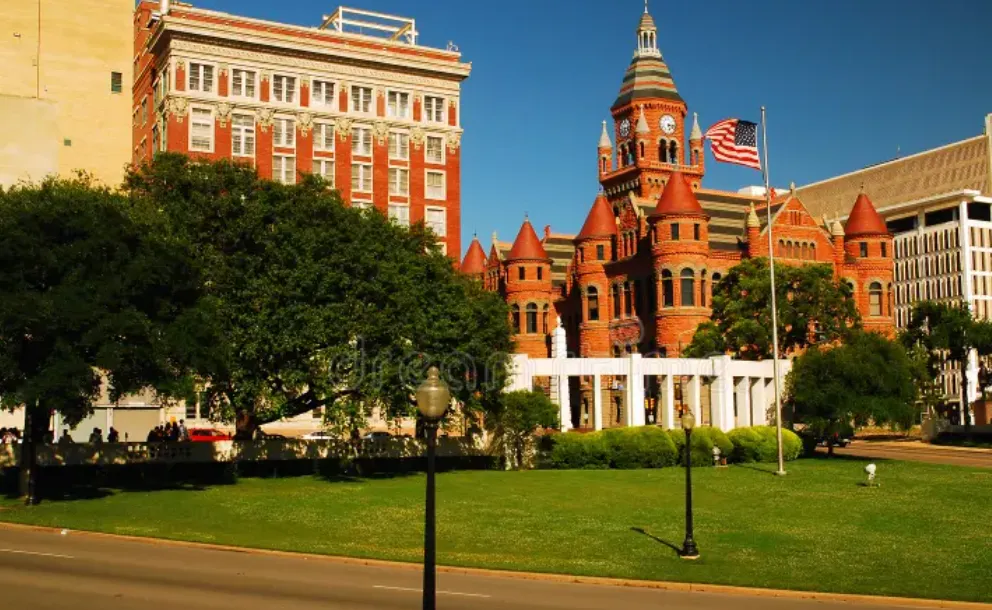
The Sixth Floor Museum (Dealey Plaza): The former Texas School Book Depository where Lee Harvey Oswald shot President Kennedy on November 22, 1963. The museum occupies the actual sixth floor where Oswald fired. Quietly devastating. $24 entry. Allow 2 hours.
Dallas Arts District: The Dallas Museum of Art (free general admission), the Nasher Sculpture Center, the Crow Museum of Asian Art. Walk between them in an afternoon.
Klyde Warren Park: A 5-acre deck park built over the Woodall Rodgers Freeway, connecting Downtown to the Arts District. Food trucks, free events, the most successful urban-renewal project in modern Dallas.
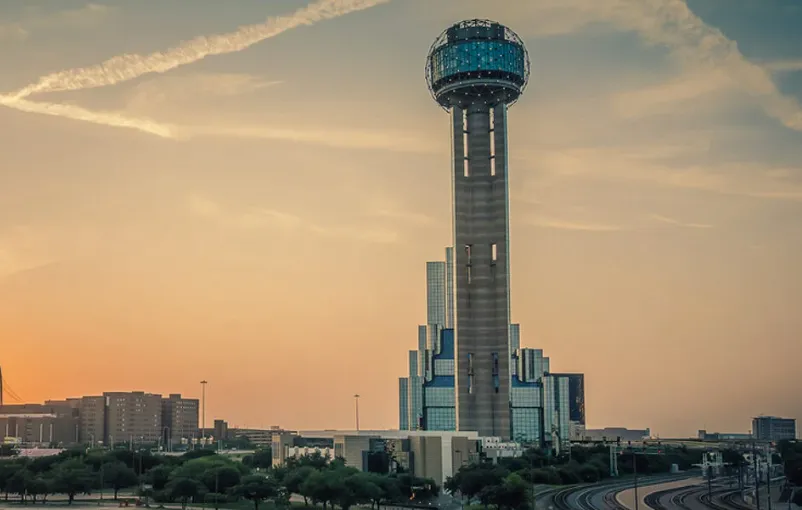
Reunion Tower: 561-foot observation tower offering 360-degree city views. $22 entry. Best at sunset.
Fort Worth
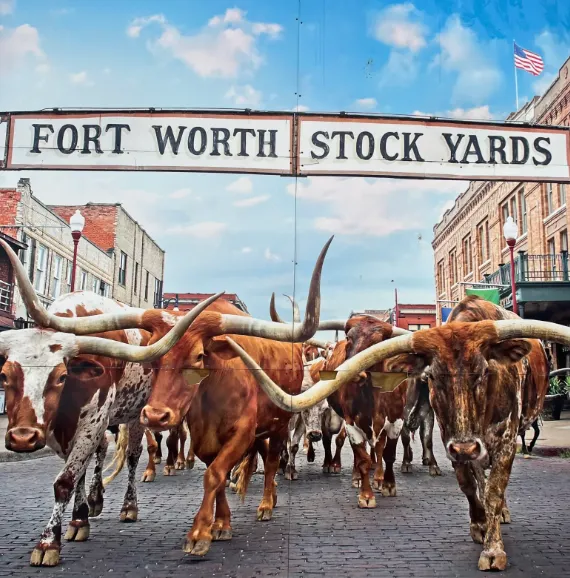
Fort Worth Stockyards: A 19th-century livestock district that has been continuously operating since 1866. Twice-daily cattle drives at 11:30am and 4pm. The Stockyards Hotel is where Bonnie and Clyde stayed.
Kimbell Art Museum: One of the great small museums in America. Designed by Louis Kahn (1972). Free general admission.
Sundance Square: 35 blocks of restored downtown Fort Worth — restaurants, bars, music venues, walkable. The square hosts a free Wednesday night concert series in summer.
Day Trips
Six Flags Over Texas: Adjacent to AT&T Stadium in Arlington. The original Six Flags theme park (1961). Skip if you have any other plans.
Glen Rose: 90 minutes south. Dinosaur Valley State Park has actual dinosaur footprints in the Paluxy riverbed.
Where to Eat and Drink
Texas BBQ — Non-Negotiable
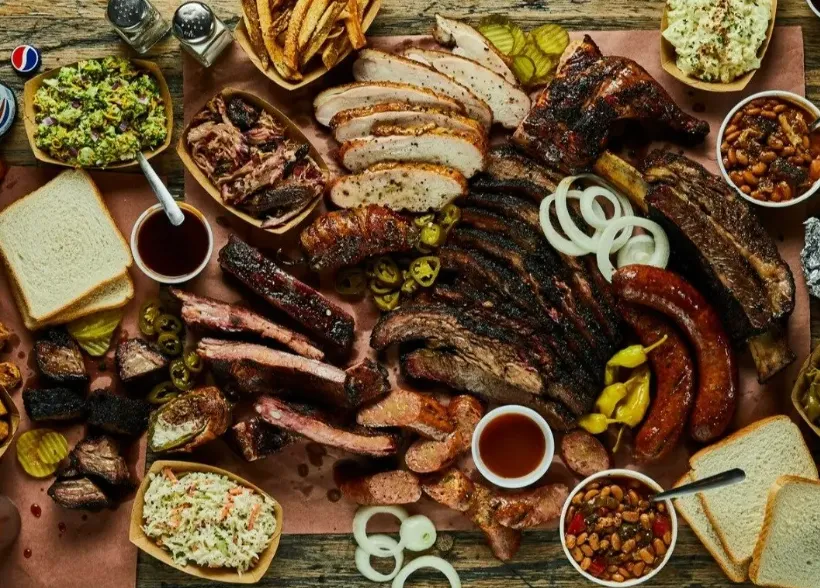
The defining food of the region. Texas BBQ uses brisket as the main event (versus pulled pork in the Carolinas, ribs in Memphis). Slow-smoked over post oak for 12-16 hours, no sauce needed.
Pecan Lodge (Deep Ellum, Dallas). The brisket institution — opened 2010, lines from 11am. Closed Mondays/Tuesdays. $25 for a generous brisket plate.
Goldee’s (Fort Worth). #1-ranked BBQ in Texas Monthly’s 2021 list. Saturdays only, lines from 7am. Worth the pilgrimage.
Heim Barbecue (Fort Worth, Magnolia Avenue). Bacon burnt ends; lines but moves fast. $20-25.
Tex-Mex
Mia’s Tex-Mex (Lemmon Avenue, Dallas, since 1981). The original location of the family chain that started Dallas’s love affair with brisket tacos. $18 for a plate.
El Fenix (multiple locations). Chain since 1918. Texas Tex-Mex, gloriously mid-tier in the best way. The combo plate.
Joe T. Garcia’s (Fort Worth). 1935. Legendary outdoor patio. Cash only. The Combination plate is the only thing to order.
High-End Dining
Mansion (Dallas Mansion on Turtle Creek). Eight Michelin stars (Texas’s first). $250 tasting menu by chef Sebastien Archambault.
Knife (Highland Park, Dallas). John Tesar’s steakhouse — wagyu, dry-aged beef, the 240-day cuts. $80-180 per person.
The Fan Experience
FIFA Fan Festival — Dallas: Confirmed at Fair Park (Dallas), the historic 277-acre site of the State Fair of Texas. Free entry. Live music, food trucks, big screens. The Cotton Bowl stadium itself (within Fair Park) will not be a viewing venue — it’s a fan zone in the surrounding fairgrounds.
Sports bars: Stan’s Blue Note (Lower Greenville, Dallas), The Foundry (Trinity Groves, Dallas), The Rustic (Uptown). For specifically football: The Londoner (Addison) is the city’s main British sports bar.
Latino fan culture in DFW: North Texas has one of the largest Mexican-American communities in the United States outside of Los Angeles and Houston. East Dallas (Jefferson Boulevard) and Oak Cliff turn into fan zones for any Mexico match. Mariachi bars, late-night taquerías, and parade culture.
Argentine fan culture: With Argentina playing at least once at AT&T Stadium and Lionel Messi rumored to attend, expect significant Argentine and South American fan presence. La Gloria in Bishop Arts (Latin American restaurant) and Asado (Argentine grill) are ground zero.
The Story
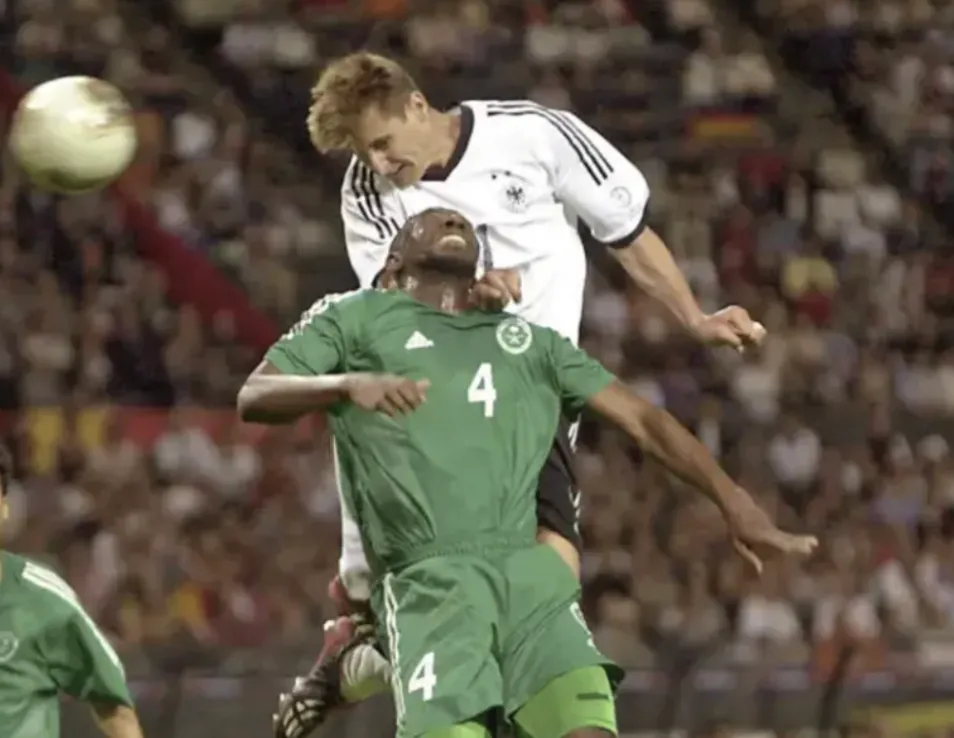
June 29, 1994. Cotton Bowl, Dallas. Saudi Arabia vs. Belgium, 1994 FIFA World Cup, Group F.
The Cotton Bowl is in Dallas (Fair Park, south of downtown). It was built in 1932 and is still standing — but it was rejected for the 2026 World Cup due to its age. AT&T Stadium did not yet exist in 1994. The Cotton Bowl was North Texas’s only major venue.
Saudi Arabia were in their first World Cup. Belgium were a top-10 European side, with veteran goalkeeper Michel Preud’homme (the eventual Yashin Award winner as the tournament’s best keeper) and a defensive line that had conceded just two goals through their first two matches. Saudi Arabia had lost their opener 2-1 to the Netherlands and beaten Morocco 2-1. Group standings were tight; this match would decide who went through.
In the 5th minute, Saudi Arabia kicked off. The ball was played back to Saeed Al-Owairan, a 26-year-old midfielder for Al-Shabab Riyadh, just inside his own half. Al-Owairan looked up. He had Belgian defenders in front of him. He started running.
What he did over the next 10 seconds has been replayed millions of times since:
- He ran past two Belgian midfielders at the halfway line.
- He cut inside a third defender at the edge of his own attacking third.
- He outpaced a fourth defender sprinting back at him.
- He beat a fifth defender at the edge of the box.
- He shot, low and right, past Preud’homme.
1-0 Saudi Arabia.
The goal covered approximately 65 meters / 70 yards. Al-Owairan touched the ball seven times. He beat five Belgian defenders in an unbroken run from his own half. The shot itself was unremarkable — the run was the event. Belgian defender Philippe Albert later said: “I don’t know what to say. He came past me like I was traffic.”
Saudi Arabia held on for the 1-0 win. They became the first Arab nation to qualify for the World Cup knockout round. They were eliminated in the Round of 16 by Sweden, but Al-Owairan’s goal was already enshrined.
The goal has been called the “Maradona of the Desert” — direct comparison to Diego Maradona’s 1986 second goal against England. Both goals featured a runner beating five defenders to score. Al-Owairan’s came eight years later, in Texas, to beat one of Europe’s most disciplined sides.
Al-Owairan never played in another World Cup. The following year, he was banned by Saudi Arabia for breaking Ramadan during a tournament tour. He played out his career at Al-Shabab. He retired in 2001 and now works in Saudi football administration. He has never given a long-form interview about the goal.
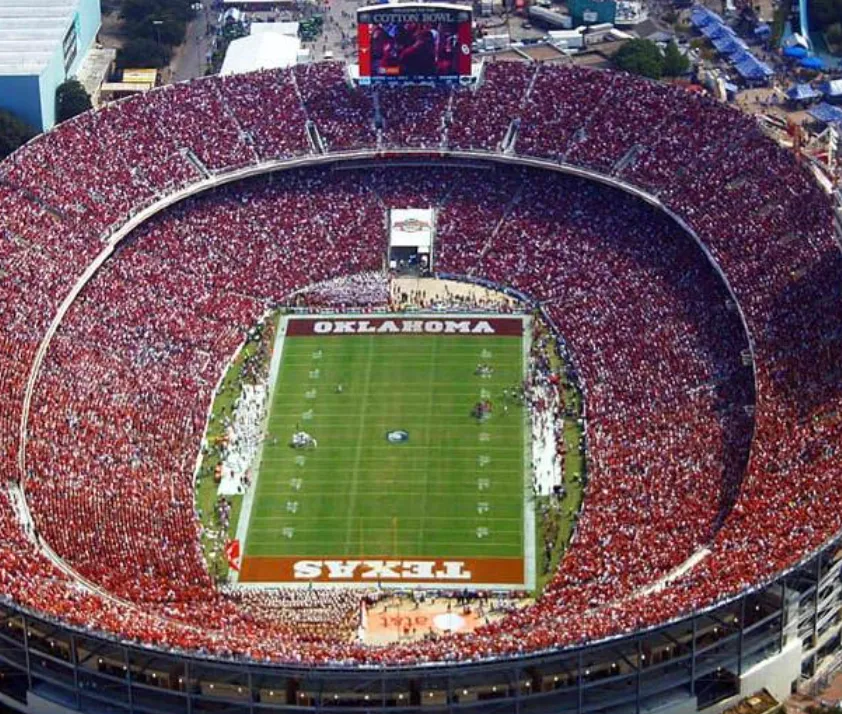
The Cotton Bowl is 35 minutes from AT&T Stadium by car. The stadium is still in active use for college football (the annual State Fair Classic, the Heart of Dallas Bowl). The grass where Al-Owairan ran his 70-yard sprint is the same grass; the goal posts have not moved. If you have a free morning, it is open to the public most days. There’s no plaque. The Cotton Bowl is a working stadium, not a museum.
When Argentina plays at AT&T Stadium on June 14, 2026 — Lionel Messi rumored to be in attendance, perhaps in the squad — the conversation in Dallas will inevitably turn to the last time a single player carried a goal across that much real estate. Different stadium, different country, different decade. Same Texas grass. Same idea.