
Quick Reference
| Detail | Information |
|---|---|
| Stadium | Mercedes-Benz Stadium / Atlanta Stadium (tournament name) |
| Capacity (WC) | 75,000 (4th-largest at the tournament) |
| Matches hosted | 8 (5 group stage + 1 Round of 32 + 1 Round of 16 + Semifinal, July 15) |
| Location | Downtown Atlanta, Georgia, 1 AMB Drive Northwest |
| Nearest airport | Hartsfield-Jackson Atlanta International (ATL) — busiest in the world |
| Recommended days | 4 nights |
| Budget level | Mid (most affordable major US host city) |
| Best neighborhoods | Midtown, Downtown, Old Fourth Ward, Inman Park, Buckhead |
| Avoid | Hotels along I-285 perimeter; some areas south of I-20 after dark |
| Currency | US Dollar (USD) |
| Tap water | Safe to drink. |
Georgia’s first World Cup. Argentina opens here on June 14, England plays Scotland in the modern Auld Enemy clash on June 22, and a July 15 semifinal caps Atlanta’s hosting duties — one of the two final-four matches before the championship at MetLife. A retractable-roof stadium with a “pinwheel” oculus inspired by the Roman Pantheon. The home of MLS’s all-time attendance record holder. The state where, 75 miles east in Athens, Nigeria’s “Dream Team” beat Argentina 3-2 in 1996 to become the first African nation to win Olympic men’s soccer gold. Here is how to land in Atlanta for June 14, 2026, and understand why the South finally got soccer.
The Stadium
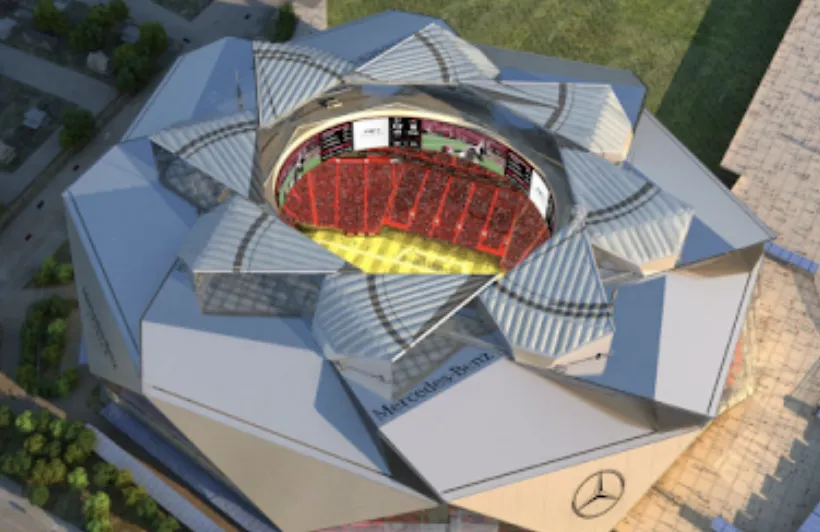
Mercedes-Benz Stadium opened on August 26, 2017, replacing the demolished Georgia Dome on adjacent land in downtown Atlanta. Construction cost approximately $1.6 billion — owned by the State of Georgia through the Georgia World Congress Center Authority and operated by Arthur Blank’s AMB Group (Blank also owns the Atlanta Falcons NFL team and Atlanta United FC of MLS).
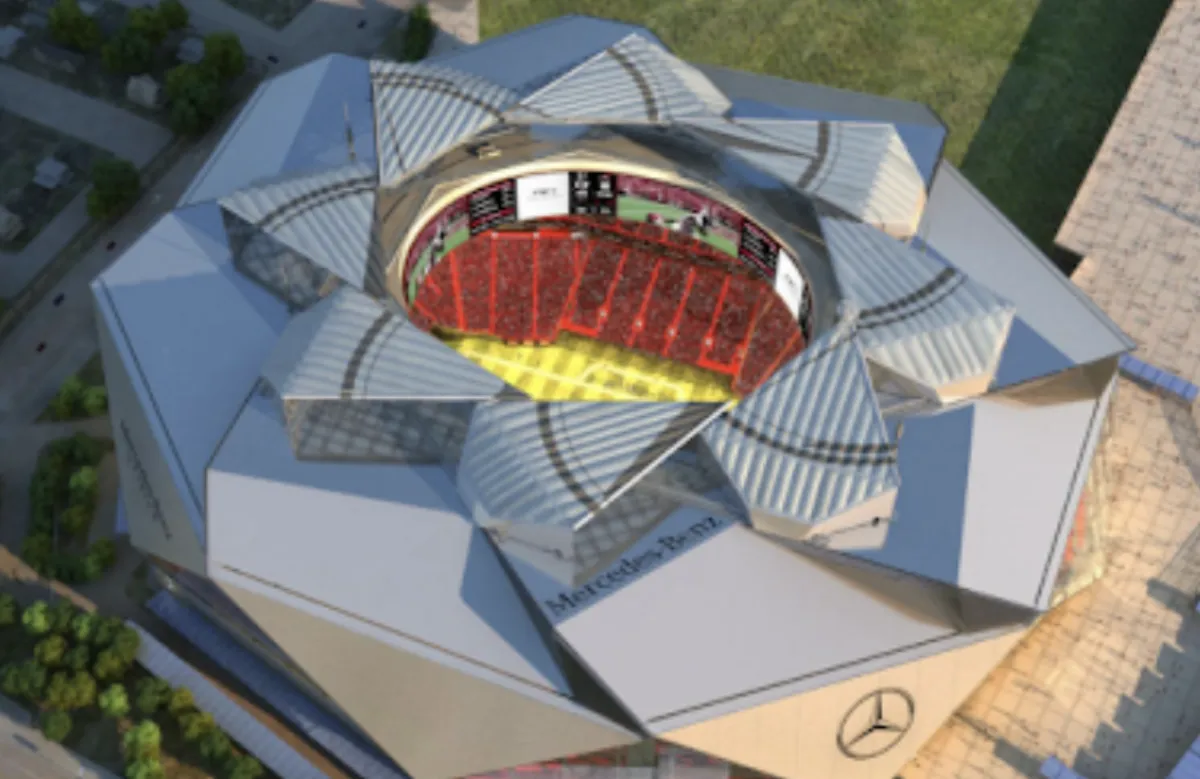
The signature feature is the eight-petal “pinwheel” retractable roof — designed by HOK and inspired by the oculus of the Roman Pantheon. The eight steel petals rotate open and closed in approximately 12 minutes, framing a circular open sky directly above the center of the pitch when fully retracted. The stadium is the first professional sports venue in the United States to achieve LEED Platinum certification for environmental design.
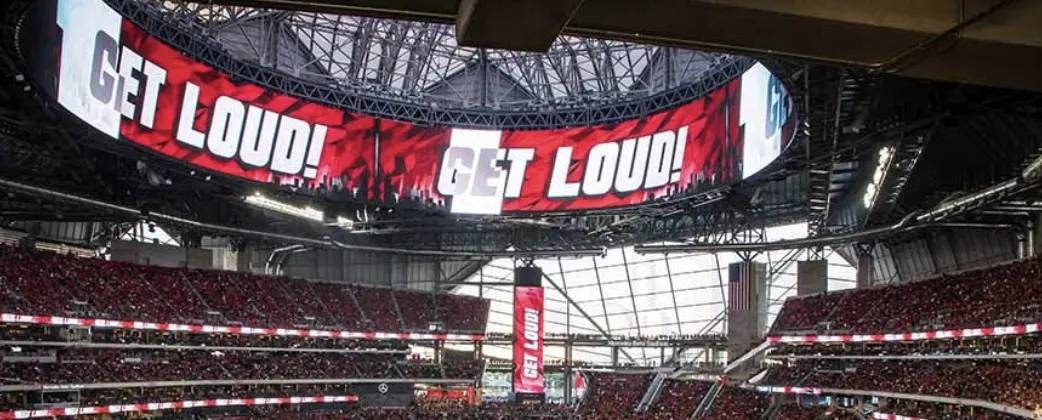
Inside, the Halo Board — a 360-degree video display ring suspended above the seating bowl — circles the entire stadium with continuous high-resolution imagery. Concession prices are famously fan-friendly: Atlanta is the only NFL/MLS venue where a hot dog costs $2 and refillable soft drinks cost $2 — a deliberate Blank-Falcons policy that has created the “Fan First Pricing” model copied by no one else.
For 2026, FIFA renames the venue Atlanta Stadium. The artificial turf has been replaced with natural grass (FIFA mandate) — the conversion ran through a $200 million venue refresh program completed in stages from 2024 through summer 2026. The retractable lower bowl has been positioned for the wider FIFA pitch, expanding both width and length to international dimensions.
The eight matches scheduled here:
- June 14 — Argentina vs. Algeria (Group J) — Argentina’s possible second match
- June 15 — Spain vs. Cape Verde (Group H)
- June 17 — Belgium vs. New Zealand (Group G)
- June 20 — United States vs. UEFA Path C Winner (Group D)
- June 22 — England vs. Scotland (Group L) — modern Auld Enemy clash
- July 1 — Round of 32
- July 7 — Round of 16
- July 15 — SEMIFINAL
The June 22 England-Scotland match is the headline group fixture. The two oldest international rivals in football — they played the first international match in history in 1872 (Glasgow, 0-0) — drawn together in a competitive World Cup match for the first time since 1992. Tickets resold for $4,000+ within 48 hours of the schedule release. The July 15 semifinal will be one of the two most-watched matches before the New Jersey Final.
Getting There
From Hartsfield-Jackson Atlanta International Airport (ATL) to the Stadium
ATL is 10 miles / 16 km south of the stadium. It is the busiest airport in the world by passenger volume — 100+ million annually. Travel time to Mercedes-Benz Stadium is 20-30 minutes in normal traffic, 45-75 minutes on match days.
The MARTA train is the recommended option — and Atlanta’s only good public transit:
- MARTA Red or Gold Line northbound from Airport Station to Five Points Station
- Transfer to Blue or Green Line westbound, one stop to GWCC/CNN Center Station or Vine City Station
- Walk 5-10 minutes to the stadium
- Total time: 25-35 minutes | Cost: $2.50 (Breeze Card)
This is the best airport-to-stadium transit option of any 2026 US host city. ATL’s MARTA station is integrated directly into the airport terminal — no transfer needed.
By rideshare (Uber/Lyft): $25-40 from ATL in normal traffic, $60-100 on match days. Drop-offs are restricted on match days; expect a 10-minute walk to your seat.
By driving: Pre-booked parking essential. Public lots ($40-100) fill 4 hours before kickoff. The stadium parking situation is among the better-organized in the league because of MARTA — about 40% of fans take the train.
Critical Atlanta tip: traffic is the second-worst in the United States after Los Angeles. The downtown perimeter (I-285) and Spaghetti Junction (I-285/I-85 interchange) are notoriously bad. Avoid driving anywhere between 4-7pm.
Visa & Entry
Standard US rules. VWP countries: ESTA required. Visa-required countries should apply 6+ months in advance.
ATL handles more international flights than any other US airport except JFK. Immigration lines on match days will run 45-90 minutes for non-Global Entry holders. Consider connecting through Atlanta if you’re flying domestic from another World Cup city.
Where to Stay
Atlanta is the most affordable major US host city. Hotel rates are 30-40% lower than New York or Los Angeles for equivalent quality.
| Neighborhood | Walk/Transit to Stadium | Double Room/Night | Vibe | Best For |
|---|---|---|---|---|
| Downtown | 5-15 min walk | $180-280 | Convention hotels, Centennial Olympic Park | Closest to stadium, conference vibe |
| Midtown | 10-15 min by MARTA | $200-340 | Walkable, parks, restaurants, gay village | Best overall — most walkable |
| Old Fourth Ward / Inman Park | 15-20 min by MARTA | $160-260 | Hip neighborhoods, BeltLine, MLK Historic Site | Culture, food, arts |
| Buckhead | 25-30 min by MARTA | $220-380 | Upscale shopping, malls, residential | Luxury seekers |
| Atlantic Station | 15 min by car/Uber | $150-240 | Mixed-use development, chain stores | Mid-budget travelers |
| Decatur | 30-40 min by MARTA | $140-220 | College town, indie restaurants | Quiet, local feel |
Midtown is the smart pick for most fans. Walking distance to Piedmont Park (Atlanta’s Central Park), the Beltline (the converted-railway path), the High Museum of Art, restaurants in every direction. MARTA stations at North Avenue and Midtown both connect to the stadium in 10 minutes.
Old Fourth Ward / Inman Park is the right call for fans wanting an authentic Atlanta experience. The BeltLine is a 22-mile walking/biking trail built on former rail corridors — the Eastside Trail through these neighborhoods is the most-developed section, lined with murals, food halls (Ponce City Market), and breweries.
What to avoid: Hotels along the I-285 perimeter (anywhere with “perimeter” in the name) — these are airport-corridor business hotels far from anything interesting and 40+ minutes from the stadium without traffic. Some areas south of I-20 (the dividing line locals know) should be researched carefully before booking.
Book by May 1. The July 15 semifinal has driven hotel demand for the second week of July. Midtown hotels are 75% booked for that week as of April. Group stage rates will be more flexible.
Beyond the Stadium
Civil Rights History — Non-Negotiable
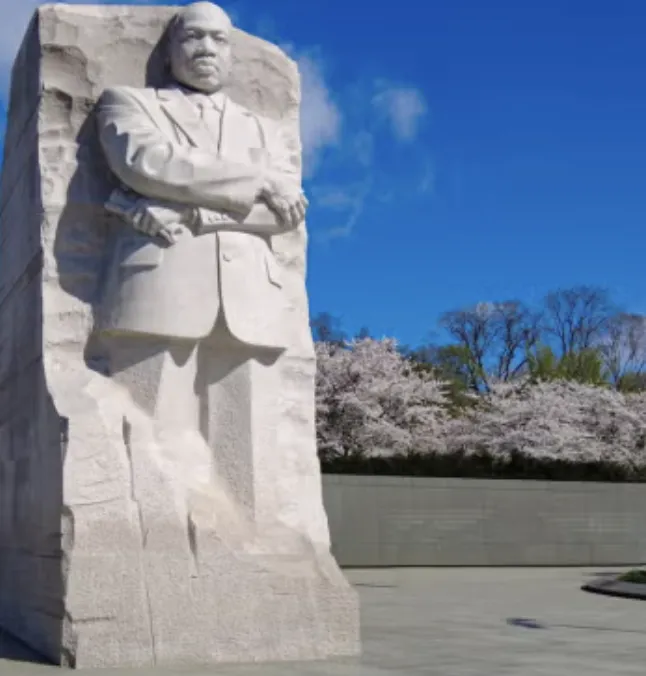
Martin Luther King Jr. National Historical Park (Old Fourth Ward): The neighborhood where Dr. King grew up. The visitor center, his birth home, the Ebenezer Baptist Church (where he preached), and the gravesite of MLK and Coretta Scott King are within walking distance. Free. Plan 2-3 hours.
The National Center for Civil and Human Rights (downtown, next to the World of Coca-Cola): Interactive exhibitions tracing the American civil rights movement and global human rights history. Powerful. $20 entry.
The Tourist Anchors
Georgia Aquarium: The largest aquarium in the Western Hemisphere by total water volume. Whale sharks, beluga whales, dolphins. $50 entry. 3-4 hours.
World of Coca-Cola: A corporate museum, but the global tasting room (sample sodas from around the world) is genuinely fun. $20. Adjacent to the aquarium.
Centennial Olympic Park
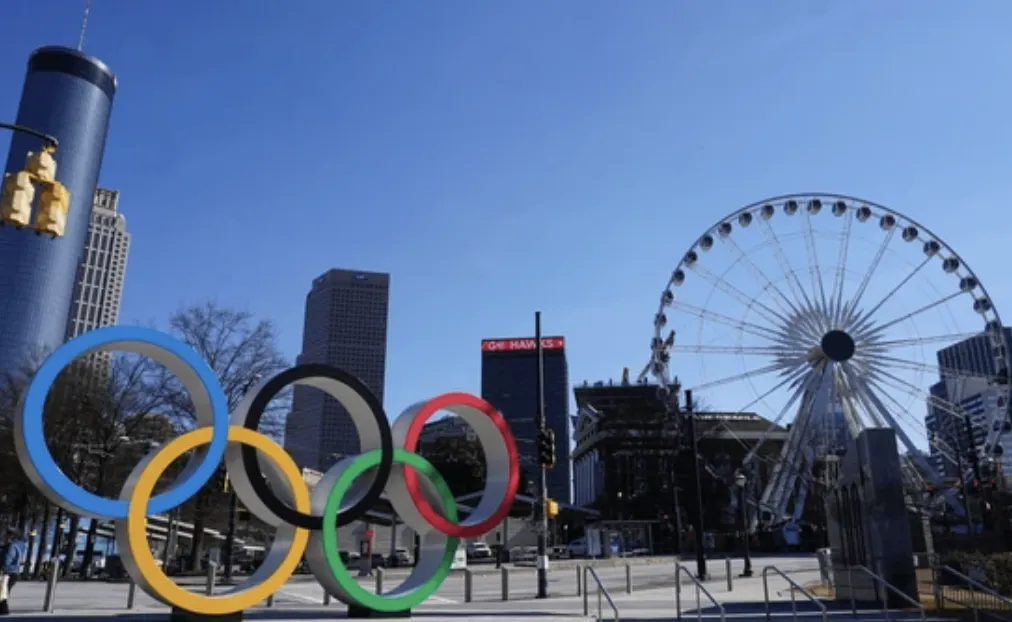
21-acre downtown park built for the 1996 Olympics. Site of the Centennial Olympic Park bombing (July 27, 1996). Now a peaceful hub with the Olympic Rings fountain, hosting free Wednesday-night concerts in summer.
Atlanta BeltLine
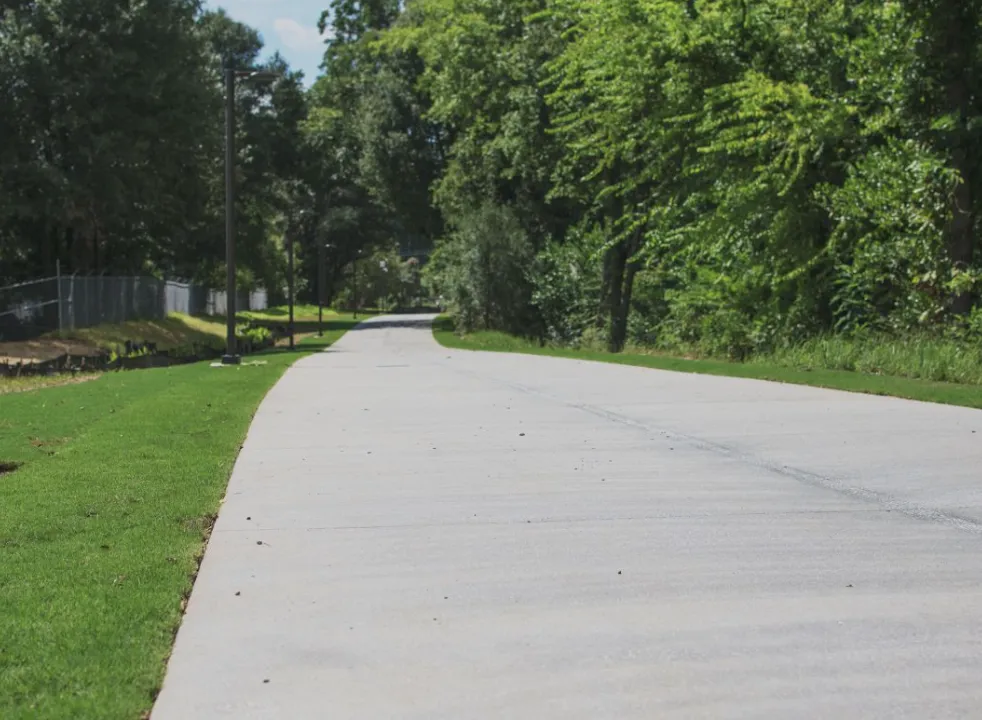
A 22-mile walking, biking, and (in development) light-rail loop circling the city’s intown neighborhoods. The Eastside Trail (3 miles) is the most-developed segment, connecting Inman Park, Old Fourth Ward, and Piedmont Park. Murals, breweries, food halls. Free.
Stone Mountain
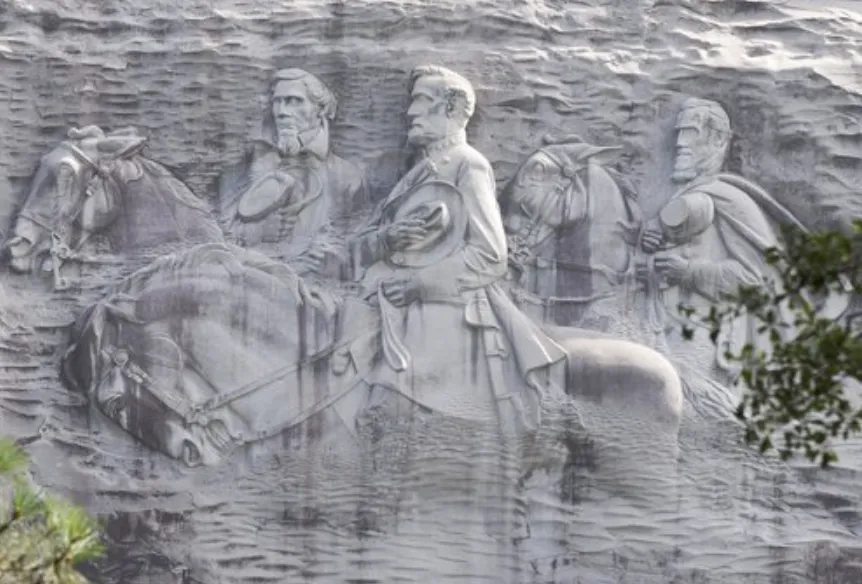
Massive granite outcrop 15 miles east of downtown. The Confederate carving on its face is historically and politically charged — the largest bas-relief sculpture in the world, completed in 1972, depicting Robert E. Lee, Jefferson Davis, and Stonewall Jackson. The state has been debating its removal for years. The hike to the summit (1.3 miles) is excellent.
Day Trip: Athens, Georgia
75 miles east. Home of the University of Georgia and Sanford Stadium — where Nigeria beat Argentina 3-2 in the 1996 Olympic men’s soccer final (more on this in The Story). Music scene (R.E.M., the B-52s started here).
Where to Eat and Drink
Soul Food and Southern Classics
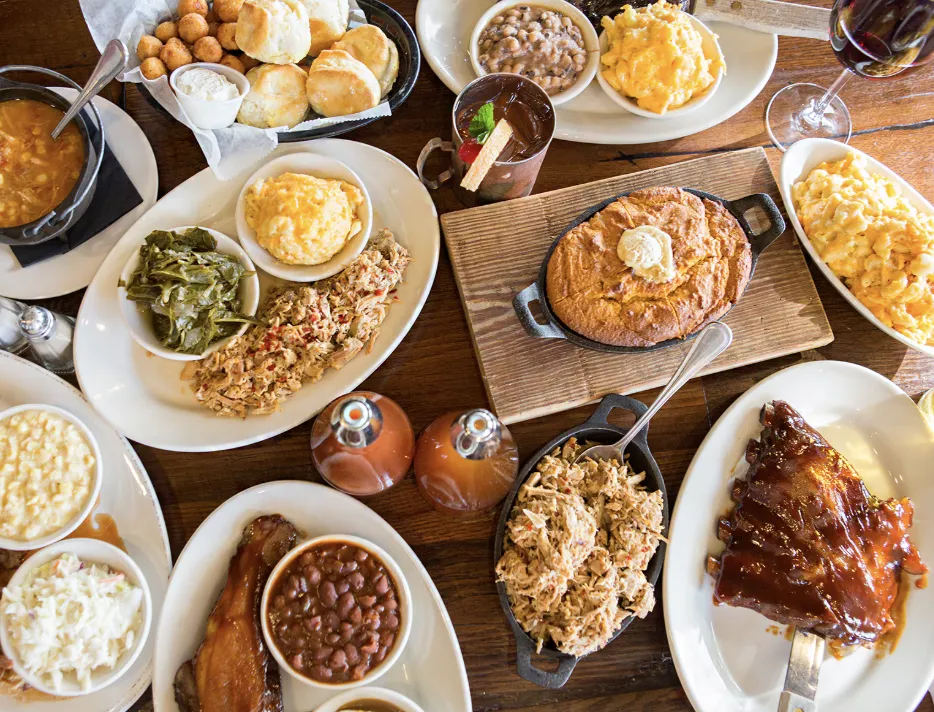
Mary Mac’s Tea Room (Midtown, since 1945). Atlanta’s most famous Southern restaurant — fried chicken, collards, mac and cheese, peach cobbler. The Tomato Pie is a peculiarity worth ordering. $25 per person.
Busy Bee Café (West End, since 1947). Soul food institution that fed the Civil Rights Movement leadership. Closed Mondays. $20 per plate.
Paschal’s (Castleberry Hill). The fried chicken that fed MLK and the SCLC during the 1960s. Still open, still excellent. $22 plate.
Atlanta-Specific
Atlanta-style Wings are flat-style, fried, and served at JR Crickets (multiple locations) or Wing Stop (chain). Lemon-pepper wings — Atlanta’s regional take — are now national, but they were invented here.
The Varsity (downtown, since 1928). The world’s largest drive-in restaurant. Famous for chili dogs, fried apple pie, and their absurd order-shouting culture: “What’ll ya have?” Cheap. Quintessential.
High-End Dining
Bacchanalia (Westside). Six-time AAA Five-Diamond restaurant. Tasting menu $220.
Staplehouse (Old Fourth Ward). Formerly the Atlanta restaurant of the Giving Kitchen non-profit. $145 tasting menu.
Aria (Buckhead). Continental American, white-tablecloth elegance. $120 per person.
The Fan Experience
FIFA Fan Festival — Atlanta: Confirmed at Centennial Olympic Park, downtown. Free entry. Big screens, food trucks, live music. Located within walking distance of the stadium itself — fans can walk from the Fan Festival to the stadium gates in 15 minutes.
Sports bars: Park Tavern (Piedmont Park, sunset patio), Stats (next to the stadium), The Albert (Inman Park). Brewhouse Cafe (Decatur) is the oldest soccer bar in town.
Atlanta United fan culture: Atlanta United FC entered MLS in 2017 and immediately broke the league’s all-time attendance record — a regular-season match against Toronto FC drew 72,243 in 2018. Their supporters group, Resurgentes (Latino) and Footie Mob (English-speaking), pack the stadium’s Supporters Section at every match. Pre-game gathering is at Brewhouse Cafe in Decatur or directly outside the stadium at the Battery Atlanta-style plazas for Atlanta United matches.
Latino fan culture: The Atlanta metro has the fastest-growing Hispanic population in the United States. Buford Highway (north of downtown) is the Latino, Asian, and immigrant restaurant corridor. For Mexico, Argentina, Colombia, or Honduras matches, this is where the parties happen.
The Story
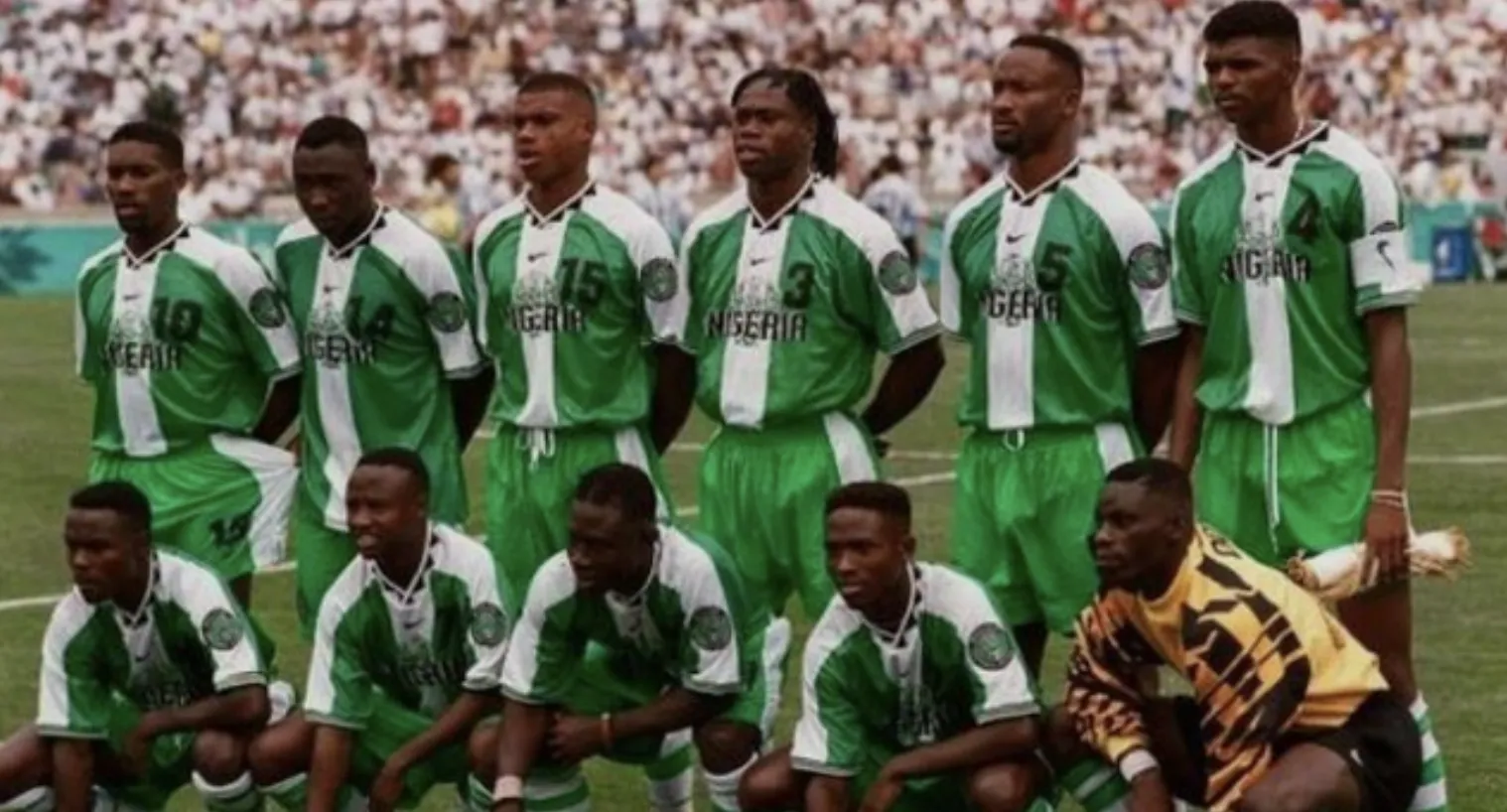
July 3, 1996. Sanford Stadium, Athens, Georgia. Nigeria vs. Argentina, 1996 Olympic Men’s Soccer Gold Medal Match.
Sanford Stadium is in Athens — the University of Georgia’s football venue, 75 miles east of Atlanta. It was the soccer venue for the 1996 Atlanta Olympics. 86,117 spectators packed into Sanford for the gold medal final, an Olympic record for any soccer match (men’s or women’s) until 2012.
Argentina were the favorites. Their squad, by Olympic rules, was an under-23 side with three over-age players. The Argentine line-up that day featured Roberto Sensini, Hernán Crespo, Claudio López, Marcelo Gallardo, Diego Simeone (over-age), and Javier Zanetti — a roster that would form the spine of the senior team for the next decade. They had eliminated Portugal in the semifinal.
Nigeria were the upstart. Coach Jo Bonfrère’s “Dream Team” had eliminated Brazil 4-3 in the semifinal — coming from 3-1 down with five minutes left, scoring in the 90th minute, the 94th minute, and again in extra time to advance. The squad featured Nwankwo Kanu (then a 20-year-old prodigy at Inter Milan), Daniel Amokachi, Sunday Oliseh, Celestine Babayaro, Taribo West, Tijani Babangida, and Emmanuel Amunike. The Atlanta heat — 90°F, 90% humidity, late afternoon kickoff — favored the Africans.
Argentina led 2-1 at the 74th minute. Crespo had scored, López had scored, the Argentine defense was holding. Then:
Minute 74: Daniel Amokachi equalized for Nigeria. 2-2.
Minute 90+1 (stoppage time): A Nigerian cross found Emmanuel Amunike in the box. He volleyed home from 8 yards. 3-2 Nigeria.
The whistle blew. Nigeria had become the first African nation in history to win an Olympic men’s soccer gold medal. Their players collapsed onto the Sanford Stadium pitch in disbelief. Coach Bonfrère, a Dutchman who had coached the side for two years, said in his post-match interview: “This is for every African boy who has ever picked up a football.”
The 1996 Nigeria team was nicknamed the “Atlanta ‘96 Dream Team”. Most of its players had careers in Europe lasting another decade. Kanu won the Champions League with Ajax months later, won two Premier League titles with Arsenal, and was twice African Footballer of the Year. Amunike won the AFCON. Babayaro played 250 matches for Chelsea and Newcastle. Taribo West played for AC Milan and Inter Milan.
Africa would not win another senior World Cup or Olympic men’s soccer gold for 26 years — until Morocco’s run to the 2022 World Cup semifinal in Qatar. The 1996 Nigerian gold remains the most consequential single tournament in African football history.
Sanford Stadium is still there, in Athens. It is the home of UGA football. The pitch where Amunike scored is still grass. The end zone where the celebration happened is now painted with the University of Georgia’s red logo. There’s no plaque commemorating the gold.
When Argentina plays at Mercedes-Benz Stadium on June 14, 2026, against Algeria, the conversation in Atlanta — among the city’s substantial African diaspora population, particularly Nigerian-American (Atlanta has the third-largest Nigerian population in the US, after Houston and DC) — will inevitably turn to the last time Argentina lost a major international match in Georgia. Different decade, different stadium, different generation. Same state. Same kit colors. Same story still being told.