Whenever anyone talks about “the highest number of live spectators in World Cup history,” the answer has remained unchanged for 32 years—the 1994 USA World Cup, with a total attendance of 3,587,538, averaging 68,991 per match. This figure still holds the highest total attendance record for a FIFA World Cup.
Even with the expansion of the World Cup to 32 teams and the increase in matches from 52 to 64 in 1998, this record still stands.
But by the summer of 2026, it may truly be ending its “32-year reign of solitude.”
I. FIFA’s “High-Stakes Gamble”: Why the 1994 USA?
According to official U.S. Soccer archives and Wikipedia, on July 4, 1988—American Independence Day—FIFA officially awarded the right to host the 1994 FIFA World Cup to the United States, surprising many international football observers.
The situation at the time was as follows:
-
The United States had no top-tier professional soccer league (the previous NASL had ceased operations in 1984);
-
American viewership for international football was widely questioned;
-
On the day of the vote, the United States received 10 votes from the FIFA Executive Committee, Morocco 7, and Brazil 2;
-
The main reason was that all proposed stadiums for the United States were already built and in use, while the Brazilian proposal had stadium deficiencies, and the Moroccan proposal required the construction of 9 new stadiums.
A key condition given by FIFA was that the United States must use the World Cup as an opportunity to establish a professional soccer league—this directly led to the formation of Major League Soccer (MLS) in 1993 and its inception in 1996. Looking back 30 years later, this decision can almost be considered the true starting point of modern American soccer history.
II. 52 Matches, 9 Cities, Nearly Sold-Out Games
From June 17 to July 17, 1994, the World Cup was held in 9 stadiums across 9 cities in the United States:
Pasadena Rose Bowl – Venue for the Final
New York/New Jersey Giants Stadium
Chicago Soldier Stadium
Dallas Cotton Bowl
Pontiac Silver Dome Stadium (Indoor)
Foxboro Stadium (Predecessor to the New England Patriots’ home stadium)
Orlando Civic Stadium
Washington RFK Stadium
Stanford Stadium
The statistics for this tournament remain astonishing:
52 matches, total attendance 3,587,538;
Average attendance per match 68,991**, nearly 96% of stadium capacity;
- The final at the Rose Bowl attracted a record-breaking 94,194 spectators—the highest attendance for a World Cup final since 1966;
- The four matches at the Pontiac Silver Dome became the first World Cup matches to be played indoors.
It’s worth noting that although Pontiac was an indoor stadium, FIFA insisted on using natural grass—to which researchers developed the world’s first modular, movable turf solution, a technology widely adopted by stadiums worldwide for many years afterward.
III. The Final: Rossi Baggio’s Missed Shot
July 17, 1994, the Rose Bowl in Pasadena, USA, was sweltering—Brazil vs. Italy.
This match went down in history for two reasons:
Firstly, it was the first World Cup final to be decided by a penalty shootout. The score was 0-0 after 120 minutes of regular time and extra time, leading to a penalty shootout in the sweltering heat.
Secondly, this was the night Roberto Baggio, then the 1993 FIFA World Player of the Year, missed a penalty when his team needed him most. With Italy trailing 1-3 and needing him to equalize, Baggio’s penalty flew high over the crossbar—his “magical right foot” ended in a silent farewell.
According to Wikipedia and several historical publications:
-
Brazil ultimately won the final 3-2 on penalties;
-
Brazil thus became the first country in World Cup history to win four titles;
-
This was their first victory since 1970 (a 24-year gap);
-
This was also Brazil’s first time lifting the new FIFA World Cup trophy—their previous three titles were all won with the old Jules Rimet Trophy (1958, 1962, 1970);
-
Brazil dedicated their victory to Ayrton Senna, the Formula One legend who died on May 1st at the Italian Grand Prix in San Marino.
Brazilian striker Romario won the Ballon d’Or with 5 goals and an MVP performance; Bulgaria’s Hristo Stoichkov and Russia’s Oleg Salenko tied for the Golden Boot, each scoring 6 goals—Salenko’s 5 goals in Russia’s group stage match against Cameroon still hold the World Cup record for most goals in a single match.
IV. Tragic Moment: The Death of Escobar
The 1994 World Cup wasn’t all laughter.
Colombian defender Andres Escobar inadvertently scored an own goal in a group stage match against hosts the United States, helping the US win 1-2. Colombia was eliminated from the group stage.
Ten days after the match, Escobar was shot and killed in the parking lot of a nightclub in Medellin, Colombia. Police investigations pointed to local drug cartels—it was alleged that Escobar’s own goal cost them a large sum of money gambling. This incident became one of the most heartbreaking off-field tragedies in World Cup history, and brought the profound question of “the relationship between football and political/social violence” back to the forefront of global media attention.
V. The “Cutting-Edge Technology” and Firsts of That World Cup
Compiled from Wikipedia and U.S. Soccer:
-
First World Cup match held indoors in a stadium (Pontiac Silver Dome, 4 matches);
-
First World Cup champion decided by penalty shootout;
-
First time group stage wins were valued at 3 points instead of 2—a reform subsequently adopted by leagues worldwide;
-
First goalkeeper sent off with a red card in the World Cup finals (Italian goalkeeper Palicara was sent off for handball against Norway);
-
Diego Maradona was expelled from the tournament for a positive drug test—one of the most famous anti-doping cases in World Cup history;
-
42-year-old Cameroonian player Roger Milla scored a goal against Russia, becoming the oldest goalscorer and player to appear in a World Cup match.
VI. “Jabulani’s Predecessor”: The Adidas Questra Ball
The official ball of this World Cup was the Adidas Questra, named after the Latin word “quaerere” (to seek, to yearn for the stars)—a tribute to America’s cultural symbolism in space exploration. It was lighter than previous World Cup balls, and forwards generally praised its ball control, but goalkeepers complained about its unpredictability in the air. This “forwards love, goalkeepers complain” pattern was repeated 16 years later with the Jabulani ball at the South Africa World Cup.
VII. The Starting Point of American Soccer: MLS and Thirty Years of Development
The most direct legacy of the 1994 World Cup for the United States was the Major League Soccer.
Major League Soccer was established in 1993 and launched in 1996. From its initial 10 teams, it has grown to 30 clubs today, making it the longest-running men’s professional soccer league in American history. Messi’s move to Inter Miami in 2023 is the latest chapter in this narrative chain stretching from 1994 to 2026.
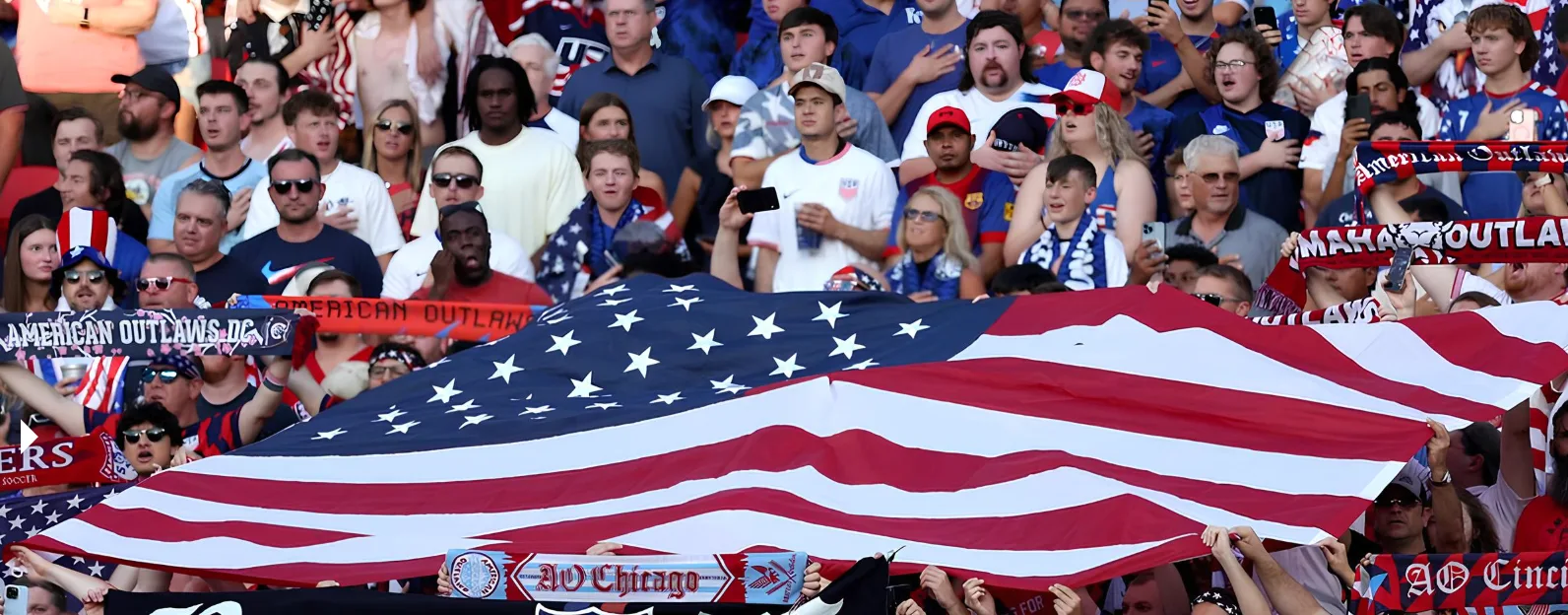
Interestingly, the venue for the 1994 World Cup final—Pasadena’s Rose Bowl—is not among the hosts for the 2026 World Cup; instead, the final will be moved to Metropolitan Life Stadium in New Jersey. However, other metropolitan areas hosting the 1994 final (such as New York/New Jersey, Los Angeles, Dallas, Houston, Philadelphia, Boston, and the San Francisco Bay Area) will all be re-hosted in 2026 with upgraded versions.
VIII. 3,587,538: A Number Destined to Be Rewritten
According to information released by FIFA and multiple media outlets in April, the 2026 World Cup has already sold over 1 million tickets, with cumulative ticket applications exceeding 500 million, and a total of over 6 million tickets expected to be released.
In terms of venue capacity, most host stadiums in 2026 will have a single-match capacity exceeding 60,000—the Metropolitan Life Stadium, the venue for the final, has a capacity of 82,500. FIFA has repeatedly stated publicly that the 1994 record of 3.5 million cumulative spectators will “almost certainly” be broken in this World Cup.
A new Copa America World Cup is about to step onto an even larger scale, building upon the achievements of the previous Copa America.
And for many American fans who first watched a match live in the summer of 1994, returning to the stadium 32 years later—may well be the moment that initial spark truly ignited football on this land.
Information sources: Wikipedia entries for “1994 FIFA World Cup” and “1994 FIFA World Cup Final”, U.S. Soccer official archives, HISTORY channel’s “When Was the Last Time the US Hosted the World Cup?”, EBSCO Research’s 1994 World Cup research entry, Axios San Francisco’s retrospective report on the Stanford Stadium renovation, and U.S. Soccer’s official “Winning the Hosting Rights on July 4th” feature.