The Short Version
Monterrey hosts 4 matches of the 2026 World Cup at Estadio BBVA — officially renamed Estadio Monterrey by FIFA — between June 14 and approximately June 29. Texas fans will reach Monterrey by driving across the Laredo border: Estadio BBVA sits 200 kilometers (125 miles) south of the US border, a 2.5-hour drive from Laredo, TX. The four matches include Tunisia’s group opener on June 14 (versus a UEFA playoff winner), Tunisia vs Japan on June 19/20, South Africa vs South Korea on June 24 (Group A’s final fixture, the most-watched Monterrey match), and a Round of 32 knockout fixture later. The stadium is nicknamed El Gigante de Acero (The Steel Giant) — 50,113 capacity, Mexico’s steepest stands at 34 degrees, seats just nine meters from the pitch. June temperatures regularly hit 86°F (30°C+), making Monterrey the hottest of the three Mexican host cities.
The Three Things You Need to Know Before Anything Else
Monterrey’s World Cup experience has three operational facts that need to be on the surface, not buried.
One — driving from Texas is the most efficient route for many US fans. Estadio BBVA sits 200 kilometers (125 miles) south of the US border via the Mexico-85D Federal Highway. From Laredo, TX, it’s a 2.5-hour drive in normal traffic. Compare this to: Mexico City (1,000 km / 13-hour drive or 2.5-hour flight + Mexico City taxi traffic), or even Houston (665 km / 9-hour drive). For Texans, Oklahomans, and Louisianans, Monterrey is closer than Mexico City — and dramatically cheaper than flying to either. You’ll need a US passport, a Mexican FMM (Forma Migratoria Múltiple — free, issued at the border crossing), and Mexican auto insurance ($15-30 USD per day, sold at every Laredo border-crossing service plaza).
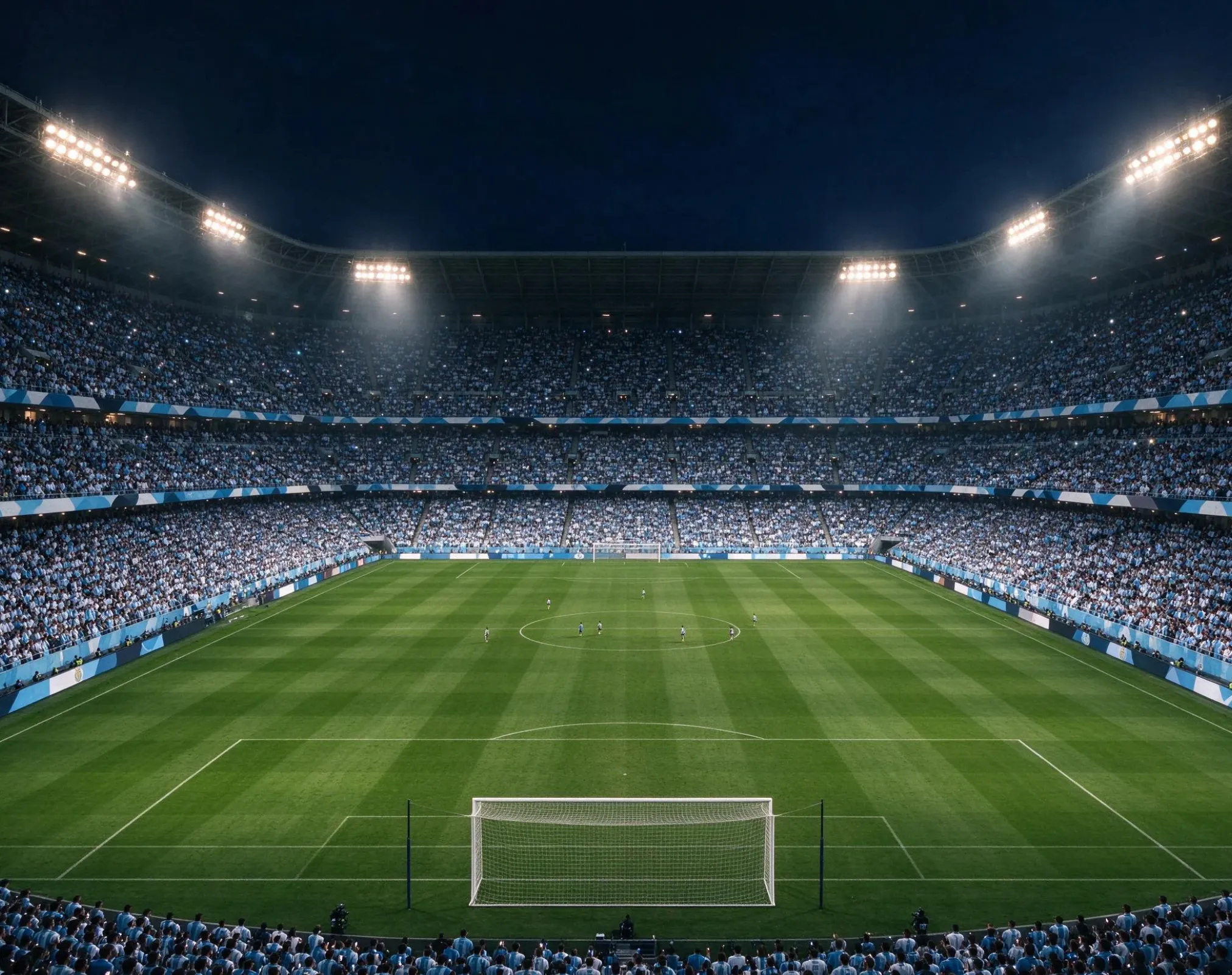
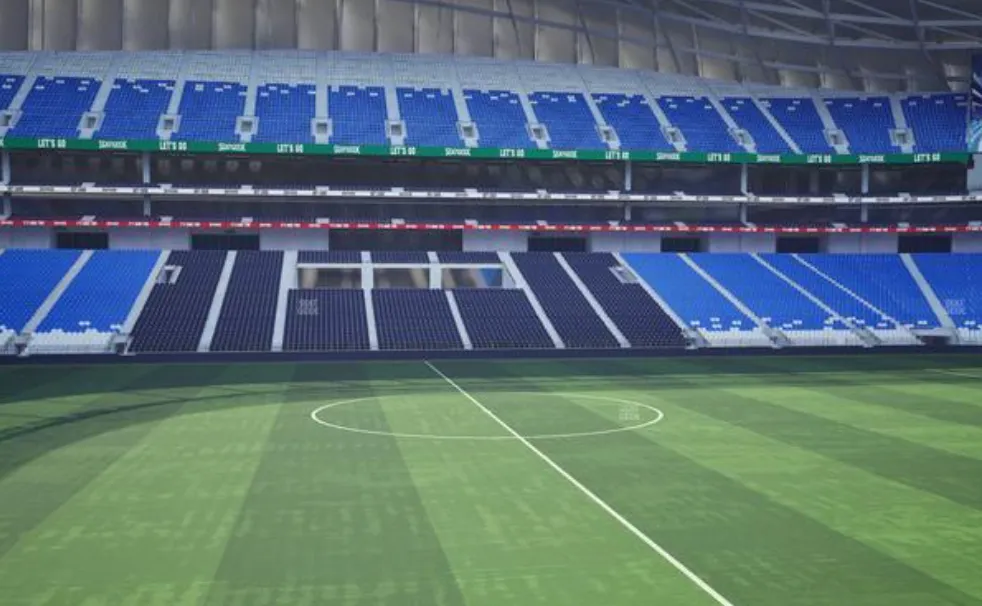
Two — the stadium is called “The Steel Giant.” Locally known as El Gigante de Acero, Estadio BBVA is the home of CF Monterrey (Rayados) and one of three Mexican host venues alongside Estadio Azteca (Mexico City) and Estadio Akron (Guadalajara). During the World Cup, FIFA’s neutral-name policy renames it Estadio Monterrey. Its defining features: Mexico’s steepest stands at 34 degrees of inclination, seats positioned just 9 meters from the pitch at their closest point, and a striking cantilever roof framing the Cerro de la Silla mountain backdrop. The stadium hosted CONCACAF Champions Cup finals twice and the 2022 CONCACAF Women’s Championship final.
Three — June 24 is the busiest match: South Africa vs South Korea. Three of the four Monterrey matches involve Group F (Tunisia and Japan), but the marquee fixture is the South Africa vs South Korea Group A match on June 24. Both teams arrive in Monterrey with significant storylines: Cho Wi-je is South Korea’s freshly-promoted World Cup centre-back (a training partner two weeks ago), and South Africa is the team whose departure was delayed by visa issues. For both teams, this is their third and final group-stage match — winner advances, loser likely flies home.
The Four Matches: Who Plays in Monterrey
Estadio BBVA hosts 4 World Cup matches. Goal.com has the full schedule; Sky Sports tournament page confirms kickoff times as matches finalize. The official FIFA Monterrey host-city page is the source of record.
| Date | Match | Kickoff (ET) | Demand |
|---|---|---|---|
| June 14 | UEFA Playoff Winner B vs Tunisia | 10:00 PM | Monterrey's opener; Group F debut |
| June 19/20 | Tunisia vs Japan | 12:00 AM ET (June 20) | Late-night kickoff; Japanese fans expected in volume |
| June 24 | South Africa vs South Korea | 9:00 PM | Peak. Group A finale; both teams need points to advance |
| ~June 29 | Round of 32 (Group F winner vs Group C runner-up) | TBC | Knockout; potential Brazil opponent if Brazil finishes second in Group C |
The June 24 match is the demand peak. Cho Wi-je — South Korea’s late-call-up centre-back who was a training partner two weeks before being promoted to the 26-man squad — could see his first World Cup minutes in this fixture. South Africa, whose World Cup departure was delayed by visa issues, arrives in Monterrey having already played matches in Mexico City (June 11 vs Mexico) and Atlanta (June 18 vs Czechia). Both teams will have known their qualification picture by kickoff: if either has already qualified, the match becomes a positioning fixture; if both still need points, it’s potentially the most intense match of Monterrey’s tournament.
The Round of 32 fixture is the bracket question. The match-up is determined by Group F winner versus Group C runner-up. Group C contains Brazil, Morocco, and others — so if Brazil finishes second in Group C (a real possibility given Morocco’s strong squad and Brazil’s recent form), Brazil would play in Monterrey. The fixture date is approximately June 29, exact kickoff time pending FIFA confirmation.
How to Actually Get to Monterrey
Three practical ways to reach Monterrey. Hierarchy from cheapest to fastest:
Option 1: Drive from Texas (cheapest)
The Laredo-Monterrey drive is the most efficient US-fan route. From Laredo, TX:
- Cross the border at the Bridge II/Colombia crossing: avoid Bridge I (city center, longer waits). The newer Colombia crossing on the outskirts is typically 30-60 minutes faster.
- Mexican FMM tourist permit: issued at the border, free for stays under 7 days, ~$30 USD for 7-180 days. Bring US passport.
- Mexican auto insurance: mandatory. Buy at any border service plaza (HCV, Sanborn’s, MexInsurance) for $15-30 USD/day. Covers liability and damage; US insurance does NOT extend across the border.
- Take Mexico-85D (toll highway): 200 km / 125 miles, 2.5 hours. Tolls total ~$15 USD; 4 toll plazas.
- Avoid the free Mexico-85 (non-toll): 3.5+ hours; not safer in cost terms once you account for fuel.
The drive crosses through Tamaulipas state. US State Department lists Tamaulipas as a Level 4 - Do Not Travel advisory due to crime concerns — important context, though border tourism on the established Laredo-Monterrey toll highway corridor is significantly safer than off-highway travel.
Option 2: Fly to Monterrey (MTY)
Monterrey International Airport (MTY) sits 25 km / 15 miles north of downtown. Direct flights:
- From Texas: Houston (45 min), Dallas (1h 15min), Austin (1h 30min), San Antonio (1h 15min). United, American, Aeroméxico all fly direct.
- From other US cities: Atlanta (2h 30min via Aeroméxico), Chicago (3h), Los Angeles (3h 30min) — fewer daily flights, often 1-stop through Houston.
- Airport-to-stadium: no train. Take official airport taxi or Uber/Didi (~$25-40 USD). 30-45 minutes depending on traffic.
Option 3: Fly to Mexico City + connect
Slowest route. Not recommended unless you’re already going to Mexico City matches. Aeroméxico operates regular Monterrey shuttles from MEX (Mexico City).
How to Get to the Stadium
Estadio BBVA is in Guadalupe, a suburb of greater Monterrey. From the city center, the venue is 25-35 minutes by car.
Option 1: Metrorrey Line 1 (recommended)
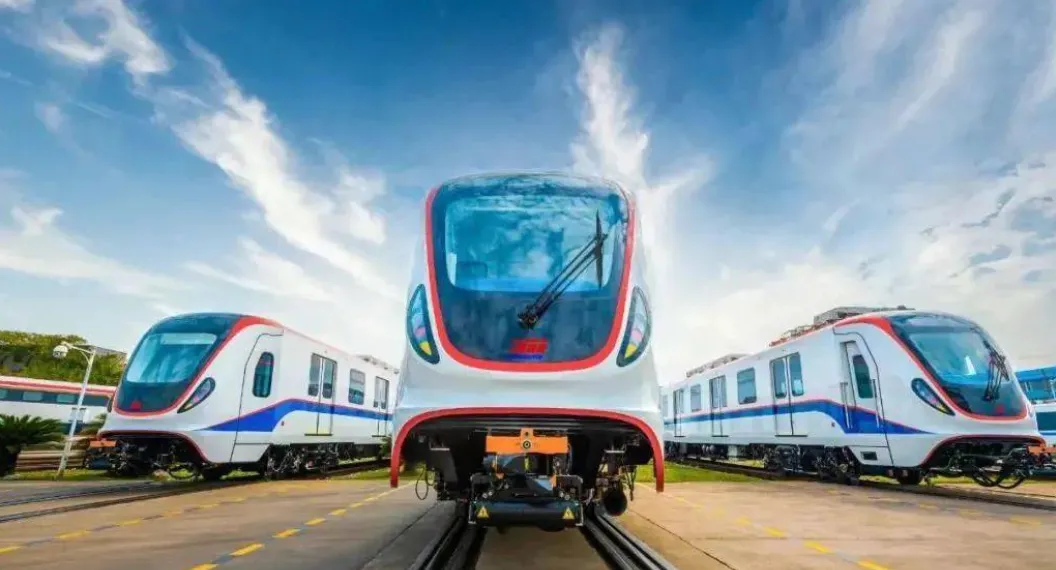
Metrorrey is Monterrey’s metro system — clean, safe, well-signposted. The route:
- Take Line 1 (Yellow) from anywhere in central Monterrey
- Exit at Exposición Station — the stadium’s primary station
- Walk through “Fan Walk”: a dedicated pedestrian walkway through La Pastora Park leading directly to the stadium gates. ~10 minutes
- Cost:
$10 MXN ($0.55 USD) per ride. Tap-to-pay via Metrorrey Card.
The Fan Walk through La Pastora Park is one of the best stadium-approach experiences of any Mexican venue. The park is partially shaded (tree cover) and features pre-match food vendors, official merchandise stalls, and a fan-engagement zone. Allow 30-45 minutes from Exposición Station to your seat for the walk + security + concourse.
Option 2: Bus / Rideshare
Buses 214, 223, TME, and 093 stop at the Pablo Livas (Estadio BBVA) bus stop, a 2-minute walk from the stadium gates. Uber and Didi are widely available — match-day drop-off areas are designated on Avenida Constitución (Highway 85D), with a 5-minute walk to the gates.
Option 3: Drive and Park
Pre-purchase a spot through ParkHub or the Estadio BBVA official site. Match-day on-site parking runs $200-400 MXN ($12-25 USD). Allow 45+ minutes to exit post-match due to single-exit funneling.
The Stadium’s Other Name and 9-Meter Pitch Proximity
The official FIFA name for the venue is Estadio Monterrey. The commercial name Estadio BBVA is suspended during World Cup play under FIFA’s neutral-name policy (same mechanism as Atlanta’s Mercedes-Benz Stadium → Atlanta Stadium, or Miami’s Hard Rock Stadium → Miami Stadium). Both names refer to the same building at Av. Pablo Livas 2011, Guadalupe.
The stadium’s defining feature is its 34-degree seat inclination — the steepest in Mexican professional football. This means closest seats are positioned just 9 meters from the pitch. By comparison, Estadio Azteca’s closest seats sit 25 meters from the pitch; Mercedes-Benz Stadium’s closest sit 20 meters. The 9-meter proximity makes Estadio BBVA one of the most intimate large-capacity venues in international football.
The stadium hosts 50,113 spectators for FIFA configuration (53,500 for regular CF Monterrey matches). Built in 2015 and opened with a Coldplay concert, it now hosts:
- CF Monterrey (Rayados) regular-season Liga MX matches
- The Clásico Regio — Rayados vs Tigres UANL, one of Latin America’s most intense derbies (54,000+ attendance record)
- Mexico national team matches (including World Cup qualifying)
- LEED Gold certification for sustainability operations
- Coldplay, The Weeknd, Shakira, and other major international concerts
The new Musco LED lighting system installed in late 2025 brings the stadium to FIFA Lighting Standard A — the highest tier — with dimming capability that enables pre-match color shows.
The FIFA Stress Test in March 2026
Monterrey’s preparation for the World Cup was unusual. In March 2026, FIFA designated Estadio BBVA as one of two Mexican venues (Guadalajara’s Estadio Akron was the other) for the 2026 World Cup intercontinental playoff matches. Each city hosted two playoff matches during the FIFA March window — the only international break before the World Cup itself.
The stress test served three purposes: testing the stadium’s logistics under tournament conditions, verifying the new Musco LED lighting, and exercising the security protocols. The June 14 match opening Monterrey’s World Cup is therefore not a green-field debut — the stadium has already run a tournament-level operation. The contrast with venues like Mercedes-Benz Stadium in Atlanta (which hosted the 2024 Copa América Mexico vs Ecuador match but not a stress test specifically tied to 2026) is significant. Monterrey’s operational team has 3 months of fresh tournament experience.
Weather: 86°F Heat, the Hottest Mexican Host
Monterrey is the hottest of Mexico’s three host cities by a wide margin. Geographic context:
- Mexico City: 7,350 ft / 2,240 m altitude, temperate (75-85°F in June)
- Guadalajara: 5,138 ft / 1,566 m, mild (78-87°F in June)
- Monterrey: 1,772 ft / 540 m, hot (86-95°F+ in June)
Monterrey’s June-July weather pattern:
- Mornings (6 AM - 11 AM): 75-82°F, humid (60-70%)
- Afternoons (11 AM - 5 PM): 92-98°F, humidity 70-80%, heat index easily 100-105°F+
- Late afternoon (5 PM - 9 PM): 88-92°F, humidity slowly dropping
- Evenings (9 PM - 11 PM): 80-86°F, humidity 65%, manageable
The June 14, 19/20, and 24 kickoffs are 10 PM / midnight / 9 PM ET — meaning local Monterrey time of 8 PM / 11 PM / 7 PM. All three group-stage kickoffs intentionally fall outside peak heat. The cantilevered roof at Estadio BBVA provides shade across approximately 60% of the bowl — check your section’s sun exposure when buying tickets. Heat impact for fans walking from Exposición Station through La Pastora Park is the most exposed segment.
Where to Stay
Monterrey’s lodging options divide into four price-and-location tiers:
- San Pedro Garza García — the wealthiest suburb in Mexico. Hotels: Live Aqua Monterrey, Quinta Real Monterrey, [Hampton Inn San Pedro]. $200-400 USD per night. Best for fans optimizing for nightlife, shopping, and restaurants. 15-25 minute drive to stadium.
- Centro / Macroplaza — historic core, walking distance to Metrorrey Line 1. Hotels: Holiday Inn Monterrey Centro, Hotel Real Plaza Monterrey, Krystal Monterrey. $80-150 USD per night. Best for fans wanting walkable city and direct metro to stadium.
- Valle Oriente (near stadium) — modern business district 15 minutes from Estadio BBVA. Hotels: Hyatt Regency Monterrey, Holiday Inn Express Valle Oriente. $150-250 USD. Best for fans optimizing for stadium proximity.
- Airport / North — cheaper, 25-30 minutes from stadium. Hotels: Hilton Garden Inn Monterrey Norte, Fairfield Inn. $80-130 USD. Best for fly-in fans on short stays.
Monterrey’s official tourism site is the cleanest reference for neighborhood-specific planning.
Food and Culture
Monterrey has the most distinct regional cuisine of any Mexican host city. Three things to eat:
- Cabrito (slow-roasted goat kid) — the Monterrey signature. El Rey del Cabrito in Centro is the iconic version; Cabrito Don Beto in San Pedro is more polished. ~$25-40 USD per person.
- Arrachera (marinated skirt steak, grilled) — Monterrey’s contribution to grill culture. Found at every parrilla restaurant; Don Diego is well-known. ~$20-30 USD.
- Norteño cabuches (cactus flower buds) — a regional vegetable rare in the rest of Mexico. Try at any Centro market.
Monterrey culture is unlike Mexico City’s. It’s industrial-business (FEMSA, CEMEX, Banorte are all headquartered here), American-influenced via the border, drier and hotter than the southern Mexican plateau. The local accent (“regiomontano”) is faster and sharper than Mexico City Spanish. Fans from Tucson, San Antonio, or Houston will find Monterrey feels operationally closer to a Texas city than to Mexico City.
Entry and Mobility
Entry to Mexico (for US passport holders) is the simplest of any 2026 World Cup country:
- US passport holders: Bring passport. FMM tourist permit issued at border or on arrival. No advance application.
- ESTA-equivalent in Mexico: not applicable. Mexico does not require advance permits for most nationalities.
- Argentine, Brazilian, Chilean, and most South American passports: 180-day visa-free entry. Bring passport only.
- Most European passports: 180-day visa-free entry.
For Korean fans flying to MTY directly: Korean Air does not operate direct MTY flights; the route is Seoul → Houston (United/Korean Air) → Monterrey. Flight time 22-26 hours total.
Money: $15 Border Tolls, $40 Cabrito, $20 Metrorrey
Practical cost snapshot for a 4-day Monterrey trip in USD:
- Border crossing tolls (drive route): $15
- Mexican auto insurance (drive route): $20-25 / day = $80-100 for 4 days
- MTY airport taxi to hotel: $25-40
- Metrorrey + bus: $5-10 per day
- Estadio BBVA pre-purchased parking: $12-25 per match
- Mid-range hotel, San Pedro or Valle Oriente, tournament dates: $150-300 per night
- Cabrito dinner: $25-40 per person
- Stadium concessions: $8-12 per person (significantly cheaper than US venues)
- Match-day total: $40-80 per person (food + transit + drinks)
FAQ
Can I drive from Texas to Monterrey for the World Cup? Yes — Estadio BBVA is 200 km / 125 miles south of the US border, a 2.5-hour drive from Laredo, TX. Bring US passport, get a Mexican FMM tourist permit at the border (free for under 7 days), buy Mexican auto insurance ($15-30 USD/day at border plazas), and take Mexico-85D toll highway. The Bridge II/Colombia border crossing is faster than Bridge I (downtown Laredo). Total cost: ~$15 in tolls + insurance + fuel.
How do I get to Estadio BBVA from downtown Monterrey? Three options. Metrorrey Line 1 (Yellow) is recommended: take it to Exposición Station, then walk through “Fan Walk” — a dedicated pedestrian path through La Pastora Park — directly to the stadium gates (~10 minutes). Bus routes 214, 223, TME, and 093 also stop at Pablo Livas (Estadio BBVA), a 2-minute walk from the gates. Driving requires pre-purchased parking ($12-25 USD).
How many matches does Monterrey host? Four, all at Estadio BBVA (officially “Estadio Monterrey”). Three group-stage matches (June 14 UEFA Playoff Winner B vs Tunisia, June 19/20 Tunisia vs Japan, June 24 South Africa vs South Korea) and one Round of 32 knockout fixture around June 29 (Group F winner vs Group C runner-up).
What is “Estadio Monterrey” vs Estadio BBVA? Same building. FIFA’s neutral-name policy renames commercial-naming venues for tournament play. Both names refer to Av. Pablo Livas 2011, Guadalupe, Nuevo León. The stadium is nicknamed El Gigante de Acero (The Steel Giant) by locals.
Why is Monterrey called Mexico’s “Steel Giant” city? Monterrey is Mexico’s industrial and business capital, home to FEMSA, CEMEX, Banorte, and dozens of major industrial firms. The “Steel Giant” nickname for Estadio BBVA reflects this industrial heritage — the stadium’s striking exterior was designed to evoke the city’s industrial architecture, and the surrounding Cerro de la Silla mountain skyline.
What is the FIFA stress test that already happened in Monterrey? In March 2026, FIFA designated Estadio BBVA as one of two Mexican venues for the 2026 World Cup intercontinental playoff matches. Estadio BBVA hosted two playoff matches during the FIFA March window. The stress test verified stadium logistics, the new Musco LED lighting system (FIFA Lighting Standard A), and security protocols. Monterrey’s operational team has 3 months of fresh tournament-level experience.
How hot is Monterrey in June? 86-95°F (30-35°C) afternoons, 80-86°F evenings. Humidity 65-80%. Heat index can reach 100-105°F in afternoons. All three Monterrey group-stage kickoffs are scheduled outside peak heat (8 PM, 11 PM, 7 PM local time). The cantilevered roof provides shade across approximately 60% of the bowl.
Where should I stay for the World Cup in Monterrey? San Pedro Garza García (premium, $200-400 USD/night) for nightlife and restaurants. Centro / Macroplaza ($80-150) for historic core and walkable city. Valle Oriente ($150-250) for stadium proximity. Airport / North ($80-130) for fly-in convenience.
Do I need a visa to visit Mexico for the World Cup? Most nationalities — US, Canadian, European, most South American, Australian, New Zealand, Japanese, South Korean — receive 180-day visa-free entry. Just bring your passport and complete the FMM tourist permit at the border or on arrival.
Is the Round of 32 match in Monterrey likely to feature Brazil? Possible. The Monterrey Round of 32 fixture pairs the Group F winner against the Group C runner-up. Group C contains Brazil, Morocco, and others. If Brazil finishes second in Group C — a plausible scenario given Morocco’s strong squad — Brazil would play their Round of 32 match in Monterrey on approximately June 29.
Which other Mexican cities host the 2026 World Cup? Mexico City (Estadio Azteca / Estadio Banorte — 5 matches including the June 11 opener and the third-place playoff) and Guadalajara (Estadio Akron — 4 matches including all three of South Korea’s group games and Mexico’s June 18 match). Monterrey is the northernmost Mexican host city.
Related Articles
- “A Dream.” Korea’s Training Partner Becomes a World Cup Player. — Cho Wi-je is South Korea’s centre-back replacement. South Korea plays its Group A finale at Estadio BBVA Monterrey on June 24 — Cho Wi-je’s potential World Cup debut (player-injury cross-cluster)
- South Africa Got a Public Sendoff. Then the Charter Couldn’t Leave. — South Africa’s chaotic pre-tournament travel, with its third group match landing in Monterrey on June 24 — the same fixture Cho Wi-je’s South Korea plays (player-injury cross-cluster)
- Why You Can’t Uber to Atlanta Stadium During the World Cup. — Atlanta hosts South Africa vs Czechia on June 18, the Group A fixture between Monterrey’s June 24 South Africa match and Mexico City’s June 11 opener (host-city cluster)
Official sources (FIFA, Estadio BBVA, Metrorrey, Monterrey Tourism, US Embassy Mexico City, Sky Sports, Goal.com, futbolupdate) are linked inline in the relevant sections above.
About the author: Diego Martínez is a football correspondent at La Redonda, the Buenos Aires outlet founded in 2009 specialising in South American football, CONMEBOL, and CONCACAF tournaments. He has covered Mexican national-team and Liga MX football from venues across the country since 2014. Contact: diego.martinez@laredonda.com.ar · LinkedIn: /in/diegomartinez-laredonda · X: @DiegoLaRedonda