The Short Version
On Saturday, May 30, 2026, South Africa’s national football team — Bafana Bafana — was given a public sendoff in Johannesburg ahead of their first FIFA World Cup appearance since hosting the 2010 tournament. The chartered flight from OR Tambo Airport to Mexico City was scheduled for Sunday morning, May 31. It didn’t leave. Visa challenges affecting some players and officials kept the squad grounded in Johannesburg for 24 hours. Sports Minister Gayton McKenzie called it “embarrassing and grossly unfair” and posted “We are being made to look like fools.” Eight hours later he confirmed all players had received their USA visas, with only an assistant coach, team doctor, head of security, and one analyst still pending. The charter departed Monday, June 1. South Africa opens Group A against co-host Mexico at Estadio Azteca on June 11 — the tournament’s official opening fixture.
Saturday: The Sendoff
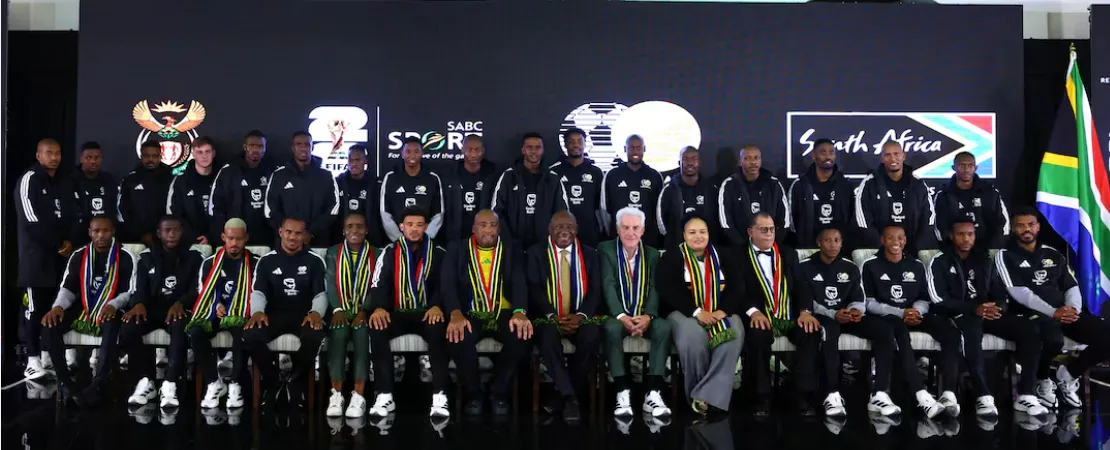
The South African Football Association staged the kind of public sendoff that defines a federation reclaiming its place at football’s biggest table. Fans filled the streets outside OR Tambo Airport. The squad wore matching tracksuits. Hugo Broos, the 73-year-old Belgian who has coached Bafana Bafana since 2021, posed with each of the 26 players he had named to the World Cup squad five days earlier. National television covered the event live. For South Africa, this is their first World Cup appearance since 2010 — the year they became the first African nation to host the tournament. Sixteen years of waiting was ending. The flight to Mexico City was scheduled for the next morning.
It didn’t leave.
Sunday: The Charter Didn’t Move
Sunday morning, May 31, 2026, the chartered flight from OR Tambo to Mexico City — paid for by SAFA, the South African Football Association — remained on the tarmac. Visa challenges affecting an unspecified number of players and team staff prevented departure. SAFA released a brief statement: “The South African senior men’s national team has experienced challenges regarding visas for some players and officials, and as a result the group could not travel to North America.”
The South African press response was immediate. The Sports Minister responded faster.
The Minister’s Two Tweets
Gayton McKenzie, South Africa’s Minister of Sports, Arts and Culture, posted to X within hours: the saga was “embarrassing and grossly unfair.” A follow-up: “We are being made to look like fools.”
Within South Africa, McKenzie’s response carried two meanings simultaneously. As a politician, he framed the visa issue as a foreign administrative failure — placing the problem squarely outside SAFA’s control. As a fan of the team, he expressed what every South African watching the spectacle felt: the team was being denied a moment they had waited 16 years to live.
His third tweet, posted Sunday evening, defused the urgency: “All Bafana Bafana players received their visas to travel to the USA, outstanding is assistant coach, team doctor, head of security and one analyst. The charter will leave tomorrow.”
Four non-playing staff members had not yet received their US visas. The 26 players had. The charter departed Monday, June 1, 2026, with the four missing staff to follow once their applications were processed.
Whose Visas? US, Not Mexico
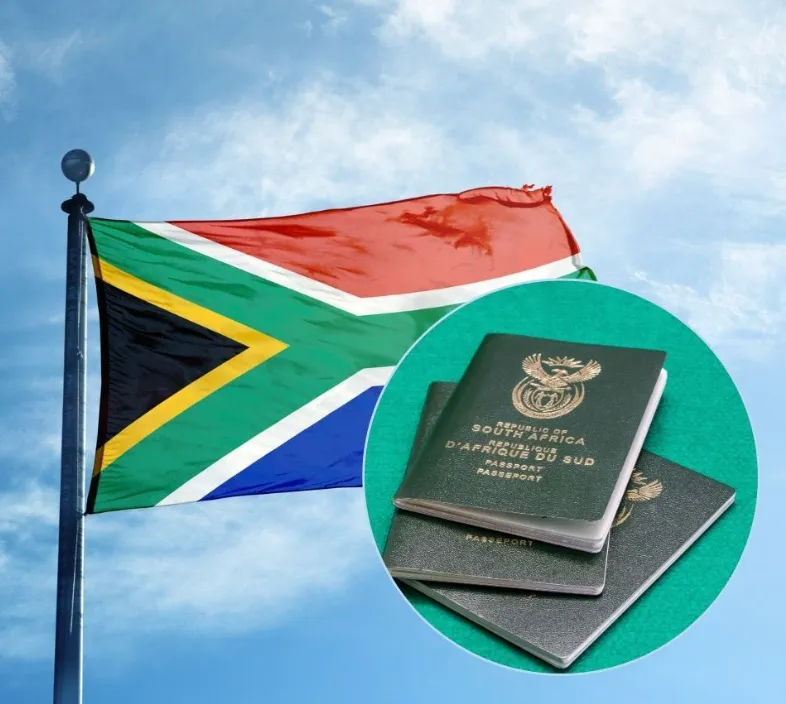
The initial Al Jazeera reporting described the issue as “visas for Mexico”, the host of South Africa’s opening match. McKenzie’s own X posts referred specifically to US visas. The discrepancy is partially explained by South Africa’s group draw: their three Group A matches split between two host countries. The 6/11 opener is in Mexico City. The 6/18 fixture against Czechia is at Atlanta’s Mercedes-Benz Stadium in the United States. The 6/24 fixture against South Korea is at Estadio BBVA in Monterrey, Mexico.
The squad therefore needed valid visas for both Mexico (for two of the three group matches) and the United States (for the June 18 fixture in Atlanta, plus any potential knockout-stage progression). The visa challenge appears to have centered on the US side, per McKenzie’s specific language. Mexico’s visa processing for the squad reportedly proceeded without issue.
For non-playing staff — coaches, medical personnel, analysts — the US visa application process can be slower than the player track. Players carrying official team accreditation typically have expedited handling under FIFA Host Country Agreement protocols. Support staff are processed through different procedures, and four members of the South African support staff fell into the slower lane.
Group A: What Happens Next
South Africa’s tournament schedule places them at the opening fixture of the entire World Cup — Mexico vs South Africa at the Estadio Azteca on June 11, 2026. The match kicks off at 3:00 PM ET. It will be the most-watched football match in CONCACAF history.
| Date | Match | Venue | Time (ET) |
|---|---|---|---|
| June 11 | Mexico vs South Africa | Estadio Azteca, Mexico City | 3:00 PM |
| June 18 | South Africa vs Czechia | Mercedes-Benz Stadium, Atlanta | 12:00 PM |
| June 24 | South Africa vs South Korea | Estadio BBVA, Monterrey | 9:00 PM |
Before the World Cup, Bafana Bafana will play a friendly against Jamaica on June 5 in Mexico — their first match on North American soil. The friendly is intended to acclimate the squad to Mexican stadium conditions and altitude (Mexico City sits at 7,350 feet; Atlanta at 1,050 feet; Monterrey at 1,765 feet — the altitude shift from Johannesburg to Mexico City is the most significant adjustment, given OR Tambo airport is at 5,500 feet).
Hugo Broos’s 26-Man Squad
Belgian-born coach Hugo Broos announced his 26-man squad on Wednesday, May 28. Two players were uncapped at the time of the announcement — a notable feature of the South African selection, suggesting Broos prioritized depth and youth over experience for the squad’s lower-priority slots.
Broos has rebuilt Bafana Bafana significantly since taking over in 2021. His tactical preference is a 4-3-3 with high-pressing midfielders and a counterattack-oriented front three. The captain, Ronwen Williams (Mamelodi Sundowns), is the goalkeeper. Lyle Foster (Burnley) and Percy Tau (Al Ahly) lead the attack. The first-choice midfield includes Teboho Mokoena (Mamelodi Sundowns), whose role brings us to the most consequential pre-tournament administrative story.
The Mokoena Precedent
In March 2025, South Africa was docked three points by FIFA in their World Cup qualifying campaign because Teboho Mokoena played against Lesotho while suspended through yellow-card accumulation. SAFA claimed the suspension was an administrative oversight, but FIFA enforced the points deduction. South Africa nonetheless qualified through the final round of group-stage matches in October 2025. The visa delay represents a separate but pattern-matching administrative episode in the federation’s recent history.
McKenzie’s “embarrassing” framing — while pointed at foreign authorities — carries domestic implication. South African football media has been openly critical of SAFA’s administrative capacity for the better part of a decade. The Mokoena suspension issue and now the visa delay sit in the same operational space.
What This Means for the Tournament
For South Africa, the practical effect of the 24-hour delay is small. The squad still arrived in Mexico City five days before the friendly against Jamaica and seven days before the World Cup opener. The four delayed staff members will join the team within 48-72 hours via separate travel. Broos’s preparation schedule absorbed the disruption.
For the 2026 FIFA World Cup overall, the South Africa visa incident is the most public administrative failure of the pre-tournament window. Other tournaments have had visa controversies — most notably Iran’s 1998 World Cup struggles with European host visas — but the 2026 tournament’s mixed-host structure (United States + Canada + Mexico) compounds the risk. Each travelling squad needs valid documentation for two of three countries minimum.
Argentina’s pre-tournament window is a separate but instructive contrast: Argentina’s squad has 7-10 players on injury watch but no visa issues. Argentina’s base camp is at Sporting Kansas City’s training complex in Kansas City, Kansas. Their visa applications were processed months ago via the US Soccer Federation’s expedited tournament processing channel.
For other nations whose visa applications remain pending or processed late — particularly African and Asian squads whose support staff often face longer US consular wait times — the South Africa story is a warning. The window for any tournament-level visa friction is now closed.
What Comes Next for Bafana Bafana
The squad’s training camp in Mexico runs from June 1 (arrival) to June 11 (Group A opener). Their friendly against Jamaica on June 5 is their only competitive warm-up after the visa episode. Broos’s tactical work for the Mexico opener focuses on three areas:
- Pressing Mexico’s deep-lying playmaker Edson Álvarez (Fenerbahçe, per Sky Sports squad list)
- Defending against 17-year-old Gilberto Mora — the youngest player on Mexico’s roster
- Managing the Estadio Azteca altitude and 87,000-capacity hostile crowd
The Mexico opener kicks off five days from publication of this article. South Africa, in spite of all the administrative chaos surrounding its departure, will be ready.
FAQ
Why was South Africa’s World Cup departure delayed? Visa challenges affecting some players and officials — primarily US visas for non-playing staff — prevented the chartered flight from OR Tambo Airport to Mexico City from departing on Sunday, May 31, 2026. By Sunday evening, all 26 players had received their US visas; only an assistant coach, team doctor, head of security, and one analyst remained pending.
Was it a Mexico visa problem or a US visa problem? US, according to South African Sports Minister Gayton McKenzie’s X posts. Some initial reporting described it as “visas for Mexico” but McKenzie’s specific statement confirmed: “All Bafana Bafana players received their visas to travel to the USA.” South Africa needs both US and Mexico visas because Group A matches are split between Atlanta (US) and Mexico City + Monterrey (Mexico).
When did the South Africa squad actually depart? Monday, June 1, 2026 — a 24-hour delay from the original Sunday morning schedule. The four delayed support staff members were to follow within 48-72 hours via separate travel.
Who is the South African Sports Minister calling this “embarrassing”? Gayton McKenzie, Minister of Sports, Arts and Culture of South Africa. He called the saga “embarrassing and grossly unfair” on X (formerly Twitter) on Sunday afternoon, then “We are being made to look like fools” before posting a Sunday evening update confirming most visas had been received.
When does South Africa play its first World Cup match? June 11, 2026 at 3:00 PM ET — Mexico vs South Africa at the Estadio Azteca in Mexico City. This is the opening fixture of the entire 2026 FIFA World Cup. The tournament officially begins with this match.
Is South Africa the host of any 2026 World Cup matches? No. South Africa is a participant nation; the 2026 tournament is co-hosted by the United States, Canada, and Mexico. South Africa hosted the 2010 World Cup, becoming the first African nation to do so. This 2026 tournament is South Africa’s first World Cup appearance since 2010.
Who is South Africa’s coach for the 2026 World Cup? Hugo Broos, a 73-year-old Belgian who has coached Bafana Bafana since 2021. He named his 26-man squad on Wednesday, May 28, 2026, including two uncapped players. His tactical preference is a 4-3-3 with high pressing and counterattacking play.
What was the Mokoena 3-point deduction? In March 2025, South Africa was docked three points by FIFA in their 2026 World Cup qualifying campaign because Teboho Mokoena played against Lesotho while suspended through yellow-card accumulation. The points deduction did not prevent South Africa from qualifying through the final round of group-stage matches in October 2025.
Which group is South Africa in for the 2026 World Cup? Group A, alongside host Mexico, Czechia, and South Korea. South Africa plays Mexico (June 11), Czechia (June 18 in Atlanta), and South Korea (June 24 in Monterrey).
Will the visa delay affect South Africa’s training preparation? The squad arrived in Mexico City five days before their June 5 friendly against Jamaica and seven days before the World Cup opener. The delay does not materially affect their training preparation. The four delayed support staff will travel separately and arrive within 48-72 hours.
Related Articles
- “A Dream.” Korea’s Training Partner Becomes a World Cup Player. — Korea is in the same Group A as South Africa, with both teams playing in Atlanta on different match-days; Cho Wi-je’s late call-up to the Korea squad happened the same week as the South Africa visa episode (player-injury cross-cluster)
- Why You Can’t Uber to Atlanta Stadium During the World Cup. — Atlanta hosts South Africa vs Czechia on June 18, the South Africa squad’s only US-soil group match (host-city cross-cluster)
- Mexico’s Squad Has a 40-Year-Old and a 17-Year-Old. Both Make History. — South Africa’s opening opponent on June 11 at Estadio Azteca; the tournament’s official opening fixture (squad-breakdown cross-cluster)
Official sources (FIFA, SAFA, Al Jazeera, ESPN, Sky Sports, Reuters, South Africa Government, US State Department) are linked inline in the relevant sections above.
About the author: Pierre Lefèvre is a football correspondent at Le But, the Paris-based outlet covering European national teams, the Africa Cup of Nations, and CAF football since 2009. He has covered African and European nations from venues across two continents. Contact: pierre.lefevre@lebut.fr · LinkedIn: /in/pierrelefevre-lebut · X: @PierreLeBut