




Quick Reference
| Detail | Information |
|---|---|
| Stadium | MetLife Stadium / New York New Jersey Stadium (tournament name) |
| Capacity (WC) | 82,500 (one of the largest at the tournament) |
| Matches hosted | 8 (5 group stage + 1 Round of 32 + 1 Quarterfinal + The Final, July 19) |
| Location | East Rutherford, New Jersey, 5 miles west of Manhattan |
| Nearest airports | Newark (EWR), JFK, LaGuardia (LGA) |
| Recommended days | 5 nights minimum |
| Budget level | Very high (the most expensive World Cup city) |
| Best neighborhoods | Midtown Manhattan, Hoboken (NJ), Jersey City (NJ), Brooklyn |
| Avoid | Times Square hotels (overpriced and inconvenient); avoid driving to stadium |
| Currency | US Dollar (USD) |
| Tap water | Safe to drink everywhere. |
The city of the final. The ten-mile drive from Manhattan that hosts more World Cup matches than any other venue — eight in total, capped by the July 19 World Cup Final and the first halftime show in tournament history. The patch of grass where Ray Houghton chipped the ball over Pagliuca’s head in 1994 and made 75,000 people cry. Here is how to navigate the world’s most-watched single matchday and a city that is, even at its calmest, the world’s most demanding tourist environment.
The Stadium
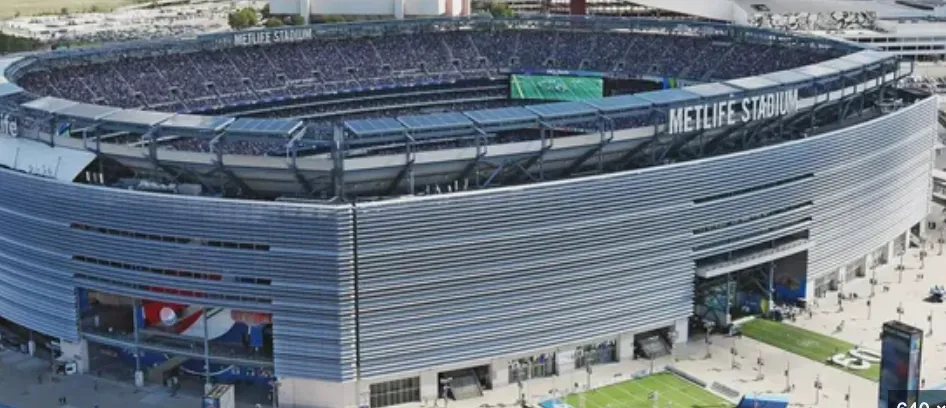
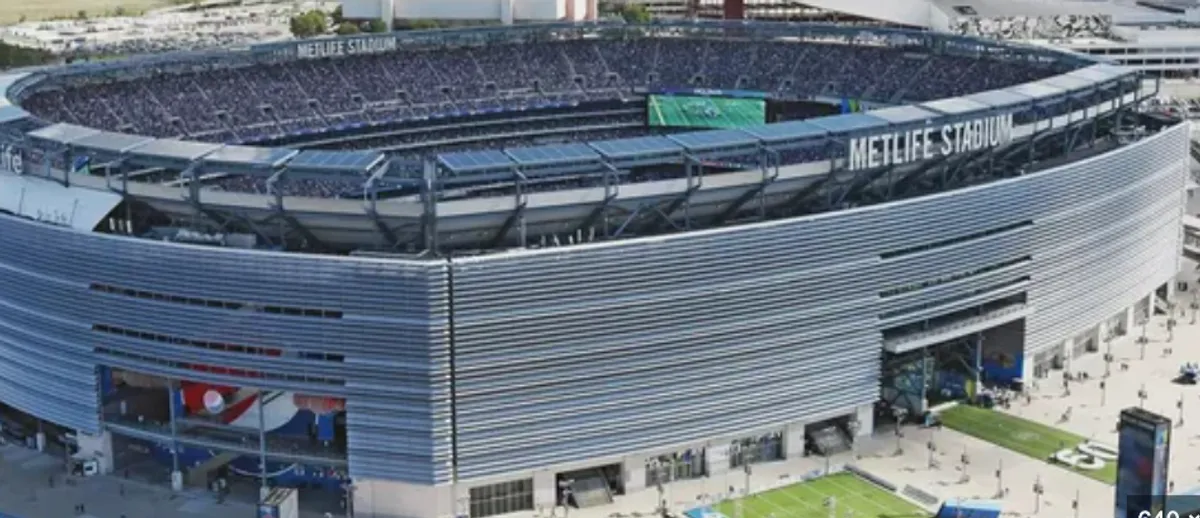
MetLife Stadium opened on April 10, 2010, replacing Giants Stadium on the same site at the Meadowlands Sports Complex. Construction cost approximately $1.6 billion — the most expensive stadium in the United States at the time. It is the only NFL stadium shared by two teams (the New York Giants and the New York Jets) and the largest venue in the NFL with 82,500 regular seats.
The architecture is a deliberate compromise between the two teams’ identities — the Giants wanted rustic stone and old-school feel; the Jets wanted modern glass and exposed steel. The result is a hybrid: limestone facing on the lower bowl, illuminated curved metal panels above, with the roof open to the sky. The stadium has been the host of Super Bowl XLVIII (February 2014, in record cold), the 2025 FIFA Club World Cup Final, and dozens of major concerts.
For 2026, FIFA renamed the venue New York New Jersey Stadium for the duration of the tournament — a generic name fans have already mocked for putting New York second. The corporate “MetLife” branding has been covered or removed across the venue. Two phases of renovation, beginning in 2024, widened the field to meet FIFA dimensions: rows of seats in the corners were replaced with a modular system that allows them to be removed for the World Cup. Approximately 1,740 seats were affected.
For the 2026 World Cup Final on July 19, FIFA confirmed in late 2024 that Global Citizen will co-produce a halftime show — the first halftime show in the history of any FIFA World Cup. The decision is controversial. American audiences expect it from the Super Bowl. Football traditionalists do not.
The eight matches scheduled here:
- June 13 — Brazil vs. Morocco (Group C) — opener at MetLife
- June 16 — Group I match
- June 22 — Group F match
- June 27 — Group G match
- June 30 — Group stage match
- July 1 — Round of 32
- July 9 — Quarterfinal
- July 19 — THE FINAL
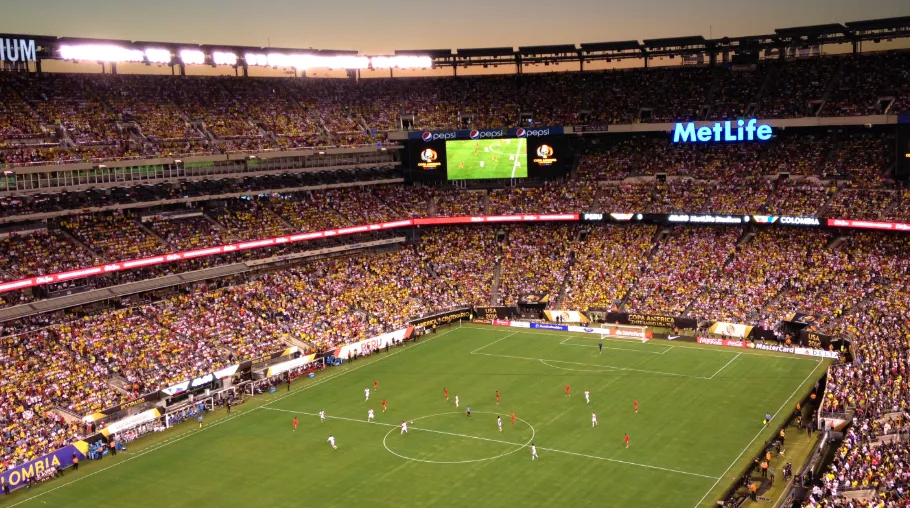
This is the most matches at any 2026 venue. The combination of the final and the largest stadium in the tournament makes the New York metro area the centerpiece of the World Cup.
Getting There
From Airport to Stadium
Three airports serve the New York metro area:
- Newark (EWR) — closest to MetLife Stadium, 15 miles / 24 km, 30 minutes by car in normal traffic
- JFK — Long Island side, 30 miles / 48 km from MetLife, 60 minutes by car normal, 2-3 hours on match days
- LaGuardia (LGA) — Queens, 20 miles / 32 km, 50 minutes normal, 90 minutes match days
For the World Cup, fly into Newark if possible. Direct rail link from EWR to Manhattan via NJ Transit, and proximity to MetLife.
To the Stadium on Match Days
There is no public parking on match days. This is a hard FIFA rule for MetLife. Every fan must arrive by official transport, and a match ticket is required to access transport options.
NJ Transit Rail (most fans):
- Penn Station Manhattan → Secaucus Junction → Meadowlands Sports Complex station
- The Meadowlands Rail Line runs only on event days; transfer at Secaucus Junction
- Round-trip ticket: $150 USD per person — controversial cost, set to offset NJ Transit’s $48 million event-day expense not subsidized by FIFA
- Travel time: 35-45 minutes from Penn Station
Official Bus Service:
- From Port Authority Bus Terminal in Manhattan, Midtown East, or a pickup location in Clifton, New Jersey
- Round-trip: $80 USD per person
- Travel time: 30-50 minutes depending on traffic
Rideshare: Uber and Lyft will operate but with substantial pickup fees ($50-100 surge plus base) and drivers must drop at designated zones at least 1 mile from the stadium. Walking from drop-off point to seat: 25-40 minutes.
Walking advice for World Cup: arrive 4 hours before kickoff for any match at MetLife. Security screening for the Final on July 19 will be the most extensive of any 2026 match — plan for 60+ minute waits.
Visa & Entry to the United States
- Visa Waiver Program (VWP) countries (UK, EU, Australia, Japan, South Korea, etc., 40 total): No visa, but ESTA approval required before flight. Apply 72 hours minimum before travel; cost $21 USD; valid 2 years.
- Brazilian, Chinese, Indian, Russian, Mexican, Argentinean citizens: B-1/B-2 visitor visa required. Apply at least 6 months in advance — US embassy wait times in some countries exceed 8 months for first-time visa interviews.
The US visa is the single biggest logistical challenge for international fans coming to the 2026 World Cup. Start the process the day you confirm tickets.
Where to Stay
New York City accommodation is the most expensive of any host city. Plan for $250-400/night even in shoulder neighborhoods.
| Neighborhood | Travel to Stadium | Double Room/Night | Vibe | Best For |
|---|---|---|---|---|
| Midtown Manhattan | 35-45 min | $350-700 | Times Square area, business hotels, central everything | First-timers (despite price) |
| Hoboken (NJ) | 25-30 min | $220-350 | Across Hudson, walkable, restaurants, clean | Closest practical option to stadium |
| Jersey City (NJ) | 30 min | $200-320 | Newer high-rises, NYC view, transit hub | Budget-conscious + matchday access |
| Brooklyn (Williamsburg, DUMBO) | 60 min to MetLife | $300-500 | Hip neighborhoods, restaurant scene, BK culture | Cultural travelers, slower pace |
| Lower Manhattan / FiDi | 50 min | $250-450 | Wall Street, financial, quiet at night | Business travelers |
| Queens (Long Island City) | 70 min | $180-300 | NYC view, ethnic food, Asian + Latin American | Budget + food-first travelers |
Hoboken is the smart pick for fans where the World Cup matches come first. It’s across the Hudson River from Manhattan (you can see the skyline from the waterfront), 30-minute commute to MetLife, walkable, with a good food scene of its own. Hotels are $100-150 cheaper per night than equivalent Manhattan options.
Midtown Manhattan is the right call for everyone else. You’re paying for being in the densest concentration of restaurants, bars, theaters, museums, and cultural sites in the country. Hotels: The Standard High Line ($450), citizenM Times Square ($320), The Pod 51 (~$250 — the budget winner with rooftop views).
What to avoid: Times Square hotels specifically. They are absurdly overpriced ($500+ for very basic rooms), constantly noisy, and serve as tourist traps. Better hotels at every price point exist 10 blocks in any direction. Also avoid hotels marketed as “Manhattan” that are in the Bronx, Queens, or northern Manhattan above 96th Street — read addresses carefully.
Book by April 15. The Final on July 19 has driven hotel demand to historic levels. Manhattan hotels are already 90% booked for that week. Hoboken is 75% booked.
Beyond the Stadium
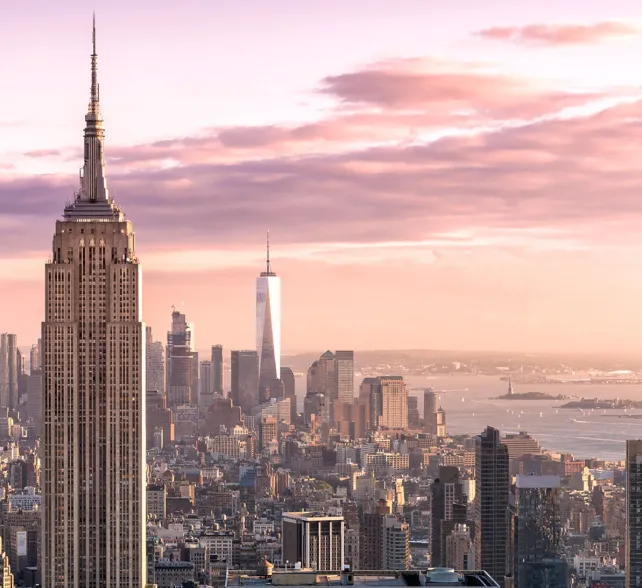
Manhattan: The Essentials
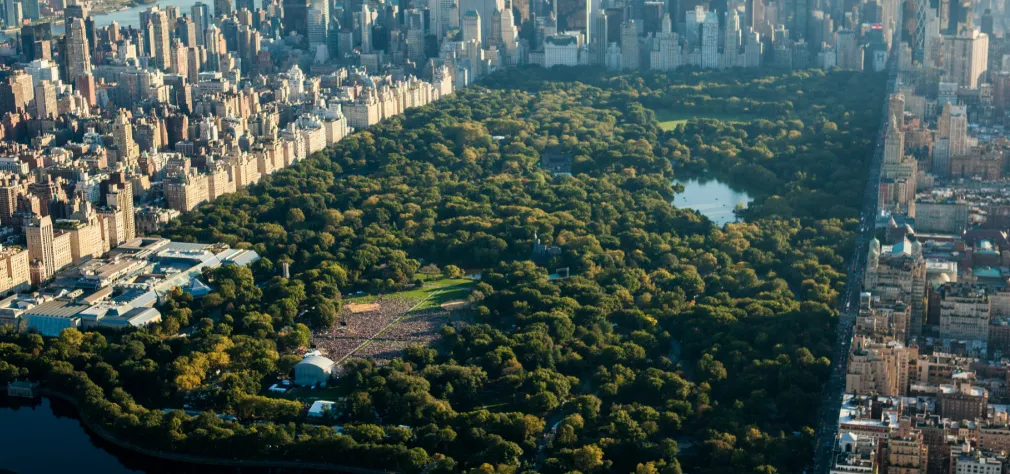
Central Park: 843 acres of green space cutting through Manhattan. Walk the Mall (formal tree-lined avenue) to Bethesda Terrace (the most photographed point in the park) and on to Strawberry Fields (the John Lennon memorial). Free.
The Metropolitan Museum of Art: 5,000 years of human creative output, all under one roof. The Egyptian wing (Temple of Dendur), the European paintings galleries, and the rooftop sculpture garden are non-negotiable. Pay-what-you-wish for NY State residents; $30 for everyone else.
The High Line: An elevated park on a converted freight railway, running from the Meatpacking District to Hudson Yards. Best at sunset. Free. 1.5 km long.
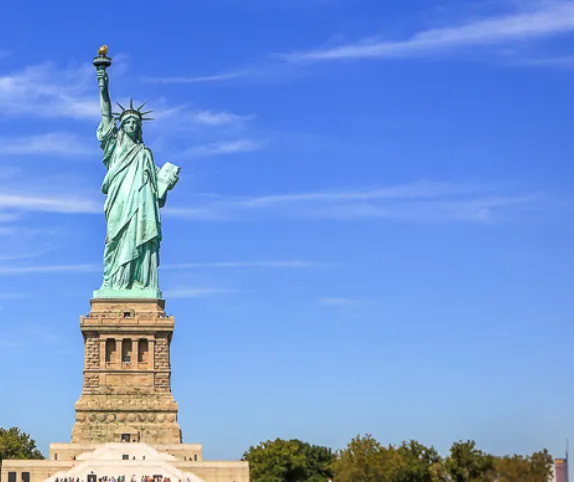
Statue of Liberty + Ellis Island: Take the Staten Island Ferry — free, no tickets needed — for a passing view of the Statue. To go inside, book Statue Cruises tickets weeks ahead.
9/11 Memorial & Museum: Where the World Trade Center stood. The two pools of water, the ringed names of victims, are quiet and powerful. The museum below has artifacts and is emotionally devastating. Memorial: free; Museum: $33.
Brooklyn: The Other New York
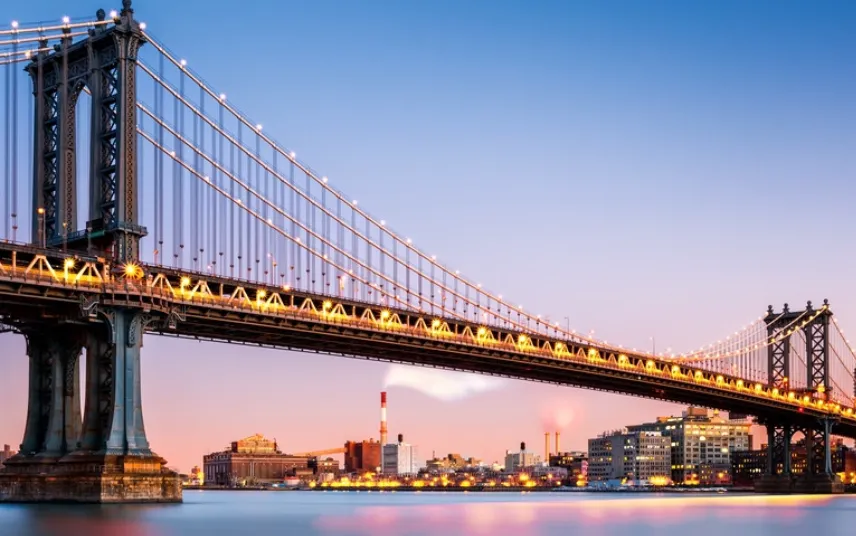
Brooklyn Bridge: Walk it from Manhattan to DUMBO for the classic New York skyline shot. Best at sunset. Free.
Williamsburg: The hip neighborhood Brooklyn became famous for. Smorgasburg food market on weekends. Vintage shops, indie bookstores, world-class pizza at Roberta’s and Pasquale Jones.
Coney Island: Subway away. Boardwalk, original Nathan’s Famous hot dogs (since 1916), the wooden Cyclone roller coaster from 1927. Best in summer.
Outside the City
Niagara Falls: 7-hour drive or 1-hour flight to Buffalo. Unless you have 3+ free days, skip.
The Hamptons: Long Island beach communities. Worth a day trip if someone has a car. Take the Hampton Jitney bus (~$50 one-way).
Hudson Valley: 90 minutes north of NYC. Storm King outdoor sculpture park, Hudson River views. Better for peace than spectacle.
Where to Eat and Drink
New York’s Defining Foods
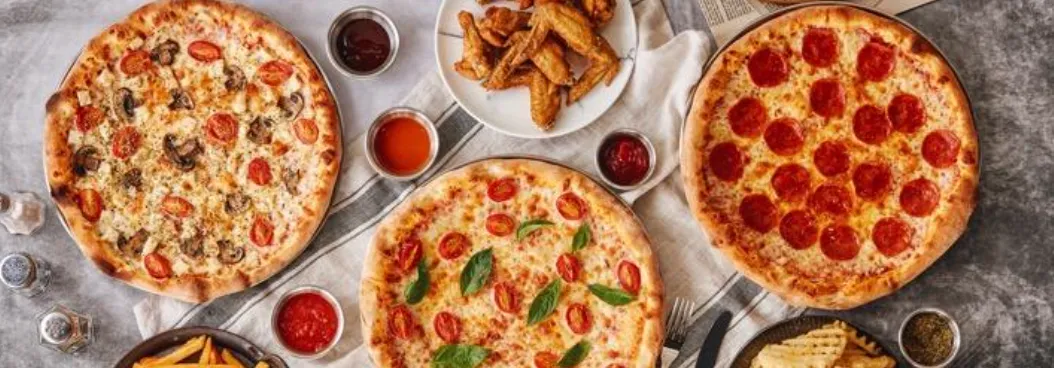
Pizza: A controversial subject. The classic: large thin-crust slice, foldable, eaten standing. Joe’s Pizza (Greenwich Village, Carmine Street since 1975) is the institution. The elevated: Lucali (Brooklyn), Roberta’s (Bushwick). Pizza here is religion, not food.
Bagels: Russ & Daughters (Lower East Side) for lox, cream cheese, and an everything bagel — the breakfast trinity. Ess-a-Bagel (Midtown) for the same plus better hours.
Pastrami on Rye: Katz’s Delicatessen (East Houston Street) since 1888. The pastrami is hand-cut, piled six inches high. $28 for the sandwich. Pay first, then sit — uniquely New York.
Halal Cart: The street-corner industry. The Halal Guys (53rd & 6th) is the famous original — chicken-and-rice plate over yellow rice with white sauce. $10. Lines until 2am.
High-End Dining
Per Se (Columbus Circle). 9-course tasting menu, $390. Reservations 60 days out exactly at midnight.
Eleven Madison Park (Madison Square Park). Plant-based fine dining, three Michelin stars. $365. Reservations 2 months ahead.
Le Bernardin (Midtown). Eric Ripert’s seafood institution. $215 4-course menu.
The Fan Experience
FIFA Fan Festival — New York/New Jersey: Liberty State Park (Jersey City) — a vast waterfront park with direct skyline views of Manhattan. Free. Big screens, food trucks, live music. Open throughout the tournament.
Post-match bars in Manhattan: For a New York vibe, Smith & Mills (Tribeca, speakeasy-style), The Dead Rabbit (FiDi, top 50 bars in the world), McSorley’s Old Ale House (East Village, since 1854 — the oldest bar in NYC, only two beers on the menu).
Latin American bars in Queens: For Brazilian, Mexican, Colombian, Argentinian, or Peruvian fans, Jackson Heights in Queens is your home. Queens Bully for sports, La Esquina del Camarón Mexicano for game-day food.
Irish pubs in Manhattan: For the World Cup, expect The Pony Bar (Hell’s Kitchen), Foley’s (Midtown — closest to Penn Station), and The Dead Poet (Upper West Side) to be packed for any Group E match. Book a stool 2 hours ahead.
The Story
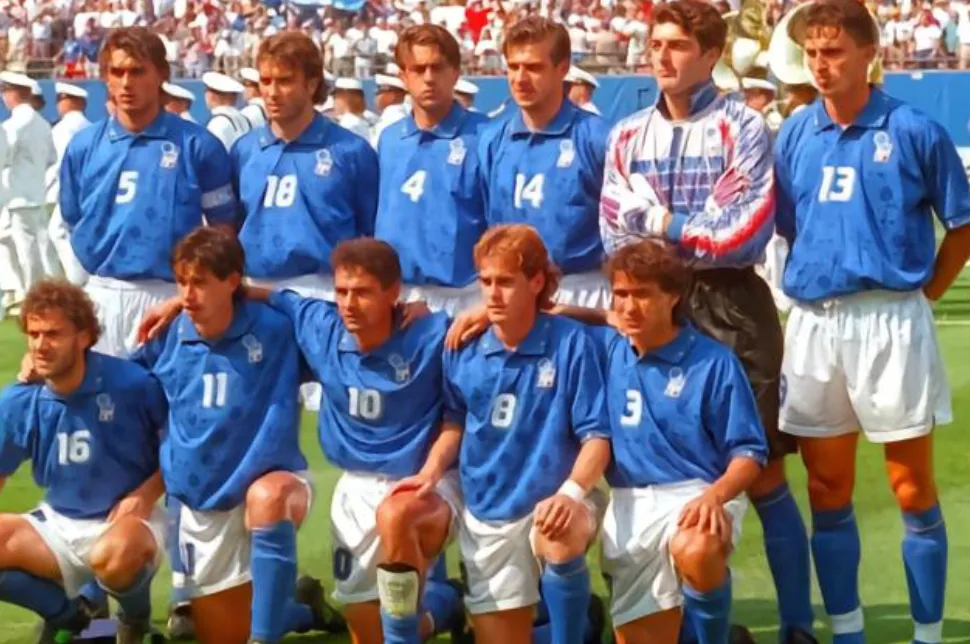
June 18, 1994. Giants Stadium, East Rutherford, New Jersey. Republic of Ireland vs. Italy, 1994 FIFA World Cup, Group E.
The 1994 World Cup was the United States’ first time hosting the tournament. Most American observers did not understand the sport, did not understand the passion, and did not understand why 75,338 people had packed into a stadium in suburban New Jersey at 8am Eastern Time on a Saturday in mid-June.
The Italians had been promised this venue. As one of the top seeds in the draw, Italy had specifically requested Giants Stadium for the group stage — knowing that East Rutherford and the New York metro have one of the largest Italian-American populations in the world. Roberto Baggio, the Ponytail, was the favorite to win the Golden Ball. Paolo Maldini, Franco Baresi, Gianluca Pagliuca — Italy’s defense was widely considered the best on Earth.
What FIFA did not anticipate: Italian-American ticket-holders, sensing easy money, sold their tickets to Irish fans. By kickoff, Giants Stadium was a sea of green. Estimates put Irish fans at 50,000 of the 75,000. Liza Minnelli sang “The Day After That” before kickoff — a baffling choice that the Irish supporters drowned out with chants of “You’ll Never Beat the Irish.”
Republic of Ireland was managed by Jack Charlton, the Englishman who had won the 1966 World Cup. His team played a relentless 4-4-2 — long balls, hard tackles, no possession football. They had reached the quarterfinals at Italia ‘90 four years earlier, knocked out by — fittingly — Italy.
Minute 12 (some sources say minute 11): Italy’s defender Franco Baresi played a careless ball forward. Ray Houghton, an Irish midfielder born in Glasgow but qualifying through his Donegal-born father, intercepted on the edge of the box. He chipped the ball with his weaker left foot from 25 yards. It looped over Pagliuca, the Italian goalkeeper, and dropped just under the crossbar.
1-0 Ireland.
Italy did not score. Roberto Baggio had eight shots on goal across 90 minutes. Pagliuca, who had been considered Italy’s most reliable component, had been beaten by a chip. The match ended 1-0 Republic of Ireland over Italy — the first time Ireland had ever beaten the Azzurri.
Italy went on to reach the 1994 World Cup Final at the Rose Bowl in Pasadena (where they lost on penalties to Brazil). Ireland were knocked out in the Round of 16 by the Netherlands. But that day in New Jersey was Ireland’s day. In Dublin, O’Connell Street was completely empty during the match. The Loughinisland Massacre — six Catholic civilians murdered by a Loyalist gunman in a Northern Ireland pub watching the match — occurred during the second half. The day became one of the most politically and emotionally charged in modern Irish history.
Giants Stadium was demolished in 2010 to make way for MetLife Stadium, which sits on the same Meadowlands land, less than 100 yards from where the original pitch stood. When the 2026 World Cup Final is played at MetLife on July 19, the ground beneath the players’ feet will be the same dirt that absorbed Ray Houghton’s chip 32 years earlier.
The Italian-American population of New Jersey has not forgotten. Neither has the Irish-American population. On the evening of the Final, in pubs from Bayonne to Bensonhurst, the conversation will turn — somewhere around minute 12 — to a chip from a man named Houghton, in a kit of green, on the same patch of grass.