A two-and-a-half-year qualifying campaign concluded on March 31, 2026 with Iraq’s 2-1 victory in Bolivia — a result that closed the longest, most expanded, and most disruptive qualification cycle in World Cup history.
By the time Aymen Hussein scored the final goal of qualifying — a header that earned Iraq the last available place at the 48-team tournament — the football world had already absorbed the bigger story: Italy is not going to North America. Neither is Nigeria. Neither is the DR Congo team that beat Nigeria in the CAF playoff final but lost the inter-confederation playoff days later. The expansion to 48 teams was supposed to make qualification easier. For some of the sport’s most established nations, it did the opposite.
The Headlines
The expanded format delivered four debutants — Cape Verde, Curaçao, Jordan, and Uzbekistan — and a fifth nation, Qatar, qualifying for the first time on sporting merit after their 2022 host-nation bye. Curaçao, with a population of approximately 155,000, becomes the smallest country ever to qualify for a men’s World Cup, breaking Iceland’s record from 2018.
Eight Arab nations qualified — Algeria, Egypt, Iraq, Jordan, Morocco, Qatar, Saudi Arabia, and Tunisia — the highest figure in tournament history, double the four who reached Qatar 2022 and 2018 Russia. The OFC (Oceania) zone received its first guaranteed automatic berth, taken by New Zealand.
Italy’s absence is the headline that won’t go away. The four-time world champions failed in the European playoffs for the third consecutive cycle, eliminated by Bosnia and Herzegovina on penalties (4-1) at San Siro on March 26. The Azzurri were ranked 12th by FIFA — the highest-ranked team in the world not to qualify. Coach Luciano Spalletti resigned within hours of the final whistle.
Europe’s Quiet Revolution
UEFA’s 16 places — up from 13 in 2022 — went to England, France, Croatia, Norway, Portugal, Germany, Netherlands, Switzerland, Scotland, Spain, Austria, Belgium, plus playoff winners Bosnia and Herzegovina, Sweden, Türkiye, and Czechia.
Sweden’s qualification arrived through the most circuitous route in the format: they reached the playoffs only via the UEFA Nations League back door, despite finishing third in their qualifying group. They are the first European nation in World Cup history to qualify by Nations League ranking after failing to qualify directly. Coach Jon Dahl Tomasson called it “a second life we did not expect.”
Norway end a 28-year wait. The team built around Erling Haaland and Martin Ødegaard topped Group I unbeaten and will play in their first World Cup since France 1998. Haaland scored 16 goals in 10 qualifying matches — a UEFA single-cycle record.
Scotland’s qualification has changed the political conversation around football in the home countries. Steve Clarke’s side will play their first World Cup since 1998, and have been drawn into Group L alongside England in what FIFA’s marketing department has labelled “the modern Auld Enemy.” The June 22 group stage match in Atlanta has been the most-resold ticket on European secondary markets, with prices for some sections exceeding $4,000 USD.
South America’s Three-Tier Reset
CONMEBOL’s six automatic places went to Argentina (defending champions), Brazil, Colombia, Uruguay, Paraguay, and Ecuador. Bolivia advanced to the inter-confederation playoffs but lost their final to Iraq.
Argentina enter as defending champions, with Lionel Messi confirming his retirement from international football after the tournament. He turns 39 in late June. Argentina coach Lionel Scaloni has named a 26-man squad expected to mix the 2022 winners — Messi, Lautaro Martínez, Rodrigo De Paul, Cristian Romero — with rising talents including Franco Mastantuono and Alejandro Garnacho.
The CONMEBOL standings produced the most competitive qualification cycle in the confederation’s recent history. Colombia, who failed to qualify for 2022, finished third with a generation led by James Rodríguez (35) and Luis Díaz (29). Their attacking trio is widely considered Colombia’s strongest since 2014, when they reached the quarterfinals in Brazil with the same Rodríguez at his peak.
Asia’s Eight, Plus One
The AFC delivered eight automatic qualifiers — Japan, Iran, South Korea, Australia, Saudi Arabia, Jordan, Qatar, Uzbekistan — and Iraq via the inter-confederation playoffs.
Japan was the first nation in the world to qualify, securing their place in March 2025 with two qualifying windows still to play. Their performance in the third round of AFC qualifying — winning the group with 25 points from 10 matches and a +25 goal differential — was the most dominant by any Asian team in World Cup qualifying history.
Iran, Saudi Arabia, and South Korea complete the established AFC quartet, each making their seventh, sixth, and 11th consecutive World Cup, respectively.
The two debutants — Jordan and Uzbekistan — are the cycle’s standout stories. Uzbekistan, an independent nation since 1991, had reached but never crossed the final qualification stage in seven previous attempts. Jordan, coached by Hussein Ammouta, beat Iraq home and away to claim their place. Both will travel to North America with no expectations and very little prior World Cup experience inside their squads.
Africa’s Painful Postscript
CAF received nine places — six more than the three the United, Mexican, and Canadian co-hosting bid initially proposed. The qualifiers were Morocco, Tunisia, Egypt, Algeria, Senegal, Cape Verde, Ghana, Ivory Coast, and South Africa.
Cape Verde’s qualification is the smallest African nation result in World Cup history. The archipelago of half a million people topped Group D with 23 points from 10 matches, finishing ahead of Cameroon — themselves a five-time World Cup nation — by a single point.
Nigeria’s elimination at the CAF playoff final is the cycle’s most dramatic single moment. The Super Eagles, twice quarter-finalists, lost on penalties to DR Congo (4-3) on November 16, 2025 in Rabat, Morocco. Striker Victor Osimhen converted the first Nigerian penalty but missed the fifth, the decisive one. He left the pitch in tears. Nigeria has now missed three of the last four World Cups.
DR Congo then lost the inter-confederation playoff in Mexico City to Bolivia, having beaten New Caledonia in the semifinal three days earlier. Congolese coach Sébastien Desabre was dismissed on April 4.
The Inter-Confederation Drama
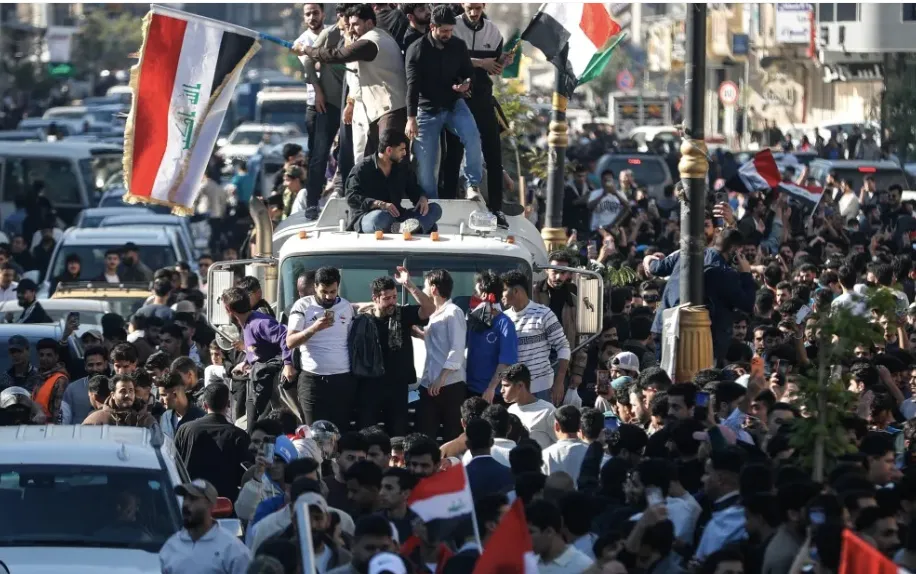
The inter-confederation playoffs in Mexico City produced two of the cycle’s most consequential single matches:
Iraq 2-1 Bolivia (March 31, Estadio Akron, Guadalajara). Iraq, returning to the World Cup for the first time since 1986, came back from 1-0 down. Bolivia, who would have been only the second time the country qualified, played their final qualifier with five players who had also been on the squad that lost the 1994 inter-confederation playoff.
Suriname 0-1 New Caledonia (March 27 semifinal, Akron). Suriname, the CONCACAF entrant, lost to OFC’s New Caledonia, who themselves lost to DR Congo in the second semifinal.
The Tournament Itself
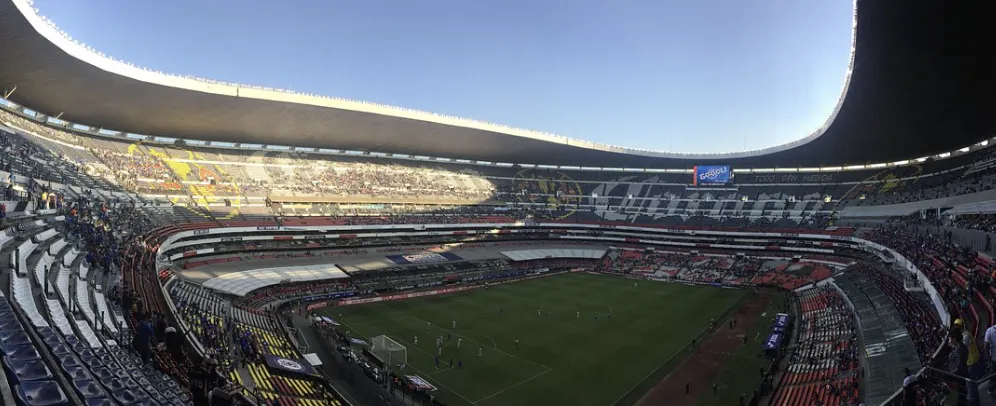
The 2026 World Cup begins on June 11 with Mexico vs. South Africa at Estadio Azteca in Mexico City — making the Azteca the first stadium in history to host matches at three World Cups (1970, 1986, 2026). The tournament concludes 38 days later on July 19 with the Final at MetLife Stadium in East Rutherford, New Jersey.
The 48 teams are split into 12 groups of 4. The expanded format means the top two from each group plus the eight best third-place finishers — 32 teams in all — advance to a Round of 32 knockout phase. The Round of 32 is new to the men’s World Cup; it had previously appeared only in the women’s tournament from 2015 forward.
The expanded format has been criticized by FIFPRO (the players’ union) and several European federations for adding additional matches in an already congested football calendar. The 2026 tournament will feature 104 matches, up from 64 in 2022 — a 62.5% increase. Players who reach the final will play eight matches in 38 days; the previous tournaments capped at seven matches across a similar span.
What Happens Now
Travel and logistical preparations have intensified. ESTAs and visas for players, families, and traveling fans are processing through US embassies; the State Department has confirmed that visa applications from Brazil, Iran, and Russia (a non-qualifier whose fans are still permitted to travel) are running at three to four months for first-time interviews.
The 16 host cities — three in Mexico (Mexico City, Guadalajara, Monterrey), two in Canada (Toronto, Vancouver), and 11 in the United States — are in their final weeks of pitch preparation, transit logistics, and security coordination. The 80-minute security incident at the 2024 Copa América final in Miami remains a reference point for organizers.
The tournament will be the most-watched television event in human history. FIFA’s projected global audience is 5 billion unique viewers across the 38 days. The single most-watched match is expected to be the July 19 Final at MetLife.
The 48 are set. The football starts in 35 days.