



Quick Reference
| Detail | Information |
|---|---|
| Stadium | Estadio BBVA / Estadio Monterrey (tournament name) |
| Capacity (WC) | 50,113 (official FIFA figure); 53,500 regular |
| Matches hosted | 4 (3 group stage + 1 Round of 32, June 15-29) |
| Location | Guadalupe (Greater Monterrey), Nuevo León |
| Nearest airport | Monterrey International (MTY) |
| Recommended days | 3 nights |
| Budget level | Mid-high (most expensive of Mexico’s three host cities) |
| Best neighborhoods | San Pedro Garza García, Barrio Antiguo, Valle Oriente |
| Avoid | Independencia, Niño Artillero, outskirts of Valle de Santa Lucía |
| Currency | Mexican Peso (MXN) ~ 20 MXN per $1 USD |
| Tap water | Do not drink. Bottled only. |
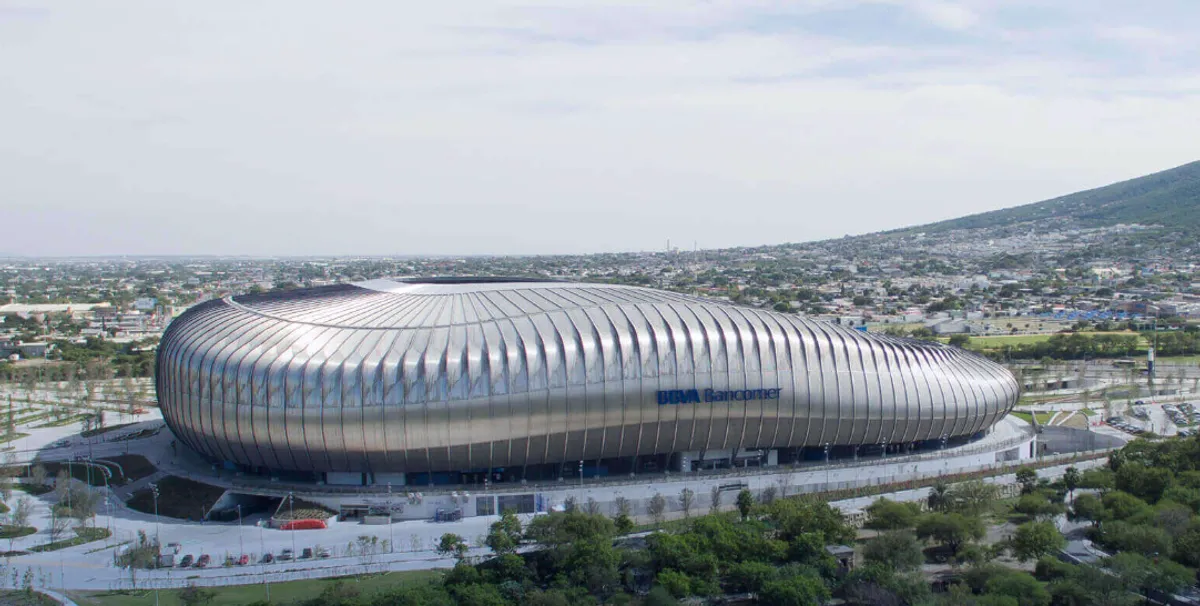
The Steel Giant of Mexican football — a stadium wrapped in aluminum that looks out at the saddle-shaped Cerro de la Silla mountain. The wealthiest city south of the US border, built on steel, cement, and beer. The site where a 25-year-old Lothar Matthäus whipped a free kick into the net to send West Germany through, and sent Morocco home as the first African team to ever reach a World Cup knockout round. Here is how to land in Monterrey for June 2026 and understand the northern half of Mexico that most visitors never see.
The Stadium
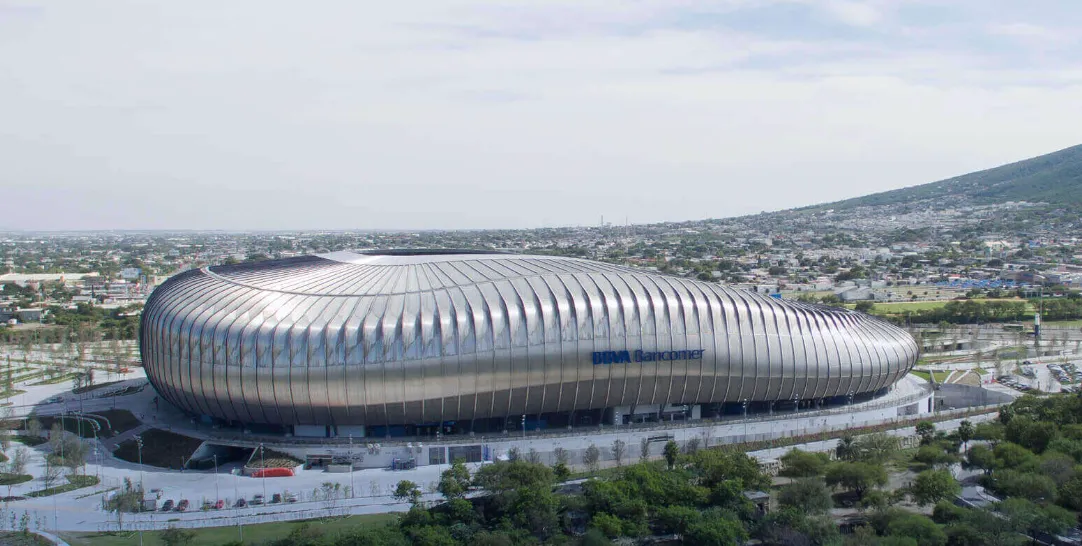
Estadio BBVA opened on August 2, 2015. Construction began in 2011 and ran four years at a price tag of approximately $200 million USD, paid by FEMSA — the Mexican beverage conglomerate that owns Coca-Cola’s Mexican bottling operation and Club de Fútbol Monterrey. The stadium was designed by Populous (the same firm that designed Wembley, Yankee Stadium, and the Tottenham Hotspur Stadium) together with Mexican firm VFO.
Locals call it “El Gigante de Acero” — the Steel Giant. The nickname comes from the exterior: an industrial aluminum Kalzip facade that wraps around the bowl in overlapping sheets, lit at night in blue and white to match Club Monterrey’s colors. The design is a deliberate nod to the region’s history — Nuevo León built its economy on steel (the ACERO company founded here in the 1890s), on cement, and on beer (FEMSA’s flagship beer Tecate was born in this state). The stadium is a corporate monument to that industrial heritage.
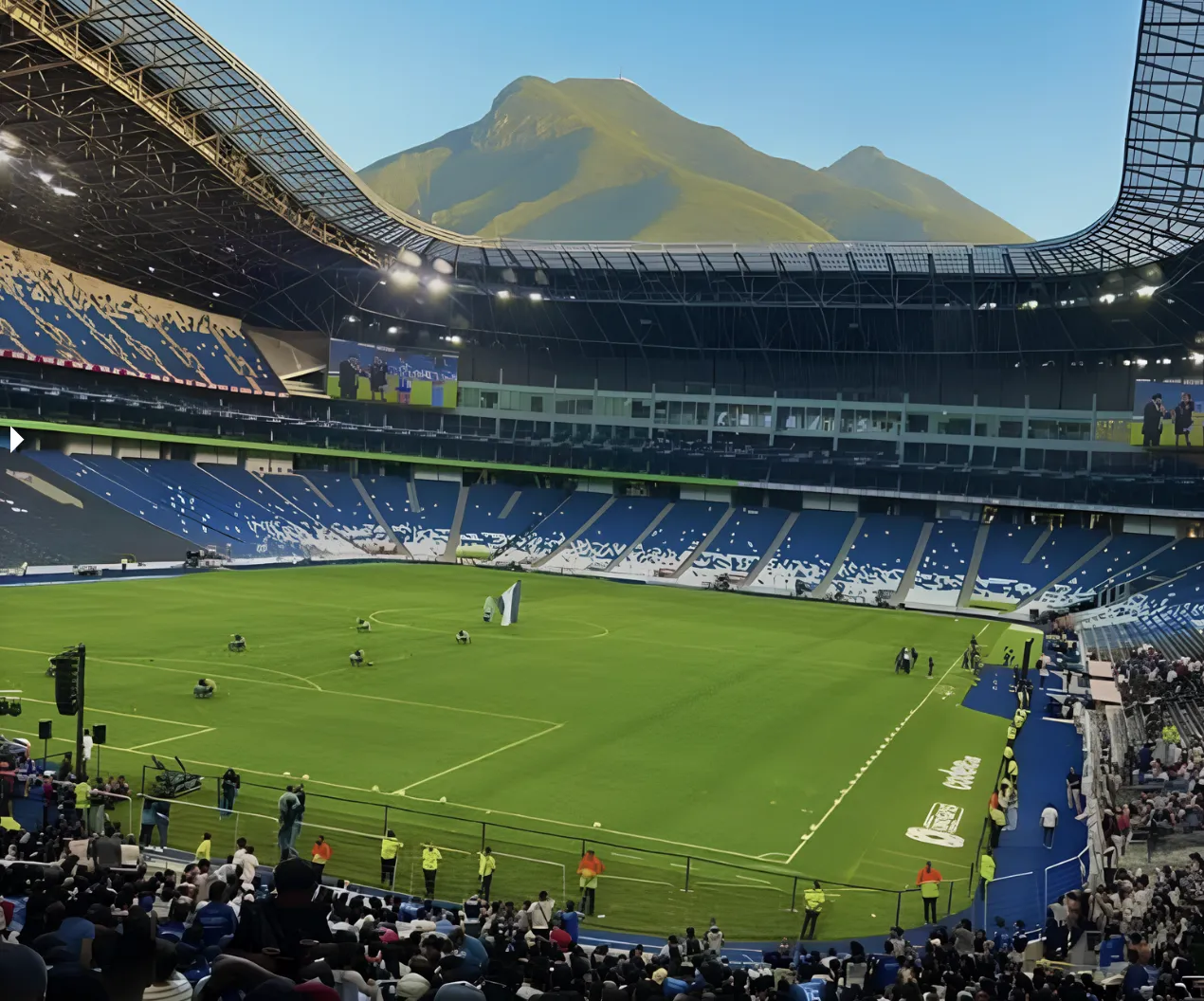
The pitch is natural grass with 5% synthetic fibers woven in — the same hybrid system used at Wembley. The stadium sits in Guadalupe, technically a separate municipality, roughly 10 km east of downtown Monterrey. The most striking feature is the view — from the upper tiers on the western side, the Cerro de la Silla mountain (saddle-shaped, hence the name — literally “Saddle Hill”) frames every match. This is the most famous mountain in northern Mexico; its silhouette appears on the state’s official seal.
For the 2026 World Cup, FIFA renames the venue Estadio Monterrey and sets capacity at 50,113 after operational deductions.
The four matches scheduled here:
- June 15 — Group stage match
- June 20 — Group stage match
- June 25 — Group stage match
- June 29 — Round of 32 (first knockout match)
No Mexican national team match is scheduled in Monterrey. The knockout game on June 29 is the stadium’s flagship fixture — a group winner facing a runner-up in elimination football.
Getting There
From Monterrey International Airport (MTY) to the Stadium
MTY sits in the suburb of Apodaca, northeast of central Monterrey. To Estadio BBVA in Guadalupe is 15 miles / 24 km — 30-40 minutes in normal traffic, 60-80 minutes on match days.
Public transit route (recommended for international fans):
- Taxi/rideshare from MTY to Central station (~$8-12 USD)
- Metrorrey Line 2 from Central to Zaragoza, transfer to Line 1 eastbound
- Exit at Exposición station — terminus of Line 1
- Walk 10 minutes to the stadium (signed route)
- Total time: 60 minutes | Cost: 15 pesos ($1 USD) after initial taxi
Rideshare (Uber/Didi) from airport: $15-25 USD, surge pricing 2x on match days. Drop-off zones are well-marked near Gate D. Unlike Mexico City and Guadalajara, Monterrey’s roads are generally wider and traffic is better organized, but the approach to the stadium bottlenecks badly.
Driving: The stadium has paid parking, but Monterrey residents hold annual parking passes (abonos) and most spots are reserved. Do not drive unless you’ve pre-booked through Parkimovil. Buses and shuttles from the city center will operate on match days.
One advantage Monterrey has: MTY is the closest Mexican host airport to the US border (only 150 miles from Laredo, Texas). For fans flying in from Houston or Dallas matches, a direct flight is only 90 minutes and significantly cheaper than flying into Mexico City.
Visa & Entry
Standard Mexican entry rules apply. US, Canadian, UK, EU, Australian, Japanese citizens: no visa under 180 days.
A specific note on Monterrey: it is the largest Mexican city closest to the US border, so you may see increased business traveler traffic at MTY immigration. Lines move faster than Mexico City’s but slower than Guadalajara’s.
Where to Stay
Monterrey is expensive by Mexican standards. The metro area is industrial; you want to pick neighborhoods carefully.
| Neighborhood | Drive to Stadium | Double Room/Night | Vibe | Best For |
|---|---|---|---|---|
| San Pedro Garza García | 20-30 min | $180-350 | Wealthiest municipality in Latin America by per-capita GDP, five-star hotels, premium restaurants, highest security | Luxury + safety priority |
| Valle Oriente | 15-20 min | $140-220 | Modern business district, corporate chains, high-end malls | Business travelers, match-day access |
| Barrio Antiguo | 30-40 min | $100-160 | Monterrey’s oldest quarter, bars, music venues, historic charm | Nightlife, culture seekers |
| Downtown Monterrey | 25-35 min | $80-140 | Macroplaza access, mid-range hotels, budget-friendly | Budget-conscious, compact stays |
| Near Stadium (Guadalupe) | 10-15 min | $90-140 | Industrial, residential, limited dining | Only if stadium access trumps everything |
San Pedro Garza García is the standard recommendation for fans with budget. It’s a separate municipality that ranks as one of Latin America’s richest, with a lower crime rate than much of Monterrey proper. The streetscape feels closer to Austin or Phoenix than to Mexico.
Barrio Antiguo is the correct choice for fans who want Monterrey’s character. The old quarter has 18th- and 19th-century buildings with modern bars and live music clubs tucked inside. It’s a walkable enclave at night — safer than surrounding areas because of the police presence.
What to avoid: Independencia, Niño Artillero, and the outskirts of Valle de Santa Lucía. Monterrey has been affected by cartel conflict in recent years — central tourist zones are secure but peripheral neighborhoods are not. Also avoid driving at night outside the main corridors (San Pedro ↔ Downtown ↔ Guadalupe). Uber in those zones after 11pm.
Book by May 1. San Pedro Garza García fills up fastest. Valle Oriente near-stadium hotels second.
Beyond the Stadium
Parque Fundidora — The City’s Living Room
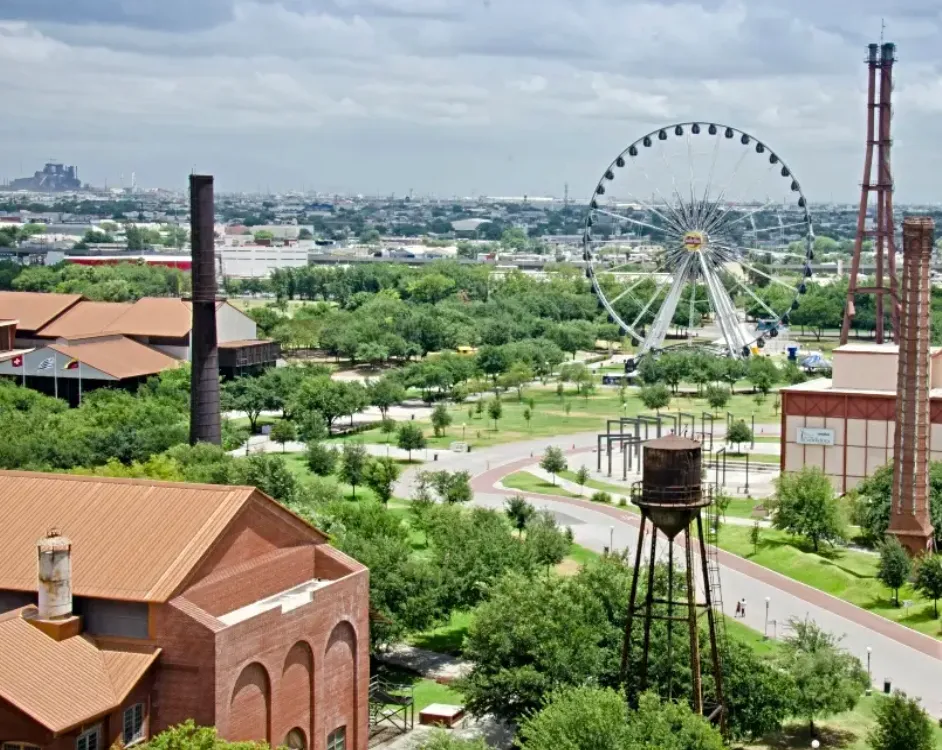
A 339-acre public park built on the grounds of a former steel foundry (Fundidora Monterrey, 1900-1986). The industrial ruins have been preserved as monuments. Horno 3 — a repurposed blast furnace — now houses an interactive steel museum with a viewing platform offering a 360-degree view of the city. The FIFA Fan Festival for Monterrey will be centered here. Entry to the park: free. Horno 3 museum entry: 150 pesos (~$9 USD).
Macroplaza
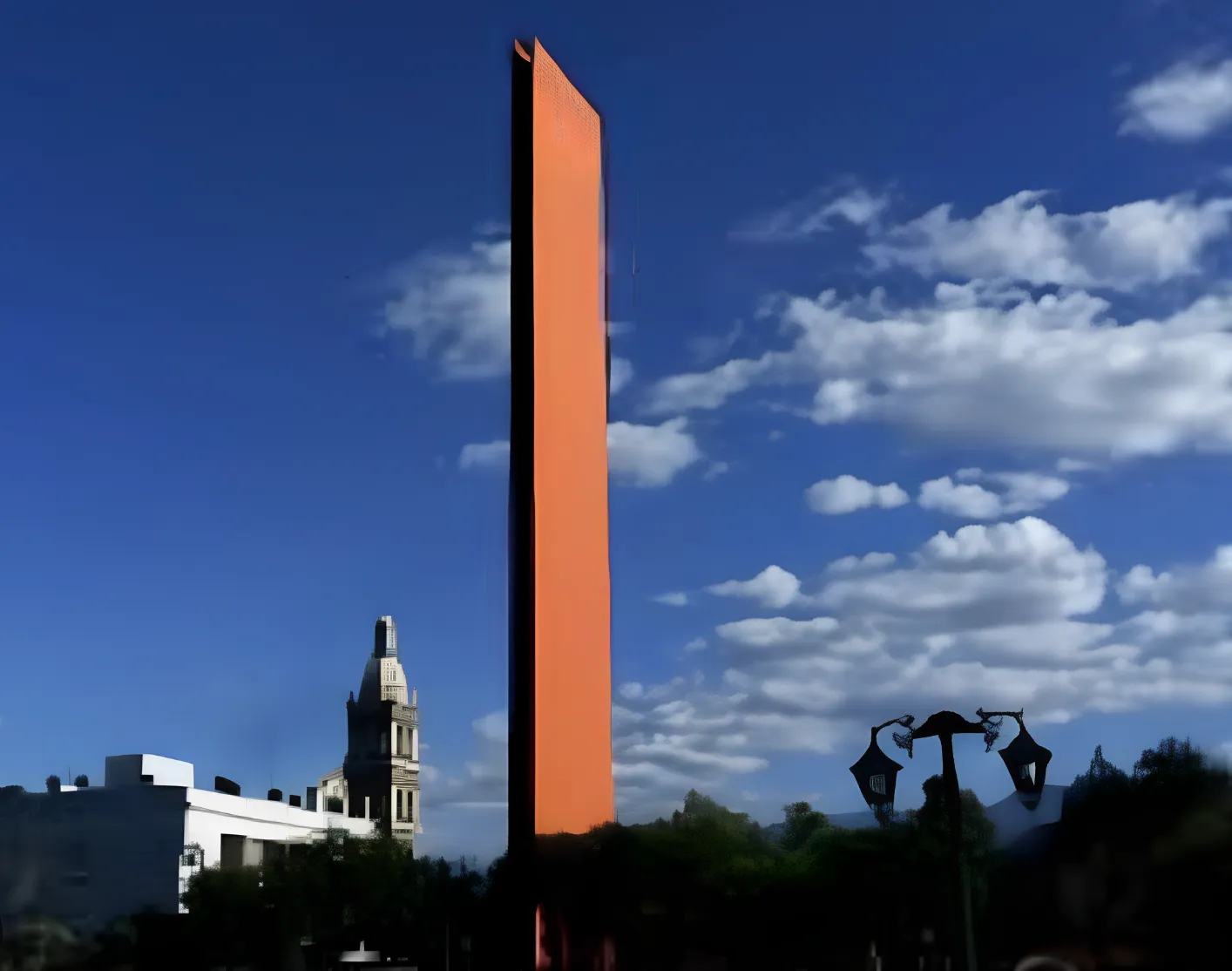
One of the largest urban squares in the world (approximately 40 hectares). Surrounded by government buildings, the cathedral, the Faro del Comercio (a 70-meter tower that emits green laser beams at night), and the Museum of Modern Art (MARCO). Come at sunset.
Barrio Antiguo (The Old Quarter)
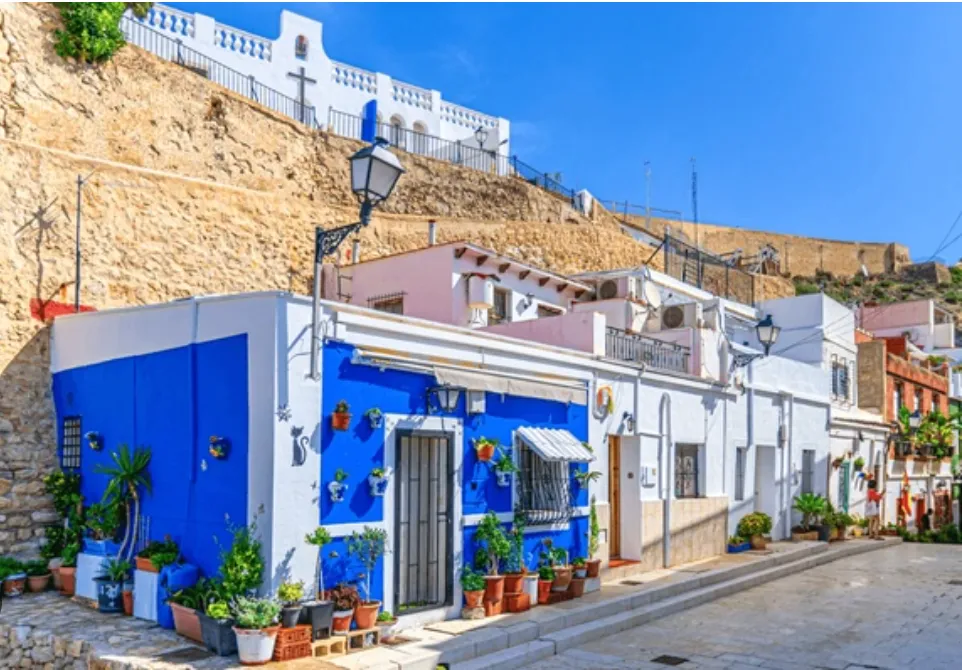
Not just for drinking. During the day, the colonial buildings, the Palacio de Gobierno (state house), and the Cathedral of Monterrey define the neighborhood. At night, the transformation: 15 blocks of bars, live music, art galleries. Café Iguana is the city’s best-known rock club, open since 1989.
Cola de Caballo (Horsetail Waterfall)
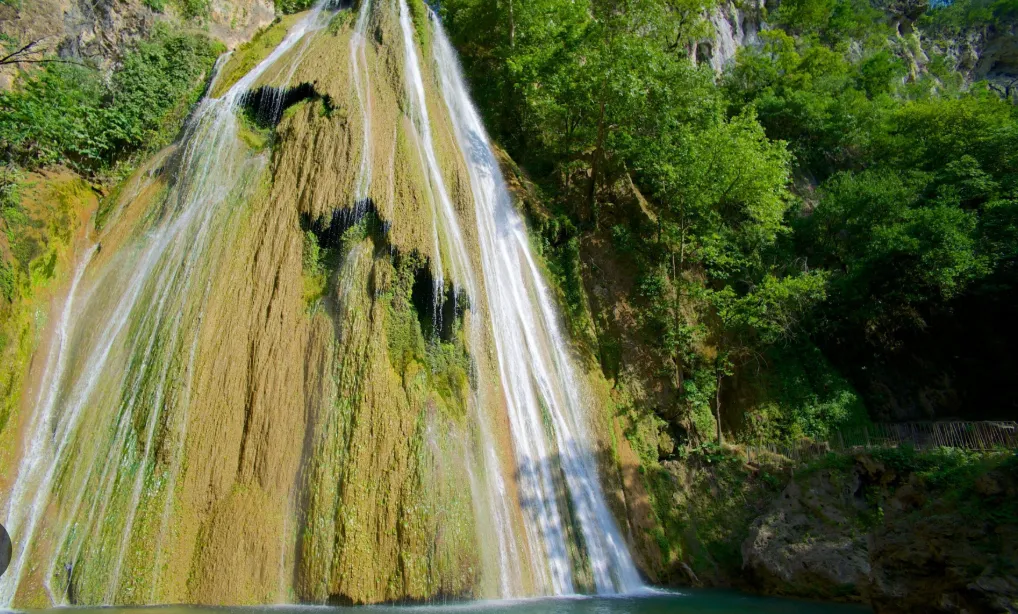
A 25-meter waterfall in Villa de Santiago, about an hour south of Monterrey. The name describes the shape. Hike in, stay for lunch at one of the rustic restaurants at the entrance. Day trip at most.
Grutas de García — The Caves
Limestone caves formed over 50 million years, reached by cable car after a 40-minute drive north. Guided tours only. Worth a half-day. 250 pesos entry.
Where to Eat and Drink
Cabrito — Monterrey’s Signature
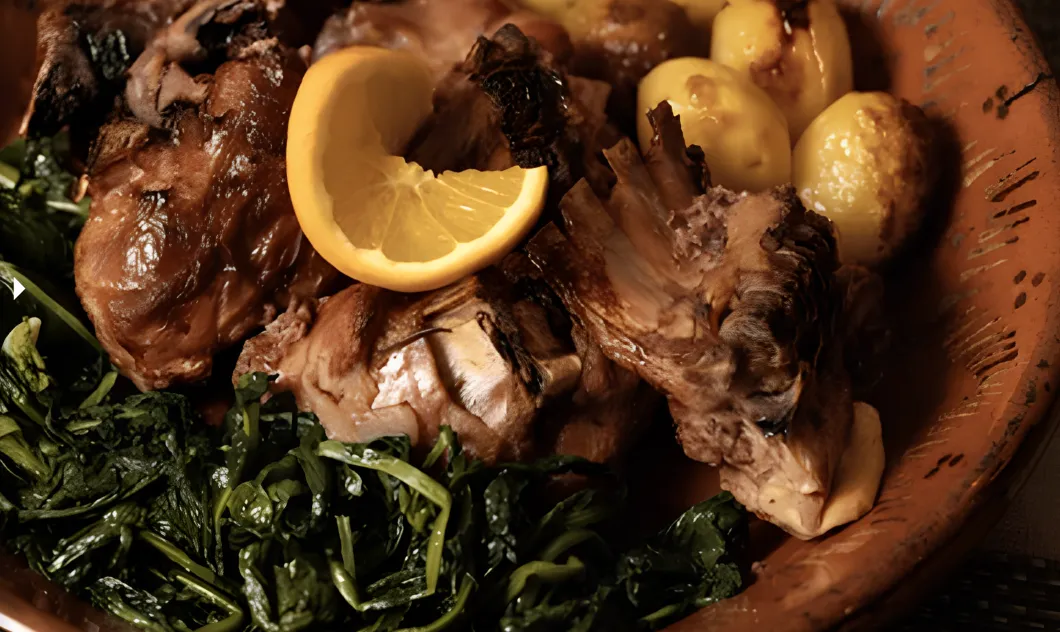
Monterrey’s food identity starts and ends with cabrito — young goat roasted over an open wood fire. Nowhere else in Mexico does this quite the same way. The meat is pink-tender, crusted on the outside, and typically served with flour tortillas, salsa, and beans.
El Rey del Cabrito (Downtown, Constitución 817). Since 1954. The most famous cabrito restaurant in Mexico. A full goat is a ceremony — you order a quarter cabrito for two people (350 pesos each), and it arrives on a wooden board still sizzling.
El Gran San Carlos (Venustiano Carranza 1039). Family-run, more casual. Smaller portions. Good for solo travelers.
Carne Asada Culture
Northern Mexico is beef country. Arrachera (skirt steak, marinated) and machacado (dried beef, rehydrated with eggs) are staples. Every restaurant in Monterrey serves them; most families cook them at home on Sundays.
Los Generales (San Pedro). Steakhouse with a curated meat program. Local wagyu, regional cuts. $60-90 USD per person.
For Breakfast
Machacado with eggs — salty, dried beef scrambled with eggs, served on a flour tortilla, probably with beans on the side. Every diner in Monterrey serves this. Tacos El Calentano (scattered locations) is the chain that does it best for 30-50 pesos.
The Fan Experience
FIFA Fan Festival — Monterrey: Parque Fundidora. Big screens, food stalls, live music. Free. This will be the largest gathering space in the city during the tournament.
Post-match bars in Barrio Antiguo: Calle Padre Mier has the highest concentration. Salón Mata Leones for wrestling-themed beer and tacos; La Nacional for craft cocktails; Café Iguana for rock music. Beers run 50-80 pesos, cocktails 120-180.
The local supporter culture: The Clásico Regio is the match between Club Monterrey (Rayados) and Tigres UANL — the two main Monterrey clubs. Both have fanatical followings. Rayados play at Estadio BBVA; Tigres play at Estadio Universitario in nearby San Nicolás de los Garza. A tip: Tigres UANL’s stadium is the venue where the 1986 Matthäus-Morocco story below actually happened. If you have a free day, visit both.
The Story
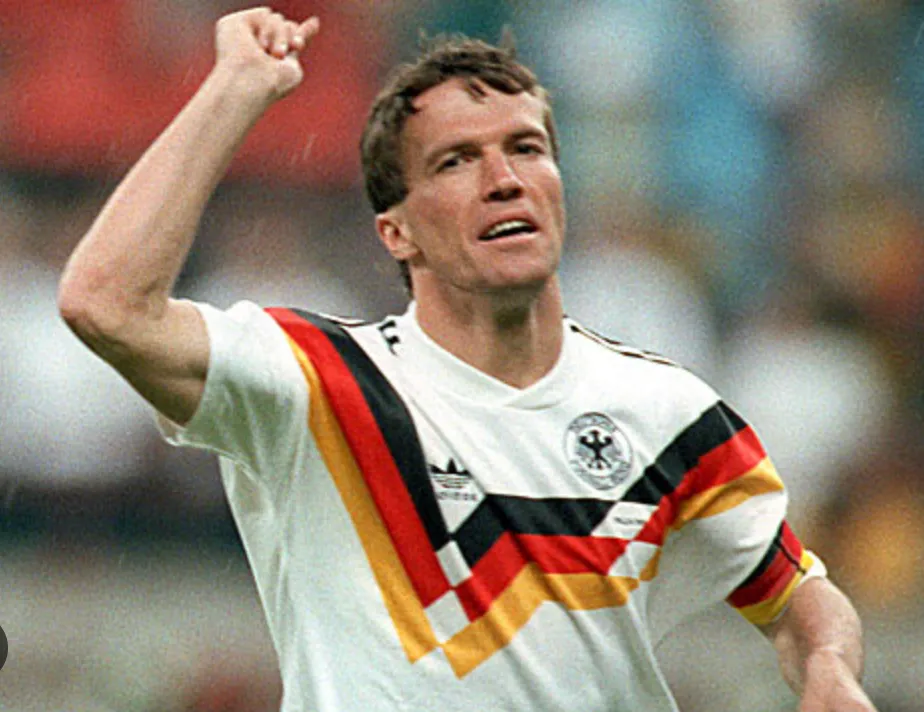
June 17, 1986. Estadio Universitario, Monterrey. West Germany vs. Morocco, Round of 16.
Morocco had become the first African nation ever to top its group in a World Cup, advancing from Group F ahead of England, Portugal, and Poland. The Atlas Lions were coached by Brazilian José Faria. They played a disciplined 4-4-2, every line absurdly compact. In the group stage they had held England to a goalless draw and beaten Portugal 3-1.
West Germany was the defending runner-up from 1982, coached by Franz Beckenbauer. Their midfield engine was Lothar Matthäus, 25, already a Bayern Munich fixture but not yet the world-beater he would become. In this tournament, he had been solid but not decisive.
For 87 minutes at Estadio Universitario — the old University of Nuevo León ground, about 30 minutes west of Estadio BBVA’s present location — neither team could score. Morocco’s defense, led by goalkeeper Badou Zaki and captain Noureddine Bouyahyaoui, repelled every German advance. Karl-Heinz Rummenigge, 31 and declining, found himself man-marked out of every half-chance. The match was heading to extra time.
In the 88th minute, Morocco conceded a free kick 25 meters from goal. Matthäus stood over the ball. The Moroccan wall set up. Matthäus struck the ball low and hard, whipped it around the defensive wall, and the shot squirmed under Zaki’s dive into the bottom-right corner.
1-0. Final score.
Morocco went home, having made history without a trophy. They remain the first African country to top a World Cup group. Their coach Faria, asked afterward about the late free kick, said: “We did everything right for 87 minutes. One mistake was enough.”
Matthäus went on to play in five World Cups (1982, 1986, 1990, 1994, 1998), a record only matched by two other players in history. He lifted the trophy in 1990. Morocco would not win a World Cup knockout match until 2022, when they reached the semifinal in Qatar — 36 years later.
The stadium where it happened, Estadio Universitario, is still there, home of Tigres UANL in Liga MX. If you have a free afternoon in Monterrey, it’s a 20-minute drive from Estadio BBVA. The capacity is smaller (41,000), the architecture older, the mountain view different. But it is where African football’s first World Cup knockout chapter ended — and where Matthäus’s 40-year career truly began.
The bars of Barrio Antiguo on match nights will play Moroccan music for fans from Casablanca and Rabat passing through — a small homage, four decades late.