July 3, 2025, 00:40 AM. Province of Zamora, northwestern Spain, A-52 motorway.
A Lamborghini Urus suffered a tire blowout while overtaking, crashing through the guardrail, overturning off the road, and catching fire.
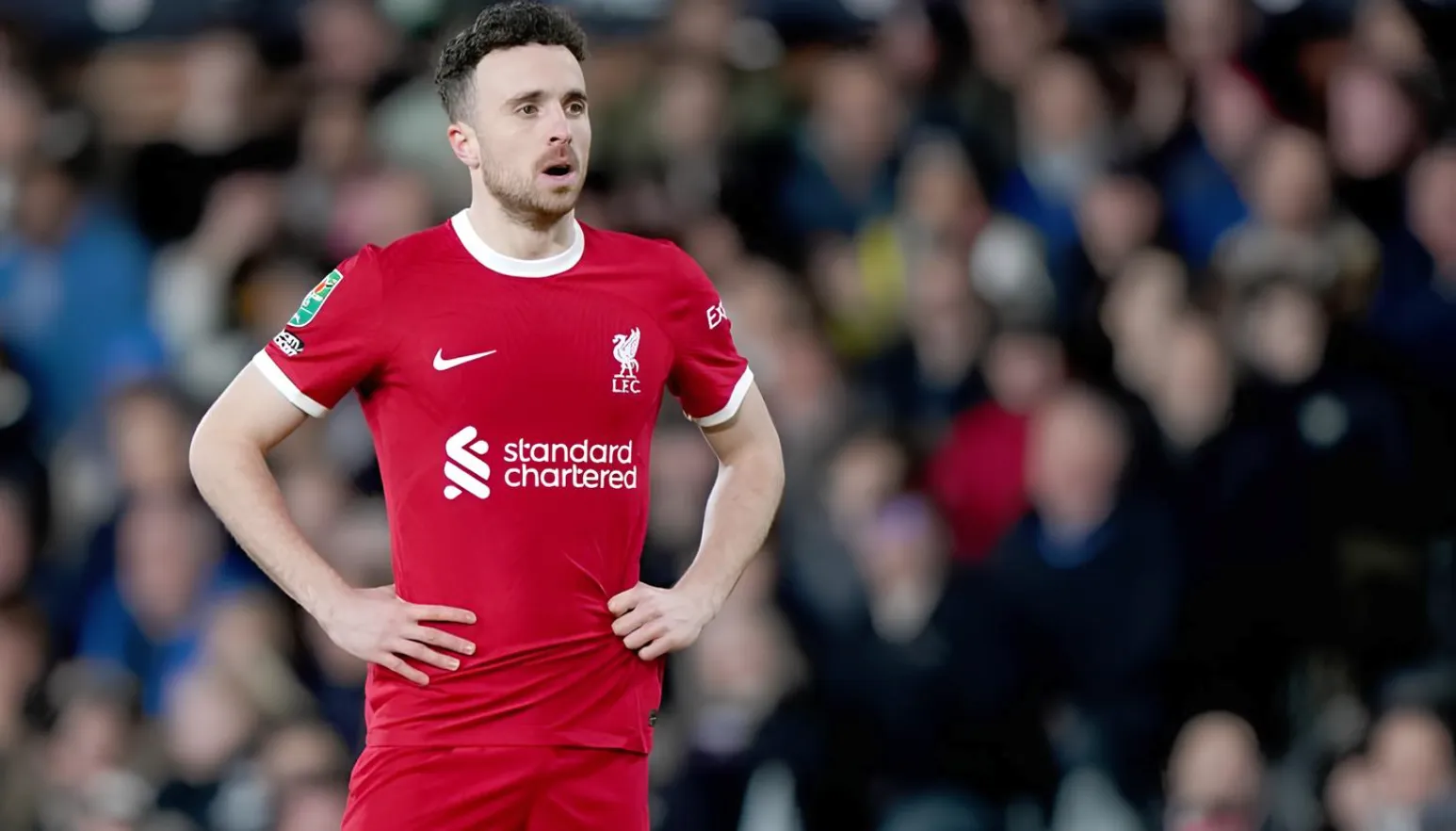
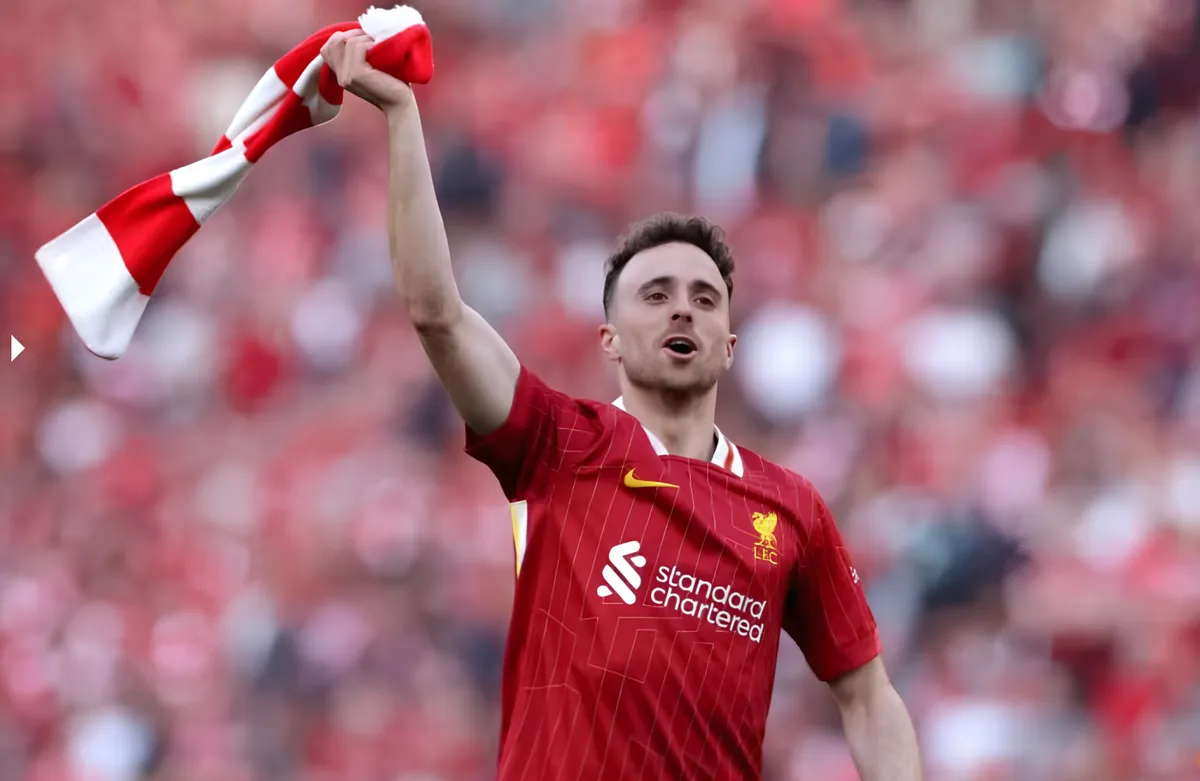
Inside were two brothers. The older brother, 28, was a Liverpool striker and Portuguese international named Diogo Jota. The younger brother, 25, was a player for Penafiel in the Portuguese Second Division named André Silva.
Neither of them made it out of the car.
Eleven days earlier, on June 22, Jota had married his childhood sweetheart, Rute Cardoso, in Porto. Twenty-five days earlier, on June 8, he had lifted the UEFA Nations League trophy with Cristiano Ronaldo at the Munich Arena.
He hadn’t planned to drive across Spain. Having recently undergone lung surgery, his doctor advised against flying. He chose the slowest route—driving from Porto to Santander, then taking a ferry back to England to make it to Liverpool’s pre-season training on July 7th.
He missed the ferry.
Empty Seats in the Dressing Room
The news spread throughout the football world that morning.
Cristiano Ronaldo wrote on X: “This makes absolutely no sense. We were on the national team together not long ago. You just got married not long ago. Rest in peace, Diogo and André. We will all miss you.”
Liverpool manager Arne Slot posted a message that was later placed on a bouquet outside Anfield: “Diogo, we had the same dream, and we achieved it together.”
LeBron James quoted the Liverpool anthem’s abbreviation on X: “YNWA, JOTA.”
Portuguese Prime Minister Luís Montenegro said he was “an athlete who brought honor to the name of Portugal.” Portuguese Football Federation President Pedro Proença used the phrase “a loss beyond football.”
That afternoon, in Bern, Switzerland, before the UEFA Women’s Euro 2025 match between Portugal and Spain, UEFA organized a minute of silence. It was the first time in the tournament that a moment was observed for a men’s footballer. For the next 48 hours, silence was observed before every match. Wimbledon allowed players to wear black ribbons on court.
One man’s passing brought several otherwise unrelated sporting events to a standstill.
He wasn’t Portugal’s “superstar,” but he was “that kind of person.”
By goals or individual awards, Jota wasn’t Portugal’s leading striker. He had 14 goals in 49 caps, and in a forward line with Ronaldo, Bruno Fernandes, and Leão, his role was always that of a rotation forward.
But everyone who worked with him described him with the same word—professional.
Always the first to arrive at training. Never the player who threw his gloves when substituted. Always the one who struck up conversation with young players arriving at their first national team camp.
For coach Roberto Martínez, Jota wasn’t an irreplaceable star, but rather a locating pin in the tactical system—his positioning inside the box, his pressing timing, and his defensive recovery speed allowed the entire attacking trident to function at the expected rhythm.
Without that pin, the parts are still there, but the machine doesn’t run the same way.
Last November, That Red Card
A crucial World Cup qualifier for Portugal took place four months after Jota’s death.
November 2025, Dublin. Portugal faced Ireland away, their qualification hopes hanging by a thread. Midway through the match, Ronaldo was shown a straight red card for elbowing Irish defender Dara O’Shea.
Portugal lost 0-2.
Ronaldo was suspended for the next match. The final match was Portugal’s home game against Armenia—a loss or draw would send them to the playoffs.
Without Ronaldo, Portugal thrashed Armenia 9-1 at home, securing top spot in their group and automatic qualification.
This match was repeatedly discussed by the Portuguese media—without Ronaldo, this team played their best 90 minutes of the year.
Two months later, in March 2026, Portugal drew 0-0 with Mexico at the Estadio Azteca in a friendly, followed by a 0-1 defeat to the United States at Mercedes-Benz Stadium in Atlanta.
Former Benfica coach José Mourinho said publicly after both matches: “Take Ronaldo out of the picture, and Portugal is just an ordinary team.”
That line has become the standard quote in Portuguese media discussions about Martínez’s tactical choices. Supporters argue that the 9-1 victory over Armenia proves Mourinho wrong; opponents argue that the two friendlies prove him right.
Stuck in the middle is Martínez. He must decide on the 23-man squad by the end of May, while solving a problem no one can teach him how to solve: how to let Ronaldo complete his final World Cup inside the same system that lost Jota.
The Number 20 Jersey Remains Empty
The Portuguese Football Federation has decided that the number 20 jersey will not be assigned to any player during the 2026 World Cup.
Jota will appear in the squad as a “symbolic 27th man.”
Martínez has not allowed the players to shy away from this topic. According to Portuguese broadcaster RTP and A Bola newspaper, the team holds a brief ceremony at the start of each long training camp—a 30-second silence led by Bruno Fernandes.
“We don’t want the sadness to stop at a certain point in time,” Martínez said at a press conference. “We want it to be part of our forward movement.”
Jota’s original role was split three ways. Rafael Leão (AC Milan) took the width on the left; Pedro Neto (Chelsea) took the counter-attacking depth; Gonçalo Ramos (Paris Saint-Germain) took the second striker position.
No single player can take over Jota’s position. Three of them together can restore part of it. That’s everything Martínez can do.
June 17, Houston
Portugal has been drawn into Group K for the 2026 World Cup, alongside DR Congo, Uzbekistan, and Colombia.
June 17, 1:00 PM Eastern Time, NRG Stadium, Houston. Portugal vs. DR Congo.
This will be Cristiano Ronaldo’s sixth World Cup opener—no player has reached that number before, unless Messi also decides to play. It will also be Portugal’s first World Cup match since losing Jota.
The Group K draw was relatively favorable to Portugal. Bookmakers give Portugal an 8% to 10% chance of lifting the trophy—roughly 6th to 7th, behind Spain, France, England, Brazil, and Argentina.
The real test isn’t in Group K. If you seed by ranking, Portugal’s Round of 16 opponent could be Germany—a team they’ve met 12 times in World Cups since 1966, with Portugal winning only twice.
But all the talk of tactics, matchups, and advancement odds shares a common backdrop in the Portuguese dressing room: an unclaimed number 20 jersey hanging on the rack.
One Last Thing
Jota’s widow, Rute Cardoso, has not made a public appearance since the funeral. She and her three children moved to Gondomar, a small town near Jota’s parents’ home. The youngest child was born in 2024 and is not yet two years old.
Rute’s Instagram post on her wedding day carried a three-word caption: “Sim. Para sempre.” — “Yes. Forever.”
That post is still up.
The Portuguese squad will train in Lisbon before heading to the United States. According to A Bola, Martínez plans for the entire team to visit Jota’s grave on the first day of the camp.
52 days from now, Group K kicks off. “You’ll Never Walk Alone” will ring out in the Liverpool supporters’ stands. But in the Portuguese dressing room, that line carries another meaning entirely.
For this team, this World Cup has long since stopped being only about how far they can go.
Sources: AP (initial July 3, 2025 crash report); Al Jazeera feature “Diogo Jota: What happened to the Liverpool and Portugal football star?”; Portuguese Football Federation official statement; Goal.com Ronaldo tribute; Olympics.com global tribute roundup; A Bola follow-up reporting on Martínez’s tactical adjustments; 2025-26 Portugal national team match data; betting market odds (Polymarket, Kalshi, April); FIFA official Group K schedule.