The Short Version
World Cup 2026 standings follow the classic system (3 points for a win, 1 for a draw, 0 for a loss) but with an unprecedented advancement mechanism: for the first time in history, 32 nations advance to the new Round of 32 starting June 28. The top two teams from each of the twelve groups qualify, joined by the eight best third-placed teams, ranked through a comparative table of all twelve third-placed sides. FIFA tiebreaker criteria follow a strict order: points, goal difference, goals scored, head-to-head result, team conduct score (based on cards), and finally the FIFA ranking. Argentina, the defending champion, opens on June 16 against Algeria in Kansas City. Italy, four-time world champion, failed to qualify for a third consecutive World Cup after losing 4-5 on penalties to Bosnia-Herzegovina on March 31. The tournament closes July 19 at MetLife Stadium, New Jersey.
The Points System: Classic, With a Structural Twist
FIFA’s official regulation for the 2026 World Cup group stage maintains traditional criteria:
| Result | Points |
|---|---|
| Win | 3 |
| Draw | 1 |
| Loss | 0 |
Each team plays three matches within its group of four. The group stage runs from June 11 to June 27, 2026. The truly new element is what happens at the close: instead of the 16 direct qualifiers from Qatar 2022, 32 teams advance to the Round of 32. The change responds to a FIFA Council decision made in March 2023, after the original format of 16 groups of three was discarded due to collusion risks between teams — a ghost that has haunted football since the infamous “Pact of Gijón” between West Germany and Austria at Spain 1982.
FIFA Tiebreaker Criteria, in Strict Order
When two or more nations finish on the same points, FIFA applies the following criteria in the exact order set out in the 2026 World Cup Regulations, Article 18.6:
- 1. Total points earned in the three group matches
- 2. Overall goal difference across all group matches
- 3. Goals scored across all group matches
- 4. Head-to-head result between tied teams — points, then goal difference, then goals scored in matches between them
- 5. Team conduct score — a cumulative card-based deduction system
- 6. FIFA Ranking at the start of the tournament
The conduct score is the least understood and yet the most used criterion in modern tournaments. It works as follows: a yellow card deducts 1 point, a second yellow card -3, a direct red -4, a yellow plus direct red -5. The total is calculated at the end of the three group matches and applied only if teams remain tied after comparing head-to-head results. Japan qualified for the Round of 16 at Qatar 2022 ahead of Senegal using exactly this criterion — both finished with the same points, identical goal difference, and identical goals scored; Japan had three fewer yellow cards.
How the 8 Best Third-Placed Teams Qualify
For the first time at a World Cup, eight of the twelve teams finishing third in their group qualify for the next round. This profoundly changes coaches’ strategic calculations: third place is no longer elimination, but a real possibility.
FIFA will compile a unified table of the twelve third-placed teams at the end of the group stage, ordering them with the same tiebreaker criteria (points, goal difference, goals scored, conduct, FIFA Ranking). The top eight advance to the Round of 32; the bottom four are eliminated alongside the twelve fourth-placed teams from each group.
| Stage | Nations | Origin |
|---|---|---|
| Start | 48 | 12 groups of 4 teams |
| End of groups | 32 qualifiers | 12 winners + 12 runners-up + 8 best thirds |
| Eliminated in groups | 16 | 12 fourth-placed + 4 worst third-placed |
| Round of 32 | 32 | Begins June 28 |
The 12 Groups: Top Seeds and Favorites
The December 5, 2025 draw at the Kennedy Center in Washington distributed the 48 teams — including the six playoff winners from March 31 — across twelve groups. The three host nations (Mexico, Canada, USA) received automatic Pot 1 assignment alongside the nine highest-ranked teams in the world.
| Group | Teams | Market favorite |
|---|---|---|
| A | Mexico · South Korea · South Africa · Czechia | Mexico |
| B | Canada · Switzerland · Qatar · Bosnia-Herzegovina | Switzerland |
| C | Brazil · Morocco · Scotland · Haiti | Brazil |
| D | USA · Paraguay · Australia · Türkiye | USA |
| E | Germany · Ecuador · Côte d'Ivoire · Curaçao | Germany |
| F | Netherlands · Japan · Tunisia · Sweden | Netherlands |
| G | Belgium · Iran · Egypt · New Zealand | Belgium |
| H | Spain · Uruguay · Saudi Arabia · Cape Verde | Spain |
| I | France · Senegal · Norway · Iraq | France |
| J | Argentina · Austria · Algeria · Jordan | Argentina |
| K | Portugal · Colombia · Uzbekistan · DR Congo | Portugal |
| L | England · Croatia · Panama · Ghana | England |
Argentina, the Case to Watch in Group J
Lionel Scaloni’s side arrives as reigning double champion — World Cup 2022 plus Copa América 2024 — but with a draw the Argentine press has called “deportively friendly, logistically demanding”. Argentina opens the tournament on June 16 at Arrowhead Stadium in Kansas City against Algeria, in what will be Lionel Messi’s first match at the World Cup at 39 and, as the captain himself confirmed in March, the last of his career with the national team.
Austria emerges as the group’s most complicated opponent. Ralf Rangnick’s side retains David Alaba, Marko Arnautović, and Konrad Laimer in its spine, and arrived as second in UEFA qualifying Group H behind Germany. Algeria and Jordan complete the group. Jordan, a World Cup debutant, has a favorable schedule: they face Algeria first, allowing them to play the most manageable match while still fresh.

The Italian Silence: Third World Cup Lost on Penalties
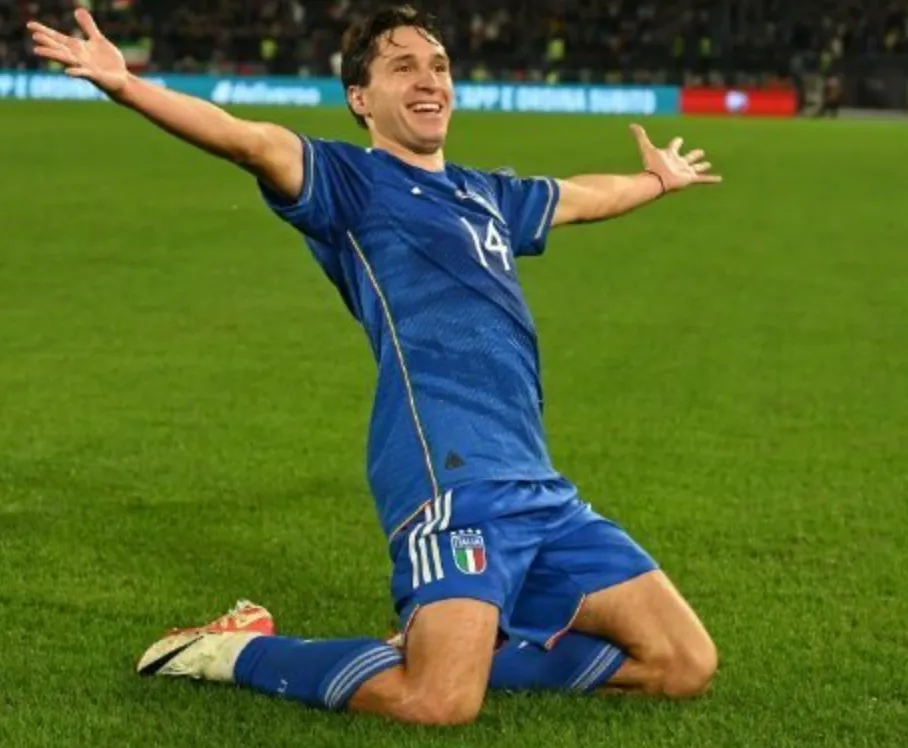
The most discussed absence of the tournament is Italy’s. The Azzurri lost the European playoff on March 31, 2026 in Zenica, where they fell 4-5 on penalties to Bosnia-Herzegovina after a 1-1 draw in regulation and extra time. Federico Chiesa, scorer of the equalizer in the 89th minute, missed his penalty as the fourth taker. Edin Džeko, 38, converted the decisive spot kick.
It is Italy’s third consecutive World Cup absence after 2018 and 2022 — an unprecedented decline for a nation with four stars on its jersey. “We have to accept the reality and rebuild from scratch”, said Italy coach Luciano Spalletti after the defeat. The Federazione Italiana Giuoco Calcio announced a complete technical restructuring in April, focused on the U-15 and U-17 categories.
The 4 Nations Making Their World Cup Debut
The 2026 World Cup marks an absolute record for debutant nations: four countries play their first finals.
| Nation | Group | Population | Qualification route |
|---|---|---|---|
| Cape Verde | H | ~520,000 | African qualifying, Group D runner-up |
| Curaçao | E | ~155,000 | CONCACAF qualifying, final round winner |
| Jordan | J | ~11 million | AFC qualifying, third round |
| Uzbekistan | K | ~36 million | AFC qualifying, Group A runner-up |
Curaçao, with just 155,000 inhabitants, is the smallest nation ever to qualify for a World Cup, surpassing the previous record set by Iceland (340,000) at Russia 2018. The squad managed by Dick Advocaat is built around Eredivisie-trained players.
Full Phase Calendar
- June 11, 2026 — Opening: Mexico vs South Africa, Estadio Banorte (ex-Azteca), Mexico City, 3:00 PM ET
- June 11–27 — Group stage (72 matches)
- June 28 – July 3 — Round of 32 (16 matches), single-elimination format
- July 4–6 — Round of 16 (8 matches)
- July 9–11 — Quarterfinals (4 matches)
- July 14–15 — Semifinals
- July 17 — Third-place playoff, Hard Rock Stadium, Miami
- July 19, 2026 — Final, MetLife Stadium, East Rutherford, New Jersey, 4:00 PM ET
Prize Money: Historic Record
FIFA confirmed on April 28, 2026 that 2026 World Cup prize money reaches $871 million, an increase of 15% over the initially announced $727 million and nearly double Qatar 2022’s $440 million.
- Champion: $50 million (record in an international team tournament)
- Runner-up: $35 million
- Third place: $30 million
- Fourth place: $26 million
- Minimum qualification guarantee: $12.5 million ($2.5M preparation + $10M qualification)
FAQ
How many teams advance from each group at the 2026 World Cup? The top two automatically, plus the eight best third-placed teams across the twelve groups, totaling 32 nations.
What happens if two teams finish on the same points? Goal difference is applied, then goals scored, then head-to-head result between tied teams, conduct score, and finally FIFA Ranking.
When does Argentina open play? On June 16, 2026 at 8:00 PM Central Time against Algeria at Arrowhead Stadium in Kansas City — Messi’s first match at his final World Cup.
Is Italy playing this World Cup? No. Italy lost on penalties to Bosnia-Herzegovina in the European playoff on March 31, 2026.
How many matches does a team reaching the final play? Eight matches total: three group stage matches plus five knockout matches (Round of 32, Round of 16, quarterfinals, semifinal, final).
What is the conduct score? It is a tiebreaker based on yellow and red cards received during group matches. It deducts points: -1 for a single yellow, -3 for two yellows, -4 for a direct red, -5 for a yellow plus direct red.