
The Short Version
Indonesia did not qualify for the 2026 World Cup after being eliminated in the fourth round of Asian qualifying. Key points: (1) In fourth-round Group B, Indonesia lost twice — 2-3 to Saudi Arabia and 0-1 to Iraq — and finished bottom of the group with no points; (2) The decisive goal was scored by Zidane Iqbal in the 75th minute against Iraq; (3) Only group winners qualified automatically; runners-up advanced to a fifth round — Indonesia did not even secure second place; (4) This extends Indonesia’s World Cup absence since 1938, when it competed as the Dutch East Indies; (5) A naturalized squad under Patrick Kluivert had raised hopes after a historic 2-0 win over Saudi Arabia in the third round; (6) After the failure, the hashtag #KluivertOut trended and PSSI chairman Erick Thohir apologized to the public; (7) The 48-team format opened eight direct slots for Asia, but Indonesia still could not break through.
One Goal in Jeddah
King Abdullah Sports City Stadium, Jeddah, October 11, 2025. Indonesia needed a win over Iraq to keep their hopes alive.
For an hour, the match was tight. Neither side created a clean chance. Then, in the 75th minute, Zidane Iqbal — the England-born midfielder representing Iraq — struck a low shot that beat Indonesia’s goalkeeper. One goal. It was enough.
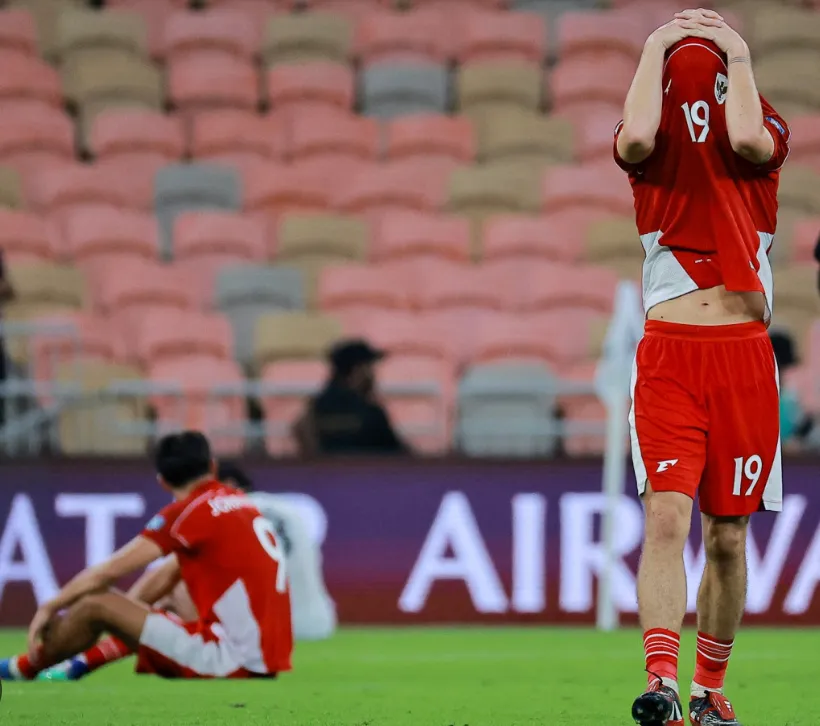
Indonesia tried to respond. Kevin Diks threatened, Ole Romeny pushed in the closing minutes. Even when Iraq were reduced to ten men after Zaid Tahseen received a second yellow in stoppage time, the Garuda still could not equalize. The final whistle blew. The 0-1 scoreline held. And with it, Indonesia’s dream of the 2026 World Cup went dark.
With two defeats in two matches, Indonesia finished bottom of Group B without a single point.
Why Indonesia Fell Short: The Fourth-Round Format
To understand this failure, you have to understand the format.
The fourth round of Asian qualifying brought six teams together in two groups of three, played at neutral venues. Only group winners qualified directly for the 2026 World Cup. Runners-up still had one more chance: advancing to a fifth round.
Indonesia were in Group B with Saudi Arabia and Iraq. The scenario was clear from the start: to qualify directly, Indonesia had to top the group. To survive, they needed at least second place.
The first match against Saudi Arabia ended 2-3. Kevin Diks converted two penalties, but Firas Al-Buraikan and company carried Saudi Arabia to the win. That defeat immediately put Indonesia in a corner: they had to beat Iraq. When the 0-1 loss came, there was no road left. Indonesia were eliminated without ever getting to think about a fifth round.
A Wait Since 1938
Here is the number that hurts: Indonesia have not appeared at a World Cup since 1938.
Back then, the name was not Indonesia but the Dutch East Indies — a colonial entity that played at the 1938 World Cup in France and lost 0-6 to Hungary in the first round. That remains the only “Indonesian” appearance on the World Cup stage, and it happened before the nation existed as an independent country.
Since independence in 1945, the Garuda have never returned to football’s biggest tournament. Generation after generation of players came and went without touching it. For a country with a fan base as fervent as Indonesia’s — where stadiums fill, the local league lives, and the national team is always a national conversation — that 88-year wait feels like a wound that won’t heal.
The 2026 World Cup, with its 48-team format opening eight direct slots for Asia, briefly felt like the best chance in a generation. That is exactly why this failure tastes more bitter.
The Naturalized Squad and the Hope That Flickered
What makes this story so emotional is how close Indonesia felt.
Under Dutch coach Patrick Kluivert — and Shin Tae-yong before him — Indonesia built a squad reinforced by many naturalized players of Dutch descent: Kevin Diks, Thom Haye, Calvin Verdonk, Mauro Zijlstra, Ole Romeny, and others. The project was controversial to some, but the results were undeniable: in the third round, Indonesia recorded a historic 2-0 win over Saudi Arabia through a Marselino Ferdinan brace.
For a moment, the whole country believed. After decades, the World Cup felt genuinely within reach. That is what made the fourth-round defeat so painful — not because Indonesia were never close, but precisely because they were so close before it all collapsed in two matches.

#KluivertOut and an Apology
The disappointment spilled onto social media. The hashtag #KluivertOut trended immediately after the loss to Iraq. Supporters questioned the tactical decisions, the player selection, and the direction of the expensive naturalization project.
PSSI chairman Erick Thohir apologized to the public for the team’s failure to secure a place at the tournament. An apology from a federation chairman — who is also the Minister of Youth and Sports — shows how much expectation was loaded onto this campaign, and how deep the disappointment ran when it went unmet.
The question now is no longer about 2026, but about what comes next.
The Road Ahead
The 2026 World Cup will go on without Indonesia. But the Garuda’s story is not over.
The naturalization project has measurably changed the national team’s competitive level — the win over Saudi Arabia proved Indonesia can now compete with Asia’s top sides, something hard to imagine a decade ago. The challenge is turning that surge into consistency, and consistency into qualification.
The 2030 and 2034 editions are coming. A generation of young players — many now playing in Europe — will reach their peak. Whether PSSI keeps Kluivert, whether the naturalization project continues or is reassessed, will decide where the Garuda fly next.
For now, millions of Indonesian supporters will watch the 2026 World Cup as spectators, not participants. But waiting, however long, is the thing Indonesian football understands best. Since 1938, they have been waiting. They will wait again — and hope that next time, one goal in Jeddah is no longer enough to bring everything down.
FAQ
Did Indonesia qualify for the 2026 World Cup? No. Indonesia failed to qualify after being eliminated in the fourth round of Asian qualifying. In Group B, Indonesia lost 2-3 to Saudi Arabia and 0-1 to Iraq, finishing bottom of the group with no points.
Why did Indonesia fail to qualify for the 2026 World Cup? In the fourth round, only group winners qualified directly and runners-up advanced to a fifth round. Indonesia lost their first two matches against Saudi Arabia and Iraq, finishing bottom of Group B and going out.
When did Indonesia last appear at a World Cup? In 1938, when it competed as the Dutch East Indies, a colonial territory. That team lost 0-6 to Hungary in the first round. It is the only World Cup appearance, and it came before Indonesia’s independence in 1945.
Who scored Iraq’s winning goal against Indonesia? Midfielder Zidane Iqbal scored the only goal in the 75th minute with a low shot, at King Abdullah Sports City Stadium in Jeddah in October 2025.
Who was Indonesia’s coach during this failure? Patrick Kluivert, the former Netherlands and Barcelona striker. After the failure, the hashtag #KluivertOut trended on social media.
What is Indonesia’s naturalized squad? Indonesia built a national team with many naturalized players of Dutch descent, such as Kevin Diks, Thom Haye, Calvin Verdonk, and Ole Romeny. The project produced a historic 2-0 win over Saudi Arabia in the third round.
Did Erick Thohir apologize? Yes. PSSI chairman Erick Thohir apologized to the public after the national team failed to secure a place at the 2026 World Cup.
How many 2026 World Cup slots did Asia get? The 48-team format gave Asia (AFC) eight direct slots plus one inter-confederation playoff spot — the most in history, but Indonesia still could not break through.
When could Indonesia qualify for a World Cup again? The next chances are the 2030 and 2034 World Cups. Many young Indonesian players now play in Europe, and the future depends on the continuation of the national team development project.
Which Asian nations qualified for the 2026 World Cup? Several Asian representatives qualified, including Japan, South Korea, Australia, Iran, Saudi Arabia, and others. Iraq advanced to the fifth round and then to the inter-confederation playoffs after finishing as a runner-up.
Related Articles
- A 90-Year Record, 55 Goals in 48 Caps: Haaland Is Not a Machine — The story of a country that did qualify, on the back of a phenomenal striker
- Neuer Returns, El Mala Comes from Nowhere: Germany Names the 26 — How a world giant assembled its squad
- The Curse of First Place: France Tops the FIFA Ranking — Where Asian nations stand in the world ranking
- Cristiano Goes to His Sixth: Portugal Names the 26 for 2026 — A nation returning to the World Cup with its star
- External sources: ANTARA News — Indonesia ousted from the 2026 World Cup · NBC Sports — AFC qualifying schedule & results · Jakarta Globe — #KluivertOut trends after failure
About the author: Bayu Pratama is a football journalist at Touchline Global. Bayu has covered the Indonesia national team, Liga 1, and international football since 2014, with a focus on tactical analysis and the supporter’s perspective. Contact: bayu.pratama@bolanformasi.id · Twitter: @BayuPratamaBN · Profile: bolanformasi.id/penulis/bayu-pratama