The Short Version
The final official FIFA ranking before the 2026 World Cup (April 1, 2026) places France at the top, ahead of Spain and Argentina. Key points: (1) No team ranked world number one has ever won the World Cup since the ranking was created in 1992 — a run of eight tournaments; (2) Current top 5: France (1,877.32 pts), Spain (1,876.4), Argentina (1,874.81), England (1,825.97), Portugal (1,763.83); (3) Brazil, the record holder with five titles, is only 6th; (4) Italy, 12th in the world, is not playing the World Cup — the highest-ranked of the absentees, eliminated in the playoff by Bosnia; (5) France overtook Spain by beating Brazil and Colombia in March, where Argentina faced only Mauritania and Zambia; (6) The next official ranking falls on June 9, two days before kickoff; (7) The lowest-ranked teams at the tournament: New Zealand (85th), Haiti (83rd), Curaçao (82nd).
Eight Tournaments, Zero Champions in First Place
Let’s lay down the fact first, raw, because it’s stranger than it looks.
The FIFA ranking was born in December 1992. Since then, eight World Cups have been held: 1994, 1998, 2002, 2006, 2010, 2014, 2018, 2022. At each, a team occupied the top of the world ranking on the eve of the tournament. At each, that team went home without the trophy.
The pattern admits no exception. In 2014, hosts Brazil were not first; champions Germany were second. In 2010, Spain won having started second behind Brazil. In 2006, Italy lifted the cup without being top. The logic of the ranking — rewarding consistency accumulated over years — seems to collide with the logic of the tournament, which rewards seven matches played in a month.
There is an important nuance: several nations became world number one thanks to their title, in the ranking update that followed their triumph. Brazil, Italy, Spain, Germany, France, and Argentina all reached first place on the back of a World Cup victory. But arriving first and leaving as champion are two things history has never combined.
What the April 1, 2026 Ranking Says
| Rank | Team | Points | Change |
|---|---|---|---|
| 1 | France | 1,877.32 | ↑2 |
| 2 | Spain | 1,876.40 | ↓1 |
| 3 | Argentina | 1,874.81 | ↓1 |
| 4 | England | 1,825.97 | — |
| 5 | Portugal | 1,763.83 | ↑1 |
| 6 | Brazil | 1,761.16 | ↓1 |
| 7 | Netherlands | 1,757.87 | — |
| 8 | Morocco | 1,755.87 | — |
| 9 | Belgium | 1,734.71 | — |
| 10 | Germany | 1,730.37 | — |
Three teams stand within fewer than three points: France (1,877.32), Spain (1,876.40), and Argentina (1,874.81). Fewer than three points separate first from third — the statistical equivalent of a single result. The ranking has never been this tight at the summit on the eve of a World Cup.
The detail that explains the shift: France overtook Spain and Argentina not by its own exploits alone, but by the quality of its opponents. In March 2026, Les Bleus beat Brazil and Colombia — two top-15 nations. Argentina also won both its matches, but against Mauritania and Zambia. FIFA’s points system, based on the Elo model since 2018, weights the strength of the opponent. Beating Brazil pays; beating Zambia, far less.
Why the Ranking and the Tournament Don’t Say the Same Thing
Here is the heart of the paradox.
The FIFA ranking measures one thing: consistency over time. It adds and subtracts points after every official match, over years. A team ranked first is a team that has won, often, against solid opponents, for a long time.
The World Cup measures something else: the ability to win seven matches in a row, in a month, in single-elimination from the round of 16. A single bad evening, a penalty shootout, a red card — and four years of consistency vanish in ninety minutes.
The two logics are not opposed, but they don’t overlap. The ranking is a marathon; the tournament, a series of sprints. Being the best marathoner does not guarantee winning the final sprint. This is precisely why football, unlike tennis or golf where the world number one often wins, retains a streak of the unpredictable that its rankings will never fully capture.
As Yahoo Sports notes, inverting the ranking also highlights a fascinating parallel tournament: that of the nations who will never see the World Cup, from San Marino (211th) to the small island federations.
Italy, 12th and Absent
There is an anomaly in this ranking worth pausing on.
Italy is 12th in the world, with 1,700.37 points. It is the ninth-highest European nation in the ranking. And it will not be at the 2026 World Cup.
Four-time world champions, Italy failed in the playoff, beaten on penalties by Bosnia and Herzegovina. It is their third consecutive World Cup absence — a chasm for a country that had not missed the tournament between 1958 and 2014. The ranking, here, tells a cruelty: Italy is ranked higher than eleven of the nations that will, in fact, play the World Cup. The consistency measured by the ranking was not enough to clear the obstacle of a single playoff.
This is the other face of the curse of first place. The FIFA ranking is a useful instrument — it serves the draw, the seeding, the comparison. But it does not play the matches. And the World Cup is neither won nor lost on paper.
France at the Top: Asset or Omen?
There remains the question that supporters of Les Bleus are asking.
First place is, objectively, the reflection of a team at its peak. France in 2026 — carried by Mbappé, and whom Didier Deschamps takes to his last tournament before stepping aside — arrives as one of the great favourites, regardless of the ranking. Its squad depth, its recent experience (finalist in 2022, champion in 2018), its ability to beat top-tier opponents: all of that is real.
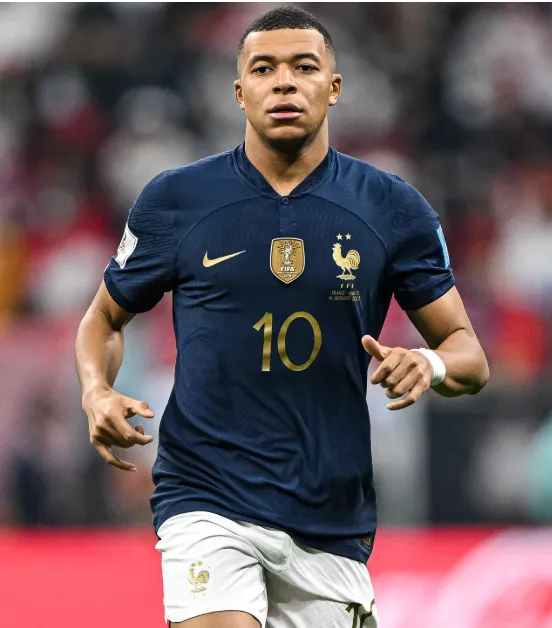
But history whispers something else. None of the eight teams arriving first in the ranking on the eve of a World Cup has left as champion. Statistically, the sample is small — eight tournaments do not make a law. And yet the pattern holds with a troubling regularity.
The next official ranking will fall on June 9, two days before the June 11 kickoff. It is unlikely to upend the hierarchy. France will therefore, in all likelihood, enter this World Cup at the top of the world ranking.
If it lifts the trophy on July 19 in East Rutherford, it will break a thirty-four-year curse. If it does not, the pattern will have held a ninth time — and the FIFA ranking will continue to be what it is: an excellent summary of the past, and a poor prophet of the future.
FAQ
Who is top of the FIFA ranking in May 2026? France, with 1,877.32 points, per the latest official update of April 1, 2026. It leads Spain (1,876.40) and Argentina (1,874.81). The next official ranking will be published on June 9, 2026, two days before the World Cup begins.
Is it true no world number one has ever won the World Cup? Yes. Since the FIFA ranking was created in December 1992, eight World Cups have been held (1994 to 2022). None was won by the team ranked first on the eve of the tournament. Several nations became number one after their title, but none won while starting first.
Why did France overtake Spain and Argentina? In March 2026, France beat Brazil and Colombia, two top-15 nations. Argentina also won both its matches, but against Mauritania and Zambia. FIFA’s Elo-based points system weights the strength of the opponent: beating a strong team pays far more.
Which is the highest-ranked team absent from the 2026 World Cup? Italy, 12th in the world with 1,700.37 points. Four-time world champions, eliminated in the playoff on penalties by Bosnia and Herzegovina — their third consecutive absence.
Is Brazil a favourite according to the ranking? Brazil, the record holder with five titles, is only 6th in the April 1, 2026 ranking (1,761.16 points). The ranking measures recent consistency, not historical honours.
Which are the lowest-ranked teams at the 2026 World Cup? New Zealand (85th), Haiti (83rd), and Curaçao (82nd) are the lowest-ranked of the 48 qualified. No team outside the top 100 is taking part.
How is the FIFA ranking calculated? Since August 2018, it is based on the Elo model: points are added or subtracted after each match according to the result, the importance of the fixture, and the strength of the opponent. A friendly win against a weak team can pay very little, or even cost points on average.
When does the next FIFA ranking come out? On June 9, 2026, two days before the World Cup kickoff on June 11. It will be the last before the tournament.
Is the ranking of any use for the World Cup? Yes, but indirectly: it served the draw and the seeding. It does not predict the winner — history even shows the opposite.
Related Articles
- Cristiano Goes to His Sixth: Portugal Names the 26 for 2026 — Portugal, 5th in the ranking, chasing a first world title
- A 90-Year Record, 55 Goals in 48 Caps: Haaland Is Not a Machine — Norway, 31st in the world, and the difficulty of scoring for a low-ranked nation
- Neymar’s Name Was Called: Brazil’s 26 for the 2026 World Cup — Brazil, the record title-holder, is only 6th in the ranking
- 52 Years After Zaire: The List That Waited Since 1974 — DR Congo, around 60th, back after half a century
- External sources: FIFA — official world ranking · Yahoo Sports / FourFourTwo — ranking before the World Cup · Wikipedia — FIFA Men’s World Ranking
About the author: Pierre Lefèvre is a football columnist at Touchline Global. Lefèvre has covered international football since 2015, with a focus on portraits, long-form narratives, and the political analysis of sport. Contact: pierre.lefevre@lebut.fr · Twitter: @PierreLefevreLB · Profile: lebut.fr/chroniqueurs/pierre-lefevre