The Short Version
On May 21, 2026, head coach Julian Nagelsmann named Germany’s 26-man squad for the 2026 World Cup. Key points: (1) Manuel Neuer returns from retirement to become Germany’s number one at 40, ahead of Oliver Baumann (Hoffenheim) and Alexander Nübel (Stuttgart); (2) Said El Mala (1. FC Köln), 19, was nominated without a single senior cap — 13 goals and five assists in 34 Bundesliga games; (3) Lennart Karl (Bayern Munich), 18, is the squad’s youngest surprise; (4) Niclas Füllkrug and Tim Kleindienst are both left out of the final squad; (5) Jamal Musiala leads the attack after a long injury, and Serge Gnabry makes it despite fitness concerns; (6) Germany has slipped to 10th in the world ranking and is under pressure after two group-stage exits (2018, 2022); (7) World Cup opener June 14 in Houston, Texas.
Neuer’s Un-Retirement
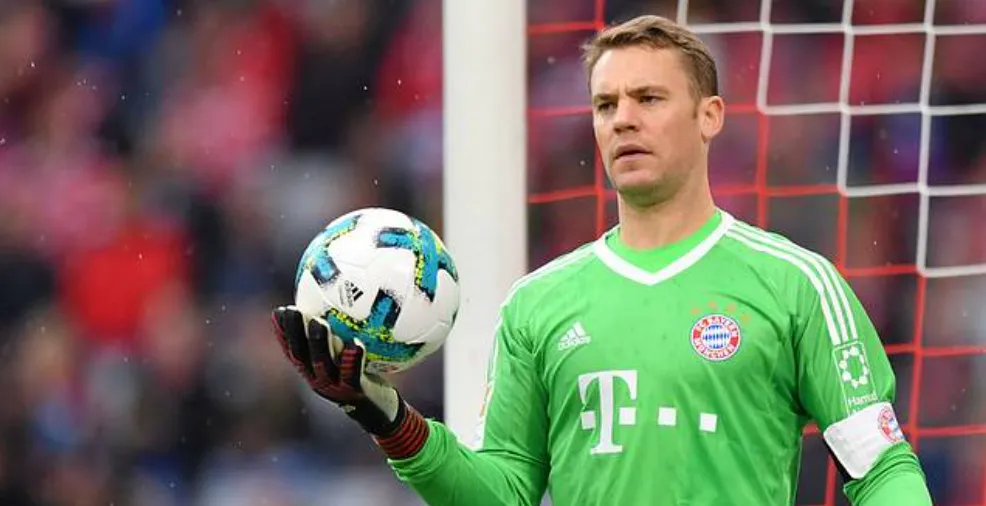
It is the story that overshadows the squad. Manuel Neuer, who had announced his retirement from the national team after Euro 2024, is back — and according to information ahead of the announcement, will be Germany’s number one at the World Cup at 40.
It is an un-retirement of a kind German football has rarely seen. Neuer, a 2014 world champion, is set to keep goal ahead of Oliver Baumann (Hoffenheim) and Alexander Nübel (Stuttgart). Jonas Urbig (Bayern) travels but is not part of the 26; Finn Dahmen (Augsburg) and Noah Atubolu (Freiburg) therefore miss out.
The decision is not without controversy. A 40-year-old goalkeeper who had already vacated his place in the national team blocks the next generation. But in a tournament decided over seven knockout games, Nagelsmann is betting on experience over the future. It is the same logic that led other coaches at this tournament to reach for veterans — experience as insurance against the one bad evening.
The 26-Man Squad
The following list reflects information at the time of the announcement and is subject in detail to official DFB confirmation.
Goalkeepers (3): Manuel Neuer (Bayern Munich), Oliver Baumann (Hoffenheim), Alexander Nübel (VfB Stuttgart).
Defenders: Joshua Kimmich (Bayern Munich, captain), Antonio Rüdiger (Real Madrid), Jonathan Tah (Bayern Munich), Nico Schlotterbeck (Borussia Dortmund), Waldemar Anton (Borussia Dortmund), Malick Thiaw (Newcastle United), David Raum (RB Leipzig), Nathaniel Brown (Eintracht Frankfurt), Josha Vagnoman (VfB Stuttgart).
Midfielders: Florian Wirtz (Liverpool), Jamal Musiala (Bayern Munich), Leon Goretzka (Bayern Munich), Angelo Stiller (VfB Stuttgart), Aleksandar Pavlović (Bayern Munich), Pascal Groß (Borussia Dortmund), Felix Nmecha (Borussia Dortmund), Anton Stach (Leeds United), Lennart Karl (Bayern Munich), Said El Mala (1. FC Köln).
Forwards: Kai Havertz (Arsenal), Nick Woltemade (Newcastle United), Deniz Undav (VfB Stuttgart), Leroy Sané (Galatasaray), Serge Gnabry (Bayern Munich), Maximilian Beier (Borussia Dortmund), Jamie Leweling (VfB Stuttgart), Kevin Schade (Brentford).
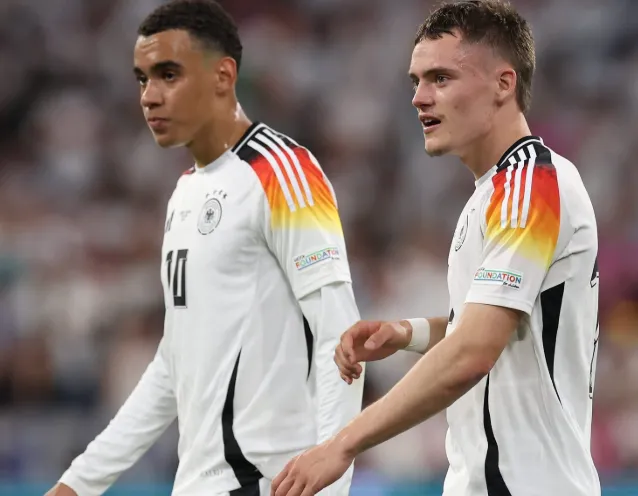
Kimmich, the captain, is likely to play at right-back again at the tournament despite his season in central midfield at Bayern, with Goretzka and Stiller in the middle. Wirtz and Musiala form the creative heart — once compared by Bastian Schweinsteiger to Robben and Ribéry.
Said El Mala: A World Cup Debutant with No Caps
If Neuer’s return is the headline, Said El Mala is the surprise.
The 19-year-old from Cologne was nominated for the World Cup without ever having played a senior international for Germany. In 34 Bundesliga games for 1. FC Köln he scored 13 goals and provided five assists — a season strong enough to convince Nagelsmann to take him straight to the World Cup without the usual intermediate step.
It is a rare decision. Most players accumulate caps before they appear at a major tournament. El Mala skips that step — a sign both of his form and of Nagelsmann’s willingness to bet on instinct. And he is not the only teenager in the squad: Bayern youngster Lennart Karl, 18, is also included, making him one of the tournament’s youngest players.
It is the other half of Nagelsmann’s squad logic: experience in goal, risk in attack.
Who Misses Out: Füllkrug, Kleindienst and the Established Names
The most prominent name absent is Niclas Füllkrug. The striker, now at AC Milan, did not make the final squad — a clear sign that Nagelsmann is building his attack around younger, in-form profiles. Tim Kleindienst (Borussia Mönchengladbach), floated at one point as an option, is also absent.
In attack, Nagelsmann instead leans on a mix of experience and freshness: Havertz, Woltemade, Undav and Sané as the established names, alongside Serge Gnabry — back from injury — and the younger Maximilian Beier, Jamie Leweling and Kevin Schade. Gnabry’s inclusion was in doubt until late after a season disrupted by fitness concerns; that he made the squad is one of the relief stories for Bayern and Germany.
Also absent are Chris Führich and Maximilian Mittelstädt, plus Robert Andrich (Bayer Leverkusen), Yann Aurel Bisseck (Inter) and Jonathan Burkardt (Eintracht Frankfurt). It is a squad that cuts some established names to make room for form and freshness.
10th in the World: A Team with Something to Prove
Germany do not travel to this World Cup as the number-one favourite. Four years after the 2014 title, the team has slipped to 10th in the FIFA world ranking — behind nations such as Morocco and Belgium.
The reason lies in two tournaments. At the 2018 World Cup in Russia and the 2022 World Cup in Qatar, Germany went out in the group stage each time — two consecutive group-stage exits for the four-time world champions. Only Euro 2024 on home soil, with the quarter-final against Spain, hinted at a recovery.
Nagelsmann, in charge since September 2023, travels with a team that has something to prove. The talent is there: Wirtz, Musiala, Havertz, a deep midfield pool. But after two group-stage exits, Germany cannot take advancing for granted. The World Cup opener is June 14 in Houston, Texas.
Experience Against the Future
This squad tells a single story in two people.
Manuel Neuer, 40, returns from retirement — the past, called upon once more. Said El Mala, 19, without a single cap — the future, skipped over and deployed at once. Between them lie more than twenty years and the full span of a team that, after years of upheaval, wants to last at a tournament again.
On June 14 in Houston, it will become clear whether Nagelsmann’s bet pays off: experience where mistakes are punished, risk where goals must come.
FAQ
When did Germany announce its 2026 World Cup squad? On May 21, 2026 (Thursday), by head coach Julian Nagelsmann. The announcement was originally planned for May 12 but was pushed back so the 2025/26 Bundesliga season could finish first.
Is Manuel Neuer really back and Germany’s number one? According to information at the time of the announcement, yes: Neuer, 40, returns from retirement and is set to be Germany’s number one at the 2026 World Cup, ahead of Oliver Baumann (Hoffenheim) and Alexander Nübel (Stuttgart). He had announced his retirement from the national team after Euro 2024.
Who is Said El Mala and why is his selection notable? Said El Mala is a 19-year-old attacker for 1. FC Köln. He was nominated for the World Cup without ever having played a senior international — after 13 goals and five assists in 34 Bundesliga games. It is rare for a player with no caps to go straight to a World Cup.
Why is Niclas Füllkrug not in the squad? Füllkrug, now at AC Milan, did not make the final 26. Nagelsmann is leaning on younger, in-form attacking profiles. Tim Kleindienst, floated at one point as an option, is also absent.
Is Serge Gnabry in the squad? Yes. Gnabry made the 26-man squad despite fitness concerns during the season and is part of Germany’s attack at the 2026 World Cup.
Is Jamal Musiala playing at the World Cup? Yes. Musiala leads the attack after a long injury layoff (a broken leg and dislocated ankle at the Club World Cup in summer 2025). Nagelsmann rates him highly and is likely to build the attack around the 23-year-old.
Where does Germany stand in the world ranking? Germany has slipped to 10th in the FIFA world ranking — after two group-stage exits at the 2018 and 2022 World Cups.
When and where does Germany open the 2026 World Cup? The World Cup opener is on June 14, 2026, in Houston, Texas.
Who is Germany’s captain? Joshua Kimmich (Bayern Munich). At the tournament he is likely to play at right-back again, with Goretzka and Stiller in central midfield.
How long has Nagelsmann been head coach? Since September 2023, when he replaced Hansi Flick. The 2026 World Cup is his first World Cup tournament as head coach.
How many times has Germany won the World Cup? Four times: 1954, 1974, 1990 and 2014. Since the 2014 title, however, the team went out in the group stage twice (2018, 2022).
Related Articles
- Cristiano Goes to His Sixth: Portugal Names the 26 for 2026 — Another side betting on a veteran at this tournament
- A 90-Year Record, 55 Goals in 48 Caps: Haaland Is Not a Machine — Announced the same day; Norway’s striker and another World Cup opener
- The 43-Year-Old and the 28-Year Wait: Scotland Names Its 26 — Another goalkeeper-veteran story
- The Curse of First Place: France Tops the FIFA Ranking — Where Germany stands in the world ranking and what it means
- City guide: Houston, Texas — Germany’s World Cup opener on June 14
- External sources: Get German Football News — leaked World Cup squad · Yahoo Sports / Sporting News — Inside Germany’s roster · Bundesliga.com — how Germany line up · FIFA official Germany page
About the author: Lukas Hartmann is a football editor at Deutsche Fussball Post, an independent German football publication. Hartmann has covered the national team and the Bundesliga since 2012, with a focus on tactical analysis and youth development. Contact: lukas.hartmann@dfp.de · Twitter: @LukasHartmannDFP · Profile: dfp.de/redaktion/lukas-hartmann