The Short Version
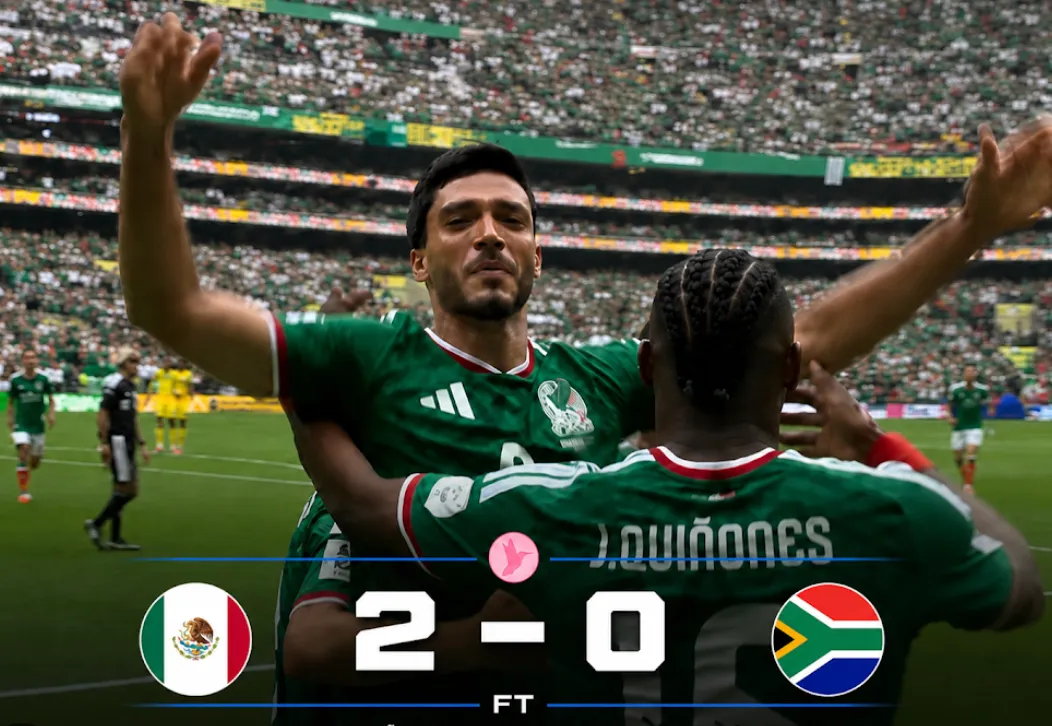
As of 11 June, the 48-team World Cup kicked off at Estadio Azteca with Mexico beating South Africa 2-0. Julián Quiñones scored the tournament’s first goal in the ninth minute and Raúl Jiménez sealed it after the break, on a night of three red cards — the most ever in an opening match. Before kickoff, Shakira and Burna Boy lit the fuse. The Azteca became the first stadium to open three World Cups.
First the party: Shakira, fireworks and a city that didn’t sleep
There are nights football doesn’t invent — it inherits. And the Azteca, that slab of concrete that watched Pelé lift one trophy and Maradona steal another, knew exactly what kind of night this was. Ninety minutes before kickoff, the pitch filled with colour and history.
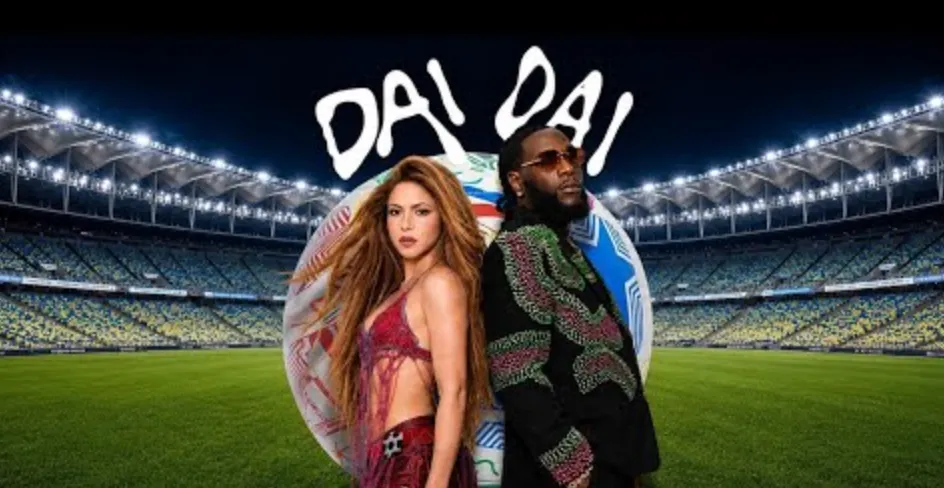
Shakira returned to the World Cup stage — sixteen years after “Waka Waka” — alongside Nigeria’s Burna Boy for “Dai Dai,” the tournament’s official song, a blend of Latin America and Africa that set the stands roaring. Italian tenor Andrea Bocelli brought the solemnity; J Balvin, South Africa’s Tyla and Venezuela’s Danny Ocean brought the pop pulse. Lila Downs greeted the crowd in Spanish and English — “People of the world, welcome to Mexico!” — while dancers in Aztec-inspired costumes took the field. Maná, Belinda with Los Ángeles Azules, Alejandro Fernández: for ninety minutes the ceremony was a postcard of what Mexico wanted to tell the planet about itself, as Al Jazeera reported.
And then, when the fireworks died down, the part that actually mattered began.
The match: nine minutes to write the first line
Mexico had played eight World Cup openers and never won one. Five defeats, two draws, and that splinter from 2010 in Johannesburg, when this very opponent — South Africa — held them 1-1 on their debut. Football, no?, chooses its reunions. This time the wait lasted nine minutes: Julián Quiñones, Colombian-born and a World Cup debutant, bundled in the first goal of the entire tournament and screamed it with Israel Reyes and Johan Vásquez piling on.
The rest was a rough afternoon. The referee showed three reds — two to South Africa, one to Mexico — the most ever seen in an opening fixture, and Hugo Broos’s Bafana Bafana finished with nine. Out of that disorder, midway through the second half, came Raúl Jiménez: a header from close range, his first World Cup goal in the fourth tournament he has played, his 46th for the national team. It drew him level with Jared Borgetti and left him six behind “Chicharito” Hernández. He didn’t celebrate like a man who had scored; he celebrated like a man who had set down a weight.
There were, beyond the scoreline, two images to keep. One: Guillermo Ochoa on the bench, the only footballer from either squad who was also there in 2010 — when, fittingly, he started that debut as a substitute. The other: Gilberto Mora, seventeen, the youngest player at the tournament, a kid who once photographed himself in the green shirt and wrote, “I dreamed of playing in a World Cup.” The Azteca, which has seen so many endings, also knows how to open beginnings. ESPN’s recap put it plainly: a winning start for the hosts.
The atmosphere: eighty thousand in green, and a city overflowing
Inside, the ground renamed “Mexico City Stadium” for FIFA — but the Azteca to everyone — throbbed with its eighty thousand. Green shirts, mariachi hats, a tide that sang every attack. Outside, the party began kilometres earlier: closed streets, fans walking an hour or more, bands and fireworks marking the route. One supporter paid $5,700 for a seat and called it money well spent, as SBS recounted.
Not all of it was harmony. Downtown, at the Zócalo, thousands pushed to get into the official fan zone shortly before kickoff; metal barriers raised days earlier — to keep protesting teachers away — narrowed the access and the scene turned tense. “Stop pushing, there are children,” someone shouted. A city’s passion has its uncomfortable edge too. The page listing ticket prices and information had already hinted at it: the Azteca, tonight, was where everyone wanted to be.
The history: a stadium that no longer hosts World Cups — it collects them
Few arenas carry what this pitch carries. In 1970, before 107,412 people, Pelé’s Brazil melted Italy 4-1 with Carlos Alberto’s thunderous final strike. In 1986, Maradona signed the “Hand of God” and the “Goal of the Century” here on the same afternoon. And now, in 2026, the Azteca became the first stadium in the world to stage the opening match of three different World Cups, per FIFA itself. One country, one ground, three World Cups: nobody else in football can put that on the table.
Mexico sit on three points atop Group A. On Thursday the 18th they travel to Guadalajara to face South Korea at Estadio Akron; South Africa, that same day, meet Czechia in Atlanta. But tonight was about something else. It was about a debt repaid, and a stadium that, on its third try, still knows how to raise the curtain.
FAQ
How did the 2026 World Cup opening match end? Mexico beat South Africa 2-0 at Estadio Azteca in Mexico City on 11 June, in the first Group A match of the tournament.
Who scored the goals? Julián Quiñones opened the scoring in the ninth minute — the first goal of the tournament — and Raúl Jiménez added a second-half header, his first goal at a World Cup.
Why were there three red cards? The referee showed three red cards — two to South Africa and one to Mexico — the most in the history of a World Cup opening match. South Africa finished with nine players.
Who performed at the opening ceremony? Shakira and Burna Boy performed “Dai Dai,” the official song. Andrea Bocelli, J Balvin, Tyla, Danny Ocean, Lila Downs, Maná, Belinda with Los Ángeles Azules and Alejandro Fernández also took part, among others.
Why is Estadio Azteca historic? It is the first stadium in the world to host the opening match of three World Cups: 1970, 1986 and 2026. It also staged the 1970 and 1986 finals.
Was this Mexico’s first win in a World Cup opener? Yes. It was their eighth opening match and their first victory; they previously had five defeats and two draws, including a 1-1 with South Africa on their 2010 debut.
Which player connects this match to 2010? Goalkeeper Guillermo Ochoa is the only footballer from either squad who was also at the 2010 World Cup, when he started that debut as a substitute.
When does Mexico play next? Mexico face South Korea on Thursday 18 June at Estadio Akron in Guadalajara. South Africa play Czechia in Atlanta the same day.
How many matches will this World Cup have? The 2026 World Cup, the first with 48 teams, will feature 104 matches over a month and a half across the United States, Mexico and Canada.
About the author: Diego Martínez is a football correspondent at La Redonda, the Buenos Aires outlet founded in 2009 and specializing in South American football and FIFA tournaments. He has covered CONMEBOL national teams since Brazil 2014. Contact: diego.martinez@laredonda.com.ar · LinkedIn: /in/diegomartinez-laredonda · X: @DiegoLaRedonda