The Short Version
By June 6 — five days before kickoff — all 48 World Cup teams are training at their official base camps across the United States, Mexico, and Canada. The first major casualty has already arrived: 18-year-old Bayern Munich midfielder Lennart Karl tore a muscle bundle in his left thigh during Germany’s Friday training at Soldier Field in Chicago, ruling him out of the tournament. DFB called up RB Leipzig’s Assan Ouédraogo (20) to replace him. The bigger story is the heat. Scientists from Bloomberg, TIME, and Queen’s University Belfast have flagged 6 host cities (Atlanta, Dallas, Houston, Kansas City, Miami, Monterrey) as “extremely high risk” for heat-stress injury during afternoon matches. Acclimatization takes 10-14 days — and most teams arrived in late May or early June. FIFA has implemented 3-minute hydration breaks at halftime and banned reusable water bottles from stadiums. Argentina is training in 90°F+ Kansas heat at Sporting KC’s Compass Minerals National Performance Center. This is what 48 training camps look like, five days out.
The Friday That Changed Germany’s World Cup
Friday, June 5, 2026. Soldier Field, Chicago. Germany’s training session in the late-afternoon Midwest heat, the day before their final World Cup tune-up against the United States. Lennart Karl, 18, the breakout midfielder who scored nine goals for Bayern Munich last season and helped them clinch the domestic double, went down with what coach Julian Nagelsmann immediately said “didn’t look so good.” He was taken to hospital. The diagnosis: a torn muscle bundle in his left thigh. The German Football Association confirmed Friday evening: Karl is out of the World Cup.
By Friday night Nagelsmann had already called Assan Ouédraogo, the 20-year-old RB Leipzig midfielder who had narrowly missed the original 26-man squad and was on holiday in Spain. According to Sky Germany’s Florian Plettenberg, broken by Bavarian Football Works, Ouédraogo accepted and is traveling from Spain to Chicago. Six independent sources confirmed the replacement, including ESPN, CGTN, Flashscore, Yahoo Sports, and OneFootball.
Nagelsmann’s quote, given to multiple outlets: “I feel incredibly sorry for Lenny. With his light-heartedness, his creativity, his pace, and his personality, he fit into the team perfectly. It is a huge shock for him and for all of us that he will miss the World Cup.”
The Karl injury is the first major training-ground casualty of the 2026 cycle. It happened five days before Germany’s opening match — well outside the 24-hour FIFA replacement deadline, giving Nagelsmann the procedural window to swap. But it’s also the clearest illustration of what training in the pre-tournament window actually means: for the players who get to the World Cup, the real opponent has often already shown up in training.
48 Teams. 25+ Time Zones Crossed. One Common Enemy.
All 48 teams in the 2026 World Cup are now at or near their official Team Base Camps — 39 in the United States, seven in Mexico, two in Canada. Most arrived between May 28 and June 4. The pre-tournament window is short: three to ten days of training before their opening match, depending on which group they’re in.
The teams brought with them every conceivable adaptation challenge:
- Jet lag: 25+ time zones crossed in total. Teams from Asia and Australia have it worst (Japan, Korea, Saudi Arabia, Iran, Australia, New Zealand). Teams from Europe a 6-9 hour difference. South American teams have the smallest jet lag — Argentina, Brazil, Colombia, Ecuador, Paraguay, Uruguay are 1-3 hours off Eastern Time.
- Climate: dry Mediterranean climates (Spain, Portugal, Algeria, Tunisia, Morocco), tropical climates (most South Americans, Curaçao, Haiti), continental European (Germany, France, Netherlands, Croatia), Middle Eastern hot-and-dry (Saudi Arabia, Jordan, Iran), African humid (Ghana, Senegal), Pacific maritime (Australia, New Zealand). Almost no team has a perfect climatological match to its base camp.
- Altitude: Mexico City sits at 7,350 feet (2,240m). Guadalajara at 5,138 ft. Most US host cities at sea level or close. South Africa, training in Pachuca (Mexico) at 8,000+ ft for matches in Mexico City, has the easiest altitude match.
- Humidity: brutal in Miami, Houston, Atlanta, Dallas, Kansas City, Monterrey. Manageable in Boston, Seattle, San Francisco, Vancouver. Dry in Phoenix-style climates that no host city perfectly represents.
But the one challenge nearly every team faces is the heat.
The Heat Map: Where It’s Actually Hard
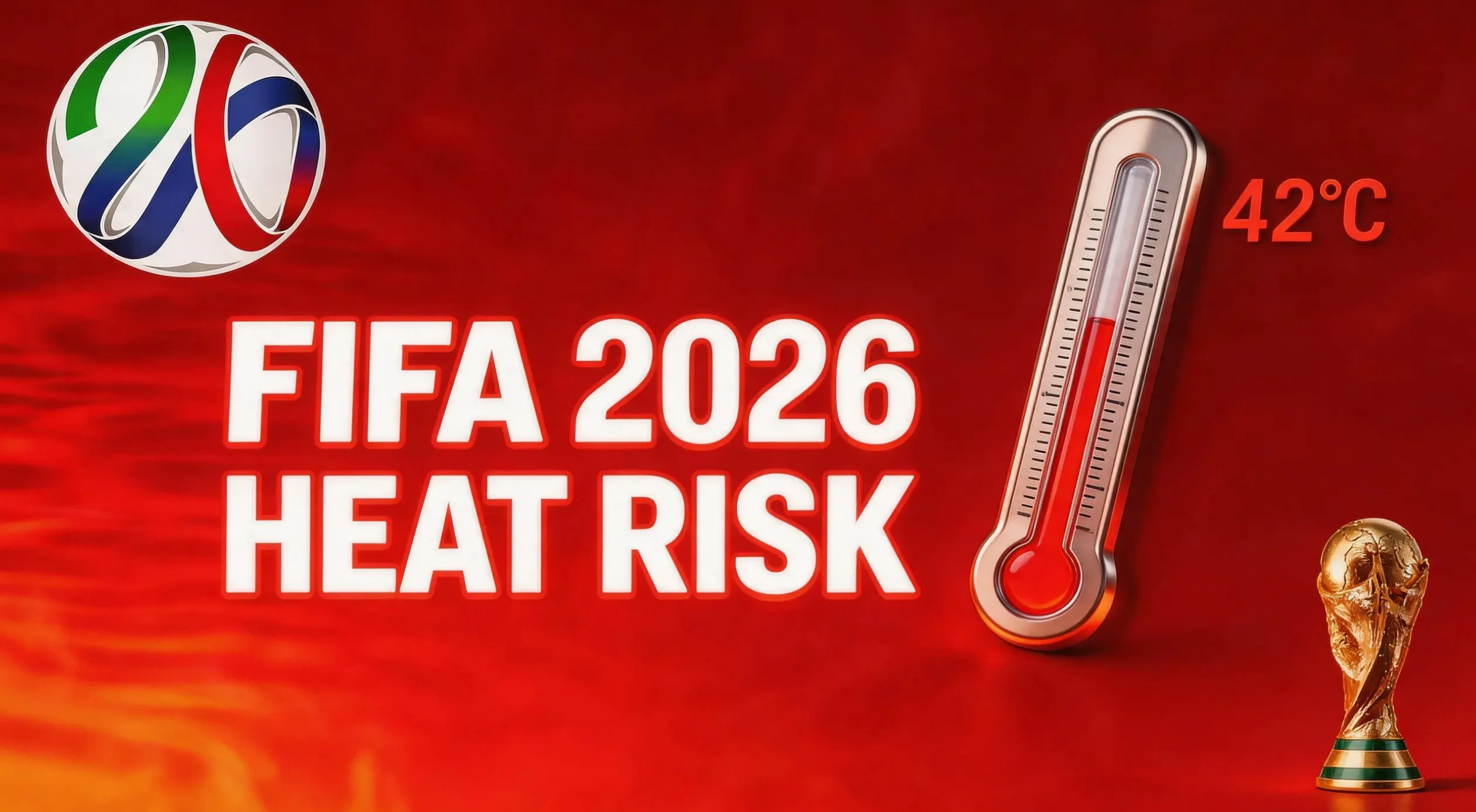
In May 2026, Bloomberg published a heat-risk analysis of the 16 host stadiums using wet-bulb globe temperature (WBGT) — the measurement that combines heat and humidity to predict heat-stress risk. The result is striking: six host cities have “extremely high risk” for heat-stress injury during afternoon matches — Atlanta, Dallas, Houston, Kansas City, Miami, and Monterrey.
The 2025 Queen’s University Belfast study, co-authored by Donal Mullan and shared with TIME, looked at meteorological data from 2003-2022 for all 16 host cities in June and July. In 14 of 16 host cities, afternoon temperatures frequently exceeded 82.4°F. In six of those cities, average afternoon temperatures regularly exceeded 89.6°F.
Mullan told Bloomberg that Tunisia faces the hottest schedule of any team — their matches concentrated in cities and times where heat-stress risk is highest. “Their players may be more adapted to the heat than certain other countries, like here in Europe,” Mullan said. But even well-adapted teams will “almost definitely take a hit as the 39-day tournament drags on.”
For comparison, the 2024 Copa America gave a preview. In Kansas City, assistant referee Humberto Panjoj fainted at stoppage time of the first half of a Canada vs Peru match. High temperature: 93°F. Humidity: 53%. Heat index: 103°F. Panjoj was hospitalized; CONMEBOL cited dehydration. The 2024 Copa was held in many of the same US cities that will host 2026 matches.
Argentina Is Training in Kansas. So Are Three Other Teams.
Of the host cities, Kansas City is the densest training cluster. Four national teams — Argentina, England, the Netherlands, and one more — have base camps in the Kansas City region. Each team picked a different facility:
- Argentina at Sporting Kansas City’s Compass Minerals National Performance Center in Kansas City, Kansas. ABC News published a photo on June 3 of Enzo Fernández training there with teammates, Argentina’s first verified on-site training image of the tournament.
- England at Swope Soccer Village in Swope Park, Kansas City, Missouri.
- Netherlands at the KC Current Training Facility in Riverside, Missouri (home to the NWSL Kansas City Current).
- One more team in the Kansas City metro (per Kansas City FWC26’s listing).
The AFA picked Kansas City after extensive scouting trips led by physical trainer Luis Martín, alternate trainer Juan Tamone, and administrators Daniel Cabrera and Alberto Pernas. The criteria: distance between matches, facility quality, climate match. Argentina plays its opener in Kansas City (June 16 vs Algeria at Arrowhead Stadium), then travels to Dallas. The decision to base where the team also plays its opener is the model — and other teams have followed it where possible.
Up to 100,000 Argentine fans are expected to travel to Kansas City during the tournament. Argentina’s first match temperature is the unknown variable: Kansas City afternoons in June average mid-to-high 80s°F, and Arrowhead Stadium is outdoor.
Inside a Modern Base Camp: What Compass Minerals Looks Like
Argentina’s Compass Minerals NPC is the best-documented training facility setup of any 2026 base camp, partly because FOX News published a March 2026 inside-look at the complex. What it contains:
- Multiple professional-grade fields — match-quality grass surfaces for full-team training, plus a recovery field for lighter sessions
- Private dining area — meals catered to Argentine player preferences; nutritional staff embedded
- Meeting rooms — for tactical sessions and video review; the room sizes vary, with a main room for full-squad meetings
- Dedicated recovery spaces — private resting rooms where, as the facility staff told FOX News: “If they’ve traveled a lot and they’re tired, they can come in here, turn the lights out and get a nice nap”
- Elite-level training amenities designed for international competition
- Connected accommodation — a separate but adjacent housing component
This is the modern World Cup base camp template — and it’s been mirrored, at varying scales, across the 48 teams’ facilities. England at Swope Soccer Village has similar amenities. Brazil at the New York Red Bulls’ Columbia Park Training Facility in Morris Township, New Jersey — a 5,000-acre regional park MLS training site — has comparable quality. France at Bentley University near Boston has a college-level facility upgraded for the team. The variation comes in two directions: large city college / MLS facilities (most teams) versus boutique high-school or club academy setups (smaller teams in less-known locations).
The base camp is not the team’s accommodation. Teams typically stay at separate hotels nearby — Austria at the Ritz-Carlton (with training at UC Santa Barbara), Australia at the Claremont Resort (with training at Oakland Roots), Croatia at the Hotel AKA Alexandria. The split between training site and hotel means daily commutes — sometimes 10 minutes, sometimes 30.
The 10-14 Day Acclimatization Window
Sports science has a clear answer on how long it takes to adapt to a new climate: 10 to 14 days of training in similar conditions. That’s how Doug Casa, professor at the Korey Stringer Institute at the University of Connecticut, framed it for ESPN ahead of the 2024 Copa America.
Most World Cup teams arrived in their training cities between May 28 and June 4. That’s 7-14 days before their first match — right at the edge of the acclimatization window. Teams that arrived early have the advantage. Teams whose tactical and contractual schedules forced late arrivals (after a European Champions League final, after a domestic playoff) had less time.
The science explains what happens during acclimatization:
- Cardiovascular strain decreases as the body’s plasma volume expands
- Sweat efficiency improves — sweat at lower temperatures, sweat with less sodium loss
- Cognitive performance under heat improves — decision-making at 90°F catches up to decision-making at 70°F
- Recovery between sessions speeds up — players who train hard back-to-back in heat take less out of their bodies after acclimatization
Teams that don’t have a full 10-14 days, like late-arriving European squads, can adopt strategies to manage the gap:
- Shorter, less intense warm-ups before matches
- Tactical shifts: more possession, less high-pressing, less covering distance
- Cooling breaks every half (FIFA now mandates them when WBGT exceeds 89°F)
- Hydration discipline: pre-match, halftime, full-time, 30-minute and 2-hour recovery
What teams can’t do is fully replicate the conditions in their home country before arriving. Brazil’s training in temperate São Paulo in May is not the same as training in Cleveland or Newark or Morris Township in June.
What FIFA Has Changed: 3-Minute Hydration Breaks + the Water Bottle Ban
FIFA has adjusted match operations under its 2026 tournament protocols in response to the heat concerns:
Hydration breaks: FIFA has implemented three-minute hydration breaks at halftime for every match in 2026. This extends what used to be a brief 15-minute halftime into something closer to a 20-minute recovery window when needed. Additional cooling breaks within each half are mandated when WBGT exceeds 89°F.
Stadium water bottle ban: FIFA’s updated Stadium Code states that “reusable water bottles may not be brought into the stadium”. Previous policy allowed transparent reusable bottles up to 1 liter — that’s gone. The justification is operational (security and stadium operations), but the practical effect is to push fans toward vendor-purchased water. Hydration costs at host cities will be real for ticket-holders.
Pre-match ceremony change: FIFA announced that all players in matchday squads — not just the starting XI — will gather around the center circle for the national anthems. This is a tournament-wide procedural change, and the reason FIFA gave is to honor every player rather than only starters. It doesn’t directly affect heat exposure, but it does mean more players on the pitch in pre-match heat.
These are operational changes. Not solutions. Heat will still be the dominant story of the group stage.
Where Each Team Is Training: The Complete Map
The full base camp picture, by region:
Kansas City region (4 teams):
- Argentina — Sporting KC / Compass Minerals NPC, Kansas City KS
- England — Swope Soccer Village, Kansas City MO
- Netherlands — KC Current Training Facility, Riverside MO
- One more team (per KC FWC26)
New York / New Jersey region (4 teams):
- Brazil — Columbia Park (NY Red Bulls), Morris Township NJ
- Morocco — Pingry School, Bernards Township NJ
- Haiti — Stockton University, Galloway NJ
- Senegal — Rutgers University, Piscataway NJ
California region (7 teams): includes Australia (Oakland Roots), Austria (UC Santa Barbara), and others — exact list varies by source
Mexico (7 teams):
- South Africa — Universidad del Fútbol, Pachuca
- Iran — Tijuana (moved from Tucson AZ)
- Colombia — Atlas AGA Academy, Guadalajara
Other US locations:
- Germany — Wake Forest University, Winston-Salem NC
- France — Bentley University, Waltham MA (near Boston)
- Spain — Baylor School, Chattanooga TN
- Japan — Nashville SC training center, Nashville TN
- Croatia — Episcopal HS Sports Complex, Alexandria VA
- Saudi Arabia — Q2 Stadium / Austin FC, Austin TX
- Egypt — Gonzaga University Luger Field, Spokane WA
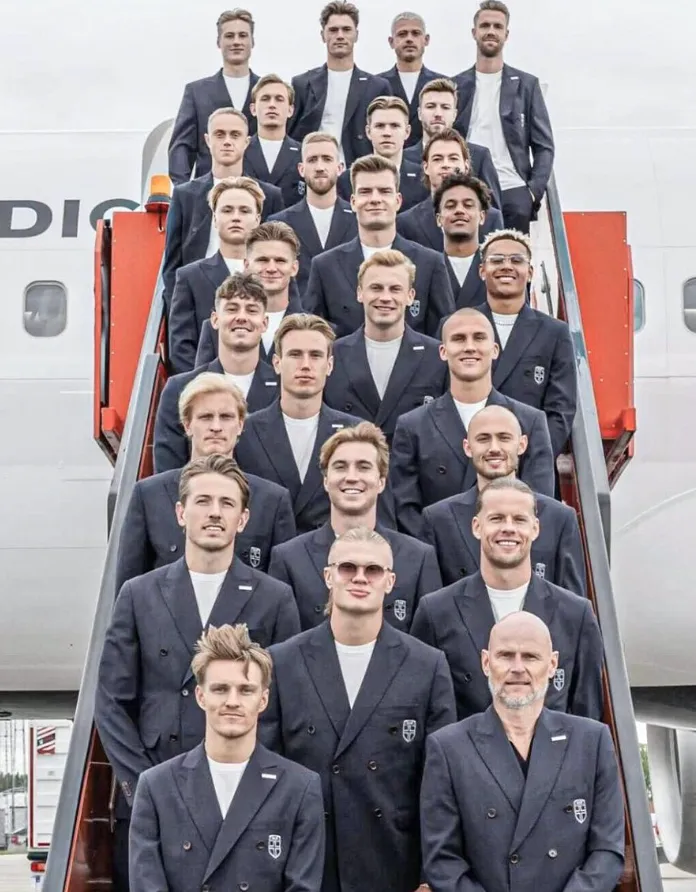
- Norway — UNC Greensboro, NC
- Algeria — University of Kansas, Lawrence KS
- Jordan — University of Portland, OR
- Ivory Coast — Subaru Park (Philadelphia Union), PA
- Ghana — Bryant University, near Providence RI
- Scotland — Charlotte FC training facility, Charlotte NC
- Ecuador — OhioHealth Performance Center, Columbus OH
- Curaçao — FAU soccer complex, Boca Raton FL
Canada (2 teams):
- Canada — National Soccer Development Centre, Vancouver
- Australia — (above, Oakland — separate USA base because of California group matches)
Twenty-five non-host communities have welcomed teams as their base camp city — a major spread of economic and fan attention beyond the 16 host cities themselves.
What This Article Doesn’t Know
In the spirit of being honest about what training-status reporting can and can’t tell you: this article doesn’t tell you specific players’ personal adaptation experiences without verified quotes. It doesn’t tell you whose training is sharp vs sluggish — that requires inside reporting we don’t have. It doesn’t tell you tactical preparations or squad selection debates inside camps. It doesn’t reproduce daily training schedules.
What it tells you, multi-source confirmed: where every team is training, what the modern base camp template looks like (using Argentina as the documented exemplar), what scientists and FIFA have flagged as the dominant adaptation challenge (heat), and what the first concrete training-ground casualty of the tournament looks like (Karl).
The bigger picture you should take away: the World Cup hasn’t started yet, but the adaptation challenges are already shaping the tournament. Karl’s injury was random; it could have happened in any team’s session. Tunisia’s heat schedule is structural; it will affect their results across the group stage. Argentina’s choice of Kansas City was calculated; it gives Messi’s team a 10-day window to acclimatize to Arrowhead before the opener. These are the variables already in play.
FAQ
When did teams start training at their World Cup base camps? Most teams arrived between May 28 and June 4, 2026. South Africa was delayed 24 hours by visa issues and arrived June 1 in Pachuca. Brazil arrived in Newark on June 2. Germany arrived in Chicago in late May. By June 6 — 5 days before kickoff — all 48 teams are training at or near their base camps.
What is the biggest adaptation challenge for World Cup teams? Heat. Six host cities (Atlanta, Dallas, Houston, Kansas City, Miami, Monterrey) have been flagged by scientists as having “extremely high risk” of heat-stress injury during afternoon matches. Acclimatization requires 10-14 days, and most teams are right at the edge of that window.
Where is Argentina training? Sporting Kansas City’s Compass Minerals National Performance Center in Kansas City, Kansas. The facility includes multiple match-grade fields, private dining, meeting rooms, and dedicated recovery spaces. Argentina plays its opener (June 16 vs Algeria) at Arrowhead Stadium nearby.
What happened to Lennart Karl? Karl, 18, tore a muscle bundle in his left thigh during Germany’s Friday June 5 training session at Soldier Field in Chicago. He was taken to hospital. The German Football Association confirmed Friday evening he is out of the World Cup. He is being replaced by RB Leipzig’s Assan Ouédraogo, 20.
How long does heat acclimatization take? 10 to 14 days of training in similar conditions, according to sports science. Most teams arrived in the US between late May and early June — right at the edge of the acclimatization window for opening matches.
What has FIFA changed for the 2026 World Cup? Three-minute hydration breaks at halftime for every match. Cooling breaks within each half mandated when WBGT exceeds 89°F. Reusable water bottles banned from stadiums. The pre-match anthem ceremony now includes all matchday squad members at the center circle, not just the starting XI.
Where is Brazil training? Columbia Park Training Facility in Morris Township, New Jersey — home of MLS’s New York Red Bulls. Brazil arrived in Newark on June 2 and is now training at the Red Bulls facility ahead of its June 13 opener vs Morocco.
Where is France training? Bentley University in Waltham, Massachusetts — near Boston, where France plays its group match against Norway on June 26. France is scheduled for a FIFA Community Training Session in Boston on June 12.
Where is Iran training? Tijuana, Mexico. Iran moved from its originally planned base in Tucson, Arizona; reasons reported include visa and processing concerns. Iran plays its first match in Mexico City on June 12.
Which teams face the hottest schedule? Tunisia, according to the Queen’s University Belfast 2025 study by Donal Mullan. Tunisia’s matches are concentrated in cities and times where heat-stress risk is highest. Several other teams in similar groups will also be heavily exposed.
What is a Community Training Session? FIFA’s program of public-access team training sessions during the pre-tournament window. Tickets are distributed by random lottery and are highly limited. Confirmed participating teams include Australia, Switzerland, Austria, Korea, Haiti, Egypt, Algeria, Colombia, Curaçao, France, Ghana, and Morocco.
Related Articles
- Your Team Just Said Goodbye to Its Country. Here’s When to Follow. — The departures-and-arrivals overview, including base camp assignments and Community Training Sessions schedule (fan-experience cross-cluster)
- South Africa Got a Public Sendoff. Then the Charter Couldn’t Leave. — The visa-delay story of the most-documented sendoff, and the team that ended up training at Hidalgo Stadium in Pachuca (player-injury / pre-tournament-disruption cluster)
- Boston Hosts 7 World Cup Matches. None Are in the City. — The host city where France and Ghana have base camps and Community Training Sessions on June 12 and 13 (host-city cluster)
Sources (Bloomberg, TIME, ABC News, ABC7 Chicago, Climate Central, ESPN, NPR, FOX News, Yahoo Sports, CGTN, Flashscore, OneFootball, Bavarian Football Works, Al Jazeera, US Soccer, Kansas City FWC26) are linked inline in the relevant sections above. Where information is single-source or uncertain, this article says so.
About the author: James O’Connor is investigative football correspondent at Touchline Global, the London-based independent football journalism outlet founded in 2012 specializing in FIFA governance, commercial reporting, and football’s political economy. O’Connor has covered every FIFA World Cup since Brazil 2014. Contact: james.oconnor@touchline.global · LinkedIn: /in/james-oconnor-touchline · X: @JamesOConnorTG