The Short Version
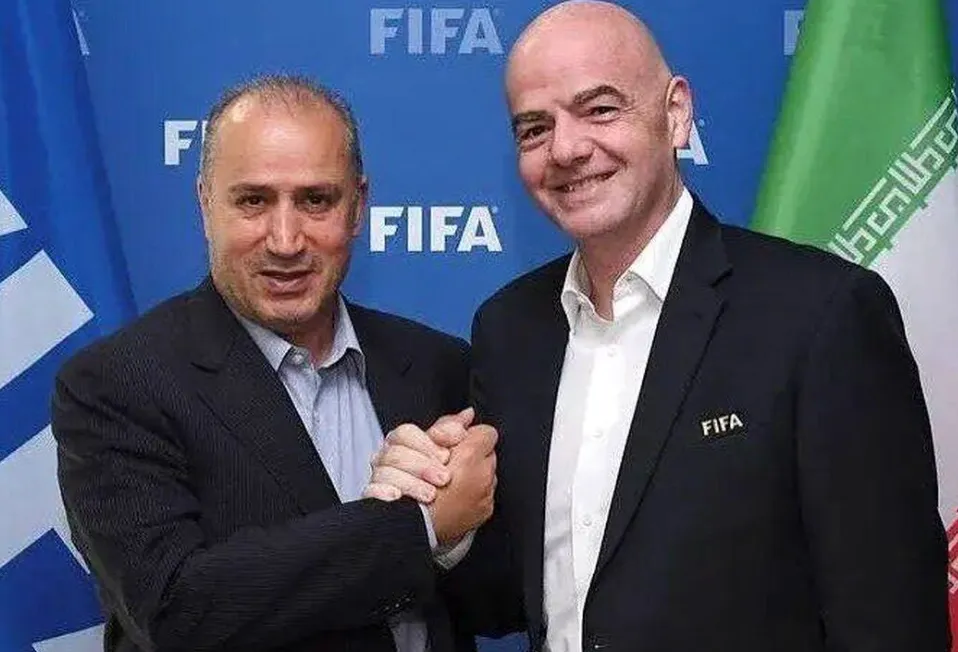
The Football Federation Islamic Republic of Iran (FFIRI) has issued a ten-point ultimatum to FIFA ahead of the May 20 summit in Zurich, demanding written guarantees on visas, security, and the treatment of Islamic Revolutionary Guard Corps (IRGC)-linked staff before Team Melli plays its three Group G matches in the United States. FIFA President Gianni Infantino confirmed at the 76th FIFA Congress in Vancouver that “Iran will be participating”, rejecting reported lobbying by Trump-aligned figures to replace Iran with Italy. Iran opens against New Zealand on June 15 in Los Angeles, faces Belgium on June 21 (Los Angeles) and Egypt on June 26 (Seattle). The standoff escalated after FFIRI President Mehdi Taj’s Canadian visa was revoked in late April due to IRGC links. The Zurich meeting — eight days before the US 26-man-roster deadline of May 26 — is now the decisive checkpoint between political conditions and 30 days of pre-tournament certainty.
The Trigger: Toronto Airport, April 28
On April 28, the FFIRI delegation flew to Toronto en route to the FIFA Congress in Vancouver. Hours after landing, Mehdi Taj — Iran’s federation president and a former IRGC member — was informed by Canadian immigration officers that his visa had been cancelled in-flight. According to Al Jazeera, Taj and two senior officials chose to return to Tehran rather than proceed without their president.
Canada designated the IRGC a terrorist organisation in 2024. The United States Secretary of State Marco Rubio confirmed in late April that “no one with ties to the IRGC will be admitted to the country” for the tournament, a position that conflicts with Iran’s insistence that all coaches and federation staff — many of whom have IRGC service histories — must be granted entry.
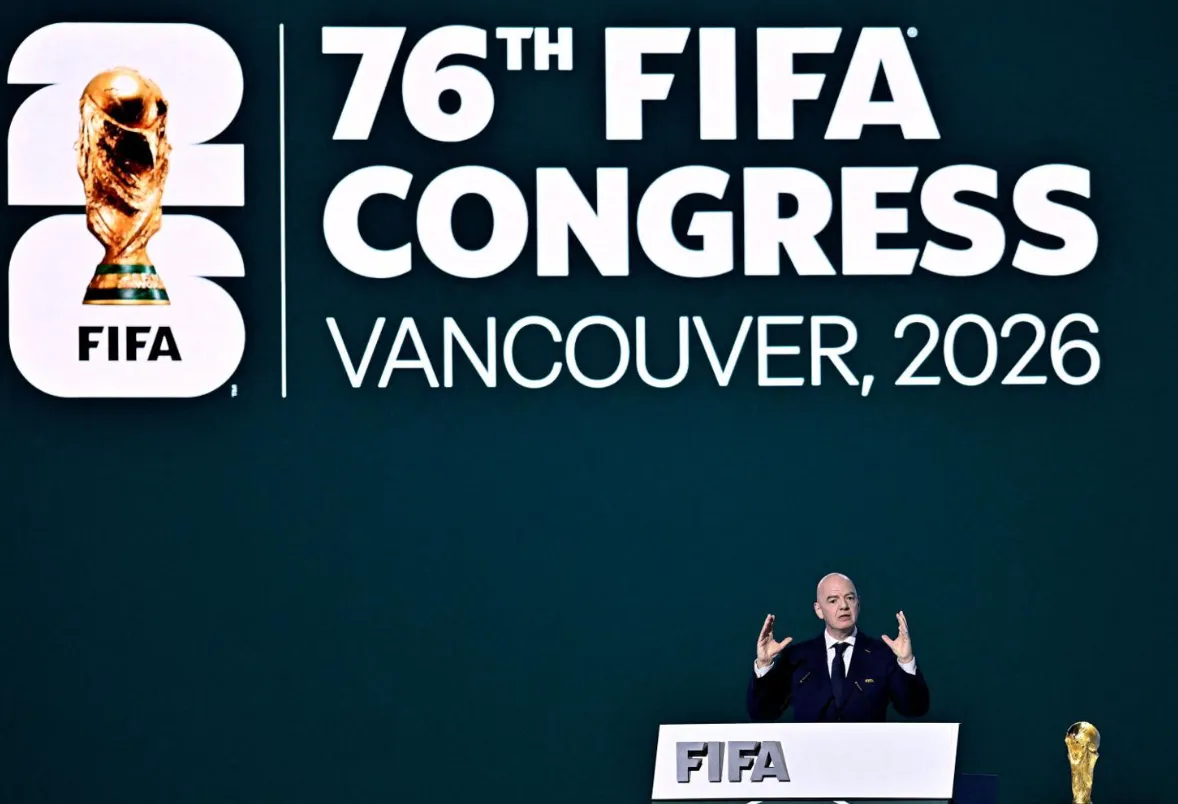
Two days later, at the 76th FIFA Congress in Vancouver on April 30, Infantino opened proceedings with an unprompted statement on Iran. “Let me start at the outset by confirming straightaway that of course Iran will be participating at the FIFA World Cup 2026”, he told delegates. President Trump, asked about the matter that afternoon, replied: “I’m OK with Iran playing.”
The 10 Conditions, in Detail
In an interview with Iranian state television on May 9, Taj outlined the ten specific conditions the FFIRI is presenting at the May 20 Zurich meeting. According to The Mirror US, the list includes:
- 1. Unconditional visa approval for all 26 players plus 36 federation and technical staff
- 2. Treatment guarantees for IRGC-linked staff — Iran insists current and former IRGC service must not be grounds for denial
- 3. Airport reception protocols — no separate screening, no detention rooms, no removal of religious items
- 4. Hotel and training-base security at Tucson, Arizona, including a Diplomatic Security Service detachment
- 5. Route protection on game days between hotel, training facility, and match venue
- 6. Iranian flag and anthem protection — no protest interference at stadium playing of "Sorude Melli-ye Jomhuri-ye Eslāmi"
- 7. Press conference rules — provocation questions to be screened by a joint FIFA-FFIRI media board
- 8. Religious accommodation — prayer rooms, halal catering, female journalist dress-code agreements
- 9. Direct FIFA-FFIRI communication channel bypassing host federation intermediaries
- 10. Penalty clause — Iran reserves the right to withdraw mid-tournament if any of the above is violated
The 10th condition is the most consequential. A mid-tournament Iranian withdrawal would unbalance Group G mathematically, leave Belgium and Egypt with one fewer match each, and trigger an unprecedented FIFA crisis-management protocol that has never been tested.
FIFA’s Position: Public Firmness, Private Negotiation
FIFA’s public stance through Infantino has been unambiguous: Iran plays, in the US, as scheduled. The official communiqué from the FIFA Council in Vancouver emphasised “the absolute integrity of the competition schedule”.
Behind the scenes, however, FIFA has invited the FFIRI to Zurich on May 20 — a date deliberately chosen to fall before the US men’s national team’s 26-man-roster announcement on May 26. Two reasons:
First, FIFA has limited leverage over US Customs and Border Protection. The State Department, not FIFA, decides who enters the country. Infantino’s role has been to negotiate exemptions for “athletes and accredited personnel” under the sporting-event carve-out in President Trump’s June 2025 executive order, which restricts travel from 12 countries including Iran but explicitly preserves access for participants in World Cup and Olympic events.
Second, the proposal to replace Iran with Italy — reportedly floated by a Trump advisor and given oxygen by Italian media — has been firmly rejected. As CNN reported, “Replacing Iran with Italy at the World Cup probably won’t happen. The suggestion alone is still embarrassing.” Italy lost the European playoff final to Bosnia-Herzegovina in Zenica on March 31; under FIFA Statutes, no replacement provision exists outside cases of withdrawal.
Group G in Focus: The Tucson Base and Three US Stadiums
Iran’s logistical setup is among the most scrutinised of any World Cup participant. The federation chose Tucson, Arizona as its training base in March 2026, citing climate compatibility (high desert, similar to Tehran’s summer) and the relatively limited diaspora presence compared with Los Angeles. The University of Arizona’s athletic facility serves as the primary training pitch.
| Date | Match | Venue | Local time |
|---|---|---|---|
| June 15 | Iran vs New Zealand | SoFi Stadium, Los Angeles | 6:00 PM PT |
| June 21 | Iran vs Belgium | SoFi Stadium, Los Angeles | 8:00 PM PT |
| June 26 | Iran vs Egypt | Lumen Field, Seattle | 6:00 PM PT |
The three venues form a north-south corridor: 800 miles from Tucson to LA, 1,200 miles LA to Seattle. The Iranian delegation will fly on chartered aircraft to bypass commercial-airport screening — an arrangement FIFA has formally requested from Customs and Border Protection.
Squad Status: Taremi, Azmoun, Mohebi
Coach Amir Ghalenoei, who notably did receive his US visa in October 2025 ahead of the draw, will name his 26-man squad in the first week of June. The probable core is intact:
- Goalkeeper: [Alireza Beiranvand](/en/team/iran/player/alireza-beiranvand/) (Persepolis) — fourth World Cup
- Defense: Sadegh Moharrami (Dinamo Zagreb), Shojae Khalilzadeh (Al Ahli)
- Midfield: [Saeid Ezatolahi](/en/team/iran/player/saeid-ezatolahi/) (Vejle), [Saman Ghoddos](/en/team/iran/player/saman-ghoddos/) (Brentford), [Alireza Jahanbakhsh](/en/team/iran/player/alireza-jahanbakhsh/) (Heerenveen)
- Attack: [Mehdi Taremi](/en/team/iran/player/mehdi-taremi/) (Inter Milan) — scored both goals in the 2-2 with Uzbekistan that secured qualification; Sardar Azmoun (Shabab Al-Ahli); Mehdi Mohebi (Esteghlal)
Taremi, 33, is the unquestioned focal point. His brace against Uzbekistan in Tehran on March 25, 2025 — a 2-2 draw that confirmed qualification for Iran’s seventh World Cup, fourth consecutive — made him Iran’s all-time top scorer at 53 international goals.
Historical Context: The 1998 USA-Iran Precedent
The May 20 meeting carries weight beyond logistics. The last time Iran played the United States at a World Cup — France 1998 in Lyon, June 21 — the political symbolism overshadowed the football. Iranian players presented their American counterparts with white roses before kickoff; Iran won 2-1 in what remains one of the most-watched group-stage matches in World Cup history.
Today’s circumstances are sharper. The post-February 2026 US-Israel war on Iran has produced active military hostilities still unresolved as the tournament approaches. The IRGC remains a central political and security institution in Tehran. And the host nation’s executive branch has, in the 12 months since Trump’s executive order, restricted travel from Iran more aggressively than at any point since 1980.
What Happens If Talks Break Down
A complete Iran withdrawal — voluntary, not imposed — would trigger procedure under FIFA Statutes Article 31. The Bureau of the FIFA Council would have 48 hours from notification to determine whether to (a) leave Group G as a three-team group with all Iran results voided, (b) admit the highest-ranked playoff-defeated team — which would be Italy after losing 4-5 on penalties to Bosnia-Herzegovina on March 31 — or (c) restructure Group G with the four-best-third-place formula recalculated.
None of these scenarios has been tested at a World Cup since 1950, when India withdrew before the tournament began. FIFA’s preference, repeatedly stated, is for the Zurich talks to produce a workable framework that keeps Iran in.
FAQ
Will Iran play at the 2026 World Cup? FIFA has publicly confirmed yes; the May 20 Zurich meeting is the operational summit to resolve visa and security conditions.
Why is the IRGC the central issue? The Islamic Revolutionary Guard Corps is designated a terrorist organisation by both Canada (since 2024) and the United States. Iran’s federation and coaching staff include current and former IRGC members, including President Mehdi Taj.
Where does Iran play its three Group G matches? New Zealand on June 15 (Los Angeles, SoFi Stadium); Belgium on June 21 (Los Angeles, SoFi Stadium); Egypt on June 26 (Seattle, Lumen Field).
Could Italy replace Iran? No. FIFA has rejected the suggestion; no replacement mechanism exists outside formal withdrawal.
Where is Iran’s training base? Tucson, Arizona, at University of Arizona athletic facilities.
Who will Iran’s star player be? Mehdi Taremi, 33, Inter Milan striker and the country’s all-time leading goalscorer with 53 international goals.