










Quick Reference
| Detail | Information |
|---|---|
| Stadium | BMO Field / Toronto Stadium (tournament name) |
| Capacity (WC) | 45,736 (after temporary expansion); 30,000 regular |
| Matches hosted | 6 (5 group stage + 1 Round of 32, June 12 - July 2) |
| Location | Exhibition Place, downtown Toronto, Ontario |
| Nearest airport | Toronto Pearson International (YYZ) |
| Recommended days | 4 nights |
| Budget level | High (one of the more expensive World Cup cities) |
| Best neighborhoods | Downtown West (Queen West, King West), The Annex, Kensington-Chinatown, Liberty Village |
| Avoid | Far-east Scarborough at night for fans not driving; some late-night transit areas |
| Currency | Canadian Dollar (CAD) ~ 1.36 CAD per $1 USD |
| Tap water | Safe to drink everywhere. |
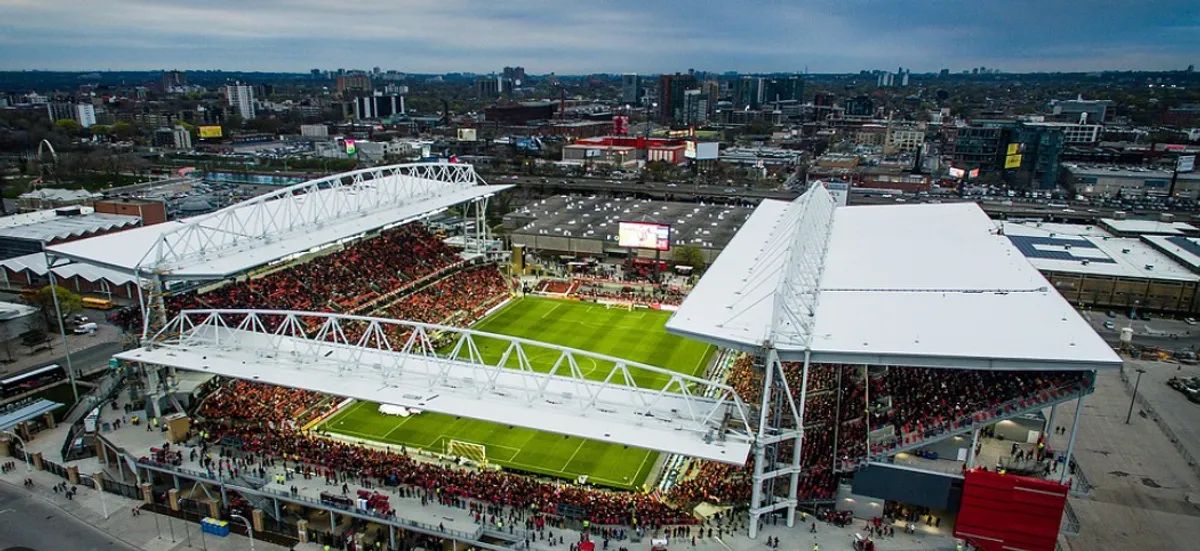
The first city ever to host a men’s World Cup match on Canadian soil. A stadium tucked between Lake Ontario and the CN Tower, expanded from 30,000 to 45,000 seats with temporary stands that will come down the day after the tournament ends. The home of one of the most diverse fan bases in any host city — every team will feel like they have supporters here. Here is how to land in Toronto for June 12, 2026, and understand why a country that loves hockey is suddenly losing its mind over soccer.
The Stadium
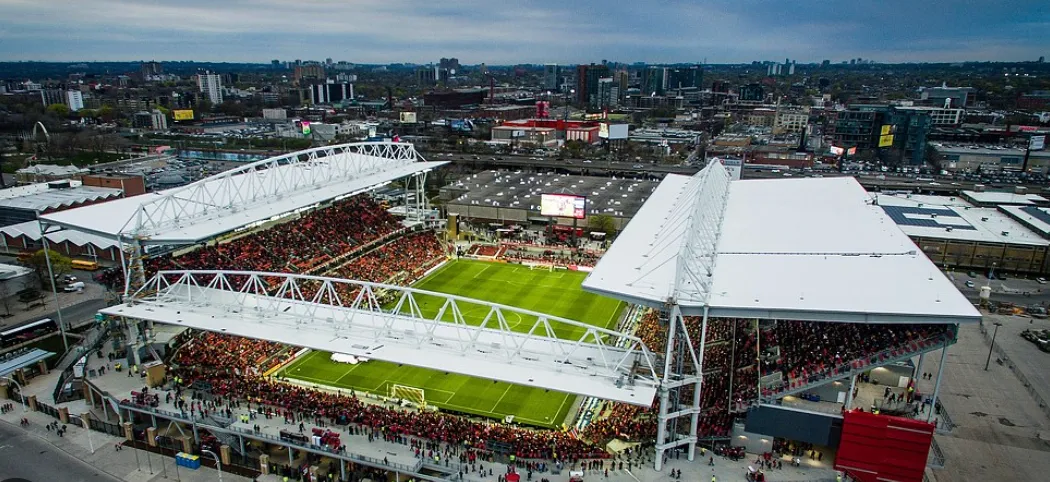
BMO Field opened in 2007 as Canada’s first soccer-specific stadium, built on the site of the old Exhibition Stadium at Exhibition Place — a 192-acre complex on Lake Ontario’s western waterfront. The original structure, designed for Toronto FC of MLS, held 21,566. Expansions in 2010 and again in 2015 brought it to 30,000 for soccer.
The 2026 World Cup forced a different kind of expansion: temporary. Maple Leaf Sports & Entertainment, the venue’s operator, contracted UAE-based Arena Event Services to install 17,756 temporary seats — 10,000 on the north grandstand, 7,000 on the south — bringing tournament capacity to 45,736, just over FIFA’s 45,000 minimum threshold. The work cost CAD 157.9 million (USD ~$116 million), split CAD 132.9 million from the City of Toronto and CAD 25 million from MLSE. Permanent improvements include a rooftop patio with capacity for 1,000 fans, four new video boards, modernized locker rooms, and an upgraded sound system. The temporary stands will come down within weeks of the tournament’s end.
The pitch is hybrid grass — natural grass woven with synthetic fibers, the same system used at Wembley. The stadium sits on Lake Ontario; on a clear day, fans in the upper north grandstand can see the lake, the CN Tower, and the downtown Toronto skyline simultaneously. There is no other World Cup venue with this view.
For the duration of the tournament, FIFA renames the venue Toronto Stadium. The bank sponsorship of “BMO” is removed for tournament use only.
The six matches scheduled here:
- June 12 — Canada vs. opponent TBD (Bosnia & Herzegovina or Italy) — Canada’s opening match
- June 17 — Group stage match
- June 22 — Group stage match
- June 26 — Group stage match
- June 29 — Group stage match
- July 2 — Round of 32
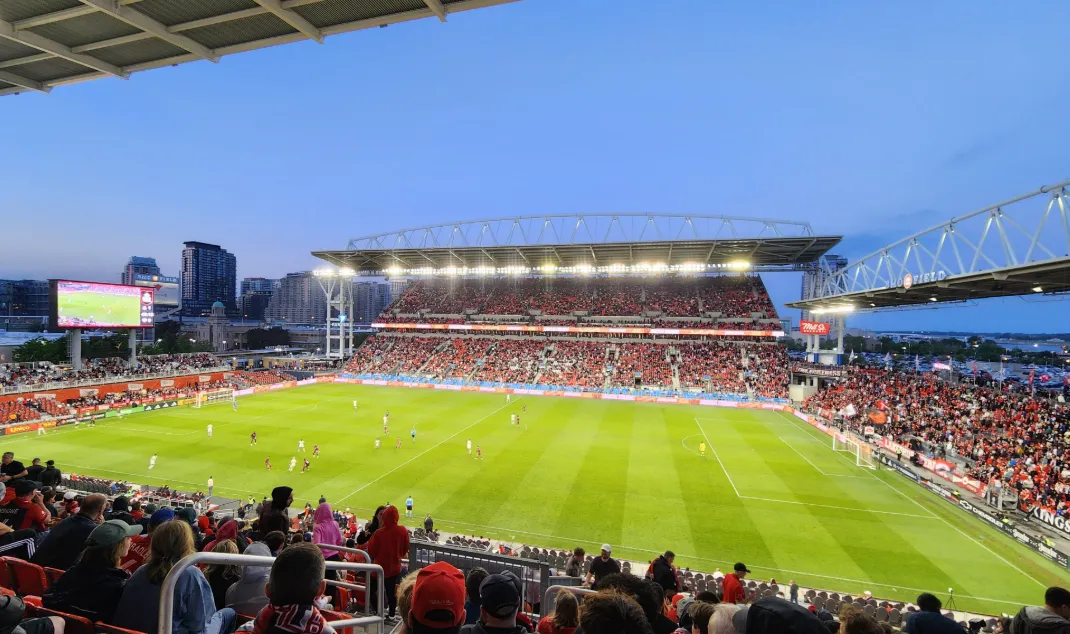
The June 12 match is historic. It will be the first men’s FIFA World Cup match ever played on Canadian soil, and it will feature the host nation. Canada qualified automatically as a co-host, but the team is not the underdog it was at Qatar 2022 — they reached that tournament for the first time in 36 years and finished bottom of their group, a credible showing against Belgium and Croatia ruined by an attacking inability to convert chances. Alphonso Davies is now 25, in his prime years at Bayern Munich, and has scored Canada’s only ever World Cup goal (against Croatia, 68 seconds into the match — the fastest goal of the 2022 tournament).
Getting There
From Toronto Pearson International Airport (YYZ) to the Stadium
Pearson is 22 km / 13.7 miles northwest of Exhibition Place. From the airport to BMO Field is 35-50 minutes in normal traffic, 75-100 minutes on match days when the Gardiner Expressway and Lake Shore Boulevard back up.
Public transit route (recommended):
- Union Pearson Express (UP Express) train from YYZ to Union Station downtown — 25 minutes, runs every 15 minutes
- From Union Station, GO Train Lakeshore West line one stop west to Exhibition Station (5 minutes), or TTC streetcar 509 Harbourfront west to Exhibition Place
- Walk 5 minutes from Exhibition Station to the stadium gates
- Total time: 45 minutes | Cost: CAD $12.35 (UP Express) + CAD $3.35 (TTC) = ~$15 USD
By rideshare (Uber/Lyft): CAD $50-75 from the airport in normal traffic. Match days easily double this, with surge pricing locked in 4 hours before kickoff. Rideshare drop-off is restricted to specific zones near Princess Gates; expect a 5-10 minute walk from drop-off to your seat.
By driving: Don’t. Exhibition Place has roughly 1,500 parking spaces, mostly pre-allocated to season ticket holders and corporate suites. Public lots fill 4 hours before kickoff at CAD $40-80. The Gardiner Expressway becomes a parking lot itself.
The single best advice for Toronto: arrive at the stadium 3 hours before kickoff. Security screening takes 30-45 minutes during major events, and gate entry queues at BMO Field are notoriously slow.
Visa & Entry to Canada
- US citizens: No visa, but valid passport required (NEXUS card or enhanced driver’s license accepted at land borders only — air travel needs a passport).
- UK, EU, Australian, Japanese citizens: No visa, but require an eTA (Electronic Travel Authorization) — apply online before flying, costs CAD $7, takes minutes to process.
- Mexican, Brazilian, Argentinean citizens: Visa required for most, though Mexico has a special arrangement; check ircc.canada.ca for your country’s specific status.
- Chinese, Indian, Russian citizens: Visitor visa required, apply 6-8 weeks before travel.
The eTA requirement catches international fans off-guard. Without it, you cannot board a flight to Canada, even from countries with no visa requirement. Apply the moment you book your tickets.
Where to Stay
Toronto is expensive and getting more so. The dollar gap with American cities has narrowed; expect to pay USD-equivalent rates.
| Neighborhood | Walk/Transit to Stadium | Double Room/Night | Vibe | Best For |
|---|---|---|---|---|
| Liberty Village | 15 min walk | $180-280 | Converted Victorian factories, craft breweries, young professional crowd | Fans wanting walking distance |
| King West / Queen West | 25-30 min by streetcar | $220-380 | Boutique hotels, bars, restaurants, Toronto’s hippest strip | Best overall choice for first-timers |
| Downtown / Financial District | 20 min by streetcar | $250-450 | Big chain hotels (Marriott, Hilton), CN Tower, Union Station access | Business travelers, multi-city itineraries |
| The Annex | 35 min by transit | $150-220 | University of Toronto adjacency, indie bookstores, character | Cultural fans, slightly slower pace |
| Kensington Market / Chinatown | 30 min by transit | $130-200 | Boho, Vietnamese pho stalls, mural alleys | Budget + character |
| Yorkville | 30 min by transit | $400-700 | Designer shopping, Michelin restaurants, polished | Luxury travelers |
Liberty Village is the smart pick for fans focused on the football. It’s a 15-minute walk to the stadium gates, has good restaurants (King West is one streetcar stop east), and is mid-priced for what it offers.
King West is the right choice for everyone else. Toronto’s main bar-and-restaurant strip runs for 2 km between Bathurst and Spadina. Hotels include Le Germain (~CAD $350), the Drake (~CAD $400), and the Hôtel X (~CAD $450, lakefront with rooftop pool, walking distance to the stadium).
What to avoid: Stay west of Don Valley Parkway. East-end Toronto (Beaches, Scarborough) requires 60-90 minute commutes to the stadium. Some areas around Jane and Finch, and parts of east Scarborough, are not advised after dark for tourists unfamiliar with the city.
Book by May 1. World Cup hotel demand will be highest for the June 12 opener. Liberty Village near-stadium hotels are already 70% booked for the June 12-15 weekend as of April.
Beyond the Stadium
CN Tower
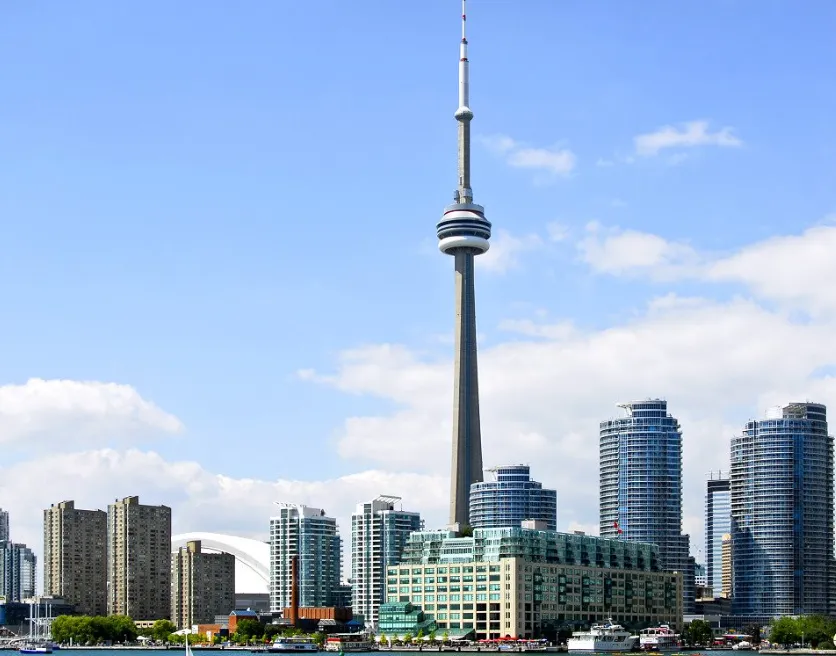
The 553-meter tower defines Toronto’s skyline. The glass floor is 342 meters up. The EdgeWalk — a hands-free walk around the outside of the tower at 356 meters — is for the brave. Tickets: CAD $43 for the SkyPod observation deck; CAD $225 for EdgeWalk. Book online to skip the entry queue. Expect 1-1.5 hours.
St. Lawrence Market
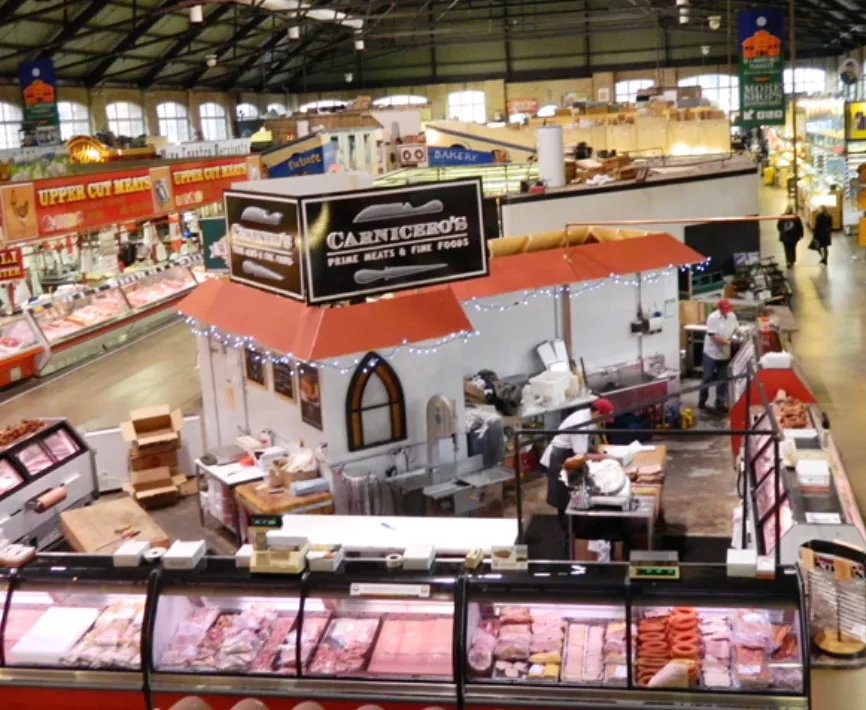
Voted by National Geographic in 2012 as the world’s best food market, the South building has been operating since 1803. Two-story building with 120 vendors. The peameal bacon sandwich at Carousel Bakery is the unofficial city dish. Closed Mondays. Best on Saturday mornings.
The Distillery District
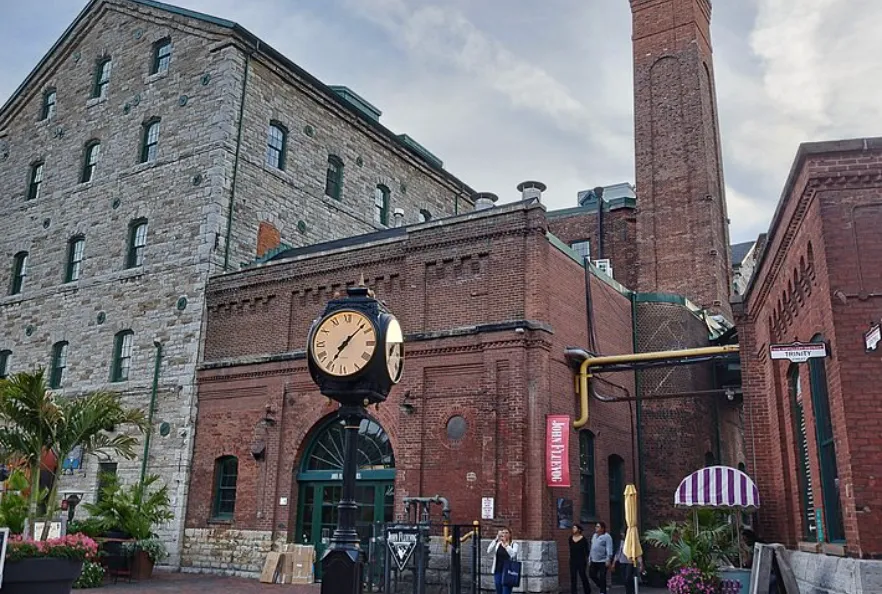
A pedestrian-only district of 19th-century redbrick warehouses (formerly the Gooderham & Worts whiskey distillery), now home to art galleries, microbreweries, and outdoor sculpture. Walk it during the day, stay for dinner.
Royal Ontario Museum (ROM)
Canada’s largest museum. Pre-Columbian collection rivals Mexico City’s. Notable architectural feature: the Daniel Libeskind crystal addition — angular glass volumes pierce the original Romanesque building. Entry: CAD $26. Closed Mondays in summer.
Toronto Islands
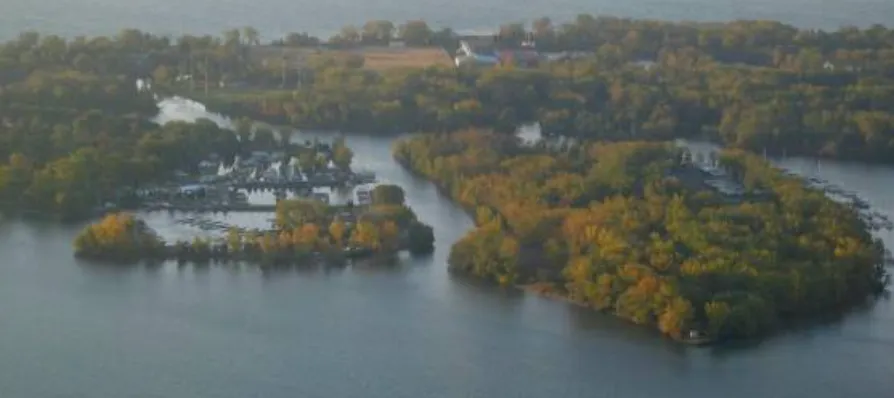
A 15-minute ferry from downtown to a chain of car-free islands with beaches, picnic grounds, and the best skyline view of the city. Centre Island has the most amenities. Round-trip ferry: CAD $9.11. Bring your own food; restaurants on the islands are limited.
Niagara Falls
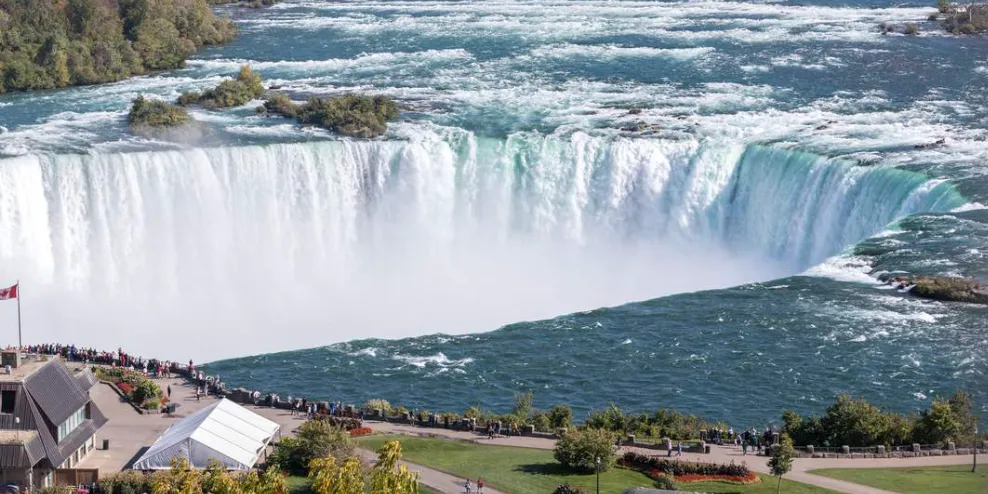
90 minutes by car or 2 hours by bus from downtown Toronto. Hornblower boat tours run to the base of the falls — wear a poncho. The Canadian side has the better view; the American side is what you see from the Canadian side.
Where to Eat and Drink
The Toronto Truth
Toronto doesn’t have one defining cuisine — it has all of them. The city is approximately 50% foreign-born, the highest rate of any major city in North America. The “best Toronto restaurant” is a contested honor across at least 15 cuisines.
Mother: Every fan should eat at Bar Mordecai (King West) or Mamakas (Ossington) for Greek-influenced Toronto cooking; Kiin (downtown) for upscale Thai; Pai (Spadina) for casual Northern Thai; Lambo’s Deli (Kensington) for Toronto-style Italian sandwiches.
Peameal Bacon Sandwich: A back-bacon-on-a-bun construction unique to Toronto. Carousel Bakery at St. Lawrence Market is the institution. CAD $7-9.

Poutine: Canada’s gift to the world. Smoke’s Poutinerie has chains everywhere; for the elevated version, try Banh Mi Boys (King West) where they put pulled pork on top.
For a Sit-Down Dinner
Alo (Queen West). Three Michelin stars. Toronto’s most decorated tasting menu — CAD $295 for 12-15 courses. Reservations 60 days out, exactly at midnight.
Edulis (Niagara). Spanish-Galician influenced, intimate dining room. Run by chef-owners Tobey and Michael Caldwell. Around CAD $150 per person.
Ricarda’s (King West). Spanish, generous portions, more relaxed. CAD $80 per person.
The Fan Experience
FIFA Fan Festival — Toronto: Confirmed at Exhibition Place, just steps from the stadium. Official location includes large screens, food trucks, live music, and free entry. Open throughout the tournament.
Post-match bars near Liberty Village: Cabana, Local Public Eatery, Track & Field (lawn bowling and craft beer), and the Toronto FC supporter pubs along King Street. The Beerbistro (King West) has 600+ Belgian beers. Beers run CAD $9-13, cocktails CAD $15-22.
Toronto’s neutral fan culture: Because of the city’s diversity, BMO Field will not feel like a single-team home ground. The Canadian crowd will be vocal, but every team in the tournament will have local supporters wearing their colors. Croatian, Italian, Portuguese, Greek, and Caribbean diaspora populations are particularly large. Expect the loudest fan group on any given match day to be whoever is playing Canada.
The Story

March 27, 2022. BMO Field, Toronto. Canada vs. Jamaica.
Canada had not played in a men’s World Cup since 1986. Thirty-six years. In that span, the United States had qualified eight times, Mexico every time, and Costa Rica four. Canada’s men had become a regional joke — beaten regularly by countries 100 places below them in FIFA’s ranking, hovering between 70th and 110th globally for two decades.
In 2018, Canada hired John Herdman, an Englishman who had previously coached the women’s national team to back-to-back Olympic bronze medals. The men’s team was at FIFA #94 when he took over. By the start of 2022 World Cup qualifying, Canada was unranked among the top tier of CONCACAF. Most observers expected the United States, Mexico, and Costa Rica to take the three automatic spots.
Canada didn’t lose a competitive home match in qualifying. They beat Mexico 2-1 in Edmonton in November 2021 — Mexico’s first qualifying defeat in Canada in 21 years. They beat the United States 2-0 in Hamilton in January 2022 — the Americans’ first qualifying loss in Canada since 1980. By the time Canada hosted Jamaica on March 27, 2022, they sat top of the CONCACAF table needing only a draw to clinch the World Cup.
It was -2°C and snowing in Toronto. The match started ten minutes late while the grounds crew cleared snow from the lines. A sellout crowd of 29,122 packed BMO Field, blowing horns and wearing every red jersey they owned.
Canada scored in the 13th minute. Cyle Larin headed in a Tajon Buchanan corner. The crowd shook the temporary north stand so violently it set off the press box’s seismic sensor. Tajon Buchanan made it 2-0 before halftime. Junior Hoilett made it 3-0 in the 70th minute. A Jamaican own goal in the 88th made it 4-0. Final whistle. Canada was in the World Cup.
Coach Herdman, in tears at the post-match press conference, said: “This country never believed in us. Because we’ve given them nothing to believe in. We’re a football country now.”
Alphonso Davies was not on the pitch that day — he was recovering from mild myocarditis at Bayern Munich. He livestreamed the match on Twitch from his Munich apartment, screaming each goal. The video has since been viewed 4 million times.
In Qatar that November, Canada lost all three matches but scored twice — a goal by Davies against Croatia (the fastest goal of the entire 2022 tournament, 68 seconds), and one by Junior Hoilett against Morocco. The team finished bottom of their group, but they had crossed the threshold. Canada was, after 36 years of silence, a World Cup country.
On June 12, 2026, when Canada walks onto the BMO Field pitch for the first ever men’s World Cup match on Canadian soil, much of that 2022 squad will still be there. Davies, now 25, will captain. Jonathan David will be the striker. Cyle Larin, the man who scored the goal that broke the 36-year drought, will be on the bench or starting depending on Marsch’s choice. The opener against Bosnia & Herzegovina or Italy is — unlike Qatar 2022 — not just a participation. It is a statement.
The temporary stands at BMO Field hold 17,756 seats that did not exist three years ago. They will come down within a month of the tournament’s end. But the noise inside that stadium on June 12 — that will not come down. That has been twenty-two years in the building, since the day Toronto FC played its first MLS match here in 2007 and a city realized it actually liked soccer.