The Short Version
On May 18, 2026, at 2 p.m. Kinshasa time, FECOFA published on its official channels the list of 26 Leopards selected by Sébastien Desabre for the 2026 World Cup. Key points: (1) First DR Congo return to the World Cup since 1974, when the country was named Zaire and finished its tournament with a goal differential of 0-14; (2) Composition: 3 goalkeepers (Fayulu, Mpasi, Epolo), 9 defenders, 10 midfielders, 4 forwards; (3) Captain: Chancel Mbemba (Lille, 107 caps, all-time record); (4) Premier League representation with Wan-Bissaka (West Ham), Wissa (Newcastle), Tuanzebe (Burnley), Sadiki (Sunderland); (5) Notable return: Gaël Kakuta (Larissa) after being set aside; first call-up: Gedeon Kalulu (Aris Limassol); (6) Notable absences: Jorthy Mokio (young eligible player), Ezechiel Banzuzi, Afimico Pululu, Michel-Ange Balikwisha, Jeremy Ngakia; (7) Camp opens May 26 at Tata Raphaël Stadium in Kinshasa with national decoration ceremony; friendlies June 3 vs Denmark in Liège and June 9 vs Chile in Marbella; (8) Group K: Portugal on June 17 at Houston (NRG Stadium), Colombia on June 23 at Guadalajara (Estadio Akron), Uzbekistan on June 27 at Atlanta (Mercedes-Benz Stadium).
The Goal of the 100th Minute
Before writing about this list, we must write about the moment that makes it possible.
Guadalajara, March 31, 2026. Estadio Akron. Intercontinental playoff against Jamaica for the final African spot at the 2026 World Cup. The score is 0-0 at the end of regulation. Extra time.
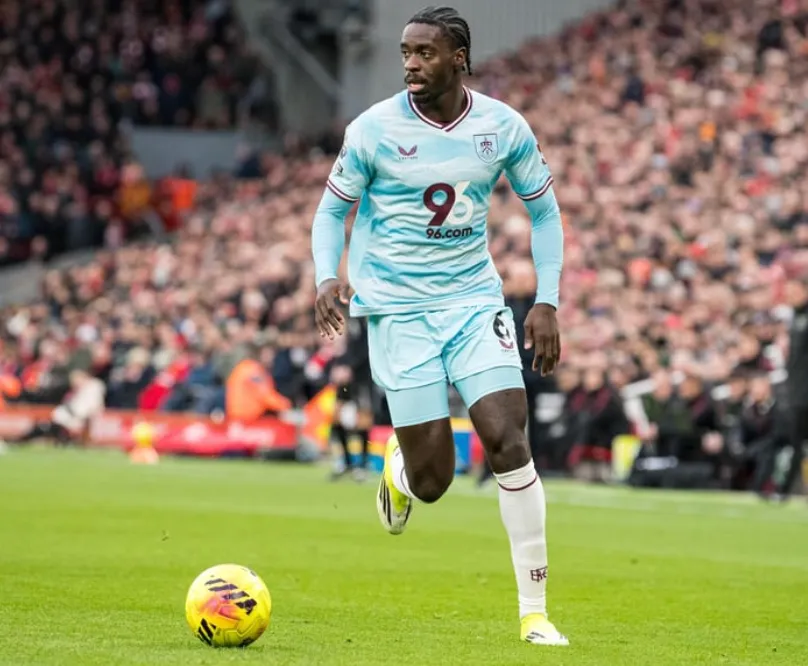
In the 100th minute, Axel Tuanzebe — Burnley defender, former England Under-21 international who chose DR Congo by lineage — scores. There will be no other goal. 1-0. DR Congo is at the World Cup.
When the players return to Kinshasa, President Tshisekedi receives them at the Palais du Peuple. He announces a national decoration. And he announces something else: “I promised them that if they took us to the World Cup, the Congolese people and government would do whatever they asked. What I am about to tell you has already been done: every Leopard player here has already been given a car and a house by the government.” Not a promise. An action already completed.
It is within this atmosphere that this afternoon’s list of May 18 appears. It is not a simple administrative announcement. It is an act of historical continuity.
Mbemba, Captain of 107
Chancel Mbemba is 31 years old. He plays for Lille in Ligue 1. He has 107 caps — the all-time record in DR Congo history. He is the captain.
His trajectory tells the trajectory of this team. He started unreliable at Newcastle, became dependable at Porto, exceptional at Marseille, and now solid at Lille. Against Cameroon in qualifying, it was him who scored in the 90th minute to send DR Congo to the African playoff final. Against Jamaica, it was him who converted a decisive penalty during the shootout before extra time against the Jamaicans.
Mbemba said, at the Palais du Peuple ceremony in April: “We’re still here; the war isn’t over yet. But first of all, I want to say thank you, because it’s been 52 years, and thanks to the Head of State, we, the children, have had this opportunity to fight for our country. We did not fight alone; you have stood by us from the very beginning, and the honor belongs to the whole country. Others started before us, and now it is our turn, today, and we will fight for this country.”
The sentence is long, like the wait. It is also political, which surprises no one in a country where football is one of the few spaces of national cohesion.
The 26, Position by Position
Goalkeepers (3): Timothy Fayulu (FC Noah, Armenia), Lionel Mpasi (Le Havre, France), Matthieu Epolo (Standard Liège, Belgium).
Defenders (9): Chancel Mbemba (Lille, France, captain), Aaron Wan-Bissaka (West Ham United, England), Axel Tuanzebe (Burnley, England), Arthur Masuaku (Lens, France), Joris Kayembe (Genk, Belgium), Steve Kapuadi (Widzew Łódź, Poland), Rocky Bushiri (Hibernian, Scotland), Dylan Batubinsika (Larisa, Greece), Gedeon Kalulu (Aris Limassol, Cyprus) — first call-up.
Midfielders (10): Théo Bongonda (Spartak Moscow, Russia), Brian Cipenga (Castellón, Spain), Meschack Elia (Alanyaspor, Turkey), Gaël Kakuta (Larissa, Greece) — notable return, Edo Kayembe (Watford, England), Nathanaël Mbuku (Montpellier, France), Samuel Moutoussamy (Atromitos, Greece), Ngal’ayel Mukau (Lille, France), Charles Pickel (Espanyol, Spain), Noah Sadiki (Sunderland, England).
Forwards (4): Cédric Bakambu (Real Betis, Spain), Simon Banza (Al Jazira, UAE), Fiston Mayele (Pyramids, Egypt), Yoane Wissa (Newcastle United, England).
Only four forwards. That is Desabre’s tactical choice: a solid defensive block, a numerous and flexible midfield, an attack where each name carries individual weight.
The Premier League Weapon
According to beIN Sports, the primary strength of this team is the concentration of European experience in top divisions. Three names stand out:
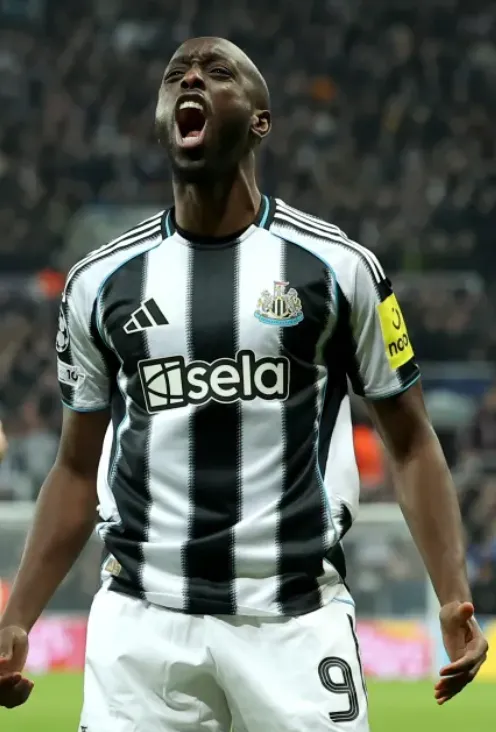
Yoane Wissa, 29, Newcastle United forward. 9 goals in 33 caps. He is the tip of the offensive spear. The profile: pace, instinct in front of goal, experience of five strong Premier League seasons. He returns after missing AFCON 2025 with a knee injury.
Aaron Wan-Bissaka, 28, West Ham fullback. Former England Under-21 international like Tuanzebe, he chose DR Congo in 2024. His one-on-one defensive quality is rare at world-class level.
Noah Sadiki, 21, Sunderland midfielder. Born in Brussels, eligible for Belgium, he chose DR Congo. Stamina, pressing, sense of positioning. He is the breakout star of Group K.
Alongside these three, there is Cédric Bakambu, 34, Real Betis forward. 21 goals in international play — only one goal away from the all-time record held by Dieumerci Mbokani. One more call-up appearance and he can enter history before even playing his first World Cup match.
From Zaire 1974 to DR Congo 2026
The history this team carries is heavy, and it must be said without flinching.
In 1974, Zaire became the first sub-Saharan African team to qualify for a World Cup. The country faced Scotland, Yugoslavia, and Brazil in West Germany. Results: 0-2 against Scotland, 0-9 against Yugoslavia, 0-3 against Brazil. Three defeats, zero goals scored, fourteen goals conceded. The tournament became a reference point of African football — but not in the way hoped for.
Fifty-two years later, the team returns. It is no longer called Zaire. It is called Democratic Republic of the Congo. The flag has changed twice in between. The jersey — sky blue with red accents, made by Umbro — is different.
But what has not changed is the wait. Five decades of absence from the greatest event in world sport. An entire generation of Congolese has never seen its national team play a World Cup. That generation will have its chance on June 17, 2026 at the NRG Stadium in Houston, against Portugal.
Group K
| Date | Opponent | City | Stadium |
|---|---|---|---|
| June 17 | Portugal | Houston | NRG Stadium |
| June 23 | Colombia | Guadalajara | Estadio Akron |
| June 27 | Uzbekistan | Atlanta | Mercedes-Benz Stadium |
Cristiano Ronaldo’s Portugal, 41 years old, in the opener. Historical symmetry: another 41-year-old who won’t let go. DR Congo plays in the same stadium — Estadio Akron of Guadalajara — where Tuanzebe scored the 100th-minute goal. Three months later. This time against Colombia.
The forecast from 1xBet, cited by TelecomAsia, gives DR Congo a 60.2% implied probability of qualifying for the knockout phase. That number says two things. The first: DR Congo is no longer considered an absolute outsider. The second: Portugal is expected to top the group, and DR Congo will fight Colombia for second place. Uzbekistan, a debutant like DR Congo, plays the pivot role.
May 26 at Tata Raphaël Stadium
Before all of that, there is a ritual.
May 26, at 10 a.m., at Tata Raphaël Stadium in Kinshasa, the Leopards’ first public training. The stadium opens its doors to supporters. Next, the official ceremony: decoration of the players by the Chancellery of the National Order. The national emblem is presented to the captain — Mbemba — in a symbolic gesture before what the state calls “the great journey.”
Then, two friendlies in Europe:
- June 3: against Denmark in Liège, Belgium
- June 9: against Chile in Marbella, Spain
Then, flight to the United States. First match on June 17.
Twenty-three days between the Kinshasa ceremony and the opening whistle against Portugal. Fifty-two years to get there.
The Country That Watches
In Kinshasa, on the main avenues — Boulevard du 30 Juin, Avenue Lumumba — Congolese flags and Leopards jerseys have been appearing since April. Sports radio talks of nothing else. Street vendors sell sky-blue scarves.
The country has 105 million inhabitants. More than one Congolese in two is under twenty. For them, the World Cup is not a return. It is a first.
That is what it is about, in the end. Not just closing a cycle of fifty-two years. But opening a new cycle for those who have never known the old one.
FAQ
When did DR Congo announce its 2026 World Cup squad? On May 18, 2026 (Monday) at 2 p.m. Kinshasa time, through official FECOFA communiqué on its social media channels. Manager Sébastien Desabre will hold a press conference at the start of camp on May 25 at 10 a.m. at FECOFA headquarters.
Why a communiqué and not a press conference? Strategic choice by FECOFA. Desabre’s press conference is held one week later, at the start of camp preparation. The list is published first, justifications come later. Unusual but consistent with a country where formal media gatherings are rare.
How long has DR Congo been absent from the World Cup? 52 years. The previous and only participation dates back to 1974, when the country was named Zaire. Three defeats, zero goals scored, fourteen goals conceded.
Who is DR Congo’s captain? Chancel Mbemba, 31, center-back for Lille. He holds the all-time appearance record with 107 caps.
Which Premier League players represent DR Congo? Four: Aaron Wan-Bissaka (West Ham), Yoane Wissa (Newcastle United), Axel Tuanzebe (Burnley), Noah Sadiki (Sunderland). It’s the largest Premier League representation in Leopards history.
What is DR Congo’s group at the 2026 World Cup? Group K, with Portugal, Colombia, Uzbekistan. First match: June 17 against Portugal at NRG Stadium in Houston.
Which friendlies before the World Cup? Two: June 3 against Denmark in Liège (Belgium); June 9 against Chile in Marbella (Spain).
When does the team gather? May 26 at Tata Raphaël Stadium in Kinshasa. Official ceremony of player decoration by the Chancellery of the National Order. The first training session is open to the public.
Which absences are notable? Jorthy Mokio (young Franco-Congolese binational), Ezechiel Banzuzi, Afimico Pululu, Michel-Ange Balikwisha, Jeremy Ngakia.
How did DR Congo qualify? Second in CAF Group B behind Senegal, then victories in African playoffs against Cameroon (1-0) and Nigeria (1-1, 4-3 pen). Finally, intercontinental playoff 1-0 against Jamaica in Guadalajara on March 31, 2026 — goal by Axel Tuanzebe in the 100th minute, victory after extra time.
What’s special about Cédric Bakambu? 21 goals in international play — only one goal away from the all-time record held by Dieumerci Mbokani. One more call-up appearance and he can enter history before even playing his first World Cup match.
Who is Sébastien Desabre? French manager, 49, in post since 2022. He had no professional playing career — he entered coaching at 30. Before DR Congo, he managed in eight African countries. This is his first World Cup campaign as a national team manager.
Related Articles
- Neymar’s Name Was Called: Brazil’s 26 for the 2026 World Cup — Announcement the same day: Neymar returns after 942 days
- The Word Modrić Will Not Say at Forty — Croatia the same day: Modrić, 40, fifth World Cup
- Tunisia Announces Its Squad: Lamouchi and the 26 Eagles of Carthage — May 15, another African milestone
- Five Nations, One Day — May 15, simultaneous announcements
- City guide: Houston, Texas — DR Congo’s opener vs Portugal at NRG Stadium
- External sources: CAF Online — Desabre names fearless squad · beIN Sports — official list · Foot Africa — 26 Leopards revealed · Sports Illustrated — DR Congo Preview · FIFA DR Congo official page
About the author: Pierre Lefèvre is a football columnist at Le But, the Lyon-based football culture magazine founded in 2017, specialized in portraits, long-form narratives, and political analysis of sport. Lefèvre has covered African football since 2015 and has written two books: Les Lions de l’Atlas (2019) and Kinshasa, capitale du ballon rond (2024). Contact: pierre.lefevre@lebut.fr · Twitter: @PierreLefevreLB · Profile: lebut.fr/chroniqueurs/pierre-lefevre