









Quick Reference
| Detail | Information |
|---|---|
| Stadium | BC Place / Vancouver Stadium (tournament name) |
| Capacity (WC) | 48,821 (official FIFA figure); 54,500 regular |
| Matches hosted | 7 (5 group stage + 1 Round of 32 + 1 Round of 16, June 13 - July 7) |
| Location | Downtown Vancouver, 777 Pacific Boulevard |
| Nearest airport | Vancouver International (YVR) |
| Recommended days | 4 nights |
| Budget level | High (most expensive Canadian host city after Toronto) |
| Best neighborhoods | Yaletown, Gastown, Coal Harbour, Mount Pleasant, Kitsilano |
| Avoid | Downtown Eastside (around Hastings & Main); some industrial fringes after dark |
| Currency | Canadian Dollar (CAD) ~ 1.36 CAD per $1 USD |
| Tap water | Safe to drink everywhere — among the best municipal water in North America. |
Mountains on one side, Pacific Ocean on the other, and a stadium with a retractable roof in the middle of the city. Canada’s busiest World Cup venue, hosting seven matches including both of Canada’s must-win group games. The pitch where Carli Lloyd scored a hat-trick in the first 16 minutes of the 2015 Women’s World Cup Final, including a goal from the halfway line. Here is how to land in Vancouver for June 13, 2026, and understand why the Pacific Coast city has quietly become Canada’s soccer capital.
The Stadium
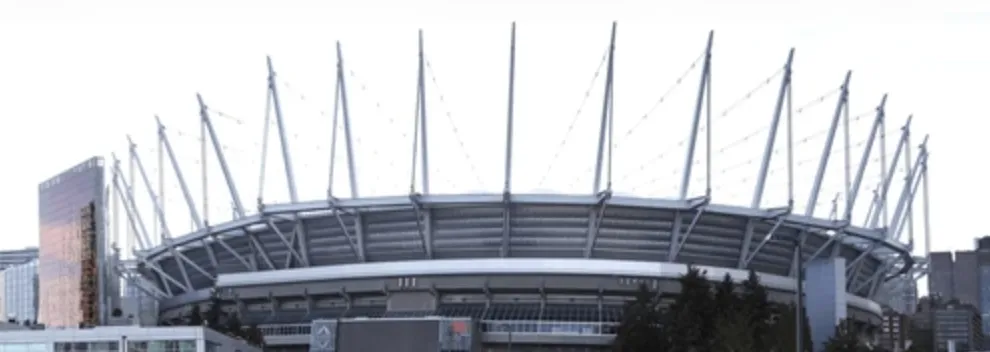
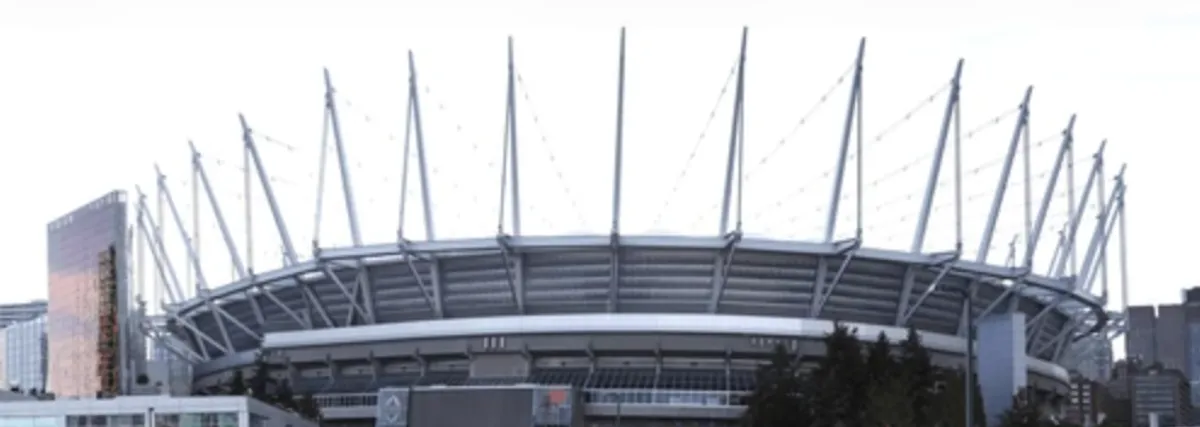
BC Place opened on June 19, 1983, at the time the world’s largest air-supported domed stadium. The white inflated roof became Vancouver’s most recognizable structure — until it deflated, twice, in storms in 2007 and 2009. After the second collapse, the province committed to a CAD 514 million total renovation that replaced the inflatable dome with a retractable cable-supported roof — the largest of its type in the world at the time of completion in 2011.
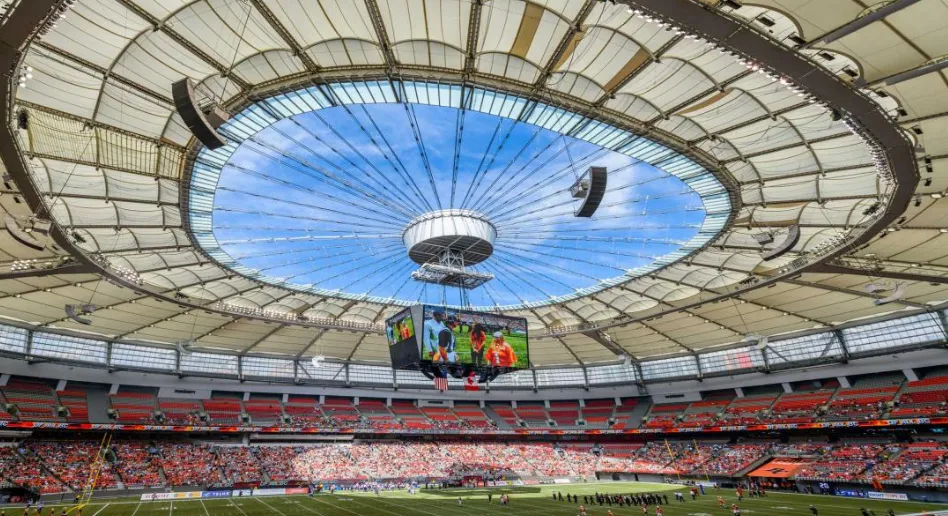
For the 2026 World Cup, the BC Pavilion Corporation invested an additional CAD 171-181 million in upgrades and operational costs. Major changes: a new center-suspended video board, locker room modernization, expanded washrooms, and — most importantly for a tournament — replacement of the artificial FieldTurf surface with natural grass from the Fraser Valley. FIFA mandates real grass at all 2026 venues. The pitch was laid in March 2026 with a view to having it fully bedded in by June.
The stadium sits in downtown Vancouver at 777 Pacific Boulevard, between False Creek and the city center. Walking distance from the SkyTrain, Stanley Park, the Pacific Ocean, and the financial district — no other World Cup venue in North America has this combination. The retractable roof matters: Vancouver’s June weather is unpredictable, with rain possible on any given day. Roof open or closed, every match will be played in comfort.
For the duration of the tournament, FIFA renames the stadium Vancouver Stadium. BC Place is its operational name; both refer to the same venue.
The seven matches scheduled here:
- June 13 — Australia vs. UEFA Path C Winner (Group D)
- June 18 — Canada vs. Qatar (Group B) — Canada’s second group match
- June 21 — Group F match
- June 24 — Switzerland vs. Canada (Group B) — Canada’s third group match
- June 26 — Group I match
- July 2 — Round of 32
- July 7 — Round of 16
Vancouver gets both of Canada’s decisive home matches. Group B places Canada with Qatar, Switzerland, and Bosnia & Herzegovina; the June 18 match against Qatar (FIFA #56 to Canada’s #30) is the one local fans expect to win. June 24 against Switzerland is the one that decides whether Canada advance to the knockout round for the first time in their history.
Getting There
From Vancouver International Airport (YVR) to the Stadium
YVR is 15 km / 9 miles south of downtown Vancouver. Travel time to BC Place is 30-40 minutes in normal traffic, 60-75 minutes on match days.
Public transit route (recommended — fastest, easiest):
- Canada Line SkyTrain from YVR International Airport station to Waterfront Station — 25 minutes, runs every 7-15 minutes
- Transfer at Waterfront Station to Expo Line eastbound, one stop to Stadium-Chinatown Station
- WARNING for World Cup: Stadium-Chinatown Station is closed during World Cup match days for crowd control. Use Main Street-Science World Station instead, then walk 8-10 minutes back to the stadium
- Total time: 35-45 minutes | Cost: CAD $5.05 (Compass Card) or $6.30 (cash) — about $4 USD
By rideshare (Uber/Lyft): CAD $35-55 from the airport in normal traffic. Match days easily double this, with surge pricing locked in 4 hours before kickoff. There are no direct rideshare zones at BC Place — drivers will drop you 2-3 blocks away.
By driving: Vancouver’s downtown is compact and parking is brutal during major events. BC Place has a parkade, but it’s pre-allocated to season ticket holders and corporate suites. Public lots in surrounding blocks fill 4 hours before kickoff at CAD $40-100. Pre-book via Honk or SpotHero.
The Vancouver advantage: Most fans arriving from US World Cup matches in Seattle, Los Angeles, or San Francisco will be flying into YVR with no US visa needed for the Vancouver portion of their trip. This makes Vancouver one of the easier cross-border World Cup destinations for non-US passport holders.
Visa & Entry to Canada
- US citizens: No visa, but valid passport required for air travel.
- UK, EU, Australian, Japanese citizens: No visa, but require eTA (Electronic Travel Authorization) — apply online before flying, costs CAD $7, takes minutes.
- Mexican citizens: Special arrangement; check ircc.canada.ca as policies have changed.
- Brazilian citizens: As of February 2024, visa is required for Brazilians.
- Chinese, Indian, Russian citizens: Visitor visa required, apply 6-8 weeks ahead.
The eTA is the most-missed requirement. Without it, you cannot board your flight. Apply the moment you book tickets.
Where to Stay
Vancouver is expensive. Hotel prices have surged 20-30% above 2024 levels in anticipation of the tournament.
| Neighborhood | Walk/Transit to Stadium | Double Room/Night | Vibe | Best For |
|---|---|---|---|---|
| Yaletown | 5-10 min walk | $250-400 | Converted brick warehouses, boutiques, harborside walk | The smart pick — closest to stadium with character |
| Gastown | 15 min walk / 8 min SkyTrain | $200-350 | Cobblestone streets, oldest part of the city, restaurant scene | Best overall for first-time visitors |
| Downtown / West End | 15-20 min walk or transit | $230-450 | Shopping, hotels, Stanley Park access | Convention-style stays, families |
| Coal Harbour | 20 min walk / 10 min transit | $300-500 | Marina views, upscale, mountains-and-ocean views | Luxury seekers, romantic stays |
| Mount Pleasant / Main Street | 15 min by SkyTrain | $150-250 | Hipster-craft beer scene, Vietnamese, indie | Budget conscious, food-first travelers |
| Kitsilano | 25 min by transit | $180-280 | Beach community, surfboard rentals, Greek diaspora restaurants | Slow pace, beach access |
Yaletown is the right call for fans where the football comes first. You can walk to the stadium in 5-10 minutes, and the neighborhood has a strong restaurant and bar scene of its own. Hotels include Opus Hotel (~CAD $400), Loden (~CAD $380), and Westin Grand (~CAD $320).
Gastown is the right call for everyone else. 8 minutes by SkyTrain to the stadium, but with a more textured Vancouver experience — late-19th-century brick buildings, Steam Clock at Cambie & Water, the city’s best cocktail bar scene.
What to avoid: The Downtown Eastside — specifically the corridor along East Hastings Street between Main and Cambie. This area has some of the most concentrated visible drug use in North America. It’s not violent toward tourists, but it is jarring and unpleasant. Many cheap hotels list themselves as “downtown Vancouver” while actually sitting on or just east of this corridor. Read reviews carefully before booking.
Book by May 1. World Cup hotel demand will be highest for the June 18 (Canada vs. Qatar) and June 24 (Canada vs. Switzerland) match weeks. Yaletown is already 80% booked for those dates as of April.
Beyond the Stadium
Stanley Park
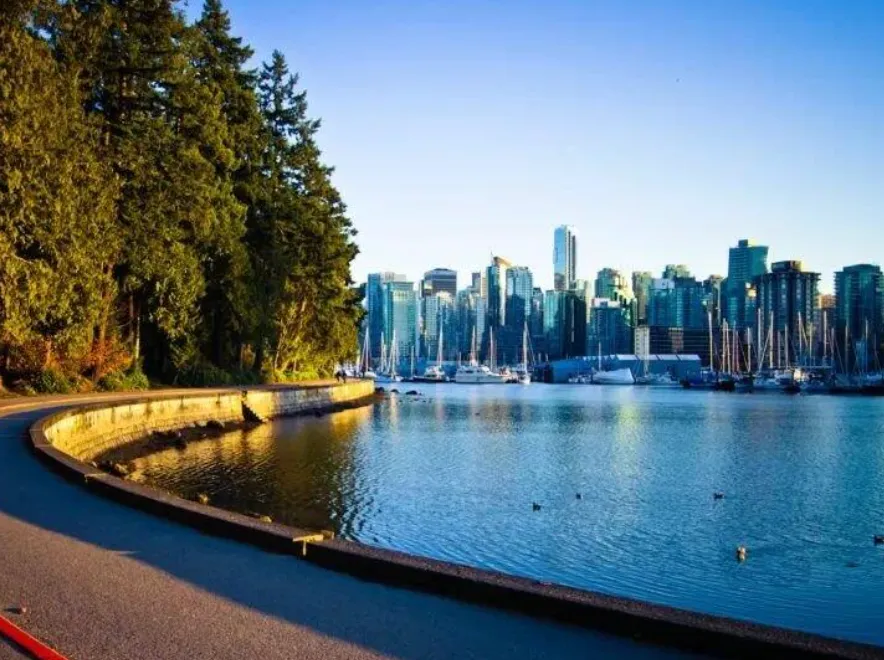
A 405-hectare urban park on the peninsula north of downtown — bigger than New York’s Central Park, surrounded on three sides by the Pacific Ocean. The 8.8 km Seawall path circles the entire park; rent a bike at any of several rentals at the park entrance (CAD $15-20/hour) and ride the loop in 90 minutes. Notable stops: Totem Poles at Brockton Point, Prospect Point lookout (best view of the Lions Gate Bridge), and Siwash Rock.
Granville Island
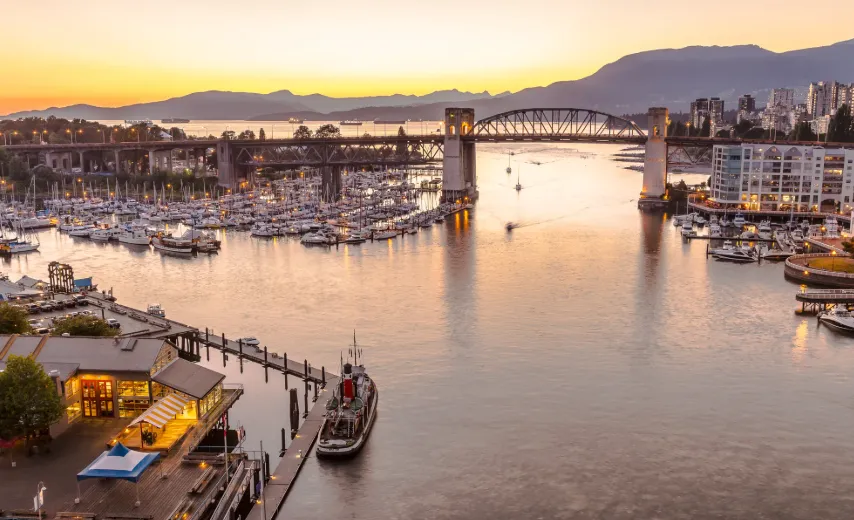
A peninsula in False Creek reached by tiny rainbow-colored ferries (Aquabus, $4 one-way) from Yaletown — itself a World Cup-week experience. The Granville Island Public Market has 50+ food vendors. Eat fish-and-chips at Go Fish outside the market while watching seaplanes land in the harbour. Buskers play continuously.
Capilano Suspension Bridge
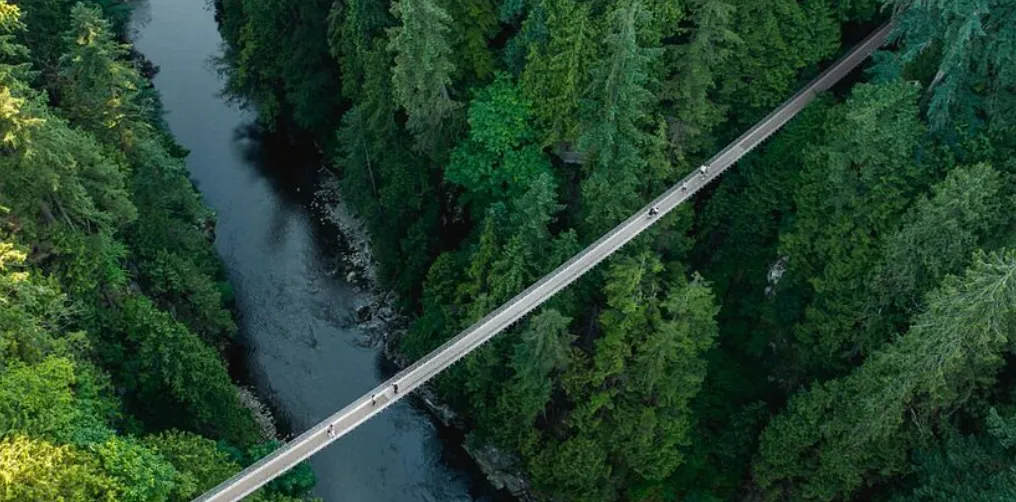
A 137-meter-long suspension bridge spanning a 70-meter canyon, plus a treetop adventure walk through old-growth Douglas fir. 20-minute drive north of downtown across the Lions Gate Bridge. CAD $69 entry. The complimentary shuttle bus from Canada Place is the painless way to get there.
Grouse Mountain
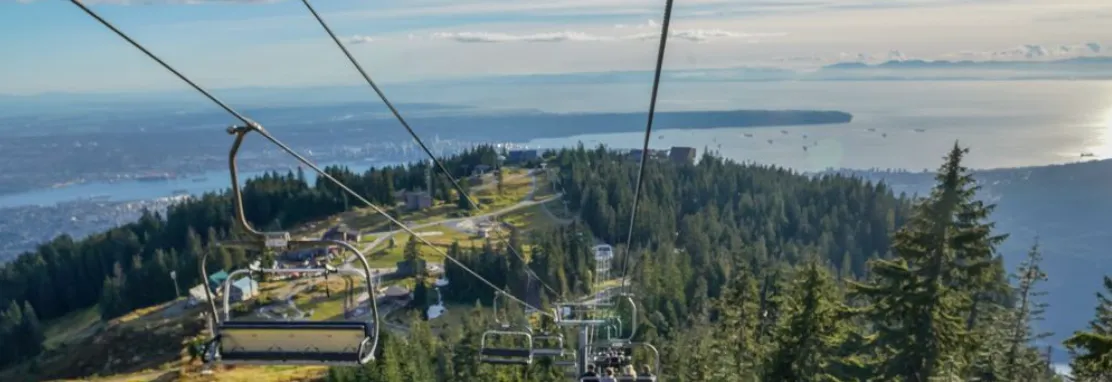
Take the SkyRide gondola from the base (15-minute drive north of downtown, transit accessible) to the summit at 1,200 meters. June views: snow at the summit, ocean and mountain ranges in every direction. The Grouse Grind is a 2.9 km hiking trail straight up — locals time themselves. Gondola: CAD $79.
Capilano Salmon Hatchery + Lynn Canyon
Free alternatives to the paid Capilano Suspension Bridge. The hatchery shows the salmon migration cycle (best in fall, but interesting year-round); Lynn Canyon has a smaller, free suspension bridge and old-growth forest trails. Combine both in a half-day.
Sea-to-Sky Highway to Whistler
If you have a free day, the drive north on Highway 99 (the Sea-to-Sky) is among North America’s most scenic — 90 minutes from downtown to Whistler village. Squamish (halfway point) has the Sea to Sky Gondola with Howe Sound views. Whistler in June is a mountain bike town more than a ski town, but the village is charming.
Where to Eat and Drink
The Vancouver Truth — Asian-Pacific Excellence
Vancouver is the most Asian-influenced major city in the Western Hemisphere — about 27% of the population is of Chinese descent, with substantial Japanese, Korean, Vietnamese, Indian, and Filipino communities. Sushi, dim sum, and ramen here are at a quality and price level that humbles most other North American cities.

Sushi: Tojo’s (Mount Pleasant) is the institution — chef Hidekazu Tojo claims to have invented the California Roll here in 1974. Tasting menus CAD $250+. Miku (Coal Harbour) for aburi (flame-seared) sushi at a more accessible CAD $80 per person.
Dim Sum: Kirin (multiple locations) and Sun Sui Wah (Cambie) are the standards. CAD $40-60 per person.
Ramen: Marutama Ra-men (Robson) for chicken-based broth that is unique in North America. CAD $18.
Pacific Northwest Specifics
Salmon: Salmon n’ Bannock (off Broadway) is Vancouver’s only Indigenous-owned fine dining restaurant. Sockeye salmon and bison-bannock pairings. CAD $50-80 per person.
Brunch: Vancouverites take brunch seriously. Jam Café (Beatty Street, near the stadium) has lines on Sunday from 9am — go on Tuesday at 10am. Café Medina (Richards Street) for the Belgian waffles.
For a Sit-Down Dinner
Botanist (Coal Harbour, in the Fairmont Pacific Rim). Two AAA Five-Diamond awards. Tasting menu CAD $235.
Published on Main (Mount Pleasant). One of Canada’s most acclaimed restaurants in 2024-25, featuring foraged BC ingredients. CAD $140.
Hawksworth (Downtown, Hotel Georgia). Toronto’s Alo plus Vancouver’s Hawksworth define the upper end of Canadian fine dining. CAD $180.
The Fan Experience
FIFA Fan Festival — Vancouver: Located at Hastings Park / PNE fairgrounds, east of downtown — not in the city center. The PNE is a century-old community fairground; live screenings will be at the PNE Amphitheatre. Free general admission, with premium seating tickets available. From downtown, take the Expo Line SkyTrain to Hastings Street or bus 14 or 16 east. Open from June 11 to July 19.
Post-match bars in Yaletown: Mahony & Sons (waterfront patio at Burrard Inlet), Yaletown Brewing (right by the stadium), and The Roxy (Granville Street) for cheap beer and live music. Beers run CAD $9-12, cocktails CAD $15-22.
Vancouver Whitecaps culture: Vancouver’s MLS team plays at BC Place when the World Cup isn’t on. The Southsiders supporters group sits in the south stand and sings continuously — they’ve been around since 2005. If you’re in Vancouver in early June and Whitecaps have a home match, go.
The Story

July 5, 2015. BC Place, Vancouver. United States vs. Japan, FIFA Women’s World Cup Final.
The stadium had been packed beyond its standard capacity for the final — 53,341 fans, the largest crowd ever for a women’s soccer match in North America at that time. Most wore red, white, and blue. Many were children. Carli Lloyd was the United States’ captain, 32 years old, in what most observers thought would be her last major tournament. The US had not won a World Cup since 1999.
The match was supposed to be Japan’s. They were defending champions, having beaten the Americans on penalties in 2011. The Japanese were the more technical, possession-oriented side. They were favored to repeat.
What happened in the first 16 minutes of the match is now considered the greatest individual performance in World Cup final history, men’s or women’s:
Minute 3: Megan Rapinoe takes a corner kick. Carli Lloyd, ghosting between defenders, sidefoots it in. 1-0 USA.
Minute 5: Lauren Holiday curves a free kick into the box. Carli Lloyd ducks her head into it. 2-0 USA.
Minute 14: Lloyd, just past the halfway line, sees Japanese goalkeeper Ayumi Kaihori far off her line. Lloyd takes one touch, looks up, and lashes a 54-yard shot that arcs over Kaihori’s head and into the net. 3-0 USA. The crowd does not believe what they have seen. Replays from a dozen angles will be shown over the next hour.
Minute 16: Lauren Holiday makes it 4-0. Japan have not yet completed a meaningful sequence in the United States’ half.
The final score was 5-2. Carli Lloyd had scored a hat-trick in the first 16 minutes of a World Cup final — including a halfway-line goal — and the United States won their third Women’s World Cup, breaking a 16-year drought.
Lloyd’s halfway-line shot has been called the greatest goal in Women’s World Cup history. The freeze-frame of her in the moment after the third goal — arms apart, mouth wide, the crowd at BC Place rising as one behind her — became the iconic image of the 2015 tournament. ESPN’s Sportscenter ran the goal on every hourly news cycle for two days. The third goal would later be voted FIFA Puskás Award winner for the most beautiful goal of 2015.
Eleven years later, on June 24, 2026, the Canadian men will play Switzerland on the same patch of grass. Carli Lloyd, retired since 2021, will be in the stands. She has said in interviews that she plans to watch from a section near the halfway line — the spot from which she scored.
The 2026 men’s tournament is BC Place’s first men’s World Cup. But the stadium has been the stage for one of the great football moments of any kind, anywhere. The new pitch, fresh-laid for 2026, sits on the same coordinates where Lloyd’s hat-trick happened. If Canada beat Switzerland on June 24, the local memory will fold: Lloyd’s halfway-line goal, and Canada’s first knockout-round qualification, will share an address.