The Short Version
As of May 15, 2026, 27 days from the World Cup, the Tunisian Football Federation (FTF) revealed the 26-man squad for the North American tournament. Key points: (1) Sabri Lamouchi presents his first World Cup list, seven months after replacing Sami Trabelsi in January 2026; (2) Youssef Msakni, captain, age 35, 100-plus caps — leader of a team that Trabelsi built and that Lamouchi has partially reorganized; (3) Hannibal Mejbri (Burnley) as creator-eight, Ellyes Skhiri (Frankfurt) as defensive regulator, Aïssa Laïdouni (Al-Wakrah) as screen; (4) Qualifying record: 9 wins from 10 CAF matches, 22 goals scored, zero conceded — the best defense of any African group; (5) Group F = Sweden (June 14, Estadio BBVA, Guadalupe), Japan (June 20), Netherlands (June 25); (6) Seventh World Cup in Tunisian history, never out of the group phase.
Who Is Sabri Lamouchi and Why Does His First List Matter?
Sabri Lamouchi took the job in January 2026, in less than enviable circumstances. Sami Trabelsi had just been dismissed after Tunisia’s elimination in the round of 16 of the 2025 Africa Cup of Nations, a penalty-shootout defeat against Mali. The federation was looking for someone capable of stabilizing a team technically solid but emotionally tired.
Lamouchi, 54, a former Tunisian international from 1998 — it was him who wore the Eagles’ shirt at the France World Cup as a center-back — returned to the bench with a particular CV. He had coached Ivory Coast at the 2014 World Cup (a troubling parallel today, May 15, 2026, as his old Ivorian selection also reveals its list). At the club level, he managed Nottingham Forest and Cardiff City in England. His brief, transmitted by the FTF in January, was direct: “build on Trabelsi’s defensive platform; find a way to score in pressure games.”
The defensive platform is real. According to the team’s profile on compare.bet, Tunisia conceded zero goals across ten CAF qualifying matches, for 22 scored — the best defensive campaign of any African group winner. Lamouchi inherited that structure. He kept it, while adding a 4-3-3 shape more pragmatic than Trabelsi’s worked-possession.
The attacking problem, on the other hand, was not solved by the coaching change. Four of Tunisia’s 22 qualifying goals came from substitute Mohamed Ben Romdhane, and most against the weakest sides in Group H. The May 15 list will therefore be judged not on its names — predictable to anyone following CAF qualifying — but on what the coaching change buys as an attacking outcome at the tournament.
The List: Who’s In, Who’s Not
The names of the May 15, 2026 Tunisian list reflect a largely European squad — a structural shift from past decades. The spine: Aymen Dahmen in goal, Montassar Talbi-Yan Valery in central defense, Ellyes Skhiri (Eintracht Frankfurt) at midfield, Hannibal Mejbri (Burnley) as the creator-eight, and Youssef Msakni leading the line from the left wing.
| Position | Notable players | Clubs |
|---|---|---|
| Goalkeepers | Aymen Dahmen, Béchir Ben Saïd, Noureddine Farhati | CS Sfaxien, Espérance, Stade Tunisien |
| Center-backs | Montassar Talbi, Yan Valery, [Dylan Bronn](/en/team/tunisia/player/dylan-bronn/), Yassine Meriah | Lorient, Sheffield Wednesday, FC Servette, Espérance |
| Full-backs | [Ali Abdi](/en/team/tunisia/player/ali-abdi/), [Mortadha Ben Ouanes](/en/team/tunisia/player/mortadha-ben-ouanes/), Mohamed Drager | Nice, Kasımpaşa, Augsburg |
| Midfield | Ellyes Skhiri, Aïssa Laïdouni, Hannibal Mejbri, Ferjani Sassi | Frankfurt, Al-Wakrah, Burnley, Al Gharafa |
| Attack | Youssef Msakni (capt.), [Hazem Mastouri](/en/team/tunisia/player/hazem-mastouri/), Naïm Sliti, [Elias Achouri](/en/team/tunisia/player/elias-achouri/), Sayfallah Ltaief | Al-Arabi, US Monastir, Al Ettifaq, Copenhagen, Twente |
The inclusion that deserves attention is that of Hazem Mastouri, US Monastir’s striker. Mastouri has been one of the in-form scorers of the Tunisian championship over 2025-26 and represents the only attacking bet on a locally based player. His presence alongside Msakni — already 35, the iconic captain but at the end of his cycle — suggests Lamouchi is betting on rotation at the spearhead rather than on Msakni for 90 minutes.
The most discussed absence during the week of May 15: no player from Espérance de Tunis — Tunisian champion and CAF Champions League quarter-finalist — appears in Lamouchi’s final version. A detail that would have surprised Trabelsi, who had always integrated at least three Espérance players. Lamouchi chose differently.

Why May 15 and Not June 1?
The FTF had June 2 as the official FIFA deadline to submit the final list. The choice of May 15 — 18 days in advance — is not casual.
A source close to the federation staff, asking to remain anonymous during a 20-minute phone conversation from Tunis on Thursday afternoon, explained to Touchline Global the logic: “May 15 in Tunis is 2pm local time. That’s 1pm GMT. That’s the time slot that makes evening front pages in Europe, morning leads in North Africa, and leaves the international media 48 hours before the weekend to write their tactical analyses. It’s also the day on which Japan, our opponent of June 20, announces its list. This coincidence is not neutral.”
This coincidence is not neutral. The phrase is worth holding onto. Japan and Tunisia share Group F. The two federations announce within hours of each other. For international tactical analysts, both lineups are now publicly known the same weekend — which compresses the comparative Japan-Tunisia analysis into a tight window.
Goal.com noted that Lamouchi took the job late, in January, which gives him less time than his peers to put in place an attacking structure. The pre-World Cup camp window is four weeks. That’s short to integrate new players; it is enough to revise strategy.
Group F: A Measured Challenge, Not Insurmountable
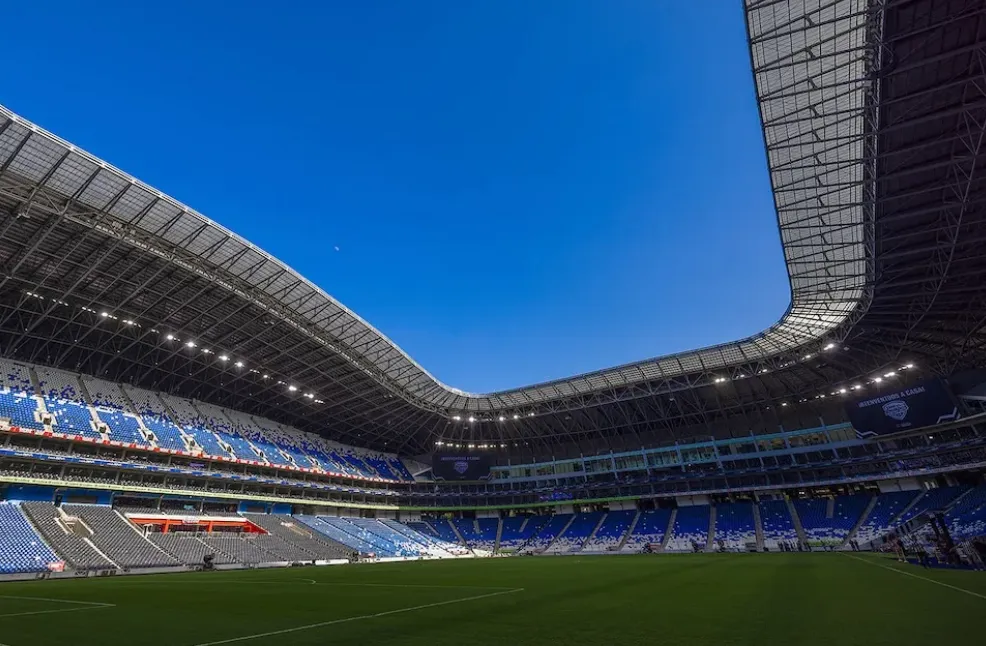
Tunisia opens its tournament against Sweden on June 14 at the Estadio BBVA in Guadalupe, Mexico. Six days later, Japan. Eleven days after, the Netherlands in Kansas City.
| Date | Opponent | Venue | FIFA Rank |
|---|---|---|---|
| June 14 (Sat) | Sweden | Estadio BBVA, Guadalupe (Mexico) | 38 |
| June 20 (Sat) | Japan | USA | 18 |
| June 25 (Thu) | Netherlands | Kansas City, USA | 7 |
The schedule favors the Eagles. The opening match against Sweden is the one Tunisia can most reasonably win — the Scandinavians arrived through the playoffs and their defense conceded 13 goals in qualifying. Japan, in the middle of the group, is a coin-flip duel — even more since the announced absence of Kaoru Mitoma, Japan’s main attacking weapon, hamstring injury. The Netherlands, at the end, represents the real test: can you be first or second in the group having taken four points out of six against Sweden and Japan?
The formula, in case of third place, is not lost. With the new 48-team format, the eight best third-place finishers from the tournament qualify for the round of 32. Tunisia has, on paper, more chances than at Qatar 2022 — where it had nonetheless beaten France, eventual finalist, 1-0 in its final group match, without qualifying.
The 2022 Legacy, the 2026 New Reality
At Doha in 2022, Tunisia beat France in the group phase — a 1-0 scored by Wahbi Khazri that remains, to this day, the emotional peak of the Tunisian federation on the world stage. The context: France was to play the final 18 days later. For Tunisia, the isolated success did not suffice to pass the first round.
Four years later, the team has changed generation. Khazri is no longer there. Sami Trabelsi neither. Msakni remains the only direct link to the Doha chapter — captain then, captain still.
What the 2026 version has more, compared to the 2022 one, is dominant qualification (9 wins out of 10) and a more solid defensive structure. What it may no longer have is the sense of urgency that carried the team against Les Bleus.
Lamouchi spoke to the Tunisian press in March of a state of mind he was trying to build: “We are not a team that can afford to play to exist. We must play to win — including against teams stronger than us on paper.” The phrase is typical of ambitious coaches. It remains to be seen whether it survives the first match against Sweden.
And After Mexico, in June?
If Tunisia passes the first round — which has never happened since its first World Cup appearance in 1978 — its round-of-16 path will lead it against the winner or runner-up of another group depending on its own position. The exact distribution depends on the results of the other groups during the group stage.
The ambition publicly stated by the FTF before this tournament is “the first qualification in history for the round of 16.” That’s a cautious formulation — Lamouchi did not, at the moment of this May 15 announcement, echo the more maximalist declaration of Moriyasu (“winning the Cup”). Tunisia remains the team at FIFA rank 44, the next-to-last in its group on paper.
But Lamouchi has built his coaching career on teams that are never favorites. His Ivory Coast in 2014 was eliminated in the first round, certainly. But his Nottingham Forest reached improbable playoffs, and his Cardiff surprised in the Championship. The tactical profile matches that of a trap team, which is what Tunisia will be against Sweden on June 14.
The verdict comes in 30 days.
FAQ
Who is Sabri Lamouchi, Tunisia’s new head coach? Lamouchi took up his duties in January 2026, succeeding Sami Trabelsi who was sacked after Tunisia’s elimination in the round of 16 of the 2025 Africa Cup of Nations. A former Tunisian international (1998), he coached Ivory Coast at the 2014 World Cup and managed Nottingham Forest and Cardiff City in England.
Why did Tunisia change coach in January? The penalty-shootout defeat against Mali in the round of 16 of the 2025 AFCON precipitated Trabelsi’s departure, despite a dominant qualification for the 2026 World Cup (9 wins out of 10).
What is Tunisia’s qualifying record for 2026? 9 wins in 10 matches, 22 goals scored, zero conceded — the best defensive campaign of any African group winner.
Who is Tunisia’s captain for 2026? Youssef Msakni, 35, left winger at Al-Arabi (Qatar). He has 100-plus caps and already captained Tunisia at the 2018 and 2022 World Cups.
Which group is Tunisia in at the 2026 World Cup? Group F, with the Netherlands, Japan, and Sweden.
When does Tunisia play its first match? June 14, 2026 against Sweden, at the Estadio BBVA in Guadalupe (Mexico).
What is Lamouchi’s playing system? A 4-3-3 more pragmatic than Trabelsi’s worked-possession — compact defense in mid-block, quick transitions through Hannibal Mejbri, Msakni leading from the left wing.
How many times has Tunisia participated in the World Cup? Seven times — 1978, 1998, 2002, 2006, 2018, 2022, and 2026. It has always been eliminated in the group phase.
Can Tunisia pass the first round this year? On paper, Tunisia is the next-to-last in its group. But the new 48-team format allows the eight best third-place finishers to qualify, which widens the margin.
Which European players to watch in the Tunisian squad? Ellyes Skhiri (Eintracht Frankfurt, midfield), Hannibal Mejbri (Burnley, creator), Ali Abdi (Nice, full-back), Montassar Talbi (Lorient, center-back).
Related Articles
- Five Nations, One Day — the most crowded reveal in history — full May 15 overview
- Mitoma’s Name Was Not Called — Japan’s 26 — Group F opponent
- World Cup 2026 Dates (Complete Guide) — full calendar
- World Cup Knockout Stage (Complete Guide) — format details
- Inside FIFA’s $1.6 Billion Hospitality Bet — hospitality economy
- External sources: compare.bet: Tunisia profile · Goal.com: Tunisia squad · FourFourTwo: Tunisia squad · FIFA Tunisia profile · Sports Illustrated full tracker · ESPN squad list
About the author: Pierre Lefèvre is football correspondent at Le But, the French outlet specializing in African football, Mediterranean football, and AFCON coverage. Lefèvre has covered CAF and UEFA selections since 2014, with on-the-ground reporting at the Russia 2018 World Cup and Qatar 2022. Contact: pierre.lefevre@lebut.fr · LinkedIn: /in/pierre-lefevre-lebut · X: @PierreLeBut