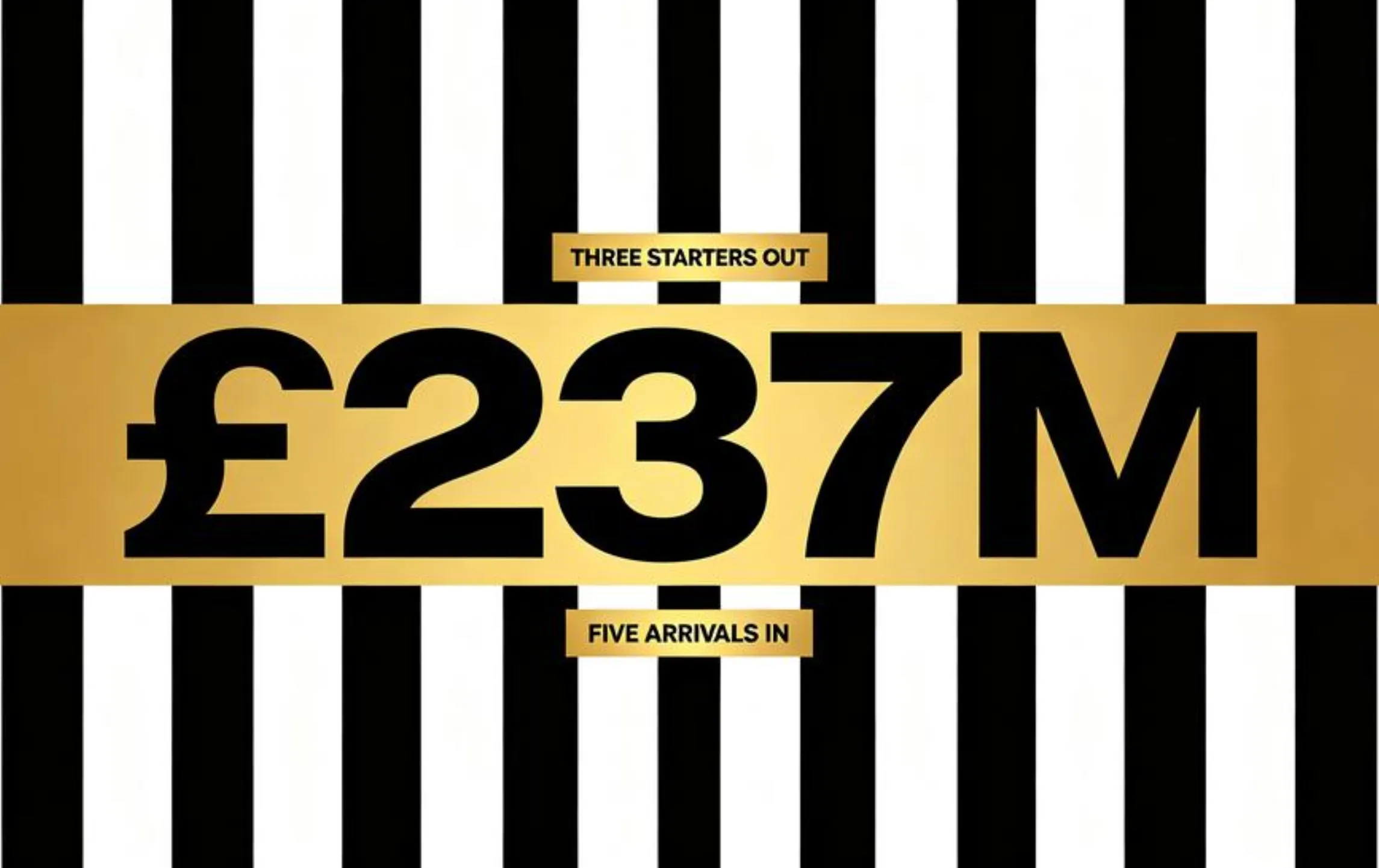
The New York Times put it bluntly in late March: during the 2026 World Cup, average hotel rates across the 16 host cities are projected to jump 300% around the opening match.
If you already have a ticket, the second half of this story is just beginning.
Where to sleep. What to eat. How to get from the airport to the stadium. These are the questions pushing out everything else now — because it turns out a Category 1 ticket to the final will cost you $10,990, and a single night in an Airbnb might run you $6,000.
This piece isn’t about how to plan. It’s too late for that. The opening match is 52 days away. This is about what you can still do if you missed the best booking windows.
”I’ll just move in with my relatives for a month”
Bloomberg’s March 28 piece profiled Bobby Roufaeal, a short-term rental manager in New Jersey. He runs a dozen properties, and between June 11 and July 19, one of his luxury listings will gross $240,000.
He says the phone won’t stop ringing — homeowners calling him. “I’ll crash at my cousin’s place for a month, you rent my house out.” Everyone triples their rates and no one flinches.
That’s the floor. According to Fortune’s reporting the same week, some top-tier Airbnb listings in New Jersey are already asking $6,000 a night. A handful of scarcity listings have posted $20,000 per night — yes, twenty thousand, for one night.
Airbnb launched a “World Cup Host Earnings Calculator” in February. Their own data shows searches for host-city stays are up 80%, and 1 in every 6 tournament-period guests is booking on Airbnb for the first time ever. New buyers pouring in, old regulars watching, prices climbing.
The most expensive city isn’t New York — and that’s a pattern worth tracking
Here’s the counterintuitive finding from Upgraded Points’ late-March study.
They built a standardized cost basket for attending one group-stage match: round-trip airfare, two nights in an Airbnb near the stadium, ride-shares, meals, one replica jersey, and a median Category 1 resale ticket from StubHub. Then they ran the math for all 11 U.S. host cities.
Number one was Boston. Total: $8,929.
Two nights in an Airbnb near Gillette Stadium: median $3,044 — highest in the sample. Scotland vs. Morocco Cat 1 resale median: $4,986.
Second most expensive was Philadelphia at $7,139, with Brazil vs. Haiti Cat 1 tickets also approaching $5,000. Cheapest was Miami — the entire group-stage experience coming in at $2,614.
Here’s the key pattern: the steepest percentage hikes are in Kansas City, Boston, and Philadelphia — cities with low baseline prices and a lot of room to surge. Cities where rates were already high — New York, San Francisco, Los Angeles — barely moved.
For anyone shut out of Boston or Philadelphia: instead of $500-a-night rooms in Philly, consider Trenton or Newark, or mid-route Amtrak stops like Metropark and Princeton. Prices drop by half; trains to Philly run 40 to 70 minutes.
Kansas City’s “38x suburbs” — you can’t fix this one, only route around it
One data point in SmarterTravel’s January city strategy piece will make you go quiet.
The satellite towns around Arrowhead Stadium in Kansas City — Grandview, Gladstone, Tonganoxie, names you’ve probably never heard — were averaging $40 to $80 a night for a short-term rental at this time in 2025.
Current asking prices have peaked at 38 times baseline.
A mid-range “premium” short-term rental is going for $4,000 to $8,000 a night right now. A basic one is $500 to $1,100. The Kansas City government dropped the STR registration fee from $200 to $50 to lure more listings. Supply remains thin.
The workaround: if you don’t have Kansas City lodging yet, stop looking within 25 miles of the stadium. Head out to Topeka (50 miles west) or Lawrence (40 miles northwest). Rates reset to something resembling normal. Drive time to Arrowhead is about an hour. Kansas City’s identity is barbecue — Topeka has a few legitimate barbecue joints of its own. You’re not really losing anything.
Vancouver is worse. The whole city has about 22,700 hotel rooms. BC Place seats 54,500. The projected gap is 70,000 room-nights. Last July, Vancouver’s hotel average was already at a record $330 — up 189% in five years. That was before the tournament.
Vancouver escape hatch: cross the border, stay in Seattle. The cities are 140 miles apart (about 2.5 hours by car). Both are 2026 host cities. Seattle’s hotel inventory is substantially larger and prices are roughly 30% lower. Base yourself in Seattle and chase a two-city itinerary.
A counterintuitive take: New York isn’t actually that expensive
Hearing that the final is at MetLife Stadium feels like a lodging disaster.
Here’s the truth: New York and New Jersey together have 118,000+ hotel rooms. Manhattan’s hotels in July run $300 to $500 a night regardless of the World Cup, because the baseline is already high enough that the surge has nowhere to go.
The cities that lose more are the ones with normal-summer rates of $150 suddenly asking $500. That’s Kansas City, Boston, Philadelphia. Not New York.
For final attendees: don’t rush to book Manhattan. Jersey City and Hoboken run 30 to 40% cheaper than Manhattan hotels, and the PATH train gets you into Manhattan in 10 minutes. Better yet: from Hoboken, take NJ Transit to Secaucus, transfer to the Meadowlands line, and you’re at MetLife in 40 minutes total — faster than most routes from Midtown.
If you’ve already made a mistake, here’s the rescue list
Mistake 1: You haven’t started your visa yet. The FIFA PASS priority lane recommends completing your B1/B2 interview by May 31. There’s still time. Critical step most people miss: first submit the PASS opt-in form in your FIFA account (free), then wait at least one hour before scheduling the interview. The system needs that window to match your records. Anyone who skips the opt-in and goes straight to scheduling won’t see priority slots.
Mistake 2: Your Airbnb host is trying to cancel and re-list at a higher rate. Classic major-event playbook — the host sees rates surge and wants out of your original booking. Refuse the cancellation. File a complaint with Airbnb directly. Airbnb has an “anti-gouging” protection for event-period bookings; they enforced it during Qatar 2022 and the vast majority of original bookings were preserved. Document everything in writing through the platform’s messaging.
Mistake 3: You booked lodging but didn’t factor in transport. The Boston trap: Gillette Stadium isn’t in Boston. It’s in Foxborough, 45 minutes outside the city. MBTA runs game-day trains but not from every downtown hotel. Base yourself in Back Bay or South Station, leave early, and budget a 90-minute commute buffer.
Mistake 4: You bought the flight without insurance. American summer thunderstorms push flight-delay rates about 40% higher than normal (FAA historical data). Add a travel insurance policy with event-delay coverage — Allianz and World Nomads both offer plans specifically for sports travel. Annual premiums run $80 to $150. That’s a rounding error compared to missing a $5,000 Cat 1 match.
Mistake 5: You assumed a U.S. visa lets you cross into Canada and Mexico freely. It doesn’t. A valid U.S. B1/B2 gets you into Mexico visa-free for up to 180 days, but Canada requires a separate eTA (online application, CAD $7, results in minutes). If your itinerary crosses all three hosts, apply for the eTA now.
Mistake 6: Category 3-4 tickets looked cheap, but the view is terrible. FIFA restructured 2026 ticket categories by stadium tier (lower bowl vs. upper bowl), not by location relative to the field. Cat 3-4 are almost entirely upper-deck. Before buying, check the seat map tool on the stadium’s official website. At MetLife and AT&T, upper-level Cat 3 can be 60+ meters from the pitch — you’re watching ants move.
Mistake 7: You booked an entire-home Airbnb without verifying its license. NYC and parts of Los Angeles are aggressively enforcing STR registration. An unregistered listing can be pulled, and your booking voided with it. On the Airbnb listing page, look for a “Registration Number” or “STR License” field. Legitimate listings display it clearly. If it’s missing, keep looking.
Mistake 8: You chose the wrong airport and torched money. Among New York’s three major airports, EWR (Newark) is 15 minutes from MetLife by car. JFK and LaGuardia are both 90+ minutes. Flying into LAX for SoFi Stadium beats Burbank or Long Beach by a lot. Before booking, check the Google Maps distance to the stadium, not to downtown.
Mistake 9: You assumed the area around the stadium is full of restaurants. NFL stadium zones on match days are packed and marked up 50-100%. Two better options: eat in a neighborhood one subway stop back from the venue, or use the stadium’s FIFA-mandated affordable food tier — every venue is required to offer a $10 to $15 hot dog/burger/beer combo.
Mistake 10: You didn’t think about the weather. June and July across the American South (Miami, Houston, Dallas, Atlanta) regularly push heat indexes past 100°F (38°C). Dark clothes, an umbrella, not hydrating before entering — every U.S.-hosted World Cup sees fans sent to hospital for heat exhaustion. Meanwhile, Toronto, Vancouver, and Seattle can drop below 55°F (12°C) in summer evenings. Bring a layer for night games.
One more thing worth noting
On April 20, Philadelphia did something every other host city should copy.
Airbnb partnered with the City of Philadelphia to sponsor free rides home on the SEPTA Broad Street Line after every World Cup match at Philadelphia Stadium (formerly Lincoln Financial Field).
This isn’t a small $5 transit subsidy. This is the difference between tens of thousands of fans funneling into a single subway entrance in an organized way versus not. Whether the other 15 host cities take notice and replicate it over the next six weeks will shape the ground-level experience of the entire tournament. At least now there’s a template.
For final attendees: keep an eye on NJ Transit and NYC MTA announcements about similar partnerships. If they happen, they’ll be announced within the week before kickoff. Book early — beats standing in line that night.
One last honest thing
This will probably go down as the most expensive World Cup ever.
It will also probably be the hardest to get in-person tickets for — 500 million+ draw applications speak for themselves. For those who are going anyway, the reasoning is simple:
48 teams, 104 matches, 16 cities, 39 days. This scale isn’t likely to recur in your lifetime. The next North American World Cup probably won’t happen before 2050.
Messi’s last. Ronaldo’s last. Mbappé and Yamal’s possible coronations. Mexico’s third hosting. North America last hosted 32 years ago.
Whether that’s worth $8,929 is a decision only you can make. At least now you know how the math works, and which traps are still worth dodging.
Sources: Upgraded Points 2026 World Cup Costs study (March); Fortune and Bloomberg coverage of the Airbnb market (March 28); SmarterTravel accommodation strategy guide (January); Airbnb Host Earnings Calculator announcement (April); FOX 29 Philadelphia on SEPTA sponsorship (April 20); FAA historical flight-delay data; U.S. Department of State FIFA PASS FAQ.