The Short Version
Seattle hosts six World Cup 2026 matches at Lumen Field — branded “Seattle Stadium” during the tournament — from June 15 to July 6. Four group-stage games, two knockout rounds. The USA plays Australia at noon on Thursday June 19 (Juneteenth), the city’s headline date. Iran plays Egypt at 8pm on Friday June 26, the late kickoff. Other groups: Belgium vs Egypt (6/15), Qatar vs Bosnia & Herzegovina (6/24). Here’s the angle no one is selling hard enough: Seattle in June averages 60-75°F (16-24°C) — by far the mildest climate among the 11 US host cities. While Miami, Houston, Kansas City, and Atlanta are battling 85-100°F + humidity, Seattle is the climate sanctuary of the tournament. Use that edge for your fitness, your sleep, your evenings outdoors, and your stadium experience. This guide is your end-to-end Seattle playbook: matches, transit, accommodation, food, weather, plus what to do between kickoffs.
Why Seattle Is the Climate Sanctuary of the Tournament
Let’s start with the angle no one else is putting in their headline.
Of the 11 US host cities, Seattle has the mildest June climate by a wide margin. The Pacific Northwest’s maritime weather means daytime highs typically sit at 65-75°F (18-24°C) in mid-June, with nighttime lows around 52-58°F (11-14°C). Humidity rarely cracks 60%. The Olympic Mountains and Cascade Range shield the city from the heat domes that punish the Midwest and South in summer.
For context: while you’re watching USA-Australia at noon on June 19 in 70°F sunshine, the simultaneous afternoon group-stage games elsewhere are playing in:
- Kansas City: 88°F + 70% humidity
- Dallas: 92°F + 65% humidity (though AT&T Stadium has retractable roof and climate control)
- Atlanta: 89°F + 75% humidity (Mercedes-Benz Stadium also has roof)
- Miami: 86°F + 80% humidity
- Houston: 90°F + 75% humidity (NRG Stadium has retractable roof)
- Philadelphia: 81°F + 65% humidity
That’s a 15-20°F differential, and Seattle’s stadium is open-air. The practical implications for you:
- Your stamina holds up across long matchdays. You can do morning sightseeing + afternoon match + evening dinner without collapsing.
- Your sleep is better. Seattle June nights are open-window weather.
- Your wallet spends less on hydration and air-conditioned escape time.
- Your stadium experience doesn’t require post-game IV fluids, which sounds dramatic but isn’t.
If you’re choosing between attending one of multiple host cities, the climate factor alone tips the calculus toward Seattle for anyone who isn’t already heat-acclimated. The Pacific Northwest is the tournament’s most comfortable physical environment, period.
Now let’s talk about what you’ll actually see.
The 6 Matches at Lumen Field (FIFA Brand: “Seattle Stadium”)
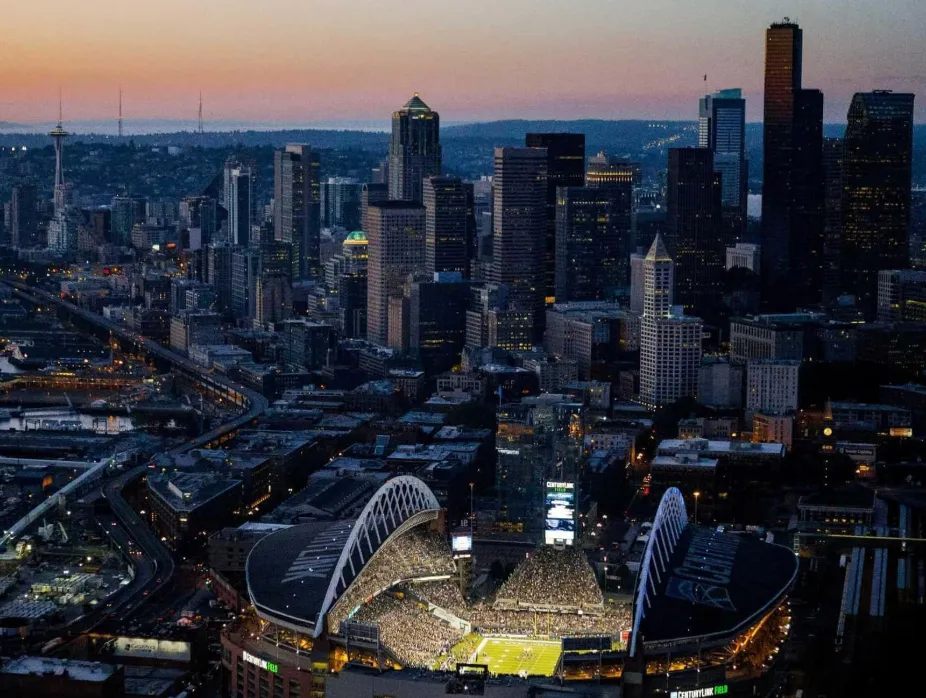
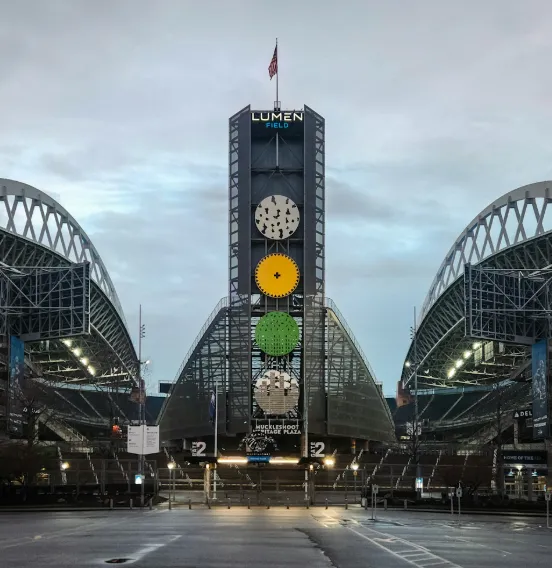
Lumen Field, home of the Seattle Seahawks (NFL), Sounders FC (MLS), and Reign FC (NWSL), serves as FIFA’s “Seattle Stadium” during the tournament — per the official Seattle FIFA World Cup organizing committee. Capacity is approximately 68,740 for football configuration, per Lumen Field’s published specifications.
The full Seattle match schedule:
| Date | Matchup | Kickoff (PT) | Stage | Notes |
|---|---|---|---|---|
| June 15 (Mon) | Belgium vs Egypt | 12:00 pm | Group G | City opens its World Cup run. Pride Weekend continuing in city. |
| June 19 (Fri) | USA vs Australia | 12:00 pm | Group D | Juneteenth federal holiday. Highest local demand. |
| June 24 (Wed) | Qatar vs Playoff A Winner (Italy, NI, Wales, or Bosnia) | 12:00 pm | Group B | Identity depends on playoff result. |
| June 26 (Fri) | Egypt vs Iran | 8:00 pm | Group G | The night match. Iran’s confirmed Seattle date. |
| July 1 (Wed) | Round of 32: Group G Winner vs Group ? Third Place | TBD | Knockout | First knockout round at Lumen. |
| July 6 (Mon) | Round of 16 | TBD | Knockout | Higher-stakes knockout match. |
Teams that play their group stage in Seattle: USA, Belgium, Egypt, Australia, Qatar, Iran, Bosnia & Herzegovina (or whichever Playoff A winner advances). The full tournament fixture list is maintained at ESPN’s 2026 World Cup match schedule.
A few practical reads:
- The USA-Australia match on June 19 will see the strongest local demand. Lumen Field with the USMNT becomes one of the highest-noise environments in international football. Tickets are by far the toughest. Plan well in advance. The Yahoo Sports tournament tracker covers live USMNT injury updates and confirmed lineups.
- The Egypt-Iran match on June 26 is the city’s most diplomatically charged fixture. Iran’s pre-tournament visa story (which we have covered) means Iran’s presence in the US is itself news-laden. Iran plays its group matches in Los Angeles and Seattle.
- The June 15 Belgium-Egypt opener is an underrated ticket. Lower demand than the USMNT match but excellent group football, in pleasant weather. If you’re flexible, this is a smart entry point.
The Stadium: Lumen Field Logistics
Lumen Field sits in SoDo (South of Downtown), about a mile south of the Pike Place Market core. It’s one of the most transit-accessible stadiums in the entire tournament.
Getting to Lumen Field
Light Rail (Link 1 Line) — Seattle’s best transit asset. Stadium Station is two blocks from Lumen Field. The line runs every 6-8 minutes during peak matchday windows. From downtown Westlake to Stadium is 5-7 minutes. From Sea-Tac Airport to Stadium is 38-45 minutes direct. One adult fare is $3.50-$4.25 depending on distance; matchday day passes are $7.50.
Walking from downtown — 15-20 minutes from Pike Place Market on flat-to-gentle-downhill terrain. Many fans walk in pre-match for the atmosphere; rail back is faster post-match. Walk routes go via Pioneer Square (worth seeing) or via 1st Avenue.
Driving and parking — Don’t. Lumen Field is in central Seattle; parking is scarce and expensive ($40-$80 for matchday garages). Sounders games already strain the system; World Cup will be worse. Use light rail.
Rideshare — Possible, but Lumen Field’s pickup/dropoff zones are restricted on matchdays. Expect 15-20 minute walks from designated rideshare points. Light rail beats it.
Inside the Stadium
The stadium completed a $19.4 million state-funded upgrade by May 2026, including:
- Artificial turf replaced with FIFA-regulation natural grass
- Bleacher seating converted to permanent backed seats
- Enhanced security cameras and turnstiles
- New lighting and broadcast/media facilities
Concessions are extensive (it’s a major-league stadium), with options from Seattle staples (Beecher’s mac & cheese, Din Tai Fung dumplings, Ezell’s chicken) alongside standard arena fare. FIFA’s clear-bag policy applies; check the FIFA app for any tournament-specific rules.
The atmosphere note: Lumen Field’s acoustics are designed to amplify crowd noise, a feature Seahawks fans have weaponized for years. For the USMNT match in particular, expect one of the loudest stadium environments at the entire World Cup. Bring earplugs if you’re noise-sensitive.
Where to Stay: Three Zones
You have three sensible neighborhoods for World Cup accommodation, each with different tradeoffs.
Zone 1: Downtown / Pike Place (5-15 min to stadium)
The default tourist zone. Walk to Pike Place, the waterfront, the major hotels. Easy to Lumen Field on foot or one light rail stop. Prices are the highest in the city — expect $300-500+/night for any decent hotel during USA-Australia weekend. The Edgewater (waterfront), Mayflower Park, Inn at the Market, and the W are the legacy choices. Several boutique properties in Belltown offer slightly lower rates with comparable access.
Zone 2: Capitol Hill (15-25 min to stadium via light rail/walking)
Seattle’s nightlife and dining concentration. More restaurants per block than anywhere else in the city. The atmosphere is younger, more queer-friendly, more bar-dense. Hotel options are limited but Airbnb/VRBO are dense. Light rail Capitol Hill Station is one stop from Westlake (downtown), which is one stop from Stadium. Easy to reach but not at Pike Place Market doorstep. Total transit time to Lumen is 15-20 minutes.
Zone 3: Bellevue / Eastside (40-60 min to stadium)
The bridge across Lake Washington. Lower hotel prices, much quieter, family-oriented. East Link light rail (opened 2023-2024 expansions) connects Bellevue to downtown in about 30 minutes; then 5-7 more to Stadium. Total travel time to Lumen is 40-60 minutes — manageable but not casual. Bellevue is the smart pick for families, business travelers extending a work trip, or anyone wanting the price break without compromising transit.
Food and Drink: Use Seattle’s Strengths
Seattle is a serious food city, often underrated by visitors expecting only coffee and salmon. The actual strengths:
Coffee, of course
Yes, Starbucks was born here. The original location at Pike Place Market draws hour-long lines that aren’t worth it. The actually-good coffee is at the city’s third-wave roasters: Victrola, Vivace, Caffè Vita, Slate, Storyville, Lighthouse. Order an espresso, sit, watch the rain (or sun). Coffee in Seattle is a Tuesday-morning institution, not a tourist exercise.
Seafood, properly
The Pacific Northwest oyster is its own argument. Taylor Shellfish Farms (multiple locations) serves them simple and cold with mignonette. The Walrus and the Carpenter in Ballard is the canonical raw bar — expect a line, expect it to be worth it. For sit-down salmon, Etta’s in Pike Place and RockCreek in Fremont are reliable. The salmon is local; the preparation is restrained.
Asian food: Seattle’s actual identity
The International District (south of downtown, near Lumen Field) is among the best Asian food zones in the country. Din Tai Fung for soup dumplings (though it’s now national). Mama Lil’s for pickled peppers. Ba Bar for Vietnamese pho. Tamarind Tree for Vietnamese fine dining. Maneki for old-school Japanese (since 1904). On Capitol Hill, Stateside for French-Vietnamese, Saint Bread for bakery culture.
Brewery culture
Seattle has more craft breweries per capita than nearly any US city. Holy Mountain, Reuben’s Brews, Optimism Brewing, Stoup Brewing, Cloudburst are the local-cult names. The neighborhood breweries in Ballard, Fremont, SoDo (near Lumen Field), and Georgetown are walkable clusters. Friday-night World Cup viewing parties at these places are likely to be everywhere.
What to Do Between Matches
You’re in Seattle for 4-21 days depending on your tournament path. Use the time.
Half-day options
- Pike Place Market — Yes the cliché, yes worth it for the energy. Skip the fish-throwing (it’s a show), do the food stalls, the bakeries (Le Panier for French, Three Girls for sandwiches), and the lower-level shops. 2-3 hours.
- Pioneer Square — Seattle’s original downtown, now a gallery and bookstore district. Walking distance to Lumen Field. First Thursday art walks are excellent.
- MoPOP (Museum of Pop Culture) — Designed by Frank Gehry, focused on music and sci-fi. The Nirvana, grunge, and Jimi Hendrix exhibits are local heritage. The science fiction wing is a fan favorite. 2-3 hours.
- Space Needle + Chihuly Garden and Glass — Combined ticket; the Chihuly glass garden is genuinely beautiful. Skip the Needle if you’ve done observation decks before; combine with Chihuly for value. 2 hours.
- Olympic Sculpture Park — Free, waterfront, art + Puget Sound views. 45-60 min.
Day-trip options (use rest days between matches)
- Bainbridge Island — 35-minute ferry from downtown. Walking-distance restaurants, wineries, art galleries from the ferry terminal. Excellent for a slow half-day; Seattle skyline view on the return is the best photo of the trip.
- Mt. Rainier National Park — 2.5 hours each way by car. The mountain is the Pacific Northwest’s defining peak. Paradise area trails are walkable; sunrise from the parking lot is spectacular. Full-day commitment.
- Boeing Future of Flight (Everett) — 45 min drive north; only operating tours of the Boeing factory in the US. For aviation people, an essential stop.
- Snoqualmie Falls — 35 min drive east, 270-foot waterfall, walk-up viewing, hour visit. Combine with Salish Lodge for high tea.
- Whidbey Island — 1.5 hour drive + ferry, smaller and quieter than Bainbridge. Lavender farms and oyster bars.
June Weather: What to Pack
Seattle’s June is generally pleasant but doesn’t act like classic summer. Your packing list:
- Layers, always. A 75°F afternoon often becomes a 55°F evening. Don’t show up in only shorts and a t-shirt.
- A light rain jacket. It might not rain — Seattle June is actually one of the drier months — but morning mist and sudden afternoon showers happen. A packable rain shell saves you.
- Walking shoes. Seattle is a walking city. Cobblestones in Pioneer Square, hills in Capitol Hill, light rail platforms — comfortable shoes matter.
- Sunscreen. When Seattle is sunny, it’s intensely sunny. The latitude is high (47.6°N), so UV exposure at 12pm noon is real.
- A water bottle. Tap water is excellent. Free at every restaurant and most public fountains.
- Cash for vendors. Most places are card-friendly, but small Pike Place stalls, tip jars at coffee shops, and street food carts often prefer or only take cash.
Average June 2026 forecast (from past climate data — official forecast updates closer to date):
- High: 71°F (22°C)
- Low: 55°F (13°C)
- Precipitation days: 6-9 per month
- Sunlight: 16 hours of daylight (sunset around 9 PM)
The long daylight hours are a hidden benefit. Sunset around 9 PM means post-match dinner and walking around at 8 PM still in full daylight. Your evening sightseeing window is real.
Practical Tips and Final Notes
A few last things you’ll want to know:
- Light rail tickets: Buy via the Transit GO Ticket app, contactless at stations, or paper ticket at vending machines. The day pass at $7.50 is excellent value if you’ll do 3+ rides.
- ORCA card: The reusable transit card. Worth it if you’re staying 4+ days.
- WiFi: Pike Place Market, Lumen Field, and most cafés have free WiFi. Hotel WiFi is generally fast.
- Tipping: 18-22% standard at restaurants. Coffee shops vary; tip jars are common.
- Tax: Washington has no state income tax but sales tax (~10.25% in Seattle) is added to most purchases. Bake into your budget.
- Late-night food: Pioneer Square and Capitol Hill have late-night options. Most Pike Place stalls close around 5-6 PM.
FAQ
Where are the World Cup matches in Seattle played? Lumen Field in central Seattle’s SoDo neighborhood, branded “Seattle Stadium” during the tournament. Capacity is approximately 68,740 for football configuration.
How do I get from Sea-Tac Airport to Lumen Field? Light rail Link 1 Line direct to Stadium Station — 38-45 minutes, $3.50-$4.25 single fare. No need for a car or rideshare for stadium access.
Which World Cup teams play in Seattle? Belgium, Egypt, USA, Australia, Qatar, Iran, and either Italy, Northern Ireland, Wales, or Bosnia & Herzegovina (whichever wins Playoff A) — for the group stage. Plus knockout-round teams TBD.
What is the USA’s Seattle match? USA vs Australia on Friday, June 19 (Juneteenth) at 12 PM PT. Group D. Highest local ticket demand.
Is Iran playing in Seattle? Yes — Iran plays Egypt at 8 PM PT on Friday, June 26 at Lumen Field. Group G. Iran’s other US group matches are in Los Angeles.
What’s the weather like in Seattle in June? Mild and pleasant. Highs typically 65-75°F (18-24°C), lows 52-58°F (11-14°C). Lowest temperatures of any US host city in June. Pack layers and a light rain jacket.
Should I rent a car in Seattle? Only if you plan day trips outside the city (Mt. Rainier, Olympic Peninsula). For matches, downtown, and city neighborhoods, light rail and walking are faster and cheaper.
Where should I stay for World Cup matches? Three good options: Downtown / Pike Place (highest convenience, highest price), Capitol Hill (best food/nightlife, light rail accessible), or Bellevue (cheapest, 40-60 min commute via light rail).
How early should I arrive at Lumen Field? For USMNT matches, arrive 90 minutes before kickoff. Other matches, 60 minutes is sufficient. Security lines are real but manageable; stadium is fully accessible.
Is there a FIFA Fan Festival in Seattle? Yes — the Seattle local organizing committee is planning fan activations throughout the city. Exact location and dates are announced via the official Seattle FIFA committee.
Are there knockout-round matches in Seattle? Two: a Round of 32 match on July 1 and a Round of 16 match on July 6. Both with TBD teams.
What’s the time zone? Pacific Time (PT) — UTC-7 during World Cup (June-July daylight savings active). For European fans, matches at noon PT are evening (8-9 PM CET).
Related Articles
- Iran’s Players Got US Visas. 14 of Its Officials Did Not. — The visa story explaining why Iran’s Seattle match against Egypt sits at the diplomatic crossroads of the tournament (pre-tournament-disruption cluster).
- Why Mexico’s Home Edge Shrunk. The Opener Is Closer Than the Odds. — The Mexico vs South Africa opener prediction, the tournament’s first game on June 11 (predictions cluster).
- Your Team Just Said Goodbye to Its Country. Here’s When to Follow. — The framework for fan travel timing relative to team departures and arrivals (fan-experience cross-cluster).
Sources (Seattle FIFA World Cup Organizing Committee, Lumen Field official, Seattle.gov FIFA portal, Seattle Sounders official announcement) are linked inline in the relevant sections. Match times and tournament-specific branding follow FIFA’s official 2026 designation. Weather data reflects historical June averages; check matchday forecasts via FIFA’s official tournament resources before traveling.
About the author: James O’Connor is investigative football journalist at Touchline Global, the London-based independent football platform focused on governance, sports diplomacy, and the intersection of football and politics. O’Connor has covered FIFA governance since 2014 and has reported on every World Cup cycle since 2018. Contact: james.oconnor@touchlineglobal.com · LinkedIn: /in/jamesoconnor-touchline · X: @JamesTouchline