The Short Version
On May 19, 2026, at Hampden Park in Glasgow, Steve Clarke announced Scotland’s 26-man squad for the 2026 World Cup — the nation’s first appearance since 1998. Key points: (1) Craig Gordon (Hearts), 43, named as one of three goalkeepers; if he plays, he becomes the second-oldest player in World Cup history behind Egypt’s Essam El Hadary (45 in 2018); (2) Andy Robertson (Liverpool) captains, the squad’s most-capped player with 92, ten short of Kenny Dalglish’s record; (3) Ross Stewart (Southampton) recalled after four years away; Findlay Curtis (Kilmarnock), 19, included after his March debut; (4) Notable omissions: Oli McBurnie (18 club goals this season), Kieron Bowie; (5) Composition: 3 goalkeepers, 10 defenders, 8 midfielders, 5 forwards; (6) Group C with Brazil, Morocco, Haiti — the same trio (minus Haiti) Scotland faced 28 years ago, losing both; (7) Schedule: June 13 vs Haiti (Boston), June 19 vs Morocco (Boston), June 24 vs Brazil (Miami); warm-ups May 30 vs Curaçao at Hampden and June 6 vs Bolivia in New Jersey.
Hampden Park, May 19
Steve Clarke has never been a manager of surprises. He builds through loyalty, continuity, the same faces across qualifying windows. So when he stepped up at Hampden Park on Tuesday to announce the squad that ends a 28-year exile, the broad strokes were known — eight defenders and seven midfielders who featured across every qualification group made the cut.
But Clarke sprang a few. The most striking was at the position you’d least expect drama: goalkeeper.
The Goalkeeper Who Nearly Retired
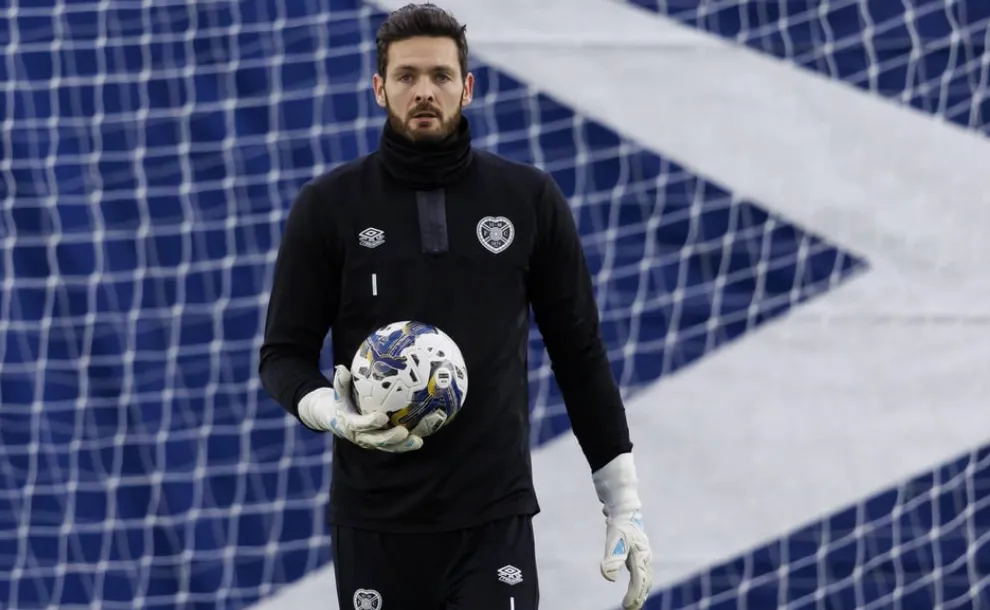
Craig Gordon made his Scotland debut in 2004. To put that in context, his teammate Findlay Curtis was born in 2006. Gordon has 83 caps spread across two decades, a career interrupted by a double leg break at the end of 2022 that nearly ended it altogether.
He didn’t play for Hearts between December 2022 and January 2025. He was cut from the Euro 2024 squad. Last summer, at 42, he considered retirement.
According to ESPN, it was Clarke who talked him out of it. “Steve Clarke was the one that told me to give it one more year, he might need me,” Gordon said after the qualifier against Denmark that sealed Scotland’s place. “I could have given all that up.”
He didn’t. And now, at 43, Gordon is set to become the second-oldest player in World Cup history if he takes the field in North America — behind only Egypt goalkeeper Essam El Hadary, who was 45 at the 2018 tournament. Gordon played only three league games all season; the three goalkeepers Clarke named combined for just four club appearances across the campaign. It’s an unusual goalkeeping picture for a World Cup squad, built on trust rather than recent minutes.
The 26, Position by Position
Goalkeepers (3): Craig Gordon (Hearts), Angus Gunn (Nottingham Forest), Liam Kelly (Rangers).
Defenders (10): Grant Hanley (Hibernian), Jack Hendry (Al-Ettifaq), Aaron Hickey (Brentford), Dom Hyam (Wrexham), Scott McKenna (Dinamo Zagreb), Nathan Patterson (Everton), Anthony Ralston (Celtic), Andy Robertson (Liverpool, captain), John Souttar (Rangers), Kieran Tierney (Celtic).
Midfielders (8): Ryan Christie (Bournemouth), Findlay Curtis (Kilmarnock), Lewis Ferguson (Bologna), Ben Gannon-Doak (Bournemouth), Billy Gilmour (Napoli), John McGinn (Aston Villa), Kenny McLean (Norwich), Scott McTominay (Napoli).
Forwards (5): Che Adams (Torino), Lyndon Dykes (Charlton Athletic), George Hirst (Ipswich), Lawrence Shankland (Hearts), Ross Stewart (Southampton).
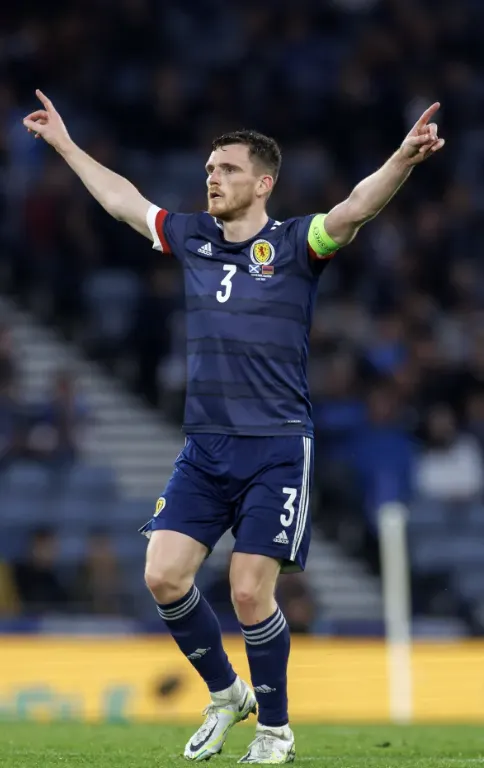
Robertson, the captain, is the most-capped player with 92 — ten short of Kenny Dalglish’s all-time Scotland record. John McGinn (Aston Villa) follows with 85. Scott McTominay, who emerged as a goal-scoring force during qualifying at Napoli, is the midfield’s most dangerous attacking presence.
The Name That Wasn’t There: Jota’s Shadow
There is a name absent from this squad that belongs to no Scottish player — and yet it hangs over the captain.
When Scotland beat Denmark 4-2 to seal qualification, Andy Robertson admitted he spent the build-up “in bits.” The reason was Diogo Jota, his Liverpool teammate, who died in a car accident in July 2025 alongside his brother André Silva. The two had shared the dream of playing this World Cup — Robertson for Scotland, Jota for Portugal.
The two nations’ fates are now strangely braided. Portugal, who announced their squad the same week, will play without Jota for the first time in a major tournament. Scotland, who qualified for the first time in 28 years, did so under the shadow of his absence. Robertson, 31, leaves Liverpool this summer after being replaced as first-choice left-back, and carries this World Cup as something heavier than a sporting milestone.
The Wildcard and the Teenager
Two names defined the announcement’s surprises.
Ross Stewart (Southampton) hadn’t played for Scotland since 2022. The 29-year-old striker scored 11 goals in 33 games this season, including in the Championship play-off semi-final, and is due to play in the play-off final at Wembley on Saturday. His recall ends four years in the international wilderness.
Findlay Curtis (Kilmarnock, on loan from Rangers) is 19. He earned his first cap against Japan in March, scored five goals in 14 loan appearances, and forced his way in. Clarke’s verdict: “He’s got something a little bit different to what we’ve got. He’s shown he can score a goal, he’s finished the season in a great place and it’s nice to have a young one in the squad.”
The casualties: Oli McBurnie (Hull City), who scored 18 goals in 41 games this season, missed out. So did Kieron Bowie. Clarke chose Stewart, Hirst, Shankland, Adams, and Dykes up front instead — loyalty to the players who carried the qualifying campaign over the higher club tally.
Group C: A 28-Year Echo
Scotland landed in Group C with Brazil, Morocco, and Haiti.
| Date | Opponent | City | Venue |
|---|---|---|---|
| June 13 | Haiti | Boston | Gillette Stadium |
| June 19 | Morocco | Boston | Gillette Stadium |
| June 24 | Brazil | Miami | Hard Rock Stadium |
There is history here. 28 years ago, at France 1998 — Scotland’s last World Cup — they were drawn alongside Brazil and Morocco in the group stage. They lost both matches. They open that tournament against Brazil in the curtain-raiser, losing 2-1; they fell 3-0 to Morocco in their final group game and went home.
Now the same two opponents return, plus Haiti. Scotland have never advanced past the group stage at a World Cup in their history — a record stretching across eight previous appearances. The closest they came was 1974 and 1978, eliminated on goal difference both times.
Brazil, with Neymar back for his fourth World Cup, is the closing fixture on June 24 in Miami. Morocco, semifinalists in 2022, sits in the middle. Haiti, themselves back after 1974, is the opener — and statistically Scotland’s best chance for a first-ever World Cup group-stage win.
The Schedule to June 13
Scotland’s preparation has two warm-up friendlies. On May 30, they face Curaçao at Hampden Park — a send-off in front of their own supporters. On June 6, they meet Bolivia in New Jersey, already on American soil.
The opener against Haiti is June 13 in Boston, at 9 p.m. local time — which is 2 a.m. on June 14 in the UK. Scotland stay in Boston for Morocco on June 19, then travel to Miami for Brazil on June 24. Both later games also kick off at 11 p.m. UK time. For the Tartan Army following from home, this is a World Cup of late nights and early mornings.
29 days separate today’s announcement from the opener. 28 years separate this squad from the last time Scotland did this.
The Two Generations in One Squad
The defining image of this Scotland squad is its span. Craig Gordon made his debut in 2004; Findlay Curtis was two years from being born. Gordon is 43; Curtis is 19. Between them sits a 24-year gulf, and a squad that bridges it.
That gulf is the story of the 28-year wait itself. An entire footballing generation passed between Scotland’s appearances — players who debuted, peaked, and retired without ever reaching a World Cup. Gordon is the last man standing from the near-misses, the failures, the long nights at Hampden that ended in disappointment. Curtis is the first of the generation that will only ever know a Scotland that qualifies.
On June 13, in Boston, both of them will be on the same bench, in the same shirt, at the same tournament their country waited 28 years to reach.
FAQ
When did Scotland announce its 2026 World Cup squad? On May 19, 2026 (Tuesday), at Hampden Park in Glasgow, by head coach Steve Clarke. It is Scotland’s first World Cup squad since 1998.
Who is the oldest player in Scotland’s 2026 World Cup squad? Craig Gordon, the 43-year-old Hearts goalkeeper. If he takes the field in North America, he becomes the second-oldest player in World Cup history, behind only Egypt’s Essam El Hadary, who was 45 at the 2018 tournament. Gordon made his Scotland debut in 2004.
Who captains Scotland at the 2026 World Cup? Andy Robertson (Liverpool), the squad’s most-capped player with 92 appearances — ten short of Kenny Dalglish’s all-time Scotland record. He has been captain since September 2018.
How long has Scotland waited for a World Cup? 28 years. Their last appearance was at France 1998. This is Scotland’s first World Cup of the 21st century and ends the longest absence in the nation’s modern footballing history.
Who was surprisingly left out of Scotland’s squad? Oli McBurnie (Hull City), who scored 18 goals in 41 games this season, was the most notable omission. Kieron Bowie also missed out. Clarke favored Ross Stewart, George Hirst, Lawrence Shankland, Che Adams, and Lyndon Dykes up front.
Why was Ross Stewart recalled? The 29-year-old Southampton striker hadn’t played for Scotland since 2022 but scored 11 goals in 33 games this season. Clarke rewarded his form, ending four years away from the national team.
Who is Findlay Curtis? A 19-year-old Rangers winger on loan at Kilmarnock, where he scored five goals in 14 appearances. He earned his first Scotland cap against Japan in March and is the youngest member of the squad.
What is Scotland’s group at the 2026 World Cup? Group C, with Brazil, Morocco, and Haiti. Scotland open against Haiti on June 13 in Boston, face Morocco on June 19 in Boston, and close against Brazil on June 24 in Miami.
Have Scotland played Brazil and Morocco in a World Cup before? Yes. At France 1998 — their last World Cup — Scotland were drawn with both Brazil and Morocco and lost both matches (2-1 to Brazil in the opener, 3-0 to Morocco). The 2026 draw is a near-exact echo, with Haiti added.
What are Scotland’s pre-tournament friendlies? May 30 vs Curaçao at Hampden Park (a home send-off), and June 6 vs Bolivia in New Jersey, already on American soil.
Has Scotland ever advanced past the World Cup group stage? No. Across eight previous appearances, Scotland have never reached the knockout rounds. They came closest in 1974 and 1978, eliminated on goal difference both times.
Why did Craig Gordon nearly retire? After a double leg break at the end of 2022, Gordon didn’t play for nearly two years and was cut from the Euro 2024 squad. At 42 he considered retirement, but Clarke persuaded him to play one more year — a decision that led to his first World Cup at 43.
Related Articles
- Neymar’s Name Was Called: Brazil’s 26 for the 2026 World Cup — Scotland’s June 24 opponents in Miami; Neymar returns for his fourth World Cup
- Cristiano Goes to His Sixth: Portugal Names the 26 for 2026 — Portugal also plays without Diogo Jota, whose death moved Robertson “to bits”
- The Word Modrić Will Not Say at Forty — Croatia announced the same week; another veteran’s last dance at 40
- 52 Years After Zaire: The List That Waited Since 1974 — Another long-awaited return announced this week
- City guide: Miami, Florida — Scotland vs Brazil at Hard Rock Stadium
- External sources: ESPN — Meet Scotland’s 26 · Sky Sports — Clarke names squad · FOX Sports — Gordon at 43 · ESPN — Robertson on Jota · FIFA Scotland official page
About the author: James O’Connor is a football correspondent at Touchline Global, the international football publication. O’Connor has covered World Cups, European Championships, and Copa América since 2010, with a focus on tactical analysis and the smaller footballing nations. Contact: james.oconnor@touchline.global · Twitter: @JOConnorTL · Profile: touchline.global/authors/james-oconnor