The Short Version
As of May 26, 2026, 16 days before kickoff, Guadalajara hosts the second match of the entire World Cup — South Korea vs Czechia at Estadio Akron on June 11, the same day the tournament opens in Mexico City. The football is easy. The week around it is what trips people up. For most fans, Mexico is one of the easiest entries in this World Cup: roughly 65 countries enter visa-free with just a passport and the FMM permit, and holders of a valid US, Canadian, UK, Japanese, or Schengen visa are waved in regardless of nationality. But “easy entry” is not the same for everyone — and the gap between a Korean fan, a Czech fan, and a fan from a visa-required country is real. The essentials: (1) check your visa tier before booking; (2) install an eSIM before you fly; (3) Estadio Akron is in Zapopan, not central Guadalajara; (4) Uber/DiDi over street taxis; (5) book lodging now.
Why Guadalajara Deserves Its Own Playbook
Mexico City takes the opening ceremony, so it takes the headlines. But Guadalajara hosts a World Cup match on that very same day — South Korea against Czechia at Estadio Akron — and it is a fundamentally different trip from the capital (Yahoo Sports).
Different altitude, different pace, different crowd. This is Jalisco — the home of tequila, of mariachi, of Chivas — and for this fixture it will fill with two travelling supports who could hardly be more different in how they get here: Koreans crossing eleven time zones, and Czechs arriving from inside the Schengen comfort zone. One guide cannot pretend those two journeys are the same. So this one doesn’t.
The principle for every host-city guide in this series is the same: solve the boring problems first — the visa, the SIM, the money, the ride from the airport — and only then talk about where to eat. A perfect taco recommendation is worthless to someone stuck at immigration.
First Question: Which Visa Tier Are You In?
Before lodging, before flights, this is the question that decides your whole trip. Mexico sorts World Cup visitors into three practical groups, and you must know which one is yours.
Group 1 — Visa-free, passport only. Citizens of roughly 65 countries enter Mexico with nothing more than a valid passport and an FMM entry permit — including South Korea, the Czech Republic and the entire EU, the US, Canada, the UK, Japan, Australia and most of Latin America (Fragomen). For this match, that covers the overwhelming majority of both Korean and Czech fans. The FMM is not a visa; it is a separate entry record, digital at major airports like Guadalajara, where your passport scan registers it automatically (RutasMéxico).
Group 2 — Visa-required, but with a shortcut. If your nationality normally needs a Mexican visa, there is a widely missed exemption: a valid US, Canadian, UK, Japanese, or Schengen visa — or permanent residency in one of those — lets you enter Mexico with no Mexican visa at all (Fragomen). For many fans from South Asia, parts of the Middle East and elsewhere, the visa they already hold for another trip is the key.
Group 3 — Visa-required, no shortcut. Citizens of countries such as India, China, Russia and most of sub-Saharan Africa, who do not hold one of those qualifying visas, must apply for a Mexican visa at a consulate before travelling (Mexico Travel & Leisure). Processing is usually quick, but it is not instant, and with 16 days to kickoff this is the group that cannot afford to wait. If this is you, the consulate appointment is more urgent than the match ticket.
One detail for everyone, all three groups: the FMM. The 2026 fee is around 983 pesos (about $54), already baked into your airfare if you fly, and free for stays of seven days or less (Mexpro). When the officer stamps your passport, check the number of days written down — it can be 30, 60, 90 or 180, and the stamp is your proof.
Second Question: How Do You Get Online the Minute You Land?
Lost connectivity is the quiet panic of modern travel — no map, no ride-hailing app, no ticket wallet. Solve it before you board.
In 2026 the answer for short-stay fans is an eSIM, installed before you leave home and active the moment your plane lands. The networks that matter route through Telcel, Mexico’s most reliable carrier and the one with the broadest coverage, including 5G across Guadalajara (TripoSIM). Typical eSIM plans run about $17 for 10GB or $30 for 20GB, valid for the length of a group-stage trip, and WhatsApp, Uber, Google Maps and banking apps all work normally on eSIM data (Traveltomtom).
A physical Telcel SIM still works as a backup — kiosks in the Guadalajara arrivals hall sell them, passport required for registration, expect to pay a markup over the roughly 200-peso street price (Mexico Travel & Leisure). But for a one-to-two-week stay, the eSIM saves you the queue, the Spanish-language activation menu and the hunt for an OXXO. Airport and café Wi-Fi exists, but treat it as a backup layer, never your primary line.
The connectivity worry isn’t identical across the crowd, either. A Czech fan can lean on EU-style expectations and roaming habits; a Korean fan eleven time zones from home, juggling KakaoTalk and a Korean banking app, will feel a dead phone far more sharply. Install the eSIM either way.
Getting From the Airport to the Match — and Where the Stadium Actually Is
Here is the trap built into this fixture: Estadio Akron is not in central Guadalajara. It sits in Zapopan, on the metropolitan area’s western side, which changes where you should sleep and how early you should leave (FIFA). One naming quirk to note so you’re not confused on signage and tickets: the venue is rebranded Estadio Guadalajara for the tournament, and it hosts four group-stage matches in all (Goal).
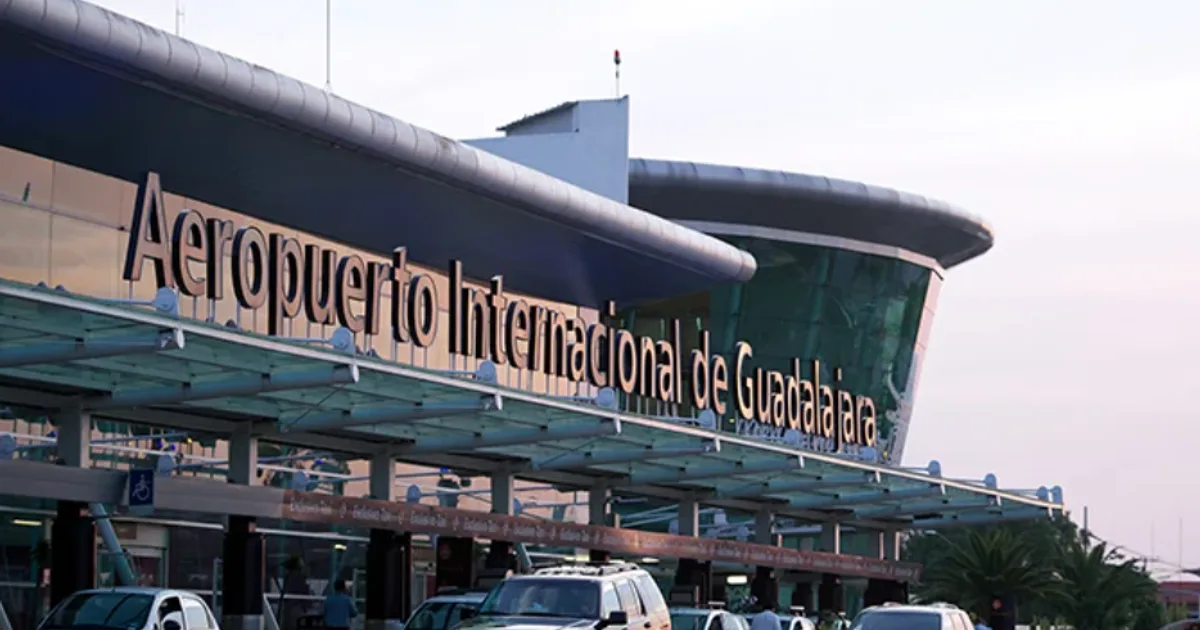
From Guadalajara’s airport, ride-hailing is the cleanest option. Uber and DiDi are widely used, usually cheaper than official taxis, and picked up from the designated “Aplicaciones” area in each terminal’s parking structure (Secret Flying). The free inter-terminal train means a wrong-terminal mistake costs minutes, not money. For groups, a pre-booked private transfer can be worth the flat rate; the cheapest route in is the Chivas or Caminante bus to the city’s main terminals.
On match day, give Zapopan extra time. A stadium crowd plus normal city traffic is a different equation from an ordinary afternoon, and “it’s only 20 minutes on the map” is how people miss kickoffs.
Where to Stay, Eat and Be Careful — Sorted by the Crowd You’re In
This is where a single checklist fails, because the same city poses different questions to different fans.
On lodging. Two honest options: stay central — around the Centro Histórico, Chapultepec or Providencia, where nightlife, food and mariachi are walkable — and commute to Zapopan on match day; or stay west, nearer the stadium, and trade atmosphere for a shorter game-day trip. With 16 days left, the decision that matters most is simply booking now; the host-city squeeze is real and rooms vanish fastest in the walkable central districts.
On food, by appetite for adventure. Guadalajara is the birthplace of birria and the torta ahogada — the “drowned” sandwich bathed in chile sauce — and Jalisco is the literal home of tequila. The first-time visitor should treat street food with the usual traveller’s caution (busy stalls, hot and fresh, bottled or purified water) rather than fear. For the Korean contingent used to late, social dining, the city’s tequila-and-mariachi night rhythm will feel surprisingly compatible; for Czech fans, the chile heat is the main adjustment, and “no picante” is a phrase worth learning.
On safety, calibrated not catastrophised. The official line for Guadalajara is to exercise normal big-city precautions; the airport, tourist areas and upscale neighbourhoods are generally safe (Secret Flying). Practically: prefer Uber/DiDi to hailing street taxis, keep phones discreet in crowds, use ATMs inside banks or malls, and carry a little cash for stalls that don’t take cards. None of this is unique to Mexico — it is the same discipline a sensible visitor brings to any large city on a major-event week.
The Money Question Nobody Plans For
A quick word, because it derails more trips than visas do. Mexico runs on the peso, cards are widely accepted in hotels and sit-down restaurants, but street food, small fondas and tip culture still want cash. Withdraw from ATMs inside banks or shopping centres rather than free-standing street machines, decline the machine’s offer to “convert” to your home currency (the rate is poor), and tell your bank you’re travelling so a Guadalajara transaction doesn’t freeze your card mid-trip. For the long-haul Korean traveller especially, a frozen card at 11pm with home support asleep is a worse emergency than for someone a short flight from home.
What to Do in the 16 Days Before You Fly
The calendar is the one part of this you control. In rough order: confirm your visa tier and, if you are in Group 3, book the consulate appointment immediately. Lock lodging next, before the central districts sell out. Buy and pre-install your eSIM so you land connected. Screenshot your match ticket, accommodation and the stadium’s Zapopan location for offline access. Learn five words of Spanish and one of them should be “ahogada.” The football, for once, is the easy part.
The Booking Links You’ll Actually Need
Every link below was verified at publication and points to an official source or primary platform — not a reseller. Prices and availability change, so confirm details on the provider’s own page before paying. (We earn nothing from these; they are listed by category so you choose your own provider.)
Entry permit (FMM) — required for everyone. Apply on Mexico’s immigration authority (INM) official portal: inm.gob.mx/fmme. If you fly in, the fee is bundled into your airfare; the online form matters most for land arrivals. Always verify the latest requirement on the INM site itself before travel.
Visa (Group 2 and 3 only). If you need a Mexican visa or want to confirm your nationality’s tier, start at the Mexican government’s foreign-ministry consular hub, gob.mx/sre, and book at your nearest Mexican consulate. Group 3 travellers: do this first, today.
eSIM — install before you fly. Two reputable providers that run on Telcel (the network with 5G in Guadalajara): Airalo and Saily. Both let you buy and pre-install now, then activate on landing. Pick a data size that matches your stay; 10–20GB covers a typical group-stage trip.
Lodging — book now. Use a primary platform and search “Guadalajara Centro Histórico” / “Chapultepec” / “Providencia” for a central base, or “Zapopan” for a stay nearer the stadium: Booking.com or Airbnb. Filter by free cancellation while plans firm up.
Airport and ground transport. Official airport (GAP) information and terminals: aeropuertosgap.com.mx. Ride-hailing from GDL: Uber and DiDi. Catch them at the “Aplicaciones” zone in each terminal’s parking structure.
Official tournament info. Match dates, venues and ticketing always trace back to FIFA: fifa.com. Treat it as the single source of truth if any third-party listing disagrees.
FAQ
Do I need a visa to attend the World Cup in Guadalajara? It depends on nationality. About 65 countries — including South Korea, the Czech Republic, the EU, the US, Canada, the UK and Japan — enter visa-free with a passport and an FMM permit. Others need a Mexican visa unless they hold a valid US, Canadian, UK, Japanese or Schengen visa, which exempts them.
What is the FMM and how much does it cost in 2026? The FMM is Mexico’s entry permit, separate from a visa. The 2026 fee is around 983 pesos (about $54), already included in your airfare if you arrive by air, and free for stays of seven days or less. At major airports it is registered digitally when your passport is scanned.
Is an eSIM better than a local SIM for Guadalajara? For a short World Cup stay, yes. An eSIM installed before you fly works the moment you land, runs on Telcel’s network with 5G in Guadalajara, and supports WhatsApp, Uber and banking apps normally. A physical Telcel SIM is a fine backup but means queuing and registering with your passport.
Where is Estadio Akron and how do I get there? Estadio Akron is in Zapopan, on the western side of the Guadalajara metropolitan area, not in the city centre. Ride-hailing apps (Uber, DiDi) from the airport or your hotel are the most reliable route. Allow extra time on match day for traffic and crowds.
Is Guadalajara safe for World Cup visitors? Official guidance is to take normal big-city precautions; the airport, tourist areas and upscale neighbourhoods are generally considered safe. Prefer ride-hailing over street taxis, keep valuables discreet, and use ATMs inside banks or malls.
Should I carry cash or rely on cards? Both. Cards are widely accepted in hotels and restaurants, but street food, small eateries and tipping favour cash. Withdraw pesos from ATMs inside banks or malls, and decline on-screen currency conversion for a better rate.
What food is Guadalajara known for? Jalisco is the home of birria, the torta ahogada (a sandwich drowned in chile sauce), and tequila itself. Busy, fresh street stalls are part of the experience; use normal traveller caution and bottled or purified water.
When should I book accommodation? Now. With about two weeks to kickoff and a host-city crowd arriving, rooms in the walkable central districts sell out fastest. Decide between a central base (commute to Zapopan on match day) or a stay nearer the stadium.
How early should I leave for the stadium on match day? Earlier than a map suggests. Zapopan is a real commute from the centre, and matchday traffic plus crowds expand travel time well beyond an ordinary afternoon trip.
Which fans face the biggest logistical adjustment for this match? Long-haul travellers — such as Korean fans crossing roughly eleven time zones — feel connectivity, banking and jet-lag issues most acutely, while Czech and other European fans arrive with shorter trips and more familiar systems. The visa basics, though, are the same for both.
Related Articles
- Why Won’t Iran Sleep in the U.S. for the WC?
- Mexico City World Cup 2026 Fan Guide: Visa, SIM & Azteca
- Monterrey for the World Cup: The Third Mexican Host (tickets-travel)
- FIFA official tournament hub — fifa.com
- Fragomen, “FIFA Mexico 2026 World Cup Entry Requirements,” March 11, 2026 — fragomen.com
- Yahoo Sports, “2026 World Cup schedule” — sports.yahoo.com
- TripoSIM, “Best eSIM for Mexico 2026” — triposim.com
- Secret Flying, “Guadalajara Airports Guide 2026” — secretflying.com
- ESPN, Liga MX / Estadio Akron coverage — espn.com
About the author: Diego Martínez is football travel correspondent at La Redonda, the Buenos Aires-based football magazine known for narrative match writing and on-the-ground tournament coverage across the Americas. Martínez has reported from three World Cups and writes on the fan’s-eye logistics of following a team abroad. Contact: diego.martinez@laredonda.com.ar · LinkedIn: /in/diego-martinez-laredonda · X: @DiegoLaRedonda