The Short Version
Argentina meet Cabo Verde in the round of 32 at Hard Rock Stadium on July 3, and the gap between the two could hardly be wider on paper. Argentina are the holders, perfect through Group J with three wins, eight goals and one conceded, with Lionel Messi leading the Golden Boot race on five goals in what is almost certainly his last World Cup. Cabo Verde, a nation of half a million people, are at a World Cup for the first time — and reached the knockouts the hard way, drawing all three group games, including a goalless stalemate with Spain. It looks like a mismatch. It is also exactly the kind of disciplined, unbothered opponent that has frustrated favourites all tournament.
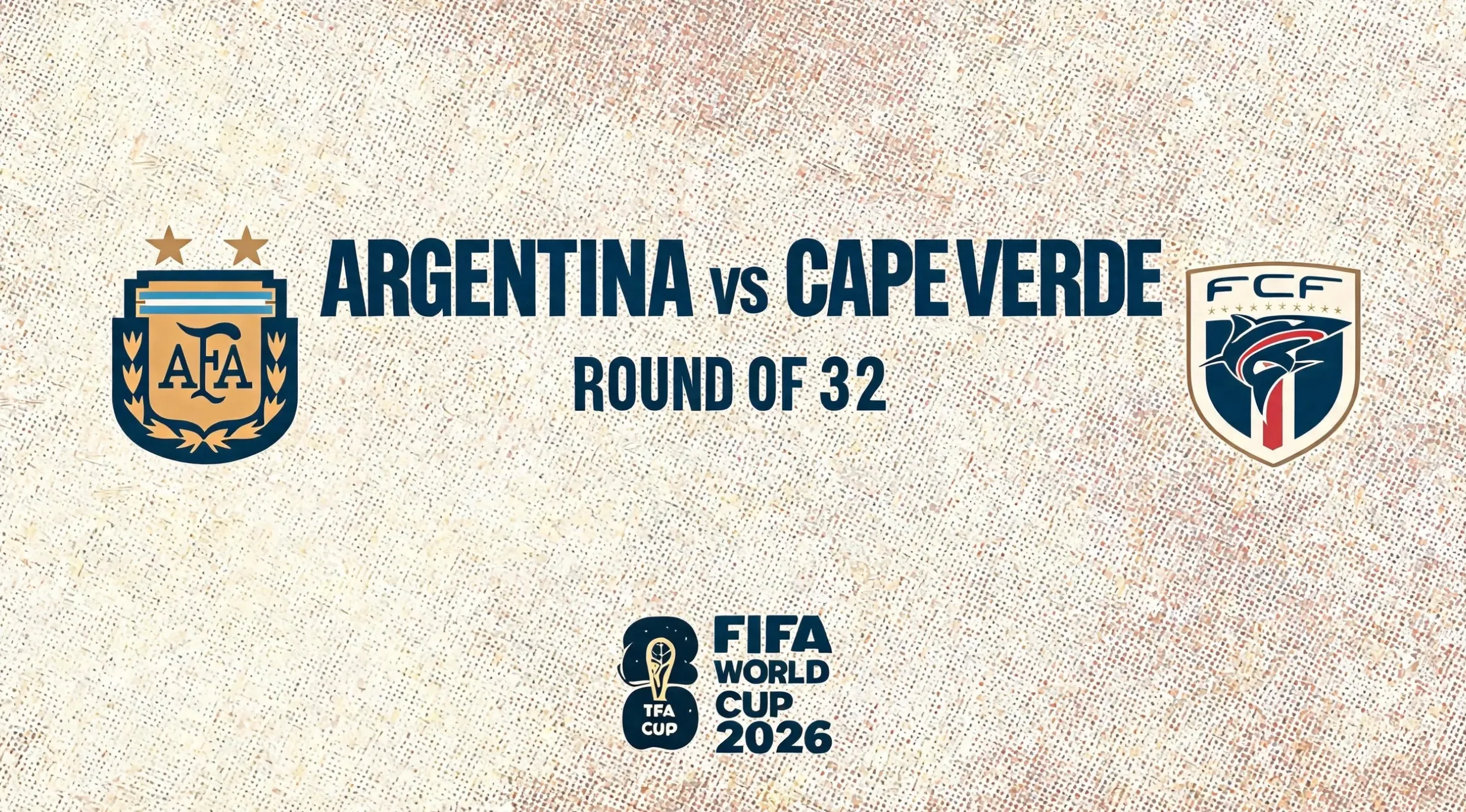
Knockout draws sometimes throw up a fixture that is less a contest than a collision of stories. This is one. On one side, the world champions and the final act of the greatest career of his generation. On the other, the smallest nation left in the tournament, playing with the freedom of a team that was never supposed to be here. The scoreline will probably favour Argentina. The narrative belongs to both.
Cabo Verde are no fluke
It would be easy to file Cabo Verde under feel-good and move on. That would be a mistake. The Blue Sharks did not stumble into the round of 32 — they earned it without losing a game, drawing all three in Group H, and the headline result was a goalless draw with Spain, one of the tournament favourites. They followed it by holding Uruguay and Saudi Arabia, going through on a debut as we detailed.
The blueprint is clear: a deep, organised block, disciplined for ninety minutes, and just enough quality on the break — Nelson Semedo’s experience at the back, a fearless front line — to make a single chance count. A team that kept Spain out for ninety minutes is not going to be overawed by the occasion, as the day’s coverage underlined. Argentina will have to break them down, not expect them to fold.
Argentina arrive at full tilt
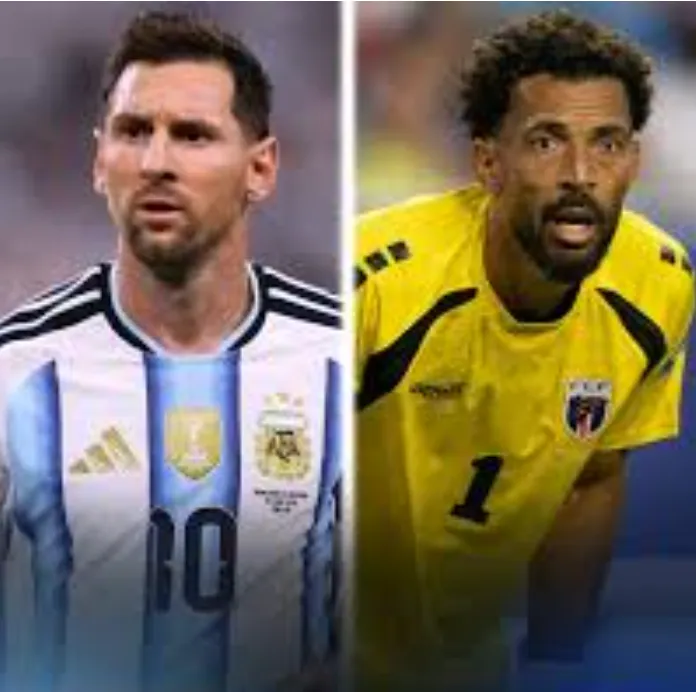
The holders, by contrast, have looked like a side intent on defending their crown without drama. Argentina won all three Group J games — 3-0 over Algeria, 2-0 over Austria, 3-1 over Jordan — scoring eight and conceding once, the kind of controlled dominance that wins tournaments, as the group-stage tables showed. The title defence we have tracked is on course.
At the centre of it, as ever, is Lionel Messi. At 38, in what is surely his last World Cup, he leads the Golden Boot race with five goals — including a hat-trick against Algeria — and looks, if anything, sharper than at any tournament since 2022. Around him, Julián Álvarez and Alexis Mac Allister give Argentina a balance that few sides can match. This is a favourite in form, not merely in name.
Where the gulf could close — or not
The shape of the game is easy to predict and hard to play. Cabo Verde will sit deep, stay narrow, and try to turn the tie into the kind of low-event, low-chance grind that frustrated Spain. Argentina will dominate the ball and the territory and look to find the one moment — a Messi free-kick, an Álvarez run, a set piece — that cracks a stubborn block open.
The danger for Argentina is patience: a heavy favourite that does not score early can invite exactly the belief an underdog feeds on. The danger for Cabo Verde is the obvious one — that ninety minutes of discipline still leaves you needing to keep out the best player of his generation, and eventually, most teams cannot. The first goal, as so often against a deep block, may decide everything.
Our read on the night
Argentina are heavy favourites, and rightly so; the likeliest outcome is a controlled win once they find the opening goal — say 2-0, or 3-0 if it arrives early and Cabo Verde have to come out. But this is a Cabo Verde side that has not conceded easily, and a one-sided scoreline is not guaranteed; a tight, frustrating 1-0 is well within range if the underdogs defend as they did against Spain. Either way, expect Messi on the scoresheet or close to it. Confidence: high on the result, lower on the margin.
Whatever the score, the meeting is its own small piece of World Cup history: the reigning champions and the game’s most decorated player, drawn against a nation of half a million playing in the round of 32 for the first time. One side is chasing a defence of everything; the other has already won simply by being here. Hard Rock Stadium gets the rare night where both teams, in their own way, have something to celebrate.
Frequently asked questions
When and where is Argentina vs Cabo Verde? The round-of-32 tie is played at Hard Rock Stadium in Miami Gardens on July 3, 2026, with a 22:00 UTC kick-off.
How did Cabo Verde reach the round of 32? Cabo Verde drew all three Group H games — 0-0 with Spain, 2-2 with Uruguay and 0-0 with Saudi Arabia — to finish second on three points and reach the knockout stage on their World Cup debut.
How did Argentina get here? Argentina won Group J with a perfect record: 3-0 over Algeria, 2-0 over Austria and 3-1 over Jordan, for nine points, eight goals scored and one conceded.
How many goals does Messi have at this World Cup? Lionel Messi leads the Golden Boot race with five goals, including a hat-trick against Algeria, in what is widely expected to be his final World Cup.
Is this likely to be Messi’s last World Cup? At 38, the 2026 tournament is almost certainly Messi’s final World Cup, which adds extra weight to Argentina’s title defence and every knockout tie they play.
Can Cabo Verde really compete with Argentina? Cabo Verde are clear underdogs, but their organised, disciplined defending — they kept Spain out for ninety minutes — means Argentina will have to break them down rather than expect an easy win.
Who are the key players to watch? For Argentina, Messi, Julián Álvarez and Alexis Mac Allister lead the way. For Cabo Verde, the experienced defender Nelson Semedo anchors a block that conceded just twice in the group stage.
Who is favourite to win? Argentina are strong favourites given their squad quality and group-stage form, but Cabo Verde’s defensive record makes a low-scoring, hard-fought tie possible.
About the author: James O’Connor is investigative football correspondent at Touchline Global, the London-based independent football journalism outlet founded in 2012 and specializing in FIFA governance, commercial reporting, and football’s political economy. O’Connor has covered every FIFA World Cup since Brazil 2014. Contact: james.oconnor@touchline.global · LinkedIn: /in/james-oconnor-touchline · X: @JamesOConnorTG