The Short Version
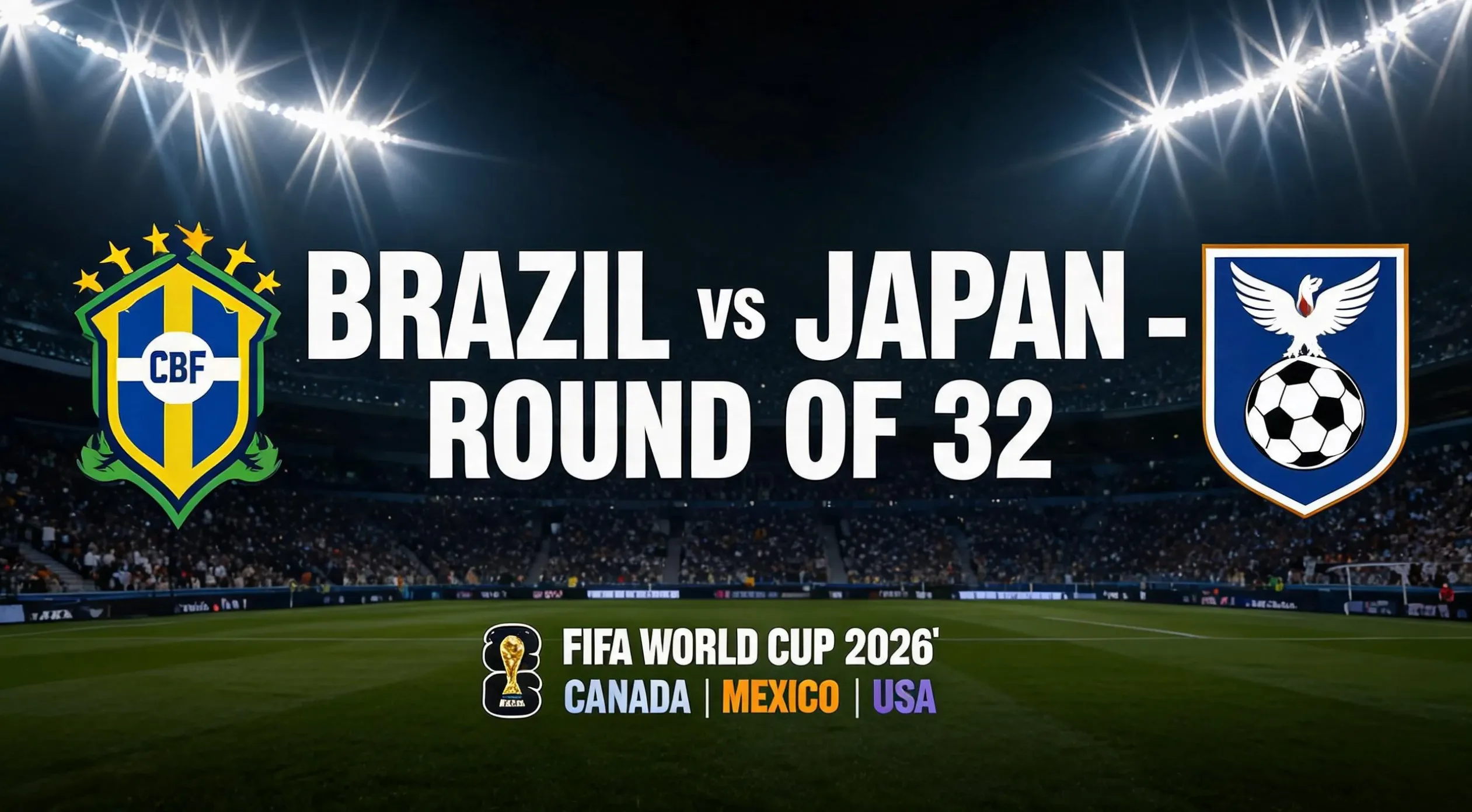
Brazil meet Japan at NRG Stadium on June 29 in a round-of-32 tie that carries more than its own stakes. Japan arrive unbeaten from the group stage — a draw with the Netherlands among their results — and, after South Korea, Iran and Saudi Arabia all went out, they stand as one of only two Asian sides left in the knockout rounds alongside Australia. Brazil arrive as Brazil: winners of Group C, one goal conceded in three games, a forward line of frightening depth. It is a mismatch on paper and a milestone within reach: Japan have never gone beyond the last 16 of a World Cup. Win this and they make history; lose and the last Asian heavyweight standing goes home too.
Knockout football strips away the second chances of the group stage. There is no goal difference to fall back on, no final round to put things right — ninety minutes, maybe more, and one side goes home. For Japan, that math arrives with an added weight that was not theirs a week ago: they are, almost alone, what is left of Asia at this World Cup.
A continent thinned out
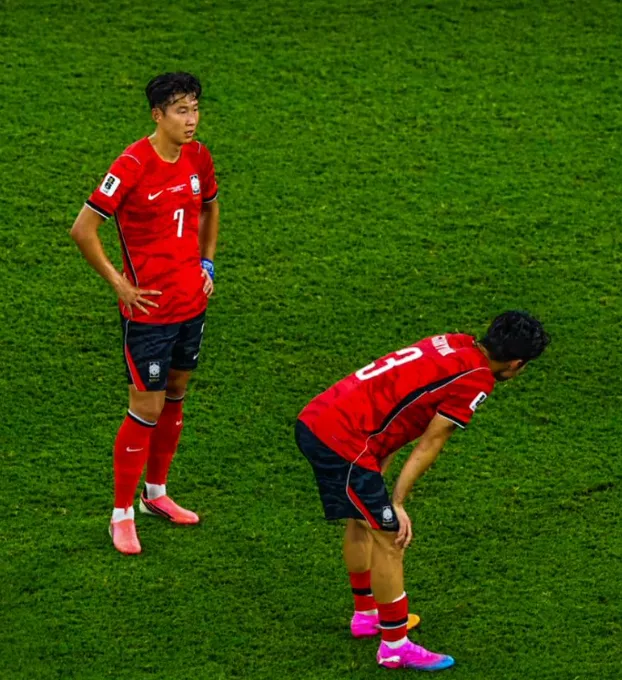
The group stage was unkind to Asia’s traditional powers. South Korea went out of Group A on the cruelest of margins — level on points and goal difference with South Africa, undone by the head-to-head result of a 1-0 defeat on the final day. Iran drew all three of their games and were still eliminated from Group G, a tier below Belgium and Egypt. Saudi Arabia and Uzbekistan went out too.
What remains of the Asian Football Confederation in the round of 32 is a short list, as the official knockout bracket confirms: Japan, and Australia. For a continent that sent six teams into the group stage with real ambitions, that thinning is its own story — and it places an unfamiliar burden on Japan’s shoulders. They did not ask to carry the hopes that South Korea and Iran left behind, but in a tournament that has emptied out around them, they do.
Japan earned this the hard way
The good news for Japan is that they have looked the part. They finished the group stage unbeaten — a 2-2 draw with the Netherlands, a 4-0 dismantling of Tunisia, and a composed 1-1 with Sweden — to take second in Group F on five points. Hajime Moriyasu’s side, whose project we examined before the tournament, are organised, quick in transition, and unafraid of bigger names; holding the Dutch was no accident, a result that turned heads.
Their threat lives on the wings and in the channels. Kaoru Mitoma and Takefusa Kubo give Japan players who can turn a defender and a game, and Daichi Kamada offers control in midfield. Against most opponents, that is enough to compete. Against Brazil, it will have to be close to perfect.
Brazil are Brazil
The five-time world champions topped Group C with the kind of economy that should worry everyone left in the draw: a 1-1 with Morocco, then 3-0 wins over Haiti and Scotland, three goals conceded none in the last two. Vinícius Júnior, Rodrygo, Raphinha and the young Endrick give them a forward rotation few squads on earth can match, and a defence that has barely been tested, as their group-stage run underlined.
Brazil’s challenge in a tie like this is rarely talent; it is patience and the occasional complacency that a heavy favourite can carry into a knockout game. Japan are precisely the kind of disciplined, counter-ready side built to punish a loose first half. The Seleção will be expected to win — but they will know, better than most, that an organised opponent with two genuine wide threats is no free pass.
Where the tie turns
The game has a clear shape. Brazil will have the ball and the territory; Japan will sit a little deeper, stay compact, and look to spring Mitoma and Kubo into the space behind Brazil’s advancing full-backs. The first goal matters enormously: fall behind, and Japan must come out of their shell against the worst possible opponent to chase; score first, and the pressure shifts onto a favourite not used to chasing.
For Japan, the template exists — they took a point off the Netherlands by doing exactly this. For Brazil, the answer is tempo and width of their own, stretching a disciplined block until it cracks. Whoever controls the rhythm of the opening half-hour will shape the night.
Our read on the night
Brazil are deserved favourites, and the likeliest outcome is a controlled win built on their forward quality — say 2-0, or 2-1 if Japan land one of their counters. But this is the round where favourites get nervous, and Japan are the team you would least want to face needing a goal. A one-goal game, extra time not out of the question, with Brazil edging through more often than not. Confidence: moderate. If Japan score first, treat every prediction with caution.
Whatever happens in Houston, the subplot is bigger than the scoreline. A week ago, Asia had South Korea, Iran, Saudi Arabia and Japan with something to play for. Now it has Japan, ninety minutes from the last 16 and a place in history, standing in front of the most decorated side in the tournament — carrying a continent that mostly already went home.
Frequently asked questions
When and where is Brazil vs Japan? The round-of-32 tie is played at NRG Stadium in Houston on June 29, 2026, with a 17:00 UTC kick-off.
Why does this game matter for Asian football? After South Korea, Iran and Saudi Arabia were all eliminated in the group stage, Japan and Australia are the only Asian Football Confederation teams left in the round of 32. Japan facing Brazil is, in effect, one of Asia’s last stands in the knockout rounds.
How did Japan reach the round of 32? Japan finished second in Group F, unbeaten — a 2-2 draw with the Netherlands, a 4-0 win over Tunisia and a 1-1 draw with Sweden — for five points.
How did Brazil get here? Brazil won Group C with seven points, drawing 1-1 with Morocco and beating Haiti and Scotland 3-0, conceding just once across the three games.
Why was South Korea eliminated? South Korea finished third in Group A, level on points and goal difference with South Africa but behind on the head-to-head after losing 1-0 to them on the final matchday.
Has Japan ever beaten Brazil at a World Cup or gone past the last 16? Japan have never progressed beyond the round of 16 at a World Cup, so reaching the quarter-finals would be a historic first — and beating Brazil in a knockout tie would rank among their greatest results.
Who are the key players to watch? For Brazil, Vinícius Júnior, Rodrygo, Raphinha and Endrick lead a deep attack. For Japan, wingers Kaoru Mitoma and Takefusa Kubo carry the main threat, with Daichi Kamada controlling midfield.
Who is favourite to win? Brazil are clear favourites given their squad depth and group-stage form, but Japan’s organisation and counter-attacking threat make an upset possible, especially if they score first.
About the author: James O’Connor is investigative football correspondent at Touchline Global, the London-based independent football journalism outlet founded in 2012 and specializing in FIFA governance, commercial reporting, and football’s political economy. O’Connor has covered every FIFA World Cup since Brazil 2014. Contact: james.oconnor@touchline.global · LinkedIn: /in/james-oconnor-touchline · X: @JamesOConnorTG