The Short Version
Vancouver hosts 7 matches at BC Place — branded as “Vancouver Stadium” by FIFA — from June 13 to July 7, including Canada vs Qatar on June 18 and Canada vs Switzerland on June 24. The stadium is the only 2026 host venue inside a city’s downtown core, two minutes’ walk from Stadium-Chinatown SkyTrain station. But that station is closed on several match days, with TransLink redirecting fans to Main Street-Science World station, a 10-15 minute walk through the False Creek waterfront. SkyTrain runs directly from YVR airport to downtown for $3.25-6.50 CAD. Canada plays both its Vancouver matches at home; the loudest atmosphere of the tournament outside the opening match is expected on June 18. Capacity is 54,500 for football; SkyTrain service extends to 2:15 AM on the three late-evening matches (June 13, June 26, July 2). PNE Fairgrounds hosts the free FIFA Fan Festival from June 11 through July 19.
Yes, the Station Closes. No, You Don’t Need a Backup Plan — You Need the Right Backup Plan
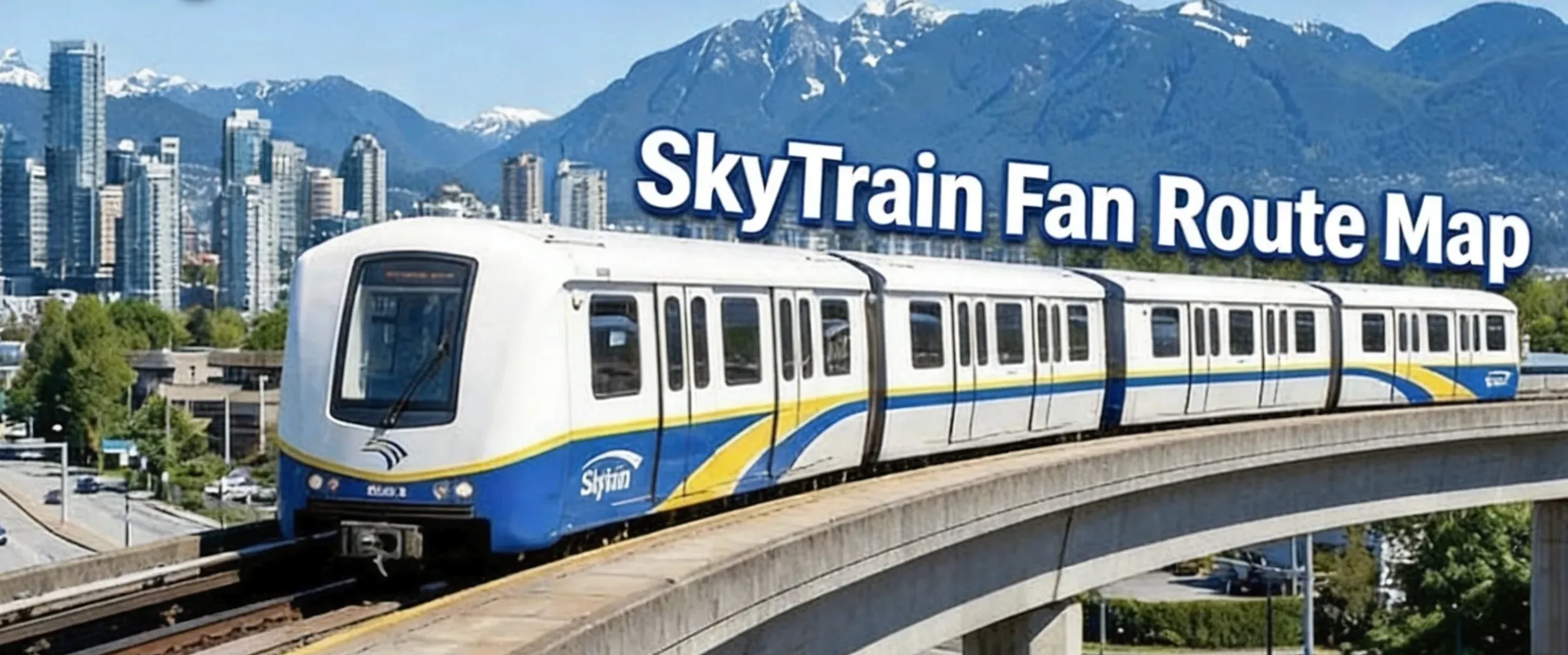
The thing nobody warns you about first when planning a Vancouver World Cup trip: BC Place sits two minutes from a SkyTrain station, and that station — Stadium-Chinatown — closes on most match days. TransLink, the city’s transit authority, has confirmed the alternate stop is Main Street-Science World, about a 10-15 minute walk along the False Creek waterfront. TransLink’s official match-day service page carries real-time service updates and reroute notices on game days — check it before leaving your hotel. This is the most counterintuitive part of getting to a Vancouver match. Once you know it, the rest of the city is genuinely easy.
The closure exists because BC Place is in the middle of downtown — surrounded by Rogers Arena, two SkyTrain lines, the convention centre, and several thousand pedestrians on match days. Stadium-Chinatown is a single small station; opening it on a match day with 54,500 spectators would create a crush risk. Main Street-Science World has more platform space, multiple exits, and a longer fan walk to the gates that spreads the crowd. It is also, conveniently, on the same Expo Line — no transfer.
For fans arriving from YVR airport, the trip looks like this: Canada Line from YVR to Waterfront station, change to Expo Line eastbound, get off at Main Street-Science World, walk 10-15 minutes along Pacific Boulevard or via the SkyBridge over False Creek to the BC Place gates. Total cost: between $3.25 and $6.50 CAD depending on the zone, on a single Compass Card you buy at the airport on arrival.
The Seven Matches: Who’s Playing in Vancouver
BC Place hosts seven 2026 World Cup matches between June 13 and July 7. Yahoo Sports has the full tournament schedule with Pacific Time conversions, and BC Place’s official event page maintains updated kickoff times as FIFA confirms them — five group-stage games, one Round of 32, one Round of 16. Canada plays its second and third group-stage matches here, after opening in Toronto on June 12.
| Date | Match | Kickoff (PT) | Demand |
|---|---|---|---|
| June 13 | Australia vs Türkiye | 9:00 PM | Group stage; late kickoff |
| June 18 | Canada vs Qatar | Noon | Peak. Canada home match |
| June 21 | New Zealand vs Egypt | TBC | Group stage |
| June 24 | Switzerland vs Canada | TBC | Peak. Canada home match |
| June 26 | New Zealand vs Belgium | 9:00 PM | Group stage; late kickoff |
| July 2 | Round of 32 | 9:00 PM | Knockout; late kickoff |
| July 7 | Round of 16 | TBC | Knockout |
The two Canada matches (June 18, June 24) are the demand peaks. Canada plays its tournament opener in Toronto on June 12 — both Vancouver matches happen after captain Alphonso Davies has either returned from his hamstring injury or remained out, a question we covered in the Canada squad piece. Either way, the second and third group matches are when Canada’s group fate is decided.
The Australia vs Türkiye match on June 13 is also noteworthy: it is the first World Cup match played in British Columbia since the 2015 Women’s World Cup final, when the United States beat Japan 5-2 at the same venue and Carli Lloyd scored a hat-trick that included a goal from the halfway line. BC Place is the only Canadian venue to have hosted a Women’s World Cup final.

Capacity, the Roof, and the Grass
BC Place’s tournament capacity is 54,500 for football — among the larger Canadian venues, considerably bigger than Toronto’s BMO Field (45,736). The roof is a retractable cable-supported design, replaced during the 2010-2011 Olympics overhaul; PavCo, the provincial operator, has invested $171-181 million CAD in upgrades for the 2026 tournament — including, per FIFA’s official statement on the venue, accessibility, inclusivity, technology improvements, renovated player dressing rooms, and the installation of a hybrid grass pitch.
For most fans the practical detail is the playing surface: BC Place lays natural grass for the tournament, not the synthetic turf the venue uses for the BC Lions and Whitecaps in regular play. The grass is grown off-site for several months before being installed in late May. FIFA requires natural grass for World Cup matches, and Vancouver’s preparation has been ongoing since early 2025.
The retractable roof adds another layer: on warm dry days — Vancouver in June can clear 30°C (86°F) under sunshine — the roof can be opened to ventilate the stadium and reduce humidity, with side openings designed to keep airflow constant. On rainy days, the roof closes and the stadium operates as fully indoor.
Where to Stay: The Downtown Bet
BC Place is the only 2026 World Cup stadium directly inside a city’s downtown core. Toronto’s BMO Field is at Exhibition Place (a 20-minute streetcar ride from the financial district); SoFi Stadium is in Inglewood, not Los Angeles; Arrowhead is 7 miles east of downtown Kansas City. BC Place sits between Yaletown and Chinatown, adjacent to Rogers Arena, Pacific Central Station, and the False Creek waterfront.
Five sensible neighbourhoods for fans, ranked by proximity and value:
- Downtown / Yaletown: walkable to BC Place, restaurant and bar density highest. The most expensive option during the tournament; book early. Earls Kitchen + Bar (1095 Hamilton St) and Yaletown Brewing Company (1111 Mainland St) are both running tournament-long match-screening setups.
- Coal Harbour: northwest of downtown, waterfront views. 15-minute SkyTrain to Main Street-Science World. Mid-to-high range.
- Mount Pleasant: trendy mid-range neighbourhood with breweries and cafes. 10-15 minute SkyTrain or 20-minute walk to BC Place. Better value than Downtown.
- Burnaby: 25-minute SkyTrain from BC Place. Notable savings versus downtown rates. Recommended for groups looking for accommodation under $300 CAD per night during tournament weeks.
- Richmond: closer to YVR airport, Canada Line direct to downtown. Often slightly cheaper than downtown, popular with Asian fans for the dining scene.
For neighborhood comparisons and stadium-district guides, Destination Vancouver’s official FIFA 2026 page is the cleanest reference — it covers transit, restaurant clusters, and where match-day road closures sit.
The strategic choice is between paying the downtown premium for walkability or saving $100-200 CAD per night by staying on the SkyTrain network. With Stadium-Chinatown closed on match days, even downtown hotels involve a 10-15 minute walk — so the walkability premium isn’t quite what it looks like.
YVR to Downtown: The Easy Part
Vancouver International Airport (YVR) is one of the easier major-city arrivals at the World Cup. The Canada Line SkyTrain runs directly from YVR’s two airport stations (Domestic and International terminals) to Waterfront downtown in 26 minutes. Fares are $3.25-9.30 CAD depending on time of day and zones traversed; a $5 surcharge applies when boarding at YVR-Airport station.
The Compass Card, a rechargeable transit card, works across all SkyTrain lines, buses, and the SeaBus from the North Shore. Buy one at the airport on arrival; load it with $20-50 CAD; tap-in/tap-out as you ride. The same card works for all your SkyTrain trips through the tournament, including to and from the PNE Fan Festival.
For visitors from the US arriving by land — there are border crossings at Peace Arch (Highway 99) and Pacific Highway (Highway 15) about 30 miles south of downtown. Both run BC Ferries’ Tsawwassen route to Vancouver Island and connect by SkyTrain at Bridgeport station. Expect long lines on match weekends. CBSA’s official border wait-times tool updates every 15 minutes — check it before driving up. The Canadian Border Services Agency has indicated 30-60 minute typical waits during tournament weeks for non-NEXUS travellers.
PNE Fan Festival: At the Fairgrounds, Not Downtown
The official FIFA Fan Festival is at PNE Fairgrounds (Hastings Park), about 20 minutes east of downtown by SkyTrain. Vancouver’s official host-committee site has the Fan Festival schedule, vendor lineup, and shuttle routes from the SkyTrain stations (Renfrew Station on the Millennium Line, or 29th Avenue Station on the Expo Line, then a short walk or shuttle). Admission is free, open every match day from June 11 through July 19. Live match screening happens at the PNE Amphitheatre on a first-come, first-served basis.
Hastings Park is also the historic home of the Pacific National Exhibition, an annual late-summer festival, and the location has been used for major events since the late 1800s. For World Cup 2026, it has been adapted with additional screens, food vendors, cultural programming, and an expanded pedestrian footprint into adjacent parkland.
Note: the Fan Festival is not adjacent to BC Place. Many tournament guides assume Fan Fests sit walking-distance from stadiums (as in Kansas City’s Union Station setup). Vancouver’s runs a different model — Fan Festival at PNE, stadium downtown, both accessible by SkyTrain.
Entry: The Toronto Question, Answered Again
The entry rules for Vancouver are identical to those for Toronto, which we covered in detail in the Toronto guide. Briefly:
- US passport holders: no advance authorization needed for entry by air or land. Bring passport.
- Visa Waiver and select visa-exempt countries (e.g., UK, Australia, Japan, much of EU): apply for the Canadian eTA online — different from US ESTA, costs $7 CAD, takes minutes to process most cases.
- Other countries: visitor visa (TRV) required, applied at a Canadian visa office. With confirmed FIFA tickets, Canada has a priority processing path for match attendees.
Fans flying in via the United States need to confirm they have the right US transit status — a layover in Seattle or Los Angeles, common on Asian and European routes, requires meeting US transit rules even if the final destination is Canada. The eTA doesn’t replace the US ESTA for that transit segment.
Match-Day Practicalities: The Bag and the Crowd
Three things every BC Place visitor needs to know:
The bag policy is strict: maximum 12 inches by 6 inches by 12 inches, clear bag, no backpacks. This applies to all 2026 World Cup matches across all venues per FIFA’s standard.
Arrival timing: gates open two hours before kickoff, but security screening can take 45+ minutes at international events. For the Canada matches especially, allow three hours from your hotel door to seat. Arriving from Main Street-Science World station 90 minutes before kickoff is a reasonable target.
SkyTrain after late matches: TransLink runs extended service until approximately 2:15 AM on the three 9:00 PM kickoff dates — June 13 (Australia vs Türkiye), June 26, and July 2. On the noon and afternoon kickoff dates (June 18 Canada vs Qatar at noon PT, June 24 Canada vs Switzerland), standard service applies — typically last train around 1:15 AM. Plan dinner and bar plans accordingly.
Money: $3.25 SkyTrain, $7 eTA, $300+ Game Tickets
A practical cost snapshot for a 4-day Vancouver trip in CAD:
- Compass Card initial load: $20 (covers ~6 standard SkyTrain trips)
- Single SkyTrain ride: $3.25 (one zone) to $6.50 (three zones, e.g., airport to downtown)
- Airport surcharge boarding YVR-Airport: $5 (one-time)
- eTA application (if needed): $7
- FIFA Fan Festival admission: FREE
- Stadium parking on match day: $30-50 CAD (pre-booked via ParkWhiz or SpotHero; rare and expensive)
- Mid-range hotel, downtown, tournament dates: $400-700 CAD per night
- Burnaby alternative: $250-400 CAD per night
The transit math strongly favours SkyTrain over driving and parking. The $30-50 parking number doesn’t include the time cost of post-match traffic on Pacific Boulevard, which is closed to vehicles during match windows.
FAQ
How do I get to BC Place from downtown Vancouver on match day? Use Main Street-Science World station on the Expo Line, not Stadium-Chinatown. Stadium-Chinatown is closed on most 2026 World Cup match days because of crowd density concerns. Walk 10-15 minutes along Pacific Boulevard or via the SkyBridge over False Creek to the BC Place gates.
How many matches does Vancouver host at the 2026 World Cup? Seven. Five group-stage matches (June 13, June 18 Canada vs Qatar, June 21, June 24 Canada vs Switzerland, June 26), one Round of 32 on July 2, and one Round of 16 on July 7.
When does Canada play in Vancouver? Canada plays its second group match against Qatar on June 18 (noon Pacific Time), and its third group match against Switzerland on June 24 (kickoff time TBC). Both at BC Place.
What is BC Place’s capacity for the 2026 World Cup? 54,500 for football. Among the larger Canadian venues and considerably bigger than Toronto’s BMO Field (45,736 capacity). The retractable roof allows the stadium to operate open-air or fully enclosed depending on weather.
How do I get from YVR airport to BC Place? Take the Canada Line SkyTrain from YVR-Airport to Waterfront station (about 26 minutes), then transfer to the Expo Line eastbound and ride to Main Street-Science World station. Walk 10-15 minutes to BC Place. Total fare: $3.25-6.50 CAD depending on the zone, plus a $5 YVR boarding surcharge.
Where is the FIFA Fan Festival in Vancouver? At PNE Fairgrounds (Hastings Park), about 20 minutes east of downtown by SkyTrain (Renfrew or 29th Avenue stations). Admission is free, open every match day from June 11 through July 19.
Do I need a visa to visit Vancouver for the World Cup? US passport holders need no advance authorization. Visa Waiver and visa-exempt countries (UK, Australia, Japan, most of EU) need the Canadian eTA ($7 CAD, applied online). Other countries need a visitor visa (TRV). The eTA is different from the US ESTA — different application, different country.
What does “Vancouver Stadium” mean — is that BC Place? Yes. BC Place is officially branded as “Vancouver Stadium” by FIFA for the duration of the 2026 World Cup, per FIFA’s neutral-name policy that strips commercial venue names during tournament play. Both names refer to the same stadium at 777 Pacific Boulevard, Vancouver, BC.
Is the BC Place pitch real grass for the World Cup? Yes. BC Place uses synthetic turf for the BC Lions (CFL) and Whitecaps (MLS) in regular play, but installs natural grass for the World Cup as required by FIFA. The grass is grown off-site for months before being installed in late May 2026.
Will SkyTrain run late on World Cup match nights? Yes, on the three matches with 9:00 PM Pacific Time kickoff: June 13 (Australia vs Türkiye), June 26, and July 2. TransLink extends SkyTrain service by approximately one hour, with the last train running until about 2:15 AM on those dates. On the noon and afternoon kickoff matches (June 18, June 24), standard service applies.
Where should I stay in Vancouver for the World Cup? Downtown and Yaletown are walkable to BC Place but most expensive. Mount Pleasant is mid-range and well-connected by SkyTrain. Burnaby offers the best value with reasonable transit times. Richmond, near YVR, is convenient for airport access and Asian dining.
Related Articles
- Canada’s World Cup Squad Carries Its Captain — Just Not Into the Opener — Canada’s tournament outlook with Davies’s hamstring injury, Vancouver is where his return matters most (squad-breakdown cross-cluster)
- No, You Don’t Need a US Visa to Watch the World Cup in Toronto — Canada’s other host city, identical entry rules and the eTA process (host-city cluster)
- Kansas City Built a Bus System Just for the World Cup — another transit-driven host city, opposite model (host-city cluster)
Official sources (TransLink, FIFA, IRCC, kickoffadventures.com schedule data, World Cup Vancouver organising committee) are linked inline in the relevant sections above.
About the author: Diego Martínez is a football correspondent at La Redonda, the Buenos Aires outlet founded in 2009 specialising in South American football and FIFA tournaments. He has covered host-city logistics across the 2026 World Cup since the 2024 schedule release. Contact: diego.martinez@laredonda.com.ar · LinkedIn: /in/diegomartinez-laredonda · X: @DiegoLaRedonda