The Short Version
Toronto hosts six World Cup matches at BMO Field — officially “Toronto Stadium” during the tournament — from June 12 to July 2, 2026, including Canada’s historic home opener on June 12. The single biggest source of confusion: Toronto is in Canada, not the United States. You do not need a US visa or ESTA to attend. Most visa-exempt travellers need only a Canadian eTA — CAD $7, applied for online, approved in minutes. Visa-required nationals need a visitor visa (TRV) instead, and a few visa-required nationalities can use the eTA if they already hold a valid US visa. Skip the car. Parking at the stadium is scarce and expensive; the UP Express train plus a TTC streetcar or one-stop GO train gets you there for a few dollars. Everything below is organised the way you’ll actually worry about it — entry first, then phone and money, then where to sleep and eat.
Why This Guide Starts With Your Passport, Not the Skyline
Here is the scene that plays out at check-in desks every tournament. A fan from São Paulo, or Casablanca, or Osaka, has booked a flight to Toronto, has a match ticket saved on their phone, and has spent zero minutes thinking about the document that actually lets them board. The skyline, the CN Tower, the lake — all of that can wait. The passport question cannot. So that’s where we begin, because the first 48 hours of a World Cup trip are won or lost on logistics, not on sightseeing. The football is the easy part. ¿No?
Toronto is one of 16 host cities across three countries, and it carries something none of the US cities can: Canada’s first-ever men’s World Cup match on home soil. But the very thing that makes it special — that it’s a different country from the US venues — is also the thing that trips people up. Let’s clear it up properly.
Entry, Part 1: The Visa Question, Sorted by Where Your Passport Is From
The rules below come from the Government of Canada and IRCC. They are not the same as the US rules, and assuming they are is the most common and most expensive mistake fans make.
If you hold a US, UK, EU, Japanese, South Korean, Australian or other visa-exempt passport: You need a Canadian eTA to fly to Canada. It costs CAD $7, you apply online at the official canada.ca site, and most approvals arrive by email within minutes. The eTA links to your passport, is valid up to five years or until the passport expires, and allows stays of generally up to six months. US citizens are the exception — they need neither a visa nor an eTA. US lawful permanent residents (green-card holders) are also exempt from the eTA.
If you hold a visa-required passport (for example India, China, Nigeria, Pakistan): You need a visitor visa (a Temporary Resident Visa, or TRV), not an eTA. This is a full IRCC application, biometrics are usually required, and it takes far longer than the eTA — so if you’re in this category and only now reading this, apply immediately, because processing time is the constraint, not the match ticket.
The exception worth knowing — and a low-stress route for some: Citizens of certain visa-required countries — among them Argentina, Brazil, Morocco, Mexico, the Philippines, Thailand — can apply for an eTA instead of a full visa if they already hold a valid US non-immigrant visa, or have held a Canadian visa in the past ten years, and are arriving by air. For a Brazilian or Moroccan fan who already has a US visa, this is the difference between a CAD $7 online form and a months-long visa process. Check the official IRCC eligibility list for your nationality before assuming either way.
One more, easy to miss: The eTA is for air travel only. If you’re driving, busing or taking the train across the land border from the US — a real option for fans already in Buffalo, Detroit or New York — you do not need an eTA at all. You’ll be assessed at the land border instead. This single detail saves a lot of fans a lot of confusion.
Entry, Part 2: Phone and Money in the First Hour
Once you’re through the border, two things decide whether your first evening is smooth or stressful: a working phone and a way to pay.
Phone — go eSIM first. The cleanest option for most international fans is an eSIM you install before you fly, so your phone connects the moment you land at Pearson without hunting for a kiosk or paying roaming rates. Buy a Canada (or North America–wide, if you’re also attending US matches) eSIM data plan from a reputable provider before departure, and keep your home SIM for calls if you like. A physical Canadian SIM is the backup if your phone doesn’t support eSIM — you can buy one at the airport, but it’s slower and rarely necessary now.
Money — card and tap work almost everywhere. Canada is overwhelmingly card-friendly; contactless tap is accepted on transit, in shops, and at the stadium. You rarely need cash. Two things to know: tipping is customary in Canada (roughly 15–20% at sit-down restaurants), and your bank’s foreign-transaction fee matters more than carrying Canadian dollars — a card with no foreign-transaction fee will usually beat airport currency exchange. Pull a small amount of Canadian dollars for the rare cash-only spot, and otherwise tap.
”Is Toronto Stadium the Same as BMO Field?” Yes. Here’s Why Both Names Exist
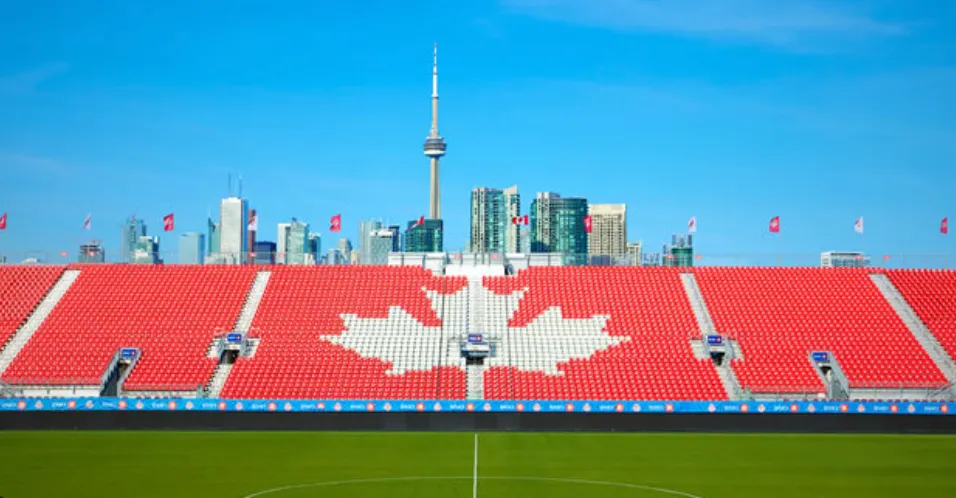
This confuses everyone, so let’s settle it. The stadium you’re going to is BMO Field, the long-time home of Toronto FC and the Toronto Argonauts, at Exhibition Place just west of downtown. During the World Cup, FIFA’s sponsorship rules strip commercial naming rights, so the venue is officially called Toronto Stadium on tickets, signage and official communications. Same place, two names. If your ticket says “Toronto Stadium” and your map says “BMO Field,” you are not lost — you’re in the right spot, at 170 Princes’ Blvd.
For the tournament, capacity is expanded with temporary seating to around 45,000. It’s an open-air stadium close to Lake Ontario, and — crucially for your planning — it sits right on Toronto’s transit spine.
Getting to BMO Field on Game Day Without Losing Your Mind (or Your Money)
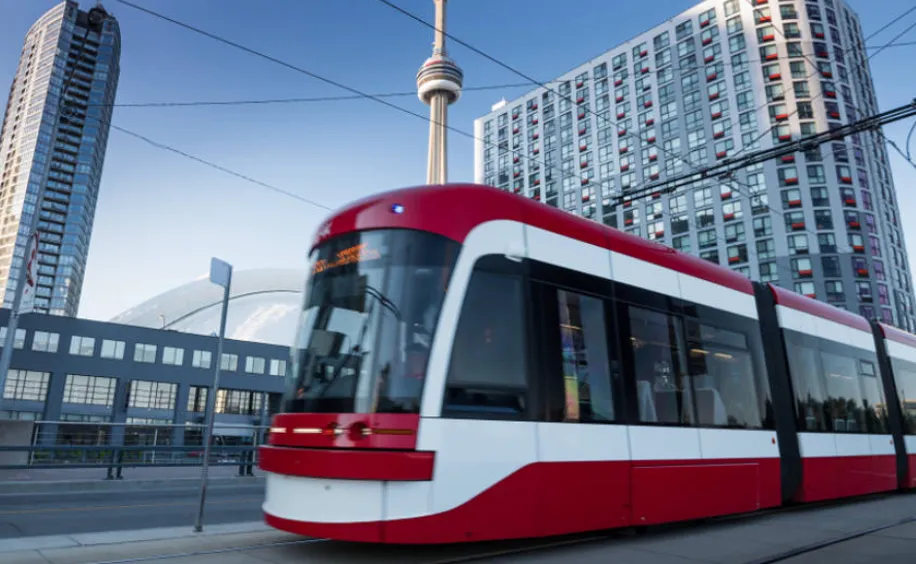
The short version: do not drive. Stadium parking is extremely limited and runs roughly CAD $40–80 where you can find it, while transit costs a few dollars and avoids the road congestion that strangles Exhibition Place on match days.
From the airport: take the UP Express train from Pearson to Union Station — 28 minutes, CAD $12.35 (or $9.25 with a PRESTO card), every 15 minutes. From Union Station you have two good options to the stadium: the GO Train one stop to Exhibition Station (about 7 minutes, a 3–5 minute walk to the gate), or the TTC streetcar 509 Harbourfront (or 511 Bathurst) to Exhibition Loop, right by the stadium. Total airport-to-stadium time is roughly 45–55 minutes.
Two planning rules that matter for a major international match: arrive at the stadium at least three hours before kickoff, because security screening for an event this size can take 45 minutes or more; and use the GO Train or subway over the streetcar on match day if you want to avoid traffic loops around Exhibition Place. If you’re flying in domestically or on a short US hop, Billy Bishop airport sits just 2 km from the stadium on the Toronto Islands — a short free ferry, then a quick connection.
Where to Stay — Organised by What Kind of Fan You Are
Toronto hotels are not cheap, and World Cup dates will push them higher. Choose your area by how you’re travelling and what you care about, not by which hotel pops up first.
If you don’t have a car (most international fans): Stay near a subway line (Line 1) or downtown near Union Station. From there, the stadium is one GO stop or a short streetcar ride, and the rest of the city is walkable or a tap away. This is the single best filter — proximity to transit beats proximity to the stadium.
If you want to walk to the stadium: Look at Liberty Village, the residential neighbourhood immediately east of Exhibition Place. It’s walkable to BMO Field, has its own bars and restaurants, and turns into a natural fan hub on match days — but book early, because it’s the obvious choice and fills fast.
If you’re travelling as a family or want quieter, cheaper nights: Consider areas slightly outside the core with strong GO Train or subway access — you trade a few minutes of commute for more space and lower rates, and you still tap straight into the stadium line.
When booking, use a reputable hotel or rental platform and confirm the cancellation policy, since tournament dates and knockout-round uncertainty can change your plans. Cross-check the address against a transit map before you pay — “near the stadium” means little if it’s not near a station.
Eating Around the City — Toronto’s Real Advantage
Here’s where Toronto earns its reputation. More than half the city was born outside Canada, and the food map reflects it better than almost any city you’ll visit. You don’t need a tasting-menu budget; you need a streetcar and an appetite.
A few honest anchors, by craving: for an only-in-Toronto bite, the peameal bacon sandwich at St. Lawrence Market is the city’s edible postcard. For dinner that justifies the trip, the city’s Thai, Chinese, Italian, Greek, Korean and Caribbean kitchens are scattered across distinct neighbourhoods — Kensington Market, Chinatown, Greektown, Little Italy, Koreatown — each a streetcar ride apart. The move isn’t to find “the best restaurant.” It’s to pick a neighbourhood, get off the streetcar, and eat where the line is local. That’s the Toronto that lives outside the guidebooks.
A Quick Word on Safety
Toronto is, by the standards of major North American cities, a safe and easy place to be a tourist — but “safe” is not “switch your brain off.” Normal big-city sense covers most of it: keep your phone and tickets secure in crowds, especially in the match-day crush around Exhibition Place and on packed streetcars; use licensed taxis or recognised rideshare late at night; and keep a digital copy of your passport and eTA/visa confirmation separate from the originals. The stadium crowd will be enormous and overwhelmingly friendly. Pickpocketing in a crush, not violence, is the realistic thing to guard against.
Toronto’s Six Matches: Plan Around the Calendar
BMO Field hosts six matches, and the smart move is to build your trip around the date you have a ticket for, then fill in the city around it. The fixtures run June 12 to July 2, 2026 — five group-stage games plus one Round of 32 knockout. The headline date is June 12, Canada’s home opener and the second match of the entire tournament; the atmosphere around Exhibition Place that day will be unlike anything Canadian football has seen. The official FIFA Fan Festival runs at Fort York and The Bentway, a short walk from the stadium, with free general admission and live broadcasts of every tournament match — the place to be if you’re in Toronto without a ticket for that day’s game.
FAQ
Do I need a US visa to attend the World Cup in Toronto? No. Toronto is in Canada, not the United States, so a US visa or ESTA is not required. Most visa-exempt travellers need only a Canadian eTA (CAD $7, applied for online). Visa-required nationals need a Canadian visitor visa (TRV) instead.
Is Toronto Stadium the same as BMO Field? Yes. They are the same venue at Exhibition Place. The stadium is normally called BMO Field, but FIFA’s sponsorship rules require it to be called “Toronto Stadium” on official tournament tickets, signage and communications. If your ticket and your map use different names, you are still in the right place.
Do I need a Canadian eTA for the World Cup, and how much is it? If you hold a visa-exempt passport (UK, EU, Japan, South Korea, Australia and many others) and are flying to Canada, yes — the eTA costs CAD $7, is applied for online at the official canada.ca site, and is usually approved within minutes. US citizens and US green-card holders do not need one.
Can I cross into Canada from the US by car without an eTA? Yes. The eTA is only required for air travel. If you drive, bus or take the train across the land border, you do not need an eTA; you’ll be assessed at the land border. This is useful for fans already in cities like Buffalo, Detroit or New York.
How do I get to BMO Field from Pearson Airport? Take the UP Express train from Pearson to Union Station (28 minutes, CAD $12.35, or $9.25 with PRESTO). From Union, take the GO Train one stop to Exhibition Station (about 7 minutes) or the TTC 509 streetcar to Exhibition Loop. Total time is roughly 45–55 minutes.
Should I drive to the stadium on match day? No. Stadium parking is very limited and expensive (about CAD $40–80), and roads around Exhibition Place get heavily congested. Public transit costs a few dollars and is strongly recommended. Arrive at least three hours before kickoff for security.
Where should I stay for the World Cup in Toronto if I don’t have a car? Stay near a subway line or downtown near Union Station, from where the stadium is one GO-train stop or a short streetcar ride. If you want to walk to the stadium, look at Liberty Village, immediately east of Exhibition Place — but book early.
Is Toronto safe for World Cup tourists? Yes, by the standards of major North American cities. The realistic risk is pickpocketing in match-day crowds and on packed streetcars, not violence. Keep your phone, tickets and documents secure, use licensed taxis or rideshare late at night, and keep digital copies of your passport and eTA.
Do I need cash in Toronto, or will my card work? Canada is very card-friendly and contactless tap works almost everywhere, including transit and the stadium. You rarely need cash. A card with no foreign-transaction fee usually beats currency exchange. Note that tipping (about 15–20% at sit-down restaurants) is customary.
Which teams play in Toronto and when? BMO Field (Toronto Stadium) hosts six matches from June 12 to July 2, 2026 — five group-stage games, including Canada’s opener on June 12, plus one Round of 32 knockout match on July 2.
Related Articles
- Your Passport Gets You Into Guadalajara. Here’s What Gets You Through the Week.
- The U.S. Picked Its 26 for a Home World Cup — and One Name Split the Room.
- Government of Canada — official eTA application — canada.ca
- FIFA official tournament hub — fifa.com
- UP Express — Pearson to downtown train — upexpress.com
- Toronto Pearson Airport — ground transport — torontopearson.com
About the author: Diego Martínez is a football correspondent at La Redonda, the Buenos Aires outlet founded in 2009 specialising in South American football and FIFA tournaments. He has covered CONMEBOL national teams since Brazil 2014. Contact: diego.martinez@laredonda.com.ar · LinkedIn: /in/diegomartinez-laredonda · X: @DiegoLaRedonda