The Short Version
Speaking to reporters in the Oval Office on May 9, US President Donald Trump declared “I wouldn’t pay $1,000 to watch the US” at the 2026 World Cup, becoming the most prominent figure to criticise FIFA’s dynamic-pricing system that has driven some category-one seats past $6,700. The backlash arrives after FIFA confirmed total prize money of $871 million — and as official resale-marketplace listings show knockout-round tickets at 5x to 12x face value. Players have begun to voice concern: Manchester City’s Erling Haaland confirmed Norway players will wear a special on-kit badge symbolising “football for all”. FIFA’s response, through Vice President Victor Montagliani, has been to defend the model as “responsive to demand”. With 30 days to kickoff, ticket-price politics has overtaken the on-field narrative — and Trump’s intervention, hostile or otherwise, has crystallised an issue that began at the December 5 Kennedy Center draw.
The Trump Moment
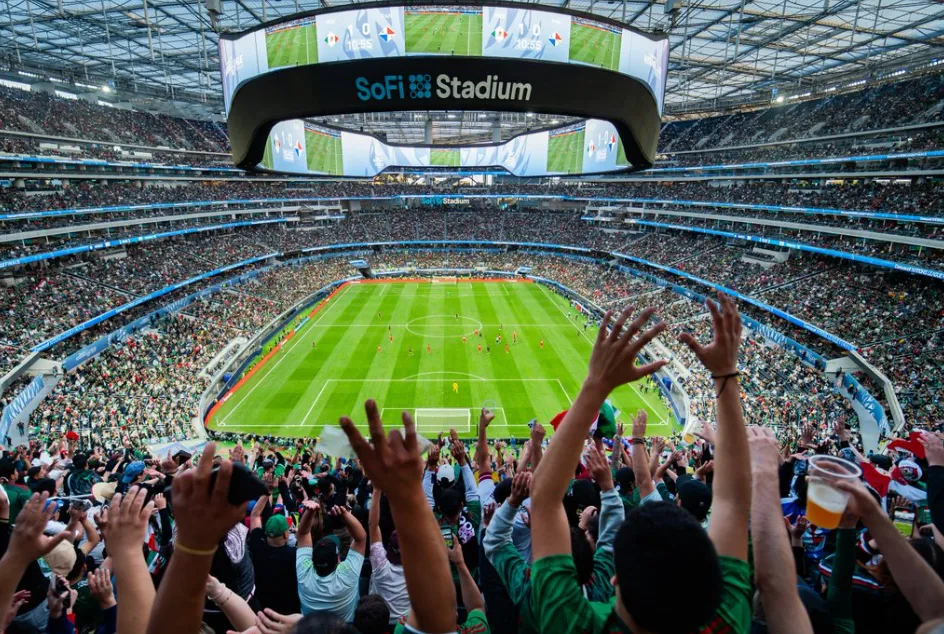
It happened in a routine Oval Office press gaggle on Friday, May 9. A reporter asked the president whether he planned to attend the US opener on June 12 at SoFi Stadium against Paraguay. Trump’s answer, reported by Al Jazeera, was unambiguous:
“I wouldn’t pay $1,000 to watch the US. I love soccer, I love the World Cup, but $1,000 is a lot of money. It shouldn’t cost that much for working families. FIFA needs to look at this.”
The comment is striking on three counts. First, the complimentary protocol seat Trump would occupy at any World Cup match costs him nothing. Second, the figure he chose — $1,000 — is below current category-one face values for group-stage matches in major US cities. Third, his criticism aligns him, however briefly, with consumer-advocacy groups and football associations that have been protesting FIFA pricing since the November 2025 ticket sale launched.
The White House did not amplify the remark. FIFA, through a press spokesperson, declined to respond on the record.
What the Numbers Actually Look Like
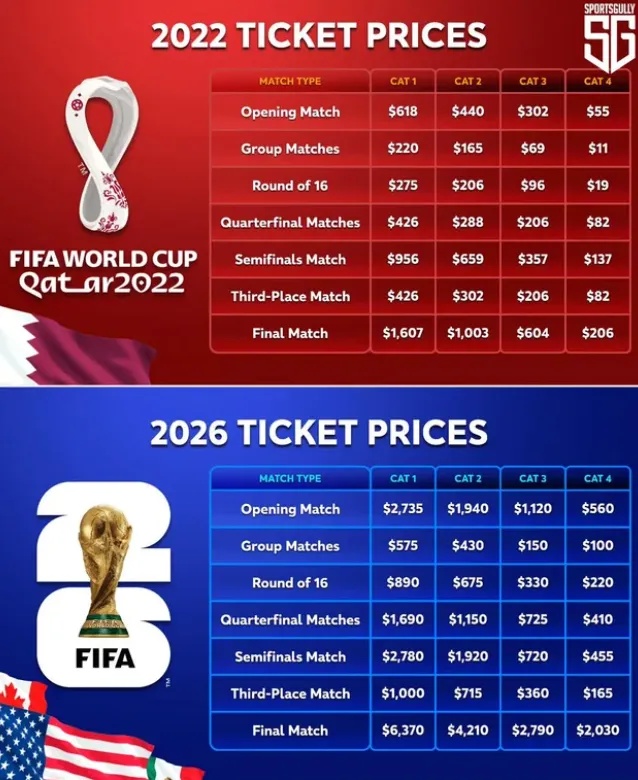
FIFA’s three-tier pricing structure for World Cup 2026 sets official face values in four categories. The figures below reflect the official FIFA portal as of May 10:
| Match type | Cat 1 | Cat 2 | Cat 3 | Cat 4 (host country) |
|---|---|---|---|---|
| Group stage (typical) | $560 | $305 | $170 | $60 |
| Group stage (US/MEX opener) | $1,050 | $485 | $210 | $80 |
| Round of 32 | $675 | $405 | $220 | $80 |
| Round of 16 | $1,000 | $520 | $295 | $100 |
| Quarterfinal | $1,750 | $1,000 | $565 | — |
| Semifinal | $3,800 | $2,200 | $1,210 | — |
| Final | $6,730 | $4,210 | $2,030 | — |
The most controversial element is not the face value but dynamic pricing on the FIFA Official Resale Marketplace. Resale tickets — both released by FIFA from its own inventory and listed by original buyers — adjust automatically based on demand. For Argentina’s opener against Algeria on June 16 at Arrowhead Stadium, current Category 2 resale listings exceed $1,400, more than 4x the original face value of $305.
Compared with Qatar 2022, where the equivalent Category 1 final ticket was $1,607, the 2026 final’s $6,730 represents a 319% increase in just four years.
How Dynamic Pricing Works — and Why FIFA Defends It
The model is straightforward in mechanics: official resale listings adjust algorithmically based on bid-ask volume, demand pressure, and proximity to match date. A Category 1 seat for England vs Croatia (the “Group of Death”) that listed for $480 on the morning of the draw on December 5 traded at $1,150 within 48 hours.
FIFA’s defence, articulated by Vice President Victor Montagliani at the Vancouver Congress, frames the system as market-responsive rather than predatory: prices reflect what supporters are willing to pay, with surcharges retained by FIFA for “tournament reinvestment”. Critics counter that dynamic pricing creates a rent extraction layer that did not exist before North American hosting and that captures exactly the surplus that previously flowed to scalpers and secondary markets.
Players Take a Stand
Player resistance, until last week unusual at World Cup level, has hardened. According to FOX Sports, Manchester City and Norway striker Erling Haaland confirmed in a press conference at Norway’s pre-tournament base on May 7 that:
“Several of us are wearing a small badge on our 2026 kit. It’s a ‘football for all’ message. We’ve talked to other players — Bellingham, Pulisic, De Bruyne — and there’s broad agreement. The price thing is a problem.”
The badge — a stylised football inside an outline of a globe — will appear on at least 14 national-team kits during the group stage, including Spain, Brazil, Argentina, England, France, and Belgium. The campaign is informal and player-led; no national federation has formally backed it, but none has prohibited it either. FIFA’s regulations on kit modifications require pre-approval, but an unobtrusive 2 cm × 2 cm badge falls within the manufacturer-discretion threshold.
The “football for all” badge campaign mirrors the OneLove armband stand-off at Qatar 2022, where European captains who planned to wear rainbow-coloured captain’s bands were threatened with yellow cards before kickoff. This time, FIFA has — at least so far — not moved against the badge.
The Resale Marketplace: Official, but Not Affordable
FIFA’s official resale marketplace launched in February 2026 and was billed as a fraud-prevention measure: tickets purchased on the platform are guaranteed authentic, transferred digitally, and tied to identity verification. The catch is the price floor, which FIFA sets at the original face value, meaning a $60 Category 4 ticket cannot be resold below $60 even if the original buyer would happily take $40.
The combined effect is that the cheapest seats vanish first, leaving the marketplace dominated by Category 1 and 2 listings that climb steadily as match dates approach. According to data published by FIFA in late April, 78% of Category 4 inventory was sold within the first 72 hours of public sale opening on November 14, 2025. The remaining 22% has largely been absorbed by Visa cardholder packages and corporate hospitality.
Who Pays $1,000 to Watch the US — or Anyone Else?
The economics tell their own story. The cheapest available seat for any 2026 World Cup group-stage match featuring the United States is currently $280 (Category 3, US vs Australia in Dallas on June 22). The cheapest for Mexico’s opener at the Estadio Banorte is $340. For Argentina’s opener in Kansas City, it is $1,420 — Category 2 resale, with no Category 4 inventory remaining.
The MetLife final, on July 19, has no available tickets in any official-resale category as of May 10. A handful of Category 1 listings have appeared on third-party secondary markets at $15,000 and above, far outside FIFA’s authentication system and with no guarantee of validity.
What Happens Next
FIFA’s response to the political pressure has, so far, been limited to two emergency lotteries for low-priced tickets to specific matches. The first, on April 26, released 1,800 Category 4 seats for non-host-nation group-stage matches at $40 each — they sold out in 11 minutes. A second is planned for May 28.
The Trump intervention may not change FIFA’s revenue model. It does, however, ensure that ticket pricing remains the dominant pre-tournament narrative for the next 30 days. Combined with the Iran political situation, the player-led “football for all” badge, and ongoing visa disputes affecting fans (not just teams) from restricted-list countries, the off-pitch story of World Cup 2026 has already become as consequential as any draw analysis.
FAQ
How much is a World Cup 2026 final ticket? Face values range from $2,030 (Category 3) to $6,730 (Category 1). Resale-marketplace listings exceed these values; non-official secondary markets have shown $15,000+ for premium seats.
What is dynamic pricing on the FIFA marketplace? Resale tickets adjust algorithmically based on demand. Prices rise as match dates approach if demand outstrips supply; they have a floor at original face value.
Did Trump criticise FIFA? Yes. On May 9 in the Oval Office, the US president said he “wouldn’t pay $1,000 to watch the US” and called on FIFA to address pricing.
What is the ‘football for all’ badge? A 2 cm player-led symbol that several national-team players plan to wear on their World Cup 2026 kits as a protest against pricing. Haaland, Bellingham, Pulisic, and De Bruyne are reportedly involved.
Where can I find affordable World Cup 2026 tickets? Through FIFA’s emergency lotteries (next: May 28), Visa cardholder packages, and remaining Category 4 inventory for non-host-nation group-stage matches.
Are non-official secondary markets safe? No. Tickets purchased outside the FIFA resale marketplace have no authentication guarantee and may be invalidated at the venue.