The Short Version
On Saturday June 6, 2026, the Iran national football team flew out of Antalya, Turkey, bound for Tijuana, Mexico, its World Cup base camp. All players have their US visas. According to US officials cited by AP and ABC News, 14 members of the Iranian backroom staff — including Football Federation Secretary-General Hedayat Mombeini and Vice President Mehdi Mohammad Nabi — did not receive US visas before Iran’s three group-stage matches in Los Angeles and Seattle. The Iran Football Federation called the refusals “vindictive behavior.” US Secretary of State Marco Rubio said the athletes and their support staff are welcome but added that the delegation will be monitored for any ties to the Islamic Revolutionary Guard Corps. This is the second World Cup 2026 visa crisis for Iran after the country boycotted the December 2025 World Cup draw in Washington when most of its delegation was denied entry. The team is going to the World Cup. Its federation, not entirely.
The Saturday Iran’s Football Federation Lost 14 of Its Own
Saturday June 6, 2026, mid-afternoon. The luxury Mardan Palace hotel in Antalya, Turkey. The Iran national football team is leaving its pre-tournament training base for Tijuana, Mexico. The players wear blue blazers over white t-shirts. They all have US visas — a fact confirmed by a US official to ABC News on Friday evening. They are about to play three group stage matches on American soil, in Los Angeles and Seattle, in the weeks ahead.
But they are not traveling alone into a simple situation.
According to Iranian state television and independently confirmed by ESPN and the Associated Press via The Hill, 14 members of Iran’s delegation entourage — staff and officials — did not receive US visas before these matches. Among them: Hedayat Mombeini, Secretary-General of the Iran Football Federation, and Mehdi Mohammad Nabi, Vice President. The status of Federation President Mehdi Taj remained unclear at the end of Saturday.
The officials denied visas were originally scheduled to travel to Mexico with the team, while efforts to obtain their visas continued, according to Iranian news agency Tasnim via AP.
The Iran Football Federation called the refusals “vindictive behavior.” It is among the sharpest diplomatic language heard from a Wild Cup-participating nation in the pre-tournament window.
What Happened, Exactly
The American account and the Iranian account converge on the perimeter of the refusals, but diverge on the reading.
The American account (two officials speaking anonymously to AP and ABC News):
- Players, coaches, trainers, and some support staff received their visas
- Certain applicants affiliated with the team were denied for having requested visas “under false pretenses” — per a third anonymous US official
- Marco Rubio, Secretary of State, said Tuesday at a House Appropriations subcommittee hearing: “We have no problem with the athletes, as we stated earlier, or their support staff”
- Rubio added that the Iranian delegation would be monitored for any members with ties to the Islamic Revolutionary Guard Corps (IRGC) — the Iranian military organization designated as a Foreign Terrorist Organization by the United States since 2019
The Iranian account (state television + Tasnim news agency + Federation spokesman):
- 14 “key” members of managerial and administrative staff were denied
- The Federation characterizes the denials as “vindictive behavior”
- Officials without visas are traveling to Mexico anyway, pending continued efforts
These two accounts are not contradictory on the facts. They are contradictory on the interpretation: the Americans frame the refusals as a question of individual vetting; the Iranians frame them as a collective political decision.
Trump’s Executive Order and Its Sports Carve-Out
The legal context is the executive order President Donald Trump signed in June 2025, establishing travel restrictions for citizens of 12 countries — Iran included, alongside Haiti, the other 2026 World Cup-qualified nation on the list.
That order contains an explicit sports exception. As noted by news outlet CNN as reprinted via AOL: the exception covers “any athlete or member of an athletic team, including coaches, persons performing a necessary support role, and immediate relatives, traveling for the World Cup, Olympics, or other major sporting event as determined by the Secretary of State.”
The friction point is in the definition of “necessary support role.” Players, coaches, and physical preparators fall clearly within the exception. Administrative and political officials of the Federation — secretary-general, vice president, president — are a more disputable category. US authorities have apparently decided some of these officials do not fall within the sports exception.
This is the interpretation the Iran Football Federation disputes.
The First Visa Crisis: The December 2025 World Cup Draw
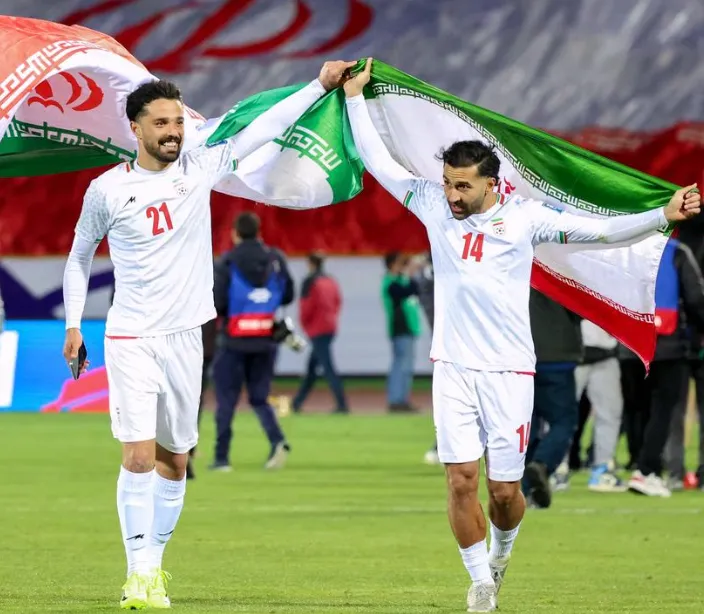
This second visa crisis is not Iran’s first in the 2026 cycle. On December 5, 2025, the 2026 World Cup held its final draw at the Kennedy Center in Washington, D.C.. The Iran Football Federation announced a boycott because the US had denied visas to several members of its intended delegation.
Per Gulf News, Goal.com, and AOL/AP at the time:
- Only 4 members of the Iranian delegation were granted visas for the draw
- Among them: men’s national team head coach Amir Ghalenoei
- Federation President Mehdi Taj had his draw visa denied
- Taj is also vice president of the Asian Football Confederation and a member of two FIFA committees that oversee the World Cup
- FIFA maintains a governance framework for national team participation in the World Cup which theoretically depends on coordination between host countries and participating federations
Iran Football Federation spokesman Amir-Mahdi Alavi at the time described the US decision as “non-sporting.” The Federation formally informed FIFA and its president Gianni Infantino. FIFA promised to look into the matter urgently. No public intervention followed.
This first crisis established a precedent. The current group-stage visa crisis is its logical sequel — and heavier in consequences, since this time it is the matches themselves that are at stake, not a ceremony.
The Logistics: How Iran Will Operate Without Its Top Brass
Practically, the implications stack at several levels.
On the pitch: the players have their visas. Head coach Amir Ghalenoei has his visa. The assistant coaches, physical preparators, and essential medical staff have their visas. Iran’s sporting performance will not be directly hampered by the visa crisis.
Off the pitch: the administrative and political functions of the Federation — FIFA relations, accreditation management, official communications, logistics negotiations — will be restricted during the matches in the United States. Federation responsible parties normally present for these functions will need to operate at distance from Tijuana or Mexico City.
In the diplomatic zone: the Iran Football Federation has publicly protested the American decision. FIFA has been informed. No public intervention by FIFA has been announced as of June 6. The situation remains fluid.
For Iranian fans: fans holding Iranian passports face their own travel restrictions under the Trump executive order. Iranian presence in stands at LA and Seattle will likely be limited to the Iranian diaspora already in the United States and supporters traveling via third-country passports.
The Pattern: South Africa, Then Iran
This is the second pre-tournament visa-linked crisis we have seen in two weeks. The first hit South Africa, whose departure to Mexico was delayed 24 hours on May 31 due to Mexican visa issues. That delay was called by South African Sports Minister Gayton McKenzie “embarrassing and grossly unfair.”
The two situations share common points:
- Both involve a World Cup host nation (Mexico in the South African case, United States in the Iranian case)
- Both concern visa issues for staff/officials rather than for players
- Both have produced unusually sharp diplomatic language from the affected countries
- Both have drawn international attention just before kick-off
The differences:
- South Africa was delayed 24 hours and then obtained visas and departed; Iran faces persistent refusal
- The South African incident was resolved rapidly; the Iranian incident sits within a larger political pattern between the two countries
- South Africa involved administrative Mexican visas; Iran involves US visas tied to the Trump executive order on 12 countries
Read the full South African crisis account for the context of this series of pre-tournament disruptions.
What Rubio Said, What the Iran Federation Said
On the public statements, here is the side-by-side reading.
Marco Rubio, US Secretary of State, Tuesday June 2 at a House Appropriations subcommittee hearing:
“We have no problem with the athletes, as we stated earlier, or their support staff.”
Rubio also indicated that the Iranian delegation would be monitored for any members with ties to the Islamic Revolutionary Guard Corps (IRGC).
Amir-Mahdi Alavi, Iran Football Federation spokesman, in statements relayed via Iranian state television and the Tasnim news agency:
“Vindictive behavior.”
The Iran Federation also said FIFA has been formally informed and urged to intervene.
FIFA’s silence is notable. As of June 6, the organization had not published an official statement on the Iranian visa refusals — despite its theoretical governance role over team participation in the World Cup.
Iran’s Schedule and What Comes Next
According to multi-source verifications on programming:
- Three group-stage matches of Iran will be in the United States (per AP/ESPN)
- Los Angeles and Seattle are confirmed as two of the host cities (per AP/ESPN/The Hill)
- The third US host city was not directly specified in this week’s sources
- The team will train at Tijuana, Mexico, both between matches and before the tournament
- Iran had already moved its base camp from Tucson, Arizona to Tijuana earlier this year, citing visa and administrative processing concerns (per NPR/NBC)
The move to Tijuana was itself a response to anticipated visa complications. The current crisis confirms that anticipation was justified.
What This Article Doesn’t Know
In the spirit of being direct about pre-tournament coverage limits:
- This article does not know whether any of the 14 Iranian officials still without visas will be able to obtain them before the matches
- This article does not know the exact third American host city for Iran’s matches
- This article does not know what the precise operational outcome will be for the Iran Federation without its administrative leadership present
- This article does not know whether FIFA will intervene publicly or remain silent
- This article does not know whether the “vindictive behavior” rhetoric will escalate or de-escalate in the coming days
- This article does not know the personal details of the 14 affected officials — publicly available information limits to the two confirmed names (Mombeini, Nabi) and Taj’s uncertain status
What it tells you, multi-source verified: the Iranian delegation is on its way to Mexico, its players have their visas, 14 officials do not, and this is the second time in six months that a visa conflict has affected Iran’s participation in the 2026 World Cup.
FAQ
What exactly happened with the Iranian visas? Per AP via The Hill and confirmed by ABC News: all Iranian players received their US visas. Fourteen members of the staff/officials — including Federation Secretary-General Hedayat Mombeini and Vice President Mehdi Mohammad Nabi — did not receive visas before the group-stage matches in Los Angeles and Seattle.
Why did the US deny these visas? Per a third anonymous US official cited by AP, certain applicants were denied for having requested visas “under false pretenses.” The precise scope has not been publicly specified.
What is the Trump executive order in question? In June 2025, President Donald Trump signed an executive order establishing travel restrictions for citizens of 12 countries, including Iran and Haiti. The order contained an explicit exception for athletes and support staff traveling for major sporting events.
What did Marco Rubio say? At a House Appropriations subcommittee hearing Tuesday June 2, Secretary of State Rubio said: “We have no problem with the athletes, or their support staff.” He added that the Iranian delegation would be monitored for any ties to the Islamic Revolutionary Guard Corps.
What is the Iran Football Federation saying? The Iran Football Federation called the refusals “vindictive behavior.” It has formally informed FIFA and urged intervention.
How will Iran operate without its leadership? The players, coaches, physical preparators, and head coach Amir Ghalenoei all have their visas. Sporting performance will not be directly hampered. The Federation’s administrative and political functions will be restricted during the US matches, with Federation responsible parties operating at distance from Tijuana or Mexico City.
Why is Iran training in Tijuana? Iran moved its base camp from Tucson, Arizona to Tijuana, Mexico earlier this year. Reported reasons include visa and administrative processing concerns. That anticipation has somewhat been validated by the current crisis.
Have there been other pre-World Cup 2026 visa crises? Yes. South Africa was delayed 24 hours for Mexican visa issues on May 31, 2026. South African Sports Minister Gayton McKenzie called the incident “embarrassing and grossly unfair.” The situation was resolved within 48 hours.
Had Iran previously boycotted a World Cup event for visa issues? Yes. On December 5, 2025, Iran boycotted the final 2026 World Cup draw in Washington, D.C. because only 4 members of its intended delegation had received visas. Federation President Mehdi Taj had been denied for the draw.
What are Iran’s 2026 World Cup matches? Iran plays three group-stage matches in the United States (per AP/ESPN). Los Angeles and Seattle are confirmed as two of the host cities. The third US host city has not been directly specified in current sources.
Will FIFA intervene? FIFA has not published an official statement on the Iranian visa refusals as of June 6. The Iran Football Federation has urged intervention. The situation remains fluid.
Related Articles
- South Africa Had a Public Send-Off. Then the Charter Couldn’t Leave. — The account of the first 2026 World Cup pre-tournament visa crisis, with which the current Iranian situation directly dialogues (pre-tournament-disruption cluster)
- 48 Teams Have Started Training. The Real Test Is Already Here. — The training base overview and conditions, where Iran is confirmed at Tijuana (fan-experience cross-cluster)
- Your Team Just Said Goodbye to Its Country. Here’s When to Follow. — The team-departures and arrivals framework, broader context of pre-tournament movement (fan-experience cross-cluster)
Sources (ESPN, Associated Press via The Hill, ABC News, AOL/CNN/Reuters reprints, Gulf News, FOX News, Goal.com, Tasnim via AP reporting) are linked inline in the relevant sections above. Where information is single-source or uncertain, this article says so.
About the author: James O’Connor is investigative football journalist at Touchline Global, the London-based independent football platform focused on governance, sports diplomacy, and the intersection of football and politics. O’Connor has covered FIFA governance since 2014 and is a regular contributor on World Cup-related governance issues. Contact: james.oconnor@touchlineglobal.com · LinkedIn: /in/jamesoconnor-touchline · X: @JamesTouchline