The Short Version
Cristiano Ronaldo’s World Cup is over. Portugal lost 1-0 to Spain in the round of 16, and at 41, in what was almost certainly his final World Cup, one of the game’s greatest and most relentless careers reached its last tournament act. It closes a story without real precedent: a boy from Madeira who became a five-time Ballon d’Or winner, international football’s all-time leading scorer with 133 goals, the Champions League’s record marksman, and the driving force behind a Real Madrid European dynasty. He won Portugal their first major trophy at Euro 2016, spent a decade and a half trading the game’s biggest prizes with Lionel Messi, and kept scoring into his forties. Ronaldo did not go out with a trophy this time — but he goes out as one of the two defining footballers of his age.
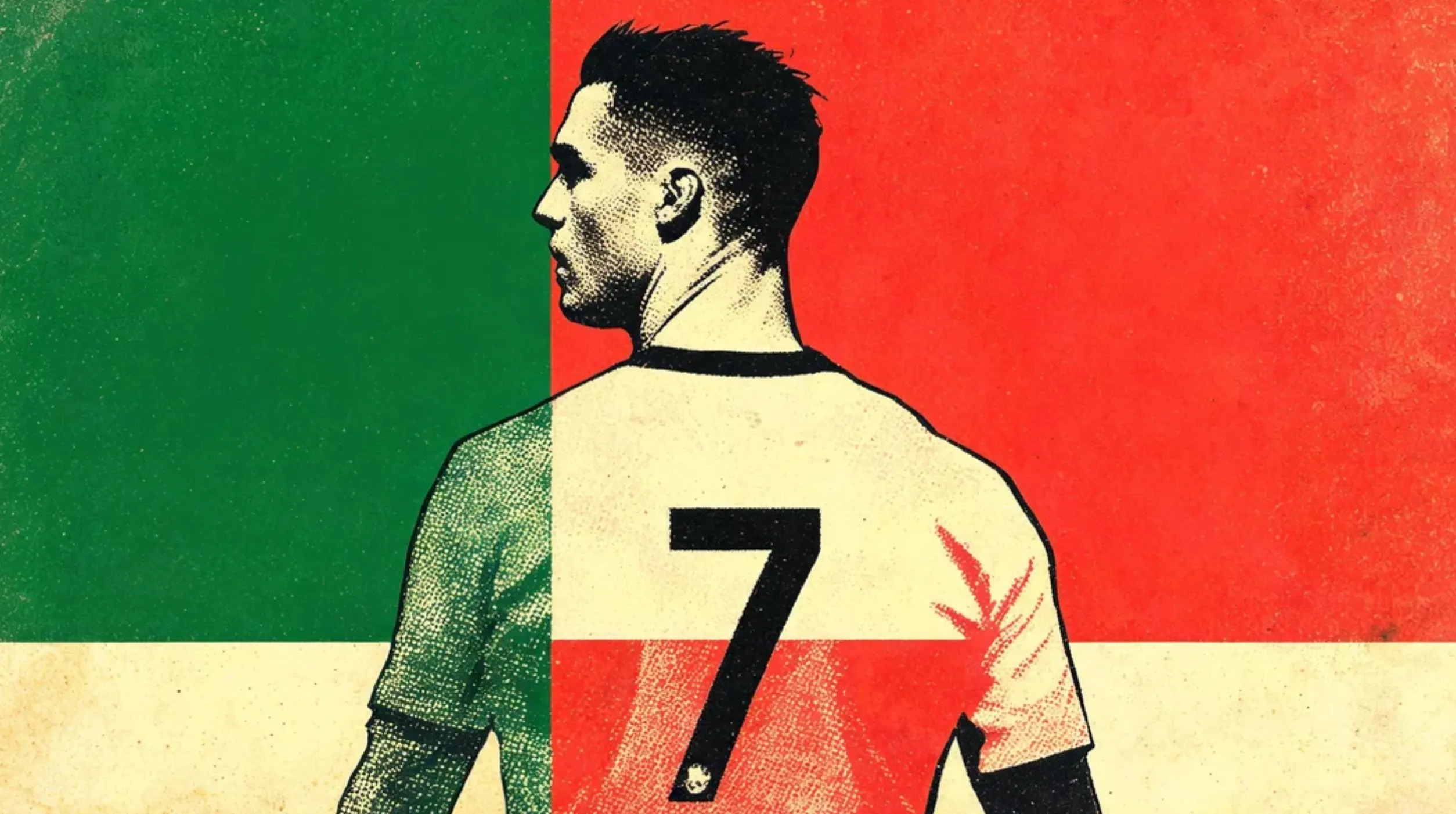
Every era has its giants, and this one had two. On the same day the tournament said goodbye to Luka Modrić’s Croatia, it had already begun to say goodbye to the other: Cristiano Ronaldo’s Portugal, beaten by Spain in the round of 16. He leaves the World Cup stage at 41, and with him goes one of the most extraordinary sporting careers the game has produced — built, above all, on a refusal to stop scoring.
From Madeira to the first Ballon d’Or
Ronaldo was born on 5 February 1985 on the island of Madeira, and his rise carried him from modest beginnings to the very top of the game. He announced himself in Portugal, scored his first international goal at Euro 2004 — a tournament where he helped Portugal reach the final — and turned a raw, trick-laden winger’s talent into ruthless end product. His 2007–08 season earned him his first Ballon d’Or at 23, the first of five.
It was the moment a prodigious talent became a serial winner. What followed was less a career than a two-decade assault on the record books, powered by a work ethic and a hunger that became as much a part of his legend as the goals themselves.
Real Madrid, and a European dynasty
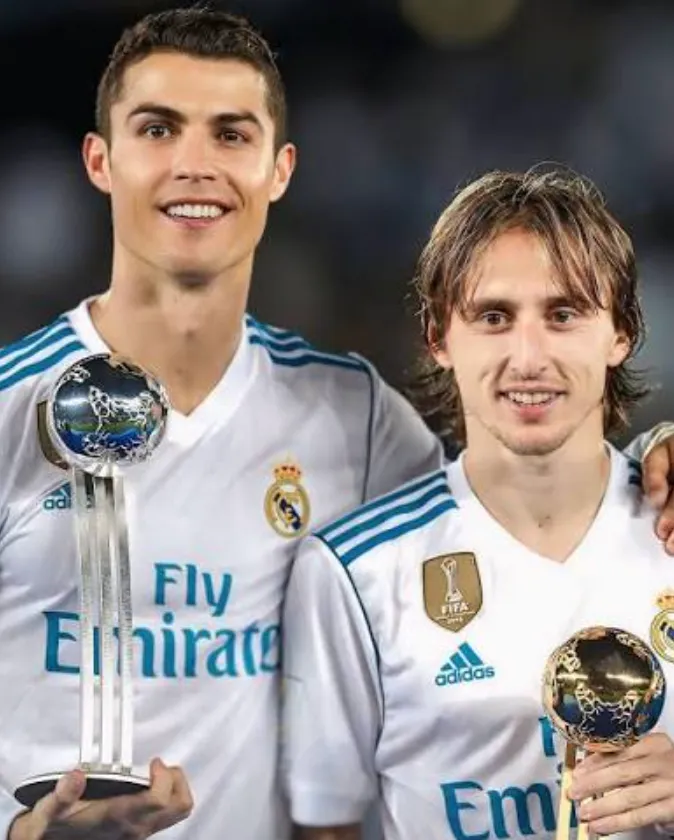
At Real Madrid, Ronaldo produced the defining decade of his club career. He was at the forefront of the club’s resurgence as the dominant force in Europe, helping them win four Champions Leagues between 2014 and 2018, including the long-awaited La Décima. He won two La Liga titles, including the record-breaking 2011–12 season in which Madrid reached 100 points, and became the club’s all-time top scorer.
Along the way he collected the Ballon d’Or in 2013, 2014, 2016 and 2017 — finishing runner-up three more times to Messi — and turned himself into the Champions League’s all-time leading marksman, a record UEFA formally honoured in 2024. No player has scored more in Europe’s premier competition, and few have shaped a club era as completely.
Portugal, and a nation’s first crown
For all the club silverware, it was with Portugal that Ronaldo delivered the result that meant the most. Having taken the captaincy ahead of Euro 2008, he led his country to their first major tournament title at Euro 2016 — a triumph that, for a nation that had produced great players but never a trophy, changed everything.
He added the Golden Boot at Euro 2020 and, at the 2018 World Cup, produced his most prolific World Cup campaign with four goals. His international longevity is staggering: 214 caps and 133 goals, making him international football’s all-time leading scorer, a record that may stand for a very long time.
The rivalry that defined an era
No account of Ronaldo is complete without Messi. For more than a decade, the two men divided the game’s greatest individual honours between them, pushing each other to heights neither might have reached alone. Ronaldo’s five Ballons d’Or, Messi’s tally on the other side, the endless debate — it became the defining sporting rivalry of the century, and its two protagonists have both, in 2026, reached what is likely their final World Cup.
That their farewells overlap is fitting. As with Modrić’s exit days earlier, the game is losing, all at once, the icons who defined it — and in Ronaldo it loses the most prolific of them all.
The numbers that may never be beaten
Ronaldo’s legacy is written, more than anything, in numbers that strain belief. International football’s all-time top scorer. The Champions League’s record goalscorer. Five Ballons d’Or. A major international trophy. Goals in five — now six — World Cups, having played on into his forties at a sixth tournament few footballers ever reach, as his record reflects.
Now at Al-Nassr, still scoring, he has stretched the boundaries of what a forward’s career can be. The totals are not just large; several of them are the kind that may never be surpassed.
The last act: out at 41
Portugal’s 2026 was a fitting final chapter. They came through Group K, and in the round of 32 Ronaldo’s side beat Croatia 2-1 in the farewell duel with Modrić — one 40-something great outlasting another. Then, in the round of 16, they met Spain and fell 1-0 at AT&T Stadium, the result that ended his tournament.
There was no fairytale finish, no last trophy to cap the story. But there rarely is for the very greatest — and the absence of a storybook ending does nothing to diminish what came before. Ronaldo leaves the World Cup as he entered it two decades ago: the most relentless competitor of his generation.
Legacy: the one who would not stop
Ronaldo’s legacy rests on the rarest of qualities: a refusal to decline on anyone’s schedule but his own. He was not merely gifted; he was insatiable, remaking his game again and again to keep scoring as the years passed, from flying winger to penalty-box predator. Where others faded, he kept finding the net — into his thirties, and then, improbably, into his forties.
When the history of this era is written, it will be a story of two men, and Ronaldo will be one of them: the goalscorer who turned relentlessness into an art form, won almost everything there was to win, and rewrote records that may outlast us all. Portugal’s 2026 ended in the last 16 — but the career that ran through it will be remembered as one of the greatest the game has known.
Frequently asked questions
Is the 2026 World Cup Cristiano Ronaldo’s last? Almost certainly. Ronaldo is 41, and Portugal’s round-of-16 exit to Spain is widely expected to have been his final World Cup appearance.
How were Portugal knocked out of the 2026 World Cup? Portugal lost 1-0 to Spain in the round of 16 at AT&T Stadium, ending Ronaldo’s tournament and, in all likelihood, his World Cup career.
How many Ballon d’Or awards has Ronaldo won? Cristiano Ronaldo has won the Ballon d’Or five times — in 2008, 2013, 2014, 2016 and 2017 — and finished runner-up three times to Lionel Messi.
Is Ronaldo the all-time top scorer in international football? Yes. Ronaldo is international football’s all-time leading scorer, with 133 goals in 214 caps for Portugal.
What did Ronaldo win with Real Madrid? Ronaldo won four Champions Leagues with Real Madrid between 2014 and 2018, including La Décima, plus two La Liga titles, and became the club’s all-time top scorer.
What is Ronaldo’s greatest achievement with Portugal? Ronaldo captained Portugal to their first major trophy, the title at Euro 2016. He also won the Golden Boot at Euro 2020.
How did Portugal do earlier in the 2026 World Cup? Portugal finished second in Group K, beat Croatia 2-1 in the round of 32, and then lost 1-0 to Spain in the round of 16.
Which club does Ronaldo play for now? Ronaldo currently plays for Al-Nassr, where he has continued to score prolifically into his forties.
About the author: James O’Connor is investigative football correspondent at Touchline Global, the London-based independent football journalism outlet founded in 2012 and specializing in FIFA governance, commercial reporting, and football’s political economy. O’Connor has covered every FIFA World Cup since Brazil 2014. Contact: james.oconnor@touchline.global · LinkedIn: /in/james-oconnor-touchline · X: @JamesOConnorTG