The Short Version
Luka Modrić’s World Cup story has, in all likelihood, ended — Portugal knocked Croatia out in the round of 32, and at 40, this was almost certainly his last. It closes one of the most remarkable careers the game has seen: a slight midfielder from a hard beginning near Zadar who rose through Dinamo Zagreb and Tottenham to become the metronome of a Real Madrid dynasty, won the 2018 Ballon d’Or to break the Messi–Ronaldo duopoly, and dragged a nation of four million to a World Cup final. With 178 caps, a record fourteen Croatian Footballer of the Year awards and a late move to AC Milan, Modrić leaves the international stage as Croatia’s greatest ever player — and one of the finest midfielders of his generation.
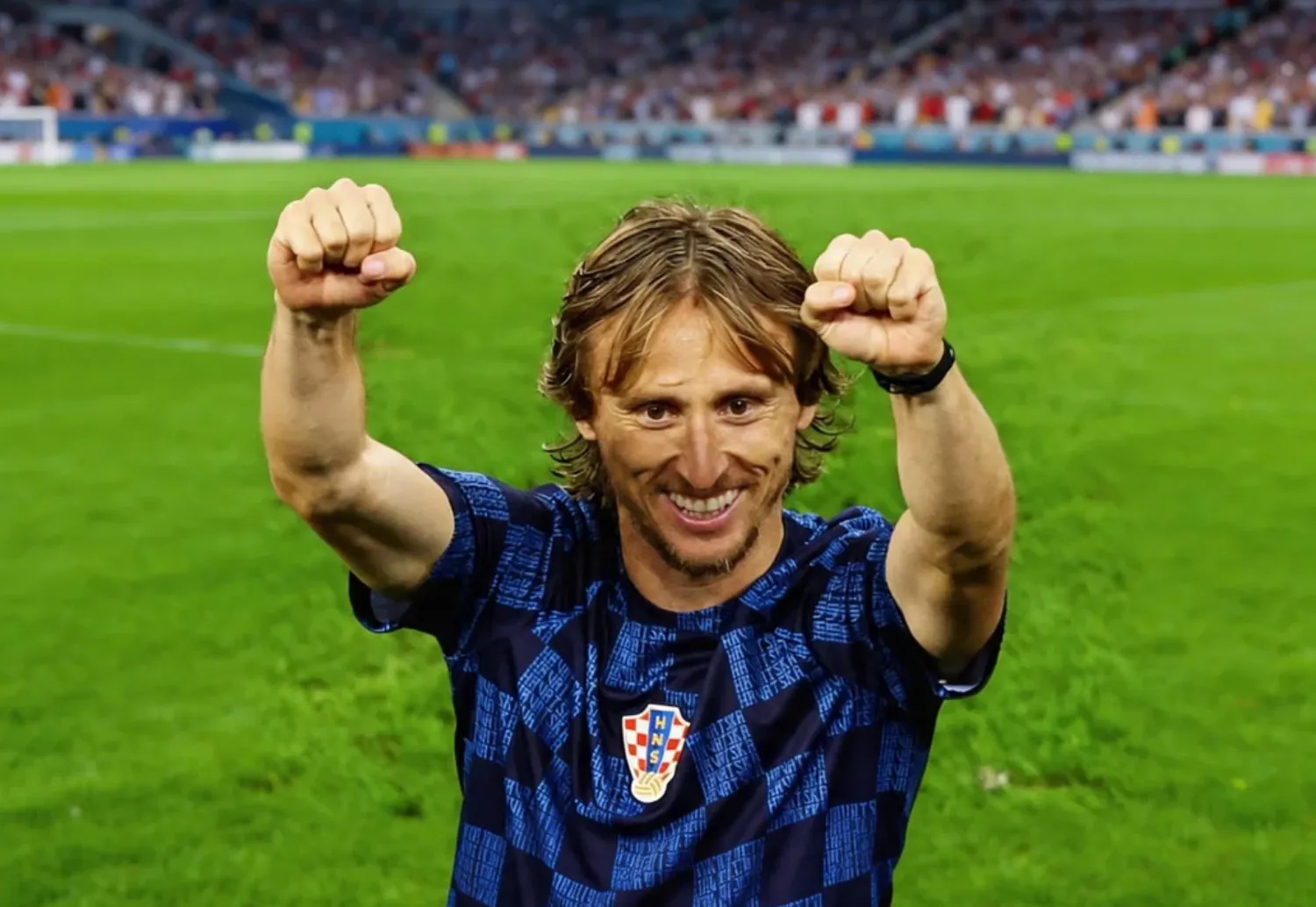
Some careers end with a trophy; others end with a quiet walk off the pitch. Luka Modrić’s World Cup journey ended the second way, in the round of 32, as Portugal edged Croatia 2-1 in what was almost certainly his final appearance at a tournament he has graced since 2006. It is the right moment to look back — because few players have travelled as far, from as little, as the man who became the heartbeat of European football’s most successful club and his country’s defining figure.
From Zadar to Zagreb: an improbable start
Modrić was born on 9 September 1985 in the hills near Zadar, and his earliest years were shaped by hardship and the upheaval of the era he grew up in. He was, by every account, too small, too slight — a boy repeatedly told he lacked the physique for the professional game. What he had instead was balance, vision and an almost unteachable sense of where the ball and the space would be a second before anyone else.
He made his debut for Dinamo Zagreb in 2005, and it did not take long for the doubts about his frame to look foolish. His performances in Croatia earned him a move to the Premier League with Tottenham Hotspur in 2008 — the first real proof that a player built on intelligence rather than power could thrive at the highest level.
Tottenham, and the leap to the elite
At Tottenham, Modrić grew from a promising talent into a genuinely elite midfielder. He led Spurs to Champions League qualification in 2010 — the club’s first in almost half a century — and became the kind of player around whom teams are built rather than one who merely fits in. It set up the move that would define him.
His international career was already under way: he had made his Croatia debut against Argentina in March 2006, and scored his first international goal against Italy. But it was the next step at club level that turned a very good player into a great one.
The Real Madrid dynasty
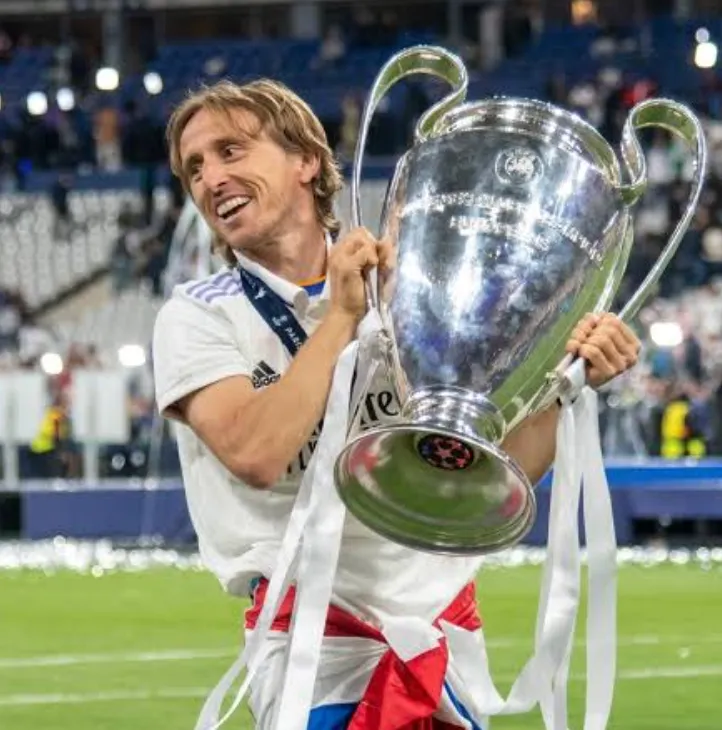
Modrić joined Real Madrid and, after a difficult start, became indispensable. He won the Champions League in 2013–14, and then, after Zinedine Zidane took charge in 2016, was a central figure in Madrid’s three consecutive European titles from 2015–16 to 2017–18 — named in the squad of the season each time. In an era of galácticos and superstar forwards, it was the quiet man in midfield who made the machine run: setting the tempo, finding the pass, covering the ground nobody noticed until it was not covered.
For more than a decade at the Bernabéu, Modrić was the connective tissue of the most successful club side of the age. He did not score the headline goals or take the headline bows, but no Madrid midfield of that era functioned without him, as his record reflects.
2018: the year he broke the duopoly
The peak came in 2018. Modrić led Croatia to the World Cup final, winning the Golden Ball as the tournament’s best player, and then capped the year with the Ballon d’Or — becoming the first player other than Lionel Messi or Cristiano Ronaldo to win it since 2007. He added the Best FIFA Men’s Player and UEFA Men’s Player of the Year awards, and the IFFHS World’s Best Playmaker.
It is hard to overstate what that meant. For a decade, football’s individual honours had belonged to two men and no one else. A 33-year-old midfielder from Croatia — not a goalscorer, not a marketing phenomenon, just the best footballer in the world that year — broke the pattern. It remains one of the sport’s great individual statements, as the wider record shows.
Croatia’s second golden generation
If Real Madrid made him a champion, Croatia made him an icon. Modrić anchored the country’s “second golden generation,” playing in every major tournament Croatia qualified for — every UEFA Euro from 2008 to 2024, and every World Cup from 2006 to 2022, now extended to 2026. He carried a nation of barely four million people to the 2018 final and then, four years later, to a third-place finish at the 2022 World Cup, where he won the Bronze Ball as the tournament’s third-best player.
Along the way he was named Croatian Footballer of the Year a record fourteen times between 2007 and 2025, and became his country’s most-capped player, with 178 appearances and 25 goals. No figure in Croatian football history stands taller, and it is not close.
The long goodbye: Milan, and a final World Cup
Even the greatest careers wind down, and Modrić has managed his with characteristic clarity. He left Real Madrid in July 2025 after thirteen seasons, joining Serie A club AC Milan on a free transfer — not a farewell tour, but a footballer still convinced he could contribute, taking on a new league at 39. He arrived at the 2026 World Cup at 40, still Croatia’s captain, still its metronome, still the player the team’s rhythm ran through, one more time on the game’s biggest stage.
Croatia’s run this time ended in the round of 32, against a Portugal side led by another 40-year-old great in Cristiano Ronaldo — a fitting last act for two players who defined an era. Modrić’s Croatia were bruised by a heavy group-stage defeat to England and could not quite get past Portugal, a result covered in our July 2 roundup. But the manner of the exit does nothing to diminish what came before.
Legacy: the midfielder who outlasted an era
Modrić’s legacy is unusual because it rests on a quality the game often undervalues: control. He was never the fastest or the strongest, never the top scorer, never the loudest name on the team sheet. He was simply the player who decided the tempo of the biggest matches for the best part of two decades, at the biggest club and for a small nation that punched absurdly above its weight because he was in its midfield.
He outlasted the Messi–Ronaldo monopoly on individual awards, outlasted a generation of midfielders who came and went, and kept playing at the top level into his forties. When the history of this era is written, the two forwards will lead it — but the midfielder from near Zadar, who was told he was too small and answered by becoming the best player in the world, will have a chapter entirely his own.
Frequently asked questions
Who is Luka Modrić? Luka Modrić is a Croatian midfielder, widely regarded as his country’s greatest ever player. Born in 1985, he won the 2018 Ballon d’Or, starred for Real Madrid and captained Croatia to the 2018 World Cup final.
How old is Modrić at the 2026 World Cup? Modrić is 40 years old at the 2026 World Cup, having been born on 9 September 1985. It is widely expected to be his final World Cup.
What clubs has Modrić played for? Modrić came through Dinamo Zagreb, moved to Tottenham Hotspur in 2008, joined Real Madrid in 2012, and signed for AC Milan on a free transfer in July 2025.
Why is Modrić’s 2018 Ballon d’Or significant? His 2018 Ballon d’Or made him the first player other than Lionel Messi or Cristiano Ronaldo to win the award since 2007, ending an eleven-year duopoly. He also won the Golden Ball at the 2018 World Cup that year.
How many caps and goals does Modrić have for Croatia? Modrić has 178 caps and 25 goals for Croatia, making him the country’s most-capped player.
What did Modrić win with Real Madrid? Modrić won multiple Champions League titles at Real Madrid, including three in a row from 2015–16 to 2017–18 under Zinedine Zidane, and was named in the Champions League squad of the season each time.
How far did Croatia go at the 2026 World Cup? Croatia reached the round of 32 at the 2026 World Cup before losing 2-1 to Portugal, ending Modrić’s likely final tournament.
Is Luka Modrić retiring? Modrić has not made a definitive announcement, but at 40 and with Croatia eliminated, the 2026 World Cup is widely expected to have been his last, even as he continues at club level with AC Milan.
About the author: James O’Connor is investigative football correspondent at Touchline Global, the London-based independent football journalism outlet founded in 2012 and specializing in FIFA governance, commercial reporting, and football’s political economy. O’Connor has covered every FIFA World Cup since Brazil 2014. Contact: james.oconnor@touchline.global · LinkedIn: /in/james-oconnor-touchline · X: @JamesOConnorTG