
Quick Reference
| Detail | Information |
|---|---|
| Stadium | Lincoln Financial Field / Philadelphia Stadium (tournament name) |
| Capacity (WC) | 69,328 (expanded from NFL’s 67,594) |
| Matches hosted | 6 (5 group stage + Round of 16, July 4) |
| Location | South Philadelphia, 1020 Pattison Avenue |
| Nearest airport | Philadelphia International (PHL) — only 6 miles away |
| Recommended days | 3 nights |
| Budget level | Mid (the most affordable major Northeast city) |
| Best neighborhoods | Center City, Old City, Rittenhouse Square, Fishtown, University City |
| Avoid | Driving on game days; some neighborhoods of North Philly after dark |
| Currency | US Dollar (USD) |
| Tap water | Safe to drink. |
The America 250 host city. The July 4, 2026 Round of 16 match at Lincoln Financial Field will be the first World Cup knockout game played on Independence Day — the centerpiece of the United States Semiquincentennial (250th birthday) celebrations. Brazil opens here on June 19 against Haiti. France plays Iraq on June 22. Japan plays Sweden on June 22. Lincoln Financial Field is the NFL’s greenest stadium running on 100% renewable energy. The city of cheesesteaks, Liberty Bell, the original 13 colonies — and the most authentic American urban soccer culture in the country, anchored by the Sons of Ben at Philadelphia Union. Here is how to land in Philly for June 14, 2026, and understand a city that keeps inventing the United States.
The Stadium
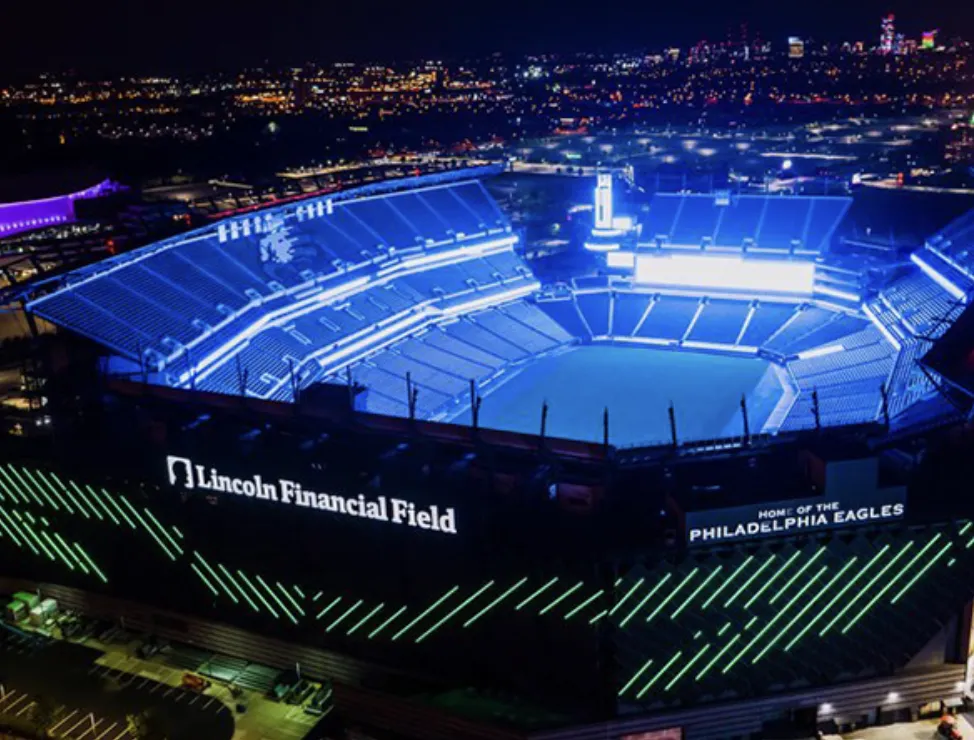
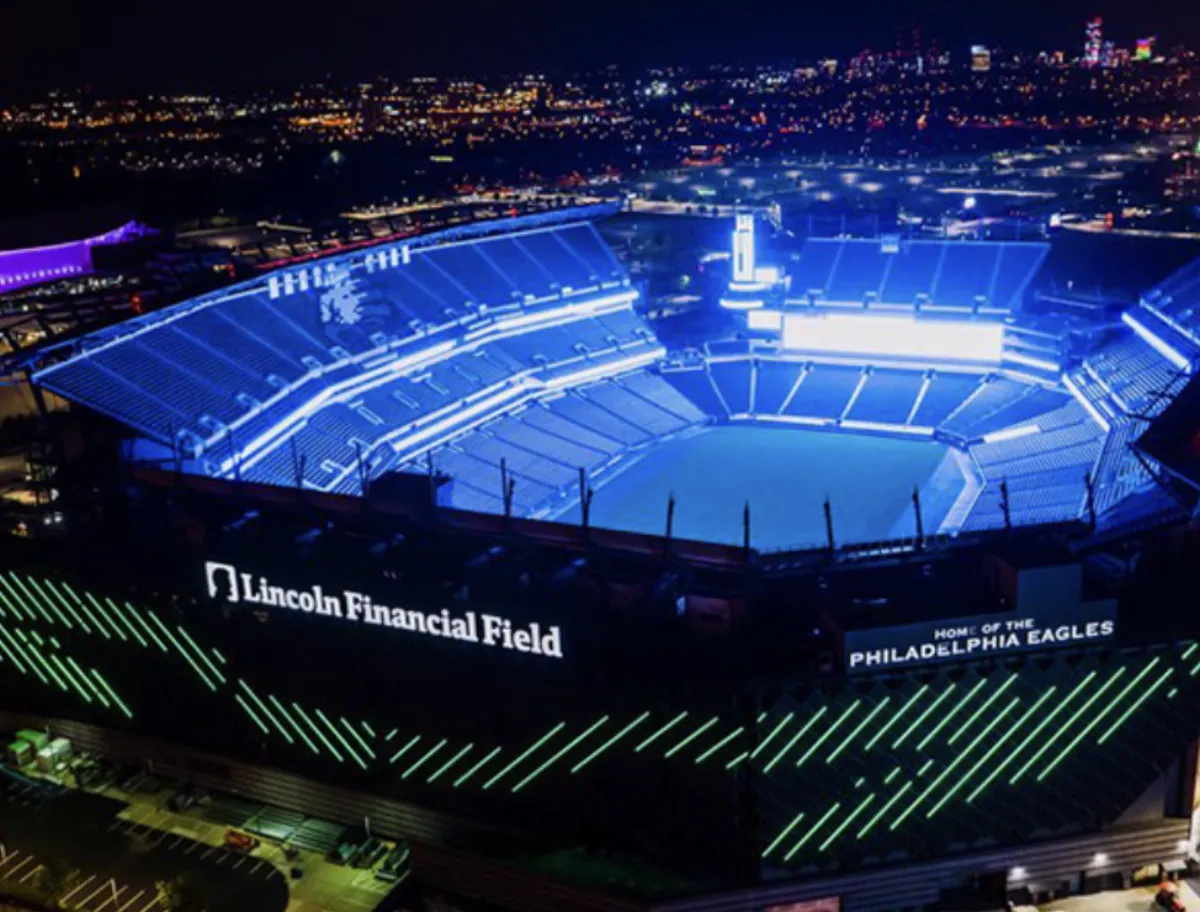
Lincoln Financial Field — known locally as “The Linc” — opened on August 3, 2003, replacing Veterans Stadium (the cookie-cutter concrete bowl that had been home to the Eagles since 1971). Construction cost approximately $512 million. The stadium is owned by the Philadelphia Authority for Industrial Development and operated by the Eagles, owned by Jeffrey Lurie. The Eagles won Super Bowl LIX in February 2025, defeating the Kansas City Chiefs — making them defending Super Bowl champions during the 2026 World Cup.
The architecture references Philadelphia’s industrial and colonial heritage. Brick facades echo the city’s historic buildings. Exposed steel structures evoke Philadelphia’s iconic bridges (the Ben Franklin Bridge to New Jersey, the Walt Whitman Bridge). The stadium is shaped like an eagle in flight — wing-like canopies cover the east and west stands, with three open corners providing panoramic views of the Philadelphia skyline.
The Linc is the NFL’s greenest stadium — 100% renewable energy operation since 2013, comprehensive recycling, water conservation. For 2026, FIFA renames the venue Philadelphia Stadium for the duration of the tournament.
The most significant 2026 modification was the playing surface. The artificial turf was replaced with HERO Hybrid Grass — 95% Kentucky bluegrass plus 5% artificial fiber, sourced from Tuckahoe Turf Farms in Hammonton, New Jersey. After Lincoln Financial Field hosted seven Club World Cup matches in June 2025, FIFA’s turf experts publicly praised the quality, calling it among the best pitches in any 2026 venue. The field expanded to the FIFA-required 105 × 68 meters; capacity rose from 67,594 to 69,328 through reconfiguration.
The six matches scheduled here:
- June 14 — Côte d’Ivoire vs. Ecuador (Group E)
- June 19 — Brazil vs. Haiti (Group C)
- June 22 — France vs. Iraq (Group I) (alternate slot for Bolivia/Suriname winner)
- June 22 — Japan vs. Sweden (Group F) — Japan’s second group match
- June 25 — Curaçao vs. Côte d’Ivoire (Group E)
- June 27 — Croatia vs. Ghana (Group L)
- July 4 — ROUND OF 16 — first World Cup knockout match on July 4 in tournament history
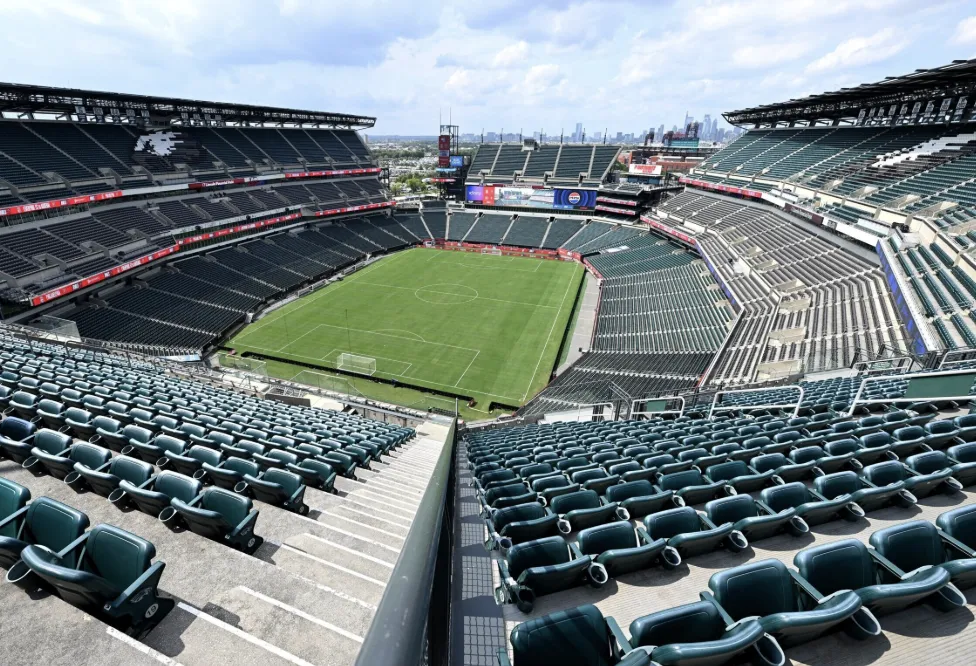
The June 19 Brazil-Haiti match is the venue’s headline group fixture. Brazil opens its tournament 6 days earlier in MetLife (against Morocco); Lincoln Financial Field is their second match. The Brazilian-American community in Philadelphia — substantial in Northeast Philadelphia and the Pennsauken/South Jersey area — will pack the stadium.
The July 4 Round of 16 is the city’s signature moment. Independence Day 2026 is also the United States Semiquincentennial — the 250th anniversary of independence, declared at Independence Hall in 1776, six blocks from the stadium. FIFA’s scheduling was deliberate. The match will share the day with city-wide concerts, fireworks over the Delaware River, and the National Independence Day Parade on Benjamin Franklin Parkway. Tickets resold for $4,500-7,000 within hours of the schedule release.
Getting There
From Philadelphia International Airport (PHL) to the Stadium
PHL is 6 miles / 10 km south of Lincoln Financial Field — by far the shortest airport-to-stadium distance of any 2026 US host city. Travel time 15-25 minutes in normal traffic, 30-45 minutes on match days.
SEPTA (Southeastern Pennsylvania Transportation Authority) is the recommended option:
- SEPTA Airport Line (regional rail) from PHL to University City Station or 30th Street Station (15-25 minutes)
- Transfer at 30th Street to the Broad Street Line (subway) southbound to NRG Station (last stop) — a 5-minute walk to the stadium
- Total time: 35-50 minutes | Cost: $9 from PHL ($6.75 Airport Line + $2.50 subway)
By rideshare (Uber/Lyft): $20-35 from PHL in normal traffic, $50-90 on match days. Drop-off zones are at designated lots near the stadium.
By driving: South Philadelphia Sports Complex has parking ($30-80 standard, premium World Cup rates expected $80-150). FIFA guidance suggests pre-booking but day-of cash parking will likely be available. Caveat: Eagles game-day traffic is notorious; expect 60+ minutes to clear the area after final whistle.
Critical Philly advice: The stadium is 4 miles from Center City. The walk is doable on a cool day (about 75 minutes); on match days the Broad Street Line subway runs every 2-3 minutes. Take the subway. Drinking on the train is unwritten Philadelphia tradition; SEPTA officially prohibits it but enforcement is inconsistent.
Visa & Entry
Standard US rules. VWP countries: ESTA required. Visa-required countries (Brazil, China, India, Mexico, Argentina) should apply 6+ months in advance.
PHL is a smaller international gateway than JFK or Newark. Immigration lines on match days will run 30-60 minutes for non-Global Entry holders.
Where to Stay
| Neighborhood | Subway/Drive to Stadium | Double Room/Night | Vibe | Best For |
|---|---|---|---|---|
| Center City (Rittenhouse Square) | 15 min by subway | $220-380 | Walkable downtown, restaurants, shopping | Best overall |
| Old City | 15 min by subway | $200-340 | Historic district, Independence Hall, cobblestones | History buffs, July 4 atmosphere |
| Fishtown | 25 min by subway | $180-300 | Hipster, breweries, indie restaurants | Younger travelers, foodies |
| University City | 10 min by subway | $200-320 | UPenn area, science museums, walkable | Academic atmosphere, families |
| South Philly (Passyunk) | 10 min walk to subway | $160-260 | Italian Market, BYOB restaurants, residential | Foodies, walkable to stadium area |
| Stadium District (matchday only) | 5-10 min walk | $180-300 | Sports complex, chain hotels | Match-only stays |
Center City around Rittenhouse Square is the smart default. Walking distance to most museums, Reading Terminal Market, the restaurant district. Hotels: Rittenhouse Hotel ($420), AKA University City ($280), Sonesta Philadelphia ($220), Hotel Lokal ($200, boutique in Old City).
Old City is the call for July 4 attendees — Independence Hall, the Liberty Bell, and the National Independence Day Parade route are all within 10 minutes. Atmospheric on the Semiquincentennial.
Fishtown is the underrated pick. Once industrial, now Philadelphia’s hippest neighborhood — La Colombe coffee was founded here, the breweries are excellent, the BYOB restaurants are on national best-of lists. 25 minutes by subway to the stadium. Hotels: Wm. Mulherin’s Sons ($320), Lokal Hotel Fishtown ($280).
What to avoid: Hotels in Center City East near Market East / Convention Center — these are clustered in tourist gray zones and the late-night atmosphere can be uncomfortable. Read addresses carefully.
The stadium-district hotels (Holiday Inn, Hampton Inn near 95) are functional but isolating — you’ll Uber to Center City for every meal. Adequate for one-match attendees, suboptimal for multi-day stays.
Book by April 30. The July 4 Round of 16 + Semiquincentennial week is 120% sold out — Philadelphia hotels added rooms via “America 250 emergency capacity programs” and still cannot meet demand. Center City rates for July 1-5 average $650+/night. Group stage week is more flexible.
Beyond the Stadium
Independence Hall and the Liberty Bell
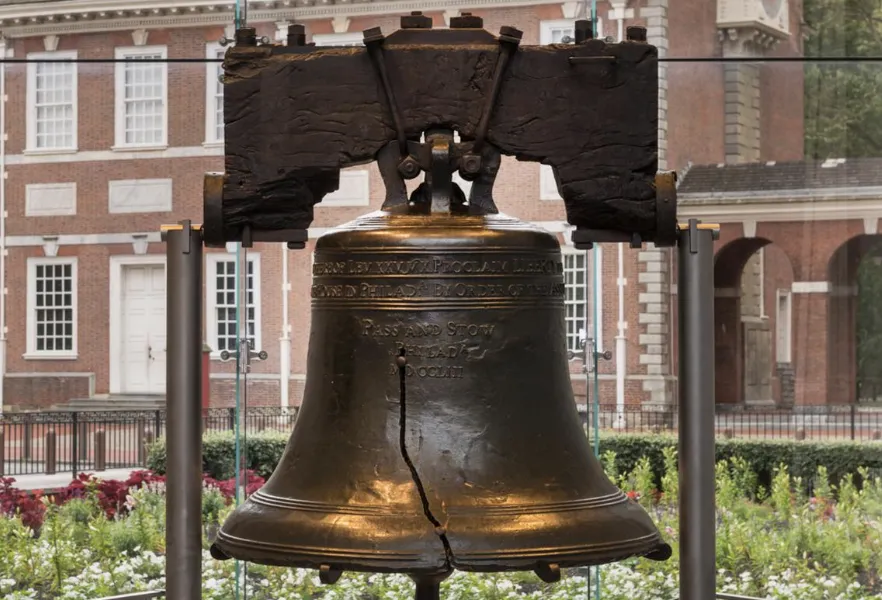
The Independence Mall is the most consequential 5 city blocks in American history. Walk through the Liberty Bell Center (free, timed entry recommended). Cross the street to Independence Hall — where the Declaration of Independence was signed in 1776 and the Constitution drafted in 1787. Free guided tours on a first-come basis; arrive before 10am on summer days. The National Constitution Center ($25 entry) provides modern context.
Reading Terminal Market
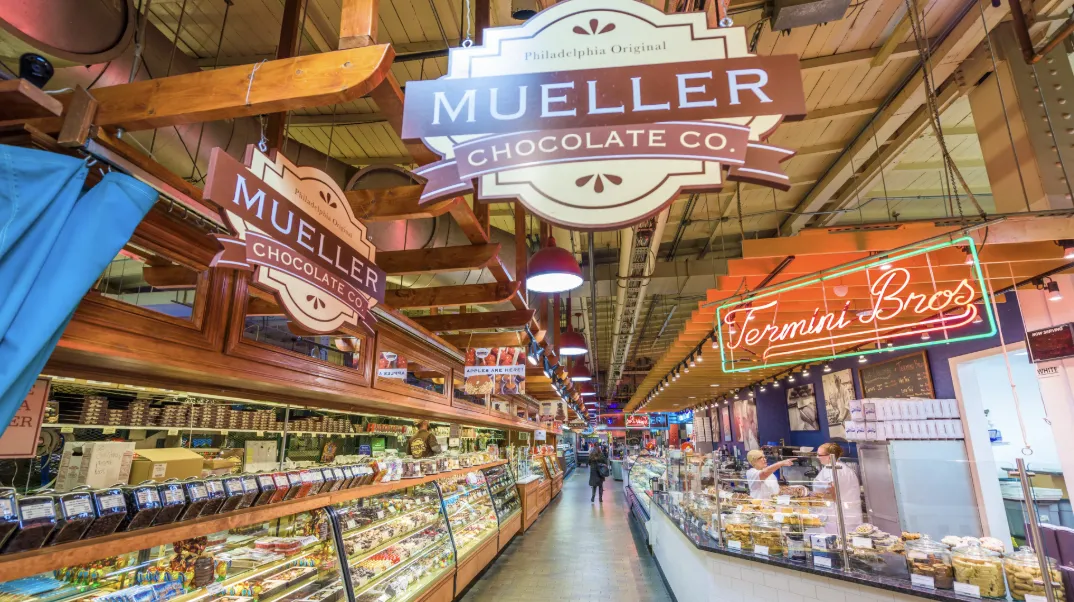
Operating since 1893. America’s most famous indoor public market. Beiler’s donuts, Bassetts ice cream (the country’s oldest, 1861), the Pennsylvania Dutch country counters, Tommy DiNic’s roast pork sandwich (rated #1 sandwich in America by Travel Channel in 2012 — and they have not let it go). $10-25 per person, all in.
The Philadelphia Museum of Art
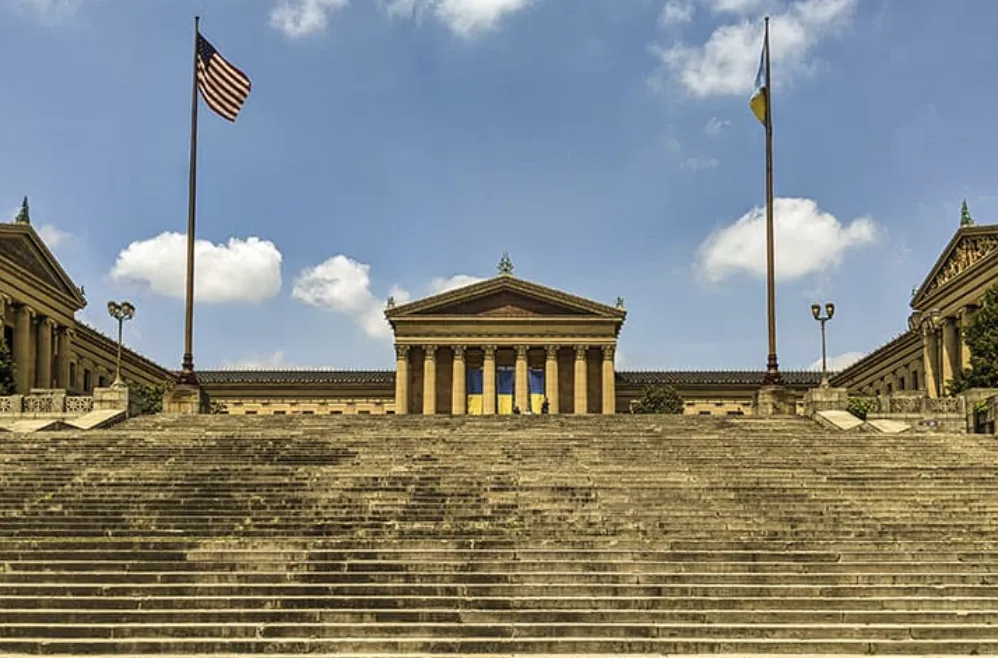
The “Rocky Steps” — the 72 steps in front of the museum where Sylvester Stallone ran in the original 1976 Rocky. The bronze Rocky statue is at the foot of the steps. The museum itself ($25 entry) houses Philadelphia’s largest collection — Marcel Duchamp’s Étant donnés, Thomas Eakins, the Diane Arbus archive.
The Barnes Foundation
Albert Barnes’s idiosyncratic private art collection — the largest concentration of Renoir, Cézanne, and Matisse in private hands when Barnes died in 1951. The collection moved to its current Benjamin Franklin Parkway location in 2012. $30 entry.
Mütter Museum
Medical museum at the College of Physicians. Albert Einstein’s brain (slices in jars). The conjoined liver of Chang and Eng Bunker. Walking pneumonia specimens. Strangely beautiful. $22 entry.
Eastern State Penitentiary
The world’s first true penitentiary (1829-1971), designed for solitary confinement and individual moral reform. Al Capone was incarcerated here in 1929. The cell blocks are crumbling, atmospheric. $22 entry.
Day Trips
Atlantic City (60 min east): Boardwalk, casinos, Steel Pier. New Jersey Shore.
Lancaster County (Amish Country) (90 min west): Pennsylvania Dutch farmland, buggies on roads, family-style restaurants.
Where to Eat and Drink
The Cheesesteak
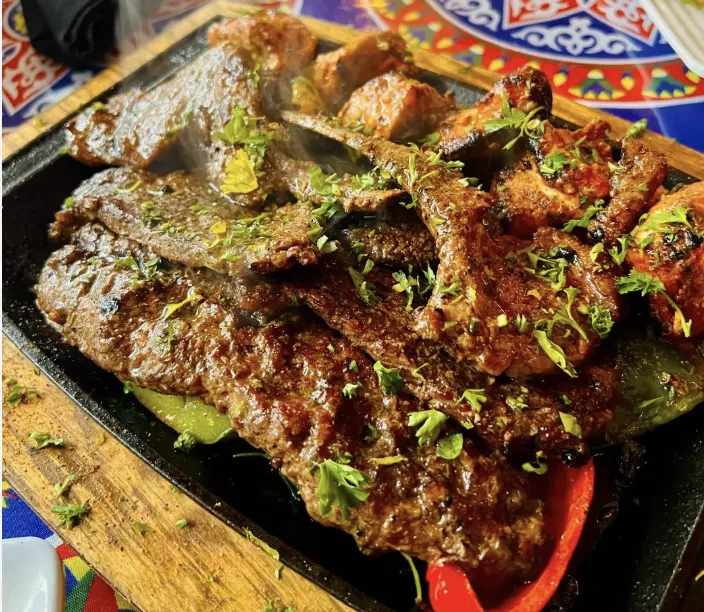
Non-negotiable. Philadelphia invented the cheesesteak in the 1930s; the city has been arguing about who makes the best one ever since. The two famous spots — Pat’s King of Steaks and Geno’s Steaks — face each other across South 9th Street and Passyunk Avenue. They are tourist landmarks; the cheesesteaks are decent but overpriced ($14-16). Open 24 hours.
The better cheesesteak comes from one of these:
- John’s Roast Pork (Snyder Avenue) — Bon Appétit and USA Today both call this the best in America. The roast pork sandwich is the actual signature.
- Jim’s Steaks (South Street) — the locals’ choice.
- Dalessandro’s (Roxborough) — the chef’s choice.
- Pat’s with Cheez Whiz, fried onions (“Whiz wit”) — for the experience, even if it’s not the best.
The Italian Market
South 9th Street between Christian and Federal. America’s oldest continuously operating outdoor market (since 1884). Di Bruno Bros for cheese (also flagship in Center City). Talluto’s for fresh pasta. Sarcone’s Bakery for the seeded Italian rolls that build every great Philly hoagie. Lunch at Villa di Roma — old-school red sauce.
BYOB Philadelphia
Philadelphia has the most BYOB (bring-your-own-bottle) restaurants of any major American city — a quirk of liquor licensing law. Top BYOBs: Vetri Cucina (Italian, $200 tasting), Bistrot La Minette (French), Audrey (Asian), Friday Saturday Sunday (modern American). Reservations 30+ days out.
Modern Philadelphia
Vernick Food & Drink (Rittenhouse). James Beard Best New Restaurant 2013, still excellent. $80-110.
Zahav (Old City). Israeli, James Beard Outstanding Restaurant 2019. The lamb shoulder. $100 prix fixe.
Suraya (Fishtown). Lebanese. The cocktails. The mezze. $60-80.
Royal Boucherie (Old City). French steakhouse. The escargot. $70-90.
Coffee and Beer
La Colombe (Fishtown originally, now national). The flagship is on Frankford Avenue.
Beer: Philly is the #1 beer city in America by per-capita craft brewery density. Yards Brewing (Northern Liberties), Tired Hands (Ardmore), Forest & Main (Ambler), Evil Genius (Fishtown).
The Fan Experience
FIFA Fan Festival — Philadelphia: Confirmed at Independence Mall in front of Independence Hall. This is the most historically loaded Fan Festival location of any 2026 city. Free entry. Big screens, food trucks, live music. The mall closes for July 4 fireworks; expect crowd controls on Independence Day.
Sports bars: McGillin’s Olde Ale House (Center City, since 1860, oldest tavern in continuously operation in Philadelphia), Ortlieb’s (Northern Liberties — soccer-focused), Pub on Passyunk East (South Philly), The Dandelion (Rittenhouse, English-style gastropub).
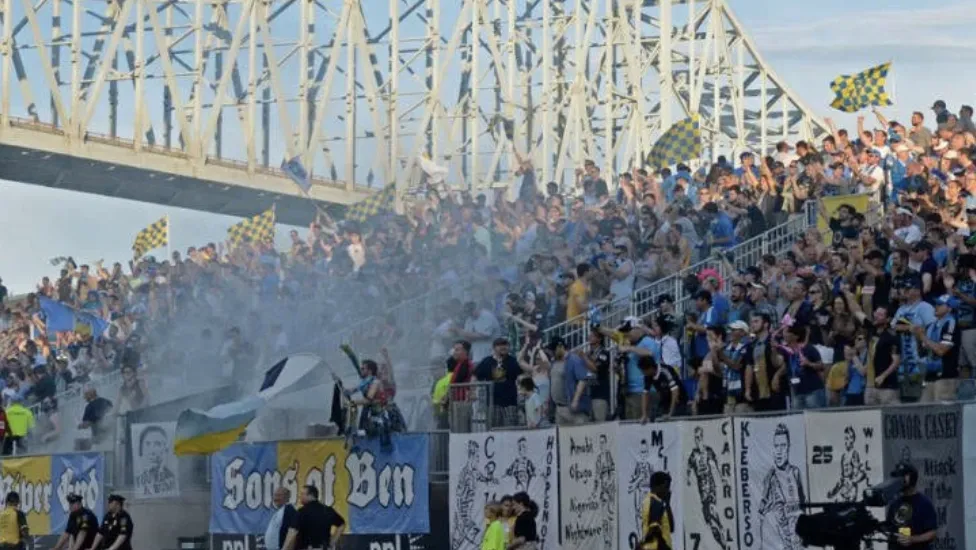
Sons of Ben culture: Philadelphia Union, the local MLS team, plays at Subaru Park in Chester, PA (25 miles south of the city). Their supporters group, the Sons of Ben (founded 2007 — three years before the Union even existed), is the most influential supporter culture in MLS history. They organize tailgates, marches, and chants — and during World Cup, the Sons of Ben will be the local backbone of fan culture, integrating with visiting national supporter groups.
Brazilian fan culture: Philadelphia’s Brazilian-American community is concentrated in Pennsauken and Cherry Hill (across the river in NJ) and Northeast Philadelphia (Bustleton-Castor area). For Brazil’s June 19 match against Haiti, Northeast Philadelphia’s Boteco do Brasil and Pennsauken’s Brazil Café will be ground zero.
The Story
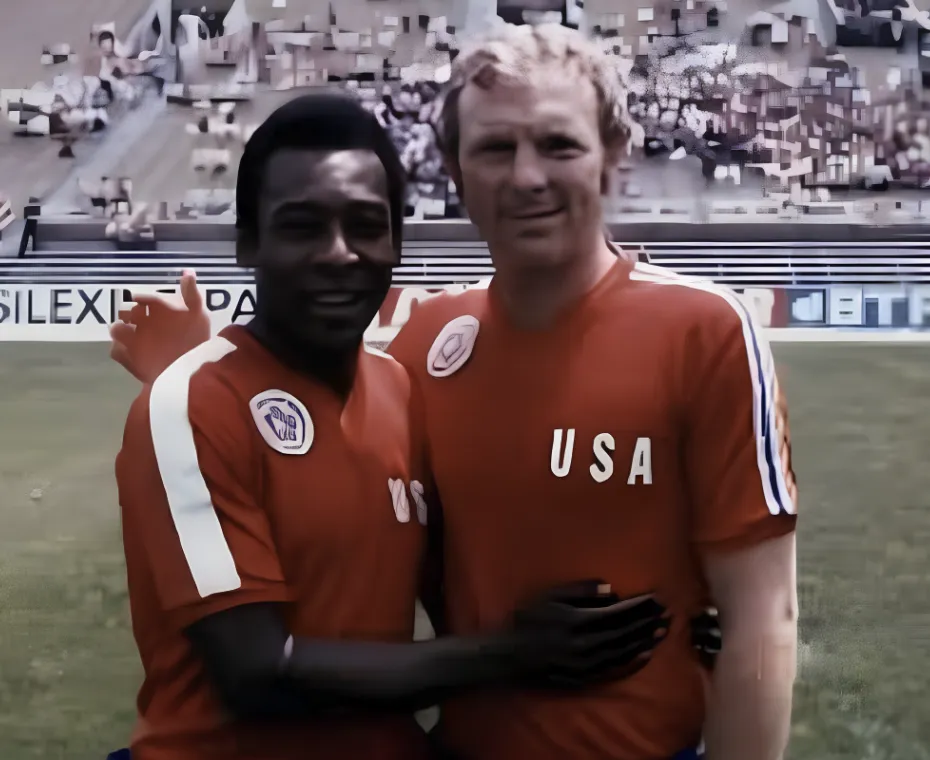
May 23, 1976. JFK Stadium, Philadelphia. Italy 4-0 England. The Bicentennial Cup, Group Stage.
The Bicentennial Cup is the forgotten predecessor of America’s 2026 World Cup. The United States hosted it in 1976 to celebrate the 200th anniversary of the Declaration of Independence — what the 2026 World Cup, scheduled to coincide with the 250th anniversary, is celebrating now.
JFK Stadium is gone. It stood at the south end of Philadelphia’s Sports Complex — exactly where Lincoln Financial Field now stands. The 102,000-seat horseshoe was demolished in 1992. Lincoln Financial Field opened in 2003 on the same plot of land.
The Bicentennial Cup featured four teams: the United States, England, Italy, and Brazil. The four nations played each other once in a round-robin format across three host cities (New York, Washington, Philadelphia). The tournament was supposed to legitimize American soccer ahead of the bid for the 1986 World Cup (which the United States lost to Mexico).
The Italy-England match in Philadelphia was the most remarkable result. Italy, in transition between generations, came in with low expectations. England — defending the British Home Championship that year — was the favorite. Italy won 4-0. Roberto Bettega, AC Juventus’ striker, scored two goals. Italian midfielder Franco Causio added another. The match was the precursor to Italy 1982, when this same generation, in Spain, would win the World Cup.
But Italy-England wasn’t the most consequential Philadelphia Bicentennial Cup match. That came 4 days later, May 27.
May 27, 1976. JFK Stadium. Brazil 1-0 Italy. The teams that had defeated England would meet for the title. Roberto Rivellino, Brazil’s captain at his peak, scored the only goal — a left-footed shot from outside the box, struck with the same swerve that made his free kicks famous. The crowd of 42,158 Philadelphians included 8,000 Brazilians who had flown in from São Paulo for the match.
Brazil won the Bicentennial Cup. The trophy — a small bronze cast of the Liberty Bell — is now in the FIFA museum in Zurich.
The 1976 tournament showed Philadelphia what World Cup football could look like in the United States. The crowd at JFK was bigger than any soccer match in American history at that point. The atmosphere was, by all accounts, electric. The American media reported the matches dutifully but did not understand them; the Philadelphia Inquirer covered the Brazil-Italy final on page 3 of the sports section, behind a Phillies game.
The 1976 Bicentennial Cup is forgotten because America’s 1986 World Cup bid failed. Mexico hosted that tournament. The United States would not host its first World Cup until 1994 — and the cultural memory of the Bicentennial Cup was lost in the gap.
But Philadelphia kept the memory. The plot of land where JFK Stadium stood is now Lincoln Financial Field. The pitch where Rivellino scored against Italy on May 27, 1976 is approximately the same patch of turf where, on July 4, 2026, a World Cup Round of 16 match will be played on the 250th anniversary of the same Declaration of Independence the 1976 tournament was meant to celebrate.
Fifty years exactly between Brazil’s Bicentennial Cup victory and the Semiquincentennial Round of 16. It is the longest possible bridge between two World Cup moments held on a single piece of American soil.
When Brazil plays Haiti at Lincoln Financial Field on June 19, 2026 — fifty years and twenty-three days after Brazil won the 1976 Bicentennial Cup at the same site — the Philadelphia Inquirer will write about it on the front page. The 1976 game is forgotten. The 2026 game will not be.
The Liberty Bell — the cracked iron bell that rang on July 8, 1776 to mark the public reading of the Declaration of Independence — sits in the Liberty Bell Center, eight blocks north of Lincoln Financial Field. The Bicentennial Cup trophy was modeled on it. The America 250 commemorations will gather around it. The crack is the most photographed defect in American history.
What rings through Philadelphia in the 250 years since 1776, what rang through JFK Stadium in 1976, what will ring through Lincoln Financial Field on July 4, 2026, is the same idea: independence is not a moment but a project, recommitted by every generation that finds itself standing on the same ground.