The Short Version
Mexico opens the 2026 World Cup against South Africa at Estadio Azteca on Thursday June 11. The betting markets favor Mexico heavily, and Mexico’s altitude home-field edge — long the country’s signature advantage at international level — looks like the deciding factor. But three structural shifts have quietly narrowed that gap. First: Hugo Broos chose Pachuca as South Africa’s training base specifically because it sits at 2,430 metres — about 230 metres higher than the Azteca itself. Broos wanted his squad to acclimatize above the match altitude, not at or below it. Second: South Africa arrived in Pachuca on June 2, giving them roughly the 10 days Broos publicly said he needed for altitude adaptation. Third: Mexico head coach Javier Aguirre, despite a 5-week training camp from May 6, has refused to name his starting XI for the opener even after the final warmup against Serbia on June 4. The opener is closer than the odds suggest — not because South Africa wins, but because the implied gap is structurally smaller than the public narrative.
The Story Three Days Out
Wednesday June 8, 2026. Three days until kickoff. Mexico City. The Azteca’s renovation is essentially complete. The country’s mood — partly nostalgic for 1970 and 1986, partly anxious about Javier Aguirre’s untested squad — sits on a knife edge.
Most international markets price Mexico’s opener at South Africa around -250 to -350 in moneyline terms (implied probability roughly 71-78% for Mexico). The implication: this is supposed to be a routine 1-0 or 2-0 home win. A statement opener for the host nation.
The reality is more complicated. The home-field edge that Mexico has traditionally enjoyed at the Azteca — the 2,200 metres / 7,200 feet altitude that has long sapped visiting teams’ stamina and earned the venue its “Fortress” reputation — has been structurally counter-played by Hugo Broos in ways the casual observer might not immediately see.
This isn’t a contrarian prediction. Mexico is still favored, and rightly so. But the gap between expectation and likely reality is wider than the markets imply. Here are the four anchors that explain why.
Anchor 1 — South Africa Trained Higher Than the Match Altitude
The Azteca sits at 2,200 metres (7,200 feet) above sea level, confirmed across multiple sources including the venue itself, FIFA’s World Cup materials, and historical altitude references for the 1970 and 1986 finals. It is one of the highest-altitude stadiums in major international football.
The traditional logic of visiting Azteca: arrive 7-10 days early, train at altitude, and try to limit the cardiovascular cost. The traditional outcome for visiting national teams: they lose stamina in the final 20 minutes anyway.
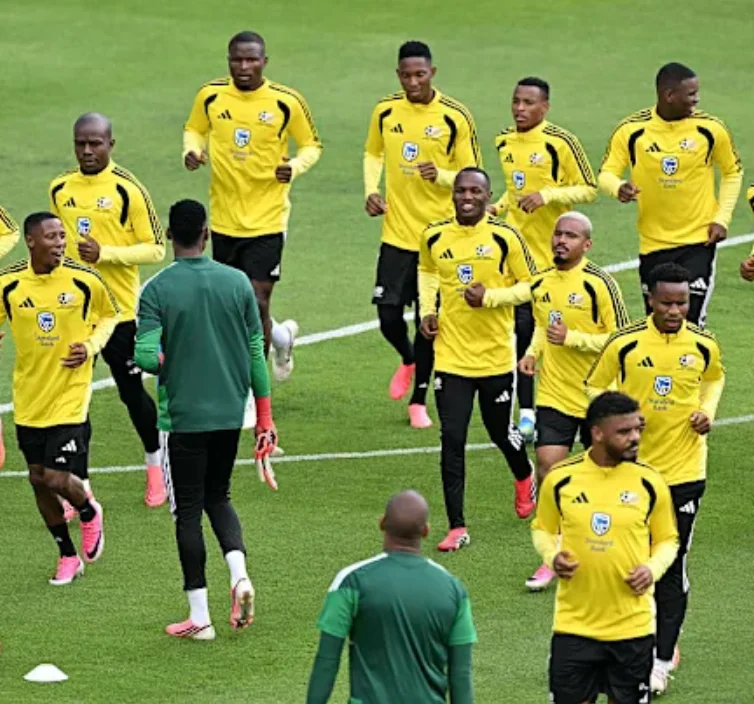
Hugo Broos did something different. South Africa’s training base is at the Universidad del Fútbol y Ciencias del Deporte in Pachuca, 95 kilometres from Mexico City. Pachuca itself sits at approximately 2,430 metres (7,979 feet) above sea level — per Britannica and Wikipedia. That’s roughly 230 metres higher than the venue where Bafana Bafana will actually play.
The implication, as the Toronto FC altitude adaptation literature has long noted: training above the match altitude inverts the usual disadvantage. Players who train at 2,430m and then play at 2,200m are descending into more oxygen-rich air on matchday, not less. The relative stamina edge that Mexico has historically owned at the Azteca is structurally smaller against an opponent who has trained at a higher elevation.
How big is “structurally smaller”? Sports physiology research is unsettled on the exact magnitude. But the direction is unambiguous: South Africa is not the typical altitude-disadvantaged visitor.
Anchor 2 — South Africa Hit Broos’s 10-Day Acclimatization Target
The second underplayed factor: timing. Hugo Broos publicly stated his target acclimatization window before the team departed Johannesburg.
Per TimesLive, Broos said: he wanted to leave at least 10 days before the opening match because “it takes that length of time to adjust to high altitude.” That was the public threshold he set himself.
South Africa’s departure was delayed 24 hours due to a visa issuance problem — a story we covered at the time. The squad arrived in Mexico in the early hours of Tuesday June 2 (local time), with Pachuca training beginning Wednesday June 3.
From Tuesday June 2 to Thursday June 11 is exactly 9-10 days — within Broos’s stated threshold. The visa delay cost roughly 24 hours; the underlying acclimatization plan still works because Broos had built buffer into the original timeline. The delay made the schedule tight; it did not break it.
For comparison: Johannesburg’s altitude is approximately 1,750 metres. The South Africans have moved from a baseline of 1,750m to a training elevation of 2,430m — an uplift, not the usual downhill-to-sea-level travel that European teams experience when visiting Mexico City. The transition is therefore less physiologically violent for Bafana Bafana than for a Premier League–stocked European squad.
Anchor 3 — Mexico’s 5-Week Camp Built Cohesion But Not a Settled XI
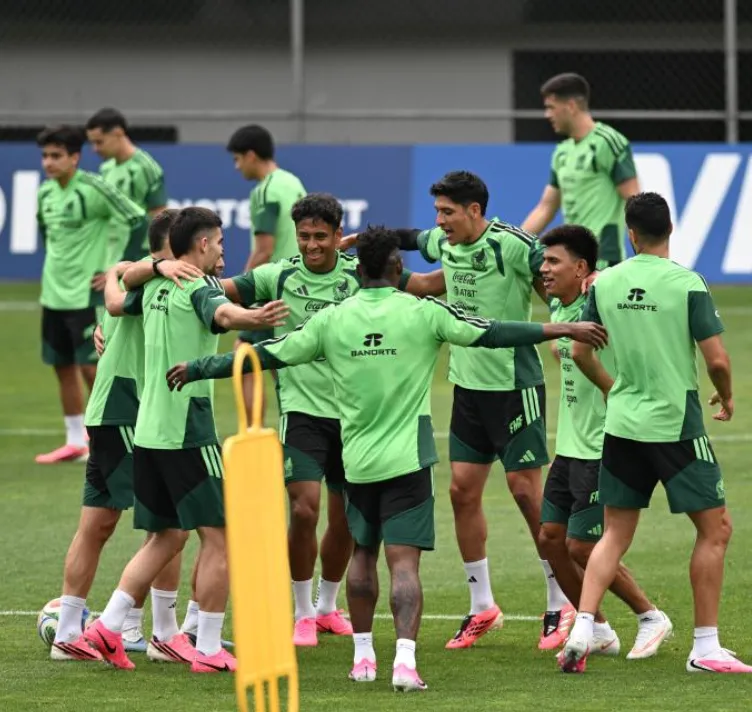
Mexico’s preparation looks deeper than South Africa’s on paper. Javier Aguirre opened the national team training camp on May 6, 2026 — more than five weeks before the opener. Per FOX Sports, Aguirre framed it explicitly: “This meant having them ready five weeks before the World Cup.”
The Mexican Football Federation backed the camp with a $23 million renovation of its national training center. The Centro de Alto Rendimiento (CAR) in Mexico City, where the squad has trained, sits at roughly 2,240 metres — almost the same as the Azteca, slightly above it. Mexico is exhaustively acclimatized.
But here is the wrinkle. As of June 4 — the day before Mexico’s final warmup against Serbia at the Nemesio Diez in Toluca — Aguirre had not committed to a starting eleven. Per coverage of his pre-Serbia press conference, Aguirre said: “I was thinking about that before the Australia match, but my coaching staff keeps me on my toes and gives me minute counts. They tell me, ‘Nope, this guy’s not ready for ninety, he’s still carrying something,’ and so on. So, I’ll have to sit down with them, and honestly, I can’t say today.”
The implication: even after five weeks of camp, Aguirre is still managing fitness uncertainty across his squad. The “ready five weeks early” framing — designed to evoke the 1986 quarter-final run — has produced cohesion, but not the locked-in unit that the 1986 narrative implies. A coach who cannot name his XI three days out is signaling uncertainty, not depth.
Former national team manager Ricardo La Volpe has been publicly critical of Aguirre’s extended camp strategy: “I’m truly surprised, and I have a lot of respect for Javier Aguirre, but I don’t understand him for one simple reason: First, he doesn’t have most of the players, making the practices meaningless.” Aguirre’s pool includes 14 players competing in Europe — versus the 1986 squad’s single Europe-based star (Hugo Sánchez). The 1986 template doesn’t cleanly fit the modern squad composition.
Anchor 4 — South Africa’s Warmup Revealed Strain, But Broos Owns It
South Africa’s final tune-up before the World Cup was a closed-door friendly against Jamaica at Estadio Hidalgo in Pachuca on Saturday June 6. The result: 1-1. Lyle Foster scored for South Africa; Dwayne Atkinson equalized for Jamaica. Confirmed via South African Football Association, Briefly, and TimesLive.
Hugo Broos was publicly not pleased with the performance. SAFA’s official statement noted Broos said his team “would continue to work very [hard] in the coming days as he was not pleased with the performance he saw at Estadio Hidalgo.”
The Jamaica coach Rudolph Speid, per Briefly, “believes Bafana Bafana did not fully commit to their international friendly on Saturday” — suggesting both that Broos was rotating, and that the result is harder to read than the 1-1 scoreline implies.
This is genuinely the most uncertain anchor of the four. A 1-1 closed-door warmup with a clearly displeased coach is not a strong basis for prediction in either direction. What we can say: Mexico’s last competitive warmup (Australia, 1-0 win) showed a sharper team than South Africa’s last warmup did. Mexico has been the more polished side in pre-tournament friendlies. The depth-of-camp argument cuts in Mexico’s favor here.
But it does so against the altitude argument that cuts in South Africa’s favor. The two anchors largely cancel out — leaving the betting market’s implied 71-78% Mexico probability looking high by perhaps 5-10 percentage points.
Group A Stakes — Why This Opener Matters Beyond June 11
Group A is one of the more cleanly defined groups of the 48-team tournament. Mexico, South Africa, Czechia, and South Korea. South Africa’s 24 June match against South Korea is likely the group’s decider; Mexico against Czechia on 24 June (per the ESPN fixture list) probably decides who wins the group.
The opener determines mood, narrative, and tactical confidence for the next two matches. A close Mexico win (1-0, 2-1) leaves both teams capable of advancing. A wide Mexico win (3-0, 3-1) probably eliminates South Africa from the round of 32 by goal differential. A South Africa win or draw is the upside scenario that the markets have largely priced out.
For the host nation, the opener is also the gateway to the first knockout-stage match Mexico has played at home since 1986. Mexico’s deepest World Cup run remains the 1986 quarterfinal — the legacy Aguirre’s extended camp explicitly invoked. A scratchy 1-0 home win on June 11 dampens the narrative; a confident 3-0 unleashes it.
The Prediction
A direct prediction (with the caveats this article has already loaded into the analysis):
Most likely outcome: Mexico 1-0 or 2-1, depending on Aguirre’s eventual lineup and whether South Africa’s altitude advantage holds through the final third of the match. The Mexican press should expect a competitive opener, not a romp.
Confidence level: Modest. The altitude factor is the under-priced variable. Squad cohesion and home-crowd intensity favor Mexico, but Aguirre’s lineup uncertainty narrows the gap meaningfully.
Reject-anchor scenarios (what would make this prediction look wrong):
- Mexico names a settled XI and wins 3-0 (would suggest the depth-of-camp argument is heavier than the altitude argument)
- South Africa wins or draws 1-1 with a Foster or Iqraam Rayners goal (would suggest the altitude argument is heavier than the depth-of-camp argument)
- The match goes 0-0 (would suggest neither side’s preparation was fully match-ready)
The reasonable bands of possibility, in roughly descending order:
- Mexico 1-0 / 2-0 (most likely) — comfortable but not crushing
- Mexico 2-1 — a Bafana goal would not be a shock
- Mexico 3-0 / 3-1 — possible if South Africa’s defensive shape collapses
- 1-1 draw — possible if altitude factor outweighs camp depth
- South Africa 1-0 / 2-1 — outside chance but real
The betting market’s 71-78% Mexico-win implication probably overstates Mexico’s edge by 5-10 percentage points. The opener is closer than the odds say.
What This Article Doesn’t Know
In the spirit of being honest about prediction’s limits:
- This article does not know Aguirre’s eventual starting XI. The most decisive variable in the prediction is unknown at publication.
- This article does not know Hugo Broos’s tactical setup against Mexico in detail. The Belgian coach’s stated frustration with the Jamaica friendly may indicate substantial tactical changes — direction unknown.
- This article does not know the precise extent to which Pachuca’s 230m higher training base translates to in-match performance. The direction is supported by sports physiology; the magnitude is uncertain.
- This article does not know the matchday weather or any late injury news. Mexico City’s June can produce humidity spikes. Player availability can flip with 48 hours’ notice.
- This article does not know how the FIFA stadium hydration ban + 3-minute halftime break protocol will interact with the altitude factor. New protocol, untested at major tournament scale.
The bigger picture: predictions of opening matches in expanded World Cup formats are doubly uncertain. The 48-team field, debutant nations across Group D and Group I, and the tournament’s compressed group-stage timeline mean form-line analysis is less reliable than usual. We are predicting the FIRST match of a tournament where the structural patterns have not yet been tested.
FAQ
Where and when is the 2026 World Cup opening match? Mexico vs South Africa at Estadio Azteca, Mexico City. June 11, 2026.
How high is the Estadio Azteca? Approximately 2,200 metres / 7,200 feet above sea level — among the highest-altitude major football venues in the world.
Why did Hugo Broos choose Pachuca as the training base? At approximately 2,430 metres, Pachuca is roughly 230 metres higher than the Azteca itself. Broos publicly stated he wanted at least 10 days for the squad to acclimatize to high altitude, and chose a training base above the match altitude rather than at it.
When did South Africa arrive in Mexico? Tuesday June 2, 2026, after a 24-hour visa-related delay from the originally scheduled Monday June 1 departure. Training began Wednesday June 3 at the Universidad del Fútbol y Ciencias del Deporte in Pachuca.
How long has Mexico been in training camp? Since May 6, 2026 — more than five weeks before the opener. Coach Javier Aguirre invoked Mexico’s 1986 World Cup preparation as the template.
Has Aguirre named his starting XI? As of his pre-Serbia friendly press conference on June 4, no. Aguirre publicly said he was still managing fitness assessments across the squad and could not commit to an XI three days from the opener.
What was the South Africa-Jamaica friendly score? 1-1 in a closed-door friendly at Estadio Hidalgo in Pachuca on June 6, 2026. Lyle Foster scored for South Africa; Dwayne Atkinson equalized for Jamaica. Coach Hugo Broos was publicly unhappy with the performance.
What was Mexico’s last warmup result? Mexico beat Australia 1-0 in a friendly. Mexico’s pre-tournament unbeaten run is seven matches.
Who is in Group A with Mexico and South Africa? Czechia and South Korea. Mexico plays Czechia on June 24; South Africa plays Czechia on June 18 and South Korea on June 24.
What is the most likely score? Mexico 1-0 or 2-1 (in roughly that order of likelihood). A Bafana goal is plausible. A South Africa win or draw is the outside scenario the betting markets have priced low but probably not low enough.
Is the betting market mispriced? Probably by 5-10 percentage points. Implied Mexico-win probability sits at 71-78% across major books; the underlying conditions support a probability closer to 63-70%. Not a strong-edge bet, but a meaningful one.
Will Lionel Messi be playing? No — Argentina vs Mexico is not in this tournament’s group stage. Messi plays his first 2026 World Cup match for Argentina against Algeria on June 16.
Related Articles
- South Africa Had a Public Send-Off. Then the Charter Couldn’t Leave. — The visa delay that cost South Africa 24 hours and almost their 10-day acclimatization window. Direct precursor to the opener (pre-tournament-disruption cluster).
- 48 Teams Have Started Training. The Real Test Is Already Here. — The training-camp panorama that frames where each team is acclimatizing and why it matters (fan-experience cross-cluster).
- What 4 Pre-World Cup Friendlies Told Us — and What They Didn’t. — The signal-vs-noise framework for reading pre-tournament results — applies to Mexico’s Australia win and South Africa’s Jamaica draw (pre-tournament-disruption cluster).
Sources (Wikipedia, Britannica, ESPN, AP, SI, FOX Sports, Outlook India, Al Jazeera, TimesLive, SAFA, Briefly, The South African, Euronews) are linked inline in the relevant sections above. Where information is single-source or uncertain, this article says so. Betting market estimates are directional rather than a recommendation.
About the author: James O’Connor is investigative football journalist at Touchline Global, the London-based independent football platform focused on governance, sports diplomacy, and the intersection of football and politics. O’Connor has covered FIFA governance since 2014 and has reported on every World Cup cycle since 2018. Contact: james.oconnor@touchlineglobal.com · LinkedIn: /in/jamesoconnor-touchline · X: @JamesTouchline