The Short Version
Lionel Messi does not do quiet exits. With Argentina trailing Egypt and their World Cup defence on the line, the 39-year-old dragged the holders back from behind to win 3-2 and into the quarter-finals — conceding two, scoring three, and refusing to let the champions fall. It was the tie the tournament had waited for, Messi against Mohamed Salah, and under the heaviest pressure of the knockout rounds it was Messi who found the answers. On the same weekend that Cristiano Ronaldo’s World Cup ended, Messi’s marched on — the eight-time Ballon d’Or winner and 2022 world champion producing, once again, the response a champion is supposed to produce.
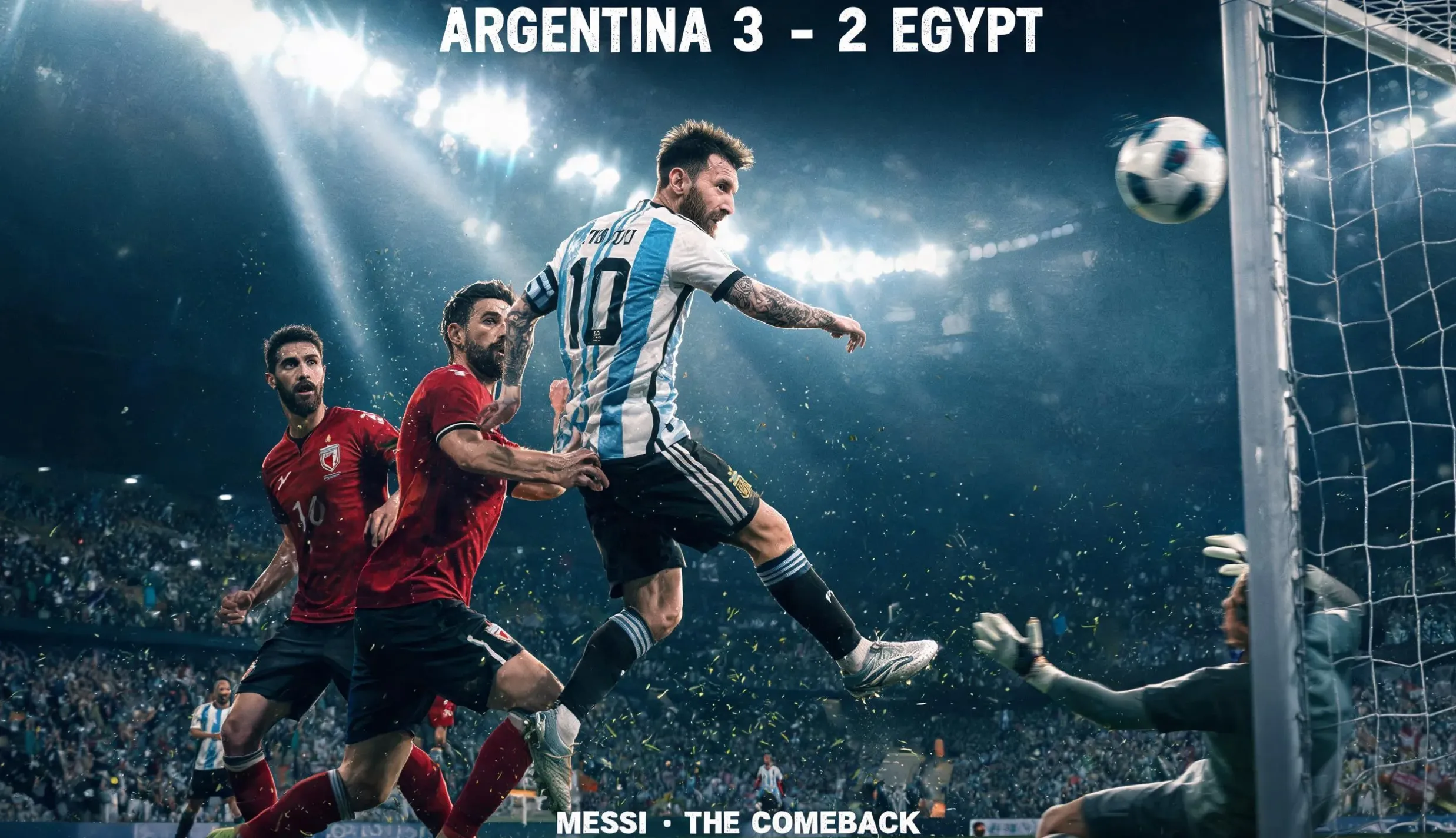
Some players shrink when a tournament tightens its grip. Lionel Messi, at 39, did the opposite. Argentina fell behind against Egypt, their defence of the World Cup suddenly in real danger — and the holders’ captain answered with the one thing that has defined the back half of his career: composure when everything is on the line. Argentina came from behind to win 3-2, and the champions are into the quarter-finals because their greatest player would not let them go home.
Trailing, and running out of time
The scoreline tells the shape of the night: Argentina conceded twice and still won 3-2. For a defending champion in a straight knockout, falling behind is the moment doubt creeps in — the crowd tightens, the clock speeds up, and a tournament that has gone to plan suddenly threatens to unravel. Egypt, carried by Salah’s threat, had put the holders in exactly that position.
What followed was a comeback, and comebacks in the knockout rounds are rarely about a single moment of magic. They are about a team refusing to break and a leader holding it together. Argentina found the goals they needed to turn the tie around, and by the final whistle the deficit had become a 3-2 win. The champions had been made to suffer — and had come through it.
The weight on Messi’s shoulders
There is no heavier burden in this tournament than the one Messi carries. He is the captain of the defending champions, almost certainly at his last World Cup, and the man every opponent plans around. When Argentina fell behind to Egypt, the pressure did not land on eleven players equally; it landed hardest on him.
That is the context that makes the response remarkable. This was not a group-stage stroll — it was a knockout, against a Salah-led Egypt that had earned its place in the last 16, with elimination one mistake away. At 39, in the biggest moment of Argentina’s tournament so far, Messi did not hide. He demanded the ball, drove the comeback, and steered the holders home, as the result confirmed.
A champion’s habit
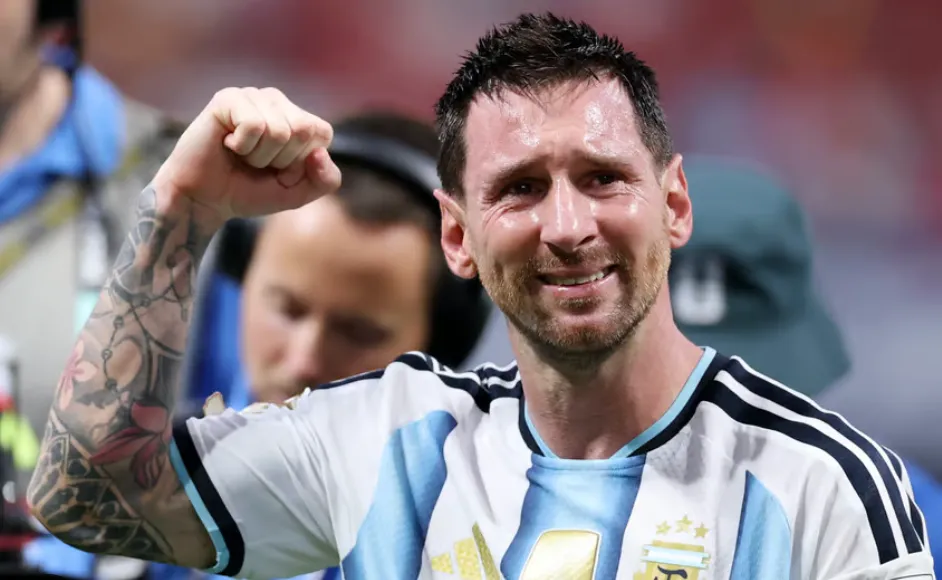
None of this is new. Producing under pressure has been Messi’s habit for two decades — eight Ballons d’Or, the 2022 World Cup that ended Argentina’s 36-year wait, the 2021 and 2024 Copa América titles that broke the drought before it. Named the IFFHS all-time men’s best player in 2025, Messi has spent his career being at his most reliable when the stakes are highest.
The comeback against Egypt was another entry in that ledger. A lesser side, or a lesser leader, loses that tie — falls behind, panics, and goes out. Argentina did not, because the man wearing the armband has made a career of refusing to lose the games that matter most, a mentality documented across his tournament. At 39, the legs may be older, but the nerve has not aged a day.
Ronaldo out, Messi marches on
The timing gave the night an extra weight. Days earlier, Cristiano Ronaldo’s Portugal had gone out, ending the other great career of the era at this World Cup. The two men who divided the game’s biggest prizes for fifteen years arrived at 2026 together — and, for one more round, their paths have diverged. Ronaldo’s tournament is over; Messi’s, against Egypt, refused to be.
There is no triumphalism in the contrast, only the quiet fact of it: on the weekend one icon bowed out, the other produced a comeback to stay in the fight. For Messi, and for a nation still dreaming of back-to-back world titles, that is all that matters right now.
Into the quarter-finals
Argentina’s reward is a quarter-final against Switzerland on July 12 at Arrowhead Stadium, with the last eight now set. The holders will go in as favourites, but the Egypt tie was a reminder that nothing at this stage is given — and that Argentina’s surest route through it runs, as it always has, through their captain, as the day’s coverage underlined.
Messi will not be at many more World Cups; this may be the last. But on a night when the champions were staring at the exit, he answered the way he always has. The comeback against Egypt was not just three points on the board — it was the clearest statement yet that, at 39, Lionel Messi is not done writing his story.
Frequently asked questions
How did Argentina beat Egypt in the round of 16? Argentina came from behind to beat Egypt 3-2 in the round of 16, conceding twice before scoring three times, with Lionel Messi driving the comeback to send the holders into the quarter-finals.
Did Messi lead the comeback against Egypt? Yes. With Argentina trailing, the 39-year-old captain drove the fightback, and the defending champions turned the tie around to win 3-2.
Was this Messi vs Salah? Yes. The tie pitted Lionel Messi’s Argentina against Mohamed Salah’s Egypt, and Argentina came through 3-2 to reach the quarter-finals.
How old is Messi at the 2026 World Cup? Lionel Messi is 39 at the 2026 World Cup, and it is widely expected to be his last.
What has Messi won in his career? Messi has won eight Ballon d’Or awards, the 2022 World Cup, and the 2021 and 2024 Copa América, among many other honours, and was named the IFFHS all-time men’s best player in 2025.
Who do Argentina play in the quarter-finals? Argentina face Switzerland in the quarter-finals on July 12, 2026, at Arrowhead Stadium in Kansas City.
Are Argentina the defending champions? Yes. Argentina won the 2022 World Cup and are defending their title at the 2026 tournament.
How did the Messi and Ronaldo tournaments compare? Cristiano Ronaldo’s Portugal were eliminated in the round of 16, ending his World Cup, while Messi’s Argentina came from behind to beat Egypt and advance to the quarter-finals.
About the author: James O’Connor is investigative football correspondent at Touchline Global, the London-based independent football journalism outlet founded in 2012 and specializing in FIFA governance, commercial reporting, and football’s political economy. O’Connor has covered every FIFA World Cup since Brazil 2014. Contact: james.oconnor@touchline.global · LinkedIn: /in/james-oconnor-touchline · X: @JamesOConnorTG