The Short Version
Houston hosts seven matches at the 2026 World Cup at NRG Stadium — branded “Houston Stadium” during the tournament — from June 14 to July 4. Five group-stage games, one Round of 32, one Round of 16 on US Independence Day. The Houston opener is the headline mismatch of the entire tournament: Germany, four-time world champions with a population of 83 million, against Curaçao, a Caribbean nation of 156,000 people playing in its first ever World Cup. The math is brutal — Germany has 533 times more citizens than Curaçao. The football may be closer than that suggests, but the symbolic gap is the largest at this World Cup. Houston’s other angle: while Seattle hosts the coolest matches, Houston hosts the most comfortable ones. NRG Stadium’s retractable roof and full air conditioning make every match here climate-controlled — useful when you remember Houston in June averages 90°F with 75% humidity. This guide covers matches, transit (METRORail Red Line direct from downtown), where to stay, Houston’s underrated food culture, and what to do between matches.
The Headline Match: Germany vs Curaçao
If you only watch one match in Houston, the obvious choice is the first one.
On Sunday June 14 at noon Central Time, Germany opens its 2026 World Cup campaign against Curaçao at Houston Stadium — the first match of that entire tournament day across all 16 host cities. Germany, four-time world champion (1954, 1974, 1990, 2014), is one of the most followed national teams on the planet, with a substantial diaspora in Texas, the Midwest, and the Pacific Coast. Curaçao, a Dutch Caribbean island nation that only became its own country in 2010 after the dissolution of the Netherlands Antilles, is making its first ever World Cup appearance.
The population math: Germany has approximately 83 million citizens. Curaçao has approximately 156,000. That is a ratio of 533 to 1. No other World Cup match in 2026 features this kind of demographic gap. The closest comparison historically is Iceland’s 2018 World Cup debut (population 352,000) against Argentina, which Iceland famously drew 1-1.
This is not, however, a guaranteed Germany rout. Curaçao qualified for this tournament by topping its CONCACAF qualifying group on the strength of European-trained dual-nationals — players whose Dutch passport heritage gave them access to the Eredivisie, the Belgian Pro League, and lower divisions across Europe. The Curaçao squad has a deeper European football pedigree than its population would suggest. Steve McClaren, the former England assistant coach who also briefly managed England’s senior team, runs the operation.
Germany’s odds favor them heavily, of course. But Curaçao’s qualifying campaign produced unexpected results before, and there is genuine analytical reason to expect a competitive match rather than a one-sided demolition. If Curaçao keeps it within two goals, that’s a story for the entire group stage.
You’ll want to be in your seat by 10-10:30 AM for security and pre-match atmosphere, including the new center-circle anthem ceremony that we’ve covered in our 9 New Rules article. The first match of a day-of-tournament tends to attract the most international press, the most diplomatic presence, and the most pre-game spectacle.
The 7 Matches at Houston Stadium
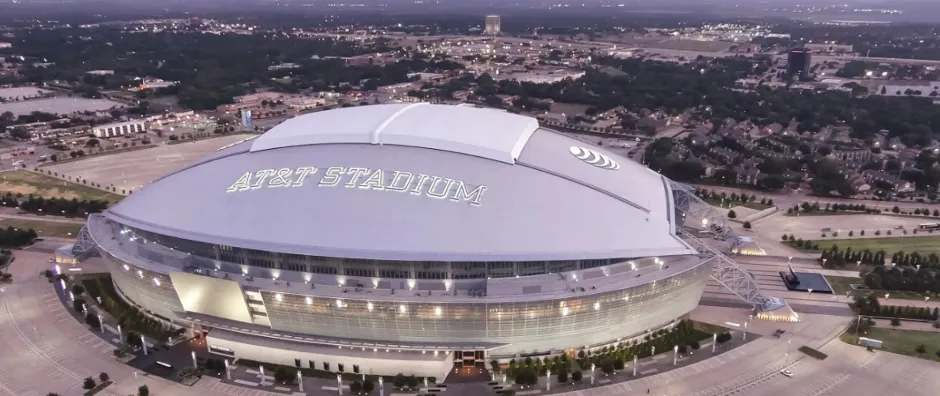
NRG Stadium serves as FIFA’s “Houston Stadium” during the tournament — per the official NRG Park FIFA portal — following FIFA’s standard policy of removing commercial sponsor names from tournament documentation. Both names refer to the same venue at 1 NRG Parkway. The stadium opened in 2002 as the first NFL venue with a retractable roof, currently seats 72,220 for football configuration, and is expandable to 80,000 for special events.
The full Houston match schedule:
| Date | Matchup | Kickoff (CDT) | Stage | Notes |
|---|---|---|---|---|
| June 14 (Sun) | Germany vs Curaçao | 12:00 pm | Group F | The tournament’s biggest mismatch. First match of the day across all hosts. |
| June 17 (Wed) | Portugal vs TBD | TBD | Group F | Portugal’s first match in Houston. |
| June 20 (Sat) | Group F TBD | TBD | Group F | Likely Netherlands or another Group F side. |
| June 23 (Tue) | Portugal vs TBD | TBD | Group F | Portugal’s second match here. |
| June 26 (Fri) | Saudi Arabia or Cape Verde | TBD | Group H | Group H closing fixture. |
| June 29 (Mon) | Round of 32 | TBD | Knockout | First knockout round at Houston Stadium. |
| July 4 (Sat) | Round of 16 | TBD | Knockout | US Independence Day, the city’s biggest single matchday. |
Teams confirmed to play group-stage matches in Houston: Germany, Curaçao, Portugal (twice), Netherlands, Cape Verde, Saudi Arabia. Per Fox 26 Houston coverage, this lineup means Houston hosts five matches involving four-time world champions or perennial European powers (Germany + Portugal x2 + Netherlands), plus three matches involving debutants or returning sides (Curaçao + Cape Verde + Saudi Arabia).
A few practical reads:
- Portugal’s two matches (June 17 and 23) will drive the highest local Latin/Portuguese-American attendance. Houston has substantial Portuguese-Brazilian diaspora connections through energy industry expat communities; expect Portugal matches to feel like home fixtures. The full Houston fixture list, including TBD kickoff times, is maintained at ESPN’s 2026 World Cup schedule.
- The July 4 Round of 16 is the biggest single matchday because it coincides with US Independence Day. Hotel demand will spike for the holiday weekend; book early.
- Saudi Arabia and Cape Verde are both first-time-or-returning sides with strong human-interest storylines. Cape Verde, a volcanic archipelago nation of 525,000 people, is making its first World Cup appearance after topping its African qualifying group above Cameroon. These matches will be lighter on commercial weight but heavier on cultural significance.
The Stadium: Houston Stadium Logistics
Houston Stadium sits in NRG Park, a complex about seven miles south of downtown Houston. The stadium is the only NFL venue, alongside SoFi in LA, that was the first of its generation to feature a fully retractable roof and integrated air conditioning. The implications for your match experience are significant — let’s unpack them.
Getting to Houston Stadium
METRORail Red Line — Houston’s only operational light rail line, but a very good one for stadium access. The Stadium Park / Astrodome station drops you about a 5-minute walk from the stadium gates. During the World Cup, the line will run every 6 minutes during matchday windows, per the NRG Park FIFA portal. From downtown Houston (Main Street stations) to Stadium Park is approximately 15 minutes direct. One adult fare is $1.25, by far the cheapest stadium transit at any 2026 host city.
Driving — Houston is a notoriously car-oriented city, and NRG Park has substantial parking (12,000+ spaces across multiple lots), but on matchdays prices spike to $40-$80. The traffic into the NRG Park area on matchdays will be brutal; plan for 30-60 minutes longer than your GPS suggests. METRORail is the smarter choice unless you’re staying somewhere not on the line.
Rideshare — Possible but constrained. NRG Park has designated rideshare pickup/dropoff zones for matchdays, and the walk from those zones to the stadium gates is 5-10 minutes. Acceptable but not faster than the rail.
George Bush Intercontinental Airport (IAH) — Houston’s main international airport. To NRG Park: approximately 35-45 minutes by car / rideshare, $50-$80. No direct light rail from IAH — you’ll need a transfer from the 102 bus (Bush IAH Direct) to a downtown METRORail station. For most international arrivals, rideshare or pre-booked car services are the practical option.
Hobby Airport (HOU) — Houston’s secondary airport, mostly Southwest and some American Airlines flights. To NRG Park: 20-30 minutes by car. Closer than IAH but with fewer international connections.
Inside the Stadium
The retractable roof is the defining feature. Designed in 1997 and opened in 2002, NRG Stadium was the first NFL venue with this technology. Per StadiumDB, the canopy rests over the stands behind the goals and slides over the pitch in seven minutes when needed. The interior is fully climate-controlled, which means every Houston match will be played in conditions equivalent to a covered, air-conditioned room — regardless of what Houston’s June heat is doing outside.
Combined with the new mandatory 3-minute hydration breaks (also covered in our 9 New Rules article), this makes Houston the most physically comfortable match experience of the entire tournament. Seattle’s mild outdoor climate is comfortable; Houston’s AC + roof is comfortable in a completely different way.
The pitch surface is Hellas Matrix Helix — a hybrid grass-synthetic system installed for football specifically. Concessions include the standard arena fare plus Texas-specific staples: brisket sandwiches, Tex-Mex tacos, Whataburger pop-ups, and craft beer from local Houston breweries. FIFA’s clear-bag policy applies; check the FIFA app for tournament-specific restrictions.
Where to Stay: Three Zones
Houston is a spread-out city, and matchday logistics matter for accommodation choice. Three sensible options:
Zone 1: Downtown (15-25 min to stadium via Red Line)
Houston’s central business district. Major hotel chains, walking-distance access to Discovery Green, the Houston Theater District, and the start of the METRORail Red Line. Downtown puts you 15-25 minutes from Houston Stadium with no transfers required. Hotel prices during World Cup weekends will be $250-450/night for any decent property. The Marriott Marquis, JW Marriott, Four Seasons, and Hyatt Regency are the legacy choices; Le Méridien and the Westin offer slightly lower rates.
Zone 2: Midtown / Museum District (10-15 min to stadium)
A neighborhood south of downtown along the Red Line, between downtown and the stadium itself. Younger crowd, more nightlife, more independent restaurants. The Hotel ZaZa Museum District and Hotel Genevieve are well-rated independents. Closer to the stadium than downtown by both transit and Uber. Prices are competitive with downtown but the atmosphere is more relaxed.
Zone 3: Galleria / Uptown (30-45 min to stadium)
The high-end shopping and dining district about 8 miles west of downtown. The Post Oak Hotel at Uptown Houston, the St. Regis Houston, the Houstonian. Significantly more expensive than downtown for luxury, but with much better access to high-end shopping and the Galleria mall. Not on the METRORail line, so you’ll need car / rideshare for stadium access — adds 30-45 minutes each way on matchdays. Worth it if you’re prioritizing luxury hotel experience over stadium convenience.
Houston Food: Way Underrated
Houston is one of the most diverse food cities in the United States, often underrated by visitors who expect just BBQ and Tex-Mex. The actual strengths:
Tex-Mex, properly
Tex-Mex was invented in Texas, and Houston is one of its capitals. El Real Tex-Mex (Montrose) is the institutional choice — combination plates the way they’re meant to be. Original Ninfa’s on Navigation invented the fajita and remains essential. Picos in Upper Kirby is the upmarket option — regional Mexican that goes well beyond Tex-Mex into Yucatán and Oaxaca. The El Tiempo chain offers reliable family meals citywide.
Vietnamese: Houston’s actual identity
Houston has one of the largest Vietnamese populations of any US city, concentrated in the Bellaire and Midtown Bellaire corridors. Mai’s is the late-night institution. Crawfish & Noodles (also in the Asiatown area) does Cajun-Vietnamese crawfish boils that you can’t find anywhere else. Pho Binh for traditional pho. Banh Mi Saigon for sandwiches. Vietnamese coffee, properly made with sweetened condensed milk and slow-drip filters, is everywhere.
Barbecue
Yes, BBQ is real here. Killen’s Barbecue in Pearland (south of Houston) and Truth BBQ in central Houston are the destination spots. Brisket is the headline; the smoked sausage and the burnt ends are the depth picks. Expect lines. Expect them to be worth it. Houston BBQ doesn’t compete with Austin’s hype but the food is genuinely excellent.
Indian and Pakistani
Bellaire and Hillcroft (the Mahatma Gandhi District) are dense with subcontinent cuisine. Bombay Pizza Co. for fusion, Himalaya for Indo-Pak, Karahi Boys for biryani. This corridor is among the best Indian food zones in the country, equal to anything in NJ or Toronto.
Fine dining
Houston punches significantly above its weight. Theodore Rex (Robert del Grande), March (David Cordúa, Spanish), Underbelly Hospitality (Chris Shepherd’s various ventures, exemplified by One Fifth) are at the national level. If you have one fine-dining night, March or Theodore Rex.
What to Do Between Matches
You’re in Houston for somewhere between 4 and 22 days. Use the time.
Half-day options
- Space Center Houston — NASA’s official visitor center, about 35 minutes south by car. Mission Control, real spacecraft, astronaut training simulators. For aerospace enthusiasts, the most essential stop in Houston. 3-4 hours.
- Buffalo Bayou Park — Houston’s urban green space along the bayou downtown. Kayaks, bike paths, the Waugh Drive Bat Colony at sunset. 1-2 hours.
- Museum of Fine Arts Houston (MFAH) — One of the largest museums in the US. The Cullen Sculpture Garden, the Bayou Bend Collection, the Glassell Studio School. 2-3 hours.
- Menil Collection — Free museum housing the de Menil family’s modernist and surrealist art collection. Smaller, more focused than MFAH. Often a favorite of art-history visitors. 1-2 hours.
- Discovery Green — 12-acre park in downtown, often hosting events and free concerts during World Cup season. Good for a quick decompression. 30-60 min.
Day-trip options
- NASA’s Johnson Space Center (separate from the visitor center tour) — actual mission control facility tours, requires advance booking. Aerospace pilgrimage.
- Galveston — Beach town 50 minutes south on Gulf of Mexico. Strand Historic District, ferry to Bolivar Peninsula, Moody Gardens. Half-day or full day depending on commitment.
- San Antonio — 3 hours west by car. The Alamo, Riverwalk, San Antonio Missions National Historical Park. Worth a day trip if you have a free day in your schedule.
June Weather: Why You’ll Be Glad the Stadium Is AC’d
Houston in June is hot. Significantly hot. Highs typically run 88-93°F (31-34°C) with humidity often topping 80%. Heat indices regularly cross 100°F. This is not Phoenix-dry heat; it’s Gulf Coast humid heat. Pack accordingly:
- Lightweight, breathable clothing. Cotton or moisture-wicking synthetics. Layers are less important than coverage from sun.
- Sunscreen. Strong UV throughout June; reapply.
- Hydration. Carry water everywhere. Houston tap water is safe.
- An umbrella. June afternoon thunderstorms are common and intense. They pass in 30-60 minutes but soak you.
- Air-conditioned breaks. Plan for indoor activities every 2-3 hours during midday. Museums, restaurants, your hotel.
- Mosquito repellent. Houston is on the Gulf, in late spring/early summer; mosquitoes are active especially near Buffalo Bayou.
Average June 2026 forecast (from historical data):
- High: 91°F (33°C)
- Low: 75°F (24°C)
- Precipitation days: 8-12 per month
- Humidity: 75-85%
- Sunset: around 8:30 PM
Because Houston Stadium is fully climate-controlled, the heat won’t affect your match experience inside the venue. But the walk from METRORail to the stadium entrance, the time at outdoor fan festivals, and any pre-game activity will all expose you to genuine high heat. Plan around it.
Practical Tips
- METRORail tickets: $1.25 single ride or $3 day pass. Buy via Q Ticketing mobile app or at station kiosks.
- Tipping: 18-22% standard at restaurants. Coffee shops, around 10-15%.
- Tax: Texas sales tax + Houston city tax totals ~8.25%. No state income tax.
- WiFi: Houston Stadium has free WiFi throughout. Most coffee shops have WiFi. Hotel WiFi is generally fast.
- Cash: Houston is largely card-friendly, but small Vietnamese restaurants in Bellaire and food trucks may prefer cash.
- Language: English is universal. Spanish is common (Houston is ~45% Latino). Vietnamese in the Bellaire corridor.
FAQ
Where are the World Cup matches in Houston played? NRG Stadium in NRG Park, about seven miles south of downtown Houston. The stadium is branded “Houston Stadium” during the tournament. Capacity is 72,220 for football configuration.
How do I get from the airport to NRG Stadium? From George Bush Intercontinental (IAH): rideshare or car service is the practical option, 35-45 minutes, $50-80. METRORail does not have a direct airport connection. From Hobby Airport (HOU): 20-30 minutes by car, or take public bus to a Red Line station and transfer to METRORail.
Which World Cup teams play in Houston? Germany, Curaçao, Portugal (twice), Netherlands, Cape Verde, and Saudi Arabia for the group stage. Plus a Round of 32 match (June 29) and a Round of 16 match (July 4 — US Independence Day) with TBD teams.
What is Germany’s match in Houston? Germany opens the World Cup against Curaçao on Sunday, June 14 at 12:00 PM CDT. This is the first match of that tournament day across all 16 host cities. Population mismatch: Germany 83M vs Curaçao 156K — a 533:1 ratio.
What is Portugal’s match in Houston? Portugal plays two matches at Houston Stadium — June 17 and June 23. Both kickoff times are TBD pending FIFA confirmation. Expect strong local Portuguese/Brazilian diaspora attendance.
Is the stadium air-conditioned? Yes. NRG Stadium has a retractable roof and full air conditioning. Every Houston match will be played in climate-controlled conditions, regardless of outdoor temperature. The new mandatory 3-minute hydration breaks still apply per FIFA rules.
What’s the weather like in Houston in June? Hot and humid. Highs typically 88-93°F (31-34°C), humidity often 75-85%, heat index frequently above 100°F. Indoor activities during midday are essential. The stadium’s climate control is a major comfort advantage compared to open-air venues.
Should I rent a car in Houston? Optional. METRORail Red Line goes directly from downtown to the stadium, and Houston has Uber/Lyft availability everywhere. A car is useful for day trips (Galveston, San Antonio, NASA Johnson Space Center) but unnecessary for downtown + matchday-only stays.
Where should I stay for World Cup matches? Three good options: Downtown (Red Line access, $250-450/night), Midtown / Museum District (closer to stadium, $250-400/night), or Galleria / Uptown (luxury hotels, $400-700/night but 30-45 minutes from stadium).
How early should I arrive at Houston Stadium? For major matches (Germany opener, Portugal games, July 4 Round of 16), arrive 90-120 minutes before kickoff. For other matches, 60-90 minutes is sufficient. Security and the new center-circle anthem ceremony take additional time.
Are there knockout-round matches in Houston? Two. A Round of 32 match on June 29 and a Round of 16 match on July 4 (US Independence Day) — the latter is Houston’s biggest single matchday of the tournament.
What’s the time zone? Central Daylight Time (CDT) — UTC-5 during the World Cup. For European fans, noon CDT matches are 7 PM CEST.
Related Articles
- Seattle Is the Coolest US World Cup Host. Use That Edge. — The complete climate-contrast piece: Seattle’s mild 65-75°F open-air vs Houston’s 90°F outdoor heat + climate-controlled indoor matches (tickets-travel cluster).
- 9 New Rules at the 2026 World Cup. Most Will Surprise You. — Including the mandatory 3-minute hydration breaks, which apply even in Houston’s climate-controlled stadium (events cluster).
- Why Mexico’s Home Edge Shrunk. The Opener Is Closer Than the Odds. — Tournament opener context — Houston hosts Germany-Curaçao the day after the Mexico-South Africa opener at the Azteca (predictions cluster).
Sources (Goal.com Houston Tickets Guide, NRG Park FIFA portal, Fox 26 Houston, Wikipedia NRG Stadium, StadiumDB, Visit Houston, and the FIFA 2026 World Cup site) are linked inline in the relevant sections above. Match times reflect FIFA’s published 2026 schedule. Specific kickoff times for TBD matches will be updated as FIFA confirms scheduling. Weather data reflects historical June averages.
About the author: James O’Connor is investigative football journalist at Touchline Global, the London-based independent football platform focused on governance, sports diplomacy, and the intersection of football and politics. O’Connor has covered FIFA governance since 2014 and has reported on every World Cup cycle since 2018. Contact: james.oconnor@touchlineglobal.com · LinkedIn: /in/jamesoconnor-touchline · X: @JamesTouchline