The Short Version
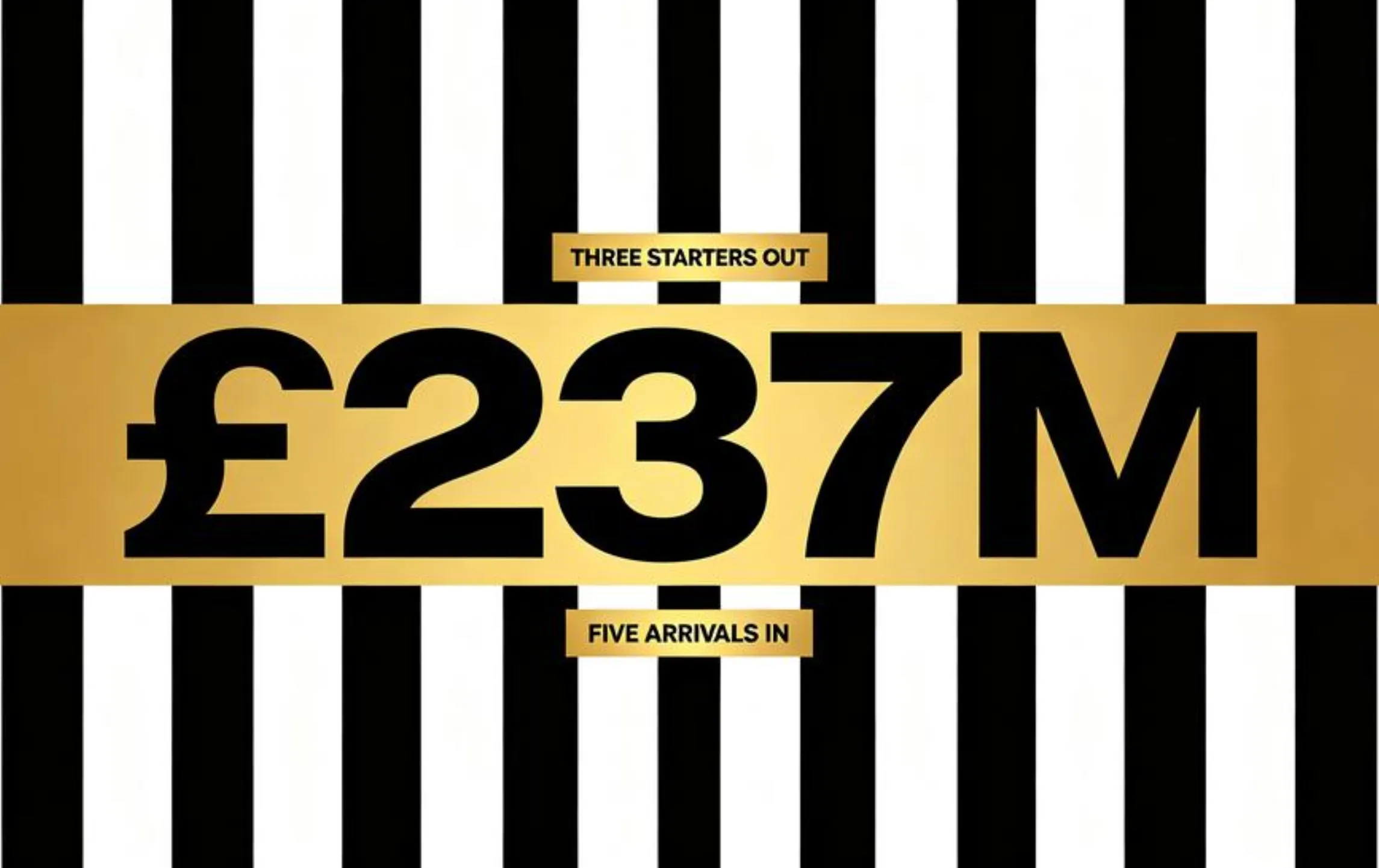
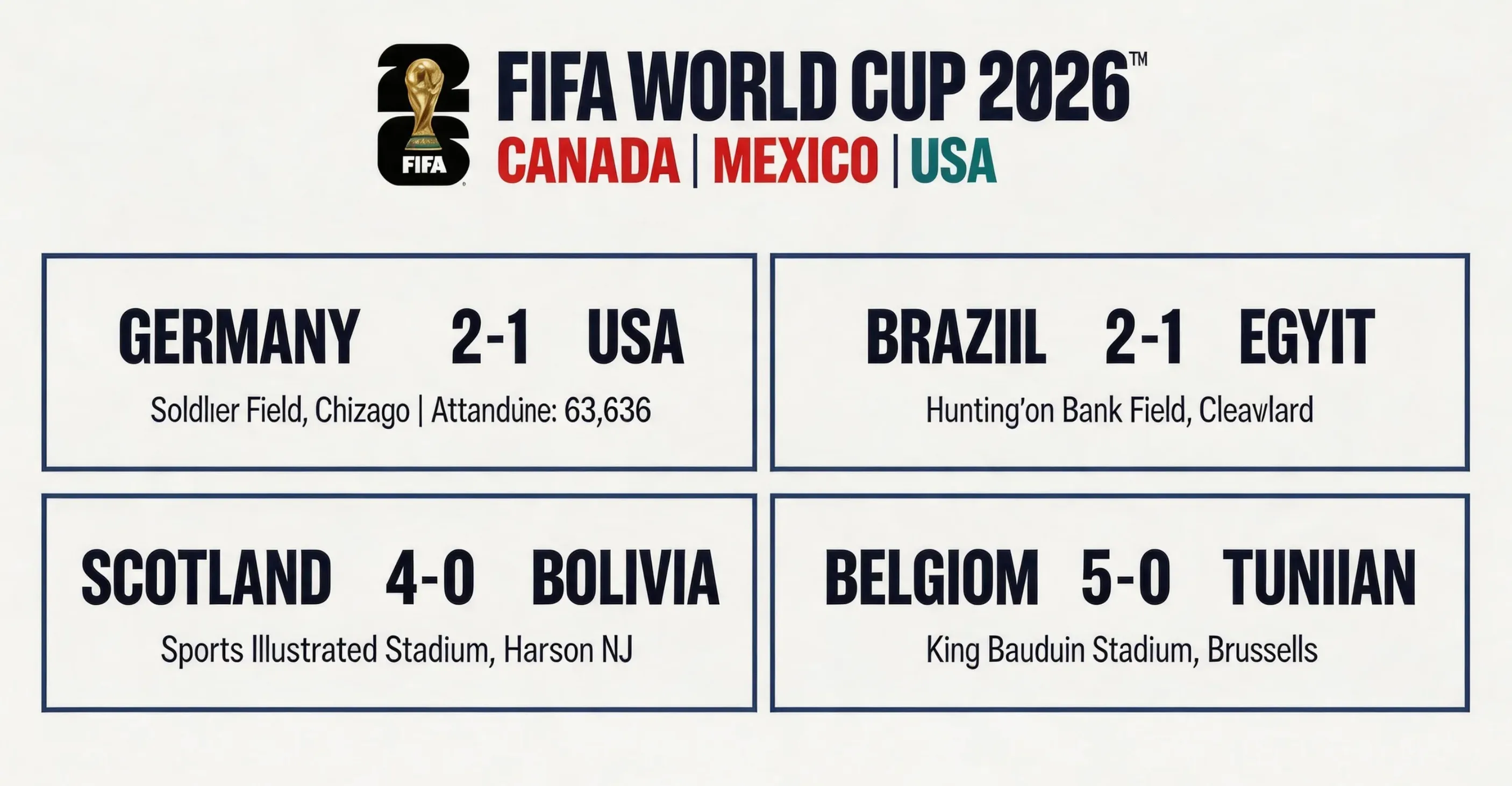
Four pre-World Cup friendlies completed on Saturday June 6 produced four wins for the more-fancied side and four heavy stories for the analysts. Germany beat the United States 2-1 at Soldier Field. Brazil beat Egypt 2-1 in Cleveland. Scotland beat Bolivia 4-0 in Harrison, New Jersey. Belgium beat Tunisia 5-0 at the King Baudouin Stadium in Brussels. The combined scoreline — 13 goals for the favorites, 4 against — looks like a clean narrative. It isn’t. Pre-tournament friendlies have a long history of misleading audiences about what teams will do in the tournament proper. But four signals do read through the noise: who scored, who didn’t play, whether set pieces converted, and how managers rotated. Three of the four winning sides scored their opening goal from a dead-ball situation. Five separate squads lost a player to the injury list this week. And one of the four matches — Belgium 5-0 Tunisia — should worry every team that has to play one of those two sides in the group stage. Here’s what the data actually tells us.
The Four Results — Multi-Source Confirmed
For each match below, the goals, scorers, and minute marks have been cross-referenced across at least five independent outlets. Where source counts vary, this article notes it.
Germany 2-1 USA — Soldier Field, Chicago. 63,636 attendance.
- 2’. Kai Havertz, header from Joshua Kimmich free kick (Tyler Adams foul preceded)
- 37’. Antonee Robinson, left-foot volley from outside the box (Christian Pulisic corner cleared by Jonathan Tah, ball fell to Robinson at top of arc)
- 57’. Leroy Sané, finish after Havertz pass (slight deflection off Miles Robinson)
- 63,636 attendance. Confirmed by ESPN, Yahoo Sports, AP via Daily Herald, Sofascore, Outlook India, Heavy, 101 Great Goals, [Sky Sports report]. Eight independent sources.
Brazil 2-1 Egypt — Huntington Bank Field, Cleveland.
- 7’. Bruno Guimarães, finish from edge of box
- 10’. Mostafa Zico, equalizer after Marquinhos pass error gifted Egypt possession
- 52’. Endrick, finish (came on at halftime; scored seven minutes after entering)
- Notable: Mohamed Salah introduced at halftime for Egypt; Brazil defender Wesley forced off injured; Neymar not in squad due to calf injury. Confirmed by ESPN, Heavy Sports, VAVEL USA, 365Scores, FOX Sports, Flashscore. Six independent sources.
Scotland 4-0 Bolivia — Sports Illustrated Stadium, Harrison NJ.
- 4’. Lawrence Shankland, header
- 22’. Scott McTominay
- 29’. Che Adams
- 44’. Che Adams (brace before halftime)
- All four goals before the break. Steve Clarke’s side. Confirmed by Sky Sports, Outlook India, Scottish FA, Athlon Sports, and an ESPN snippet. Five independent sources.
Belgium 5-0 Tunisia — King Baudouin Stadium, Brussels.
- 28’. Leandro Trossard (close range, assist Jeremy Doku from left)
- 53’. Charles De Ketelaere (assist Youri Tielemans)
- 65’. Kevin De Bruyne (assist Doku again)
- Late minutes: Dodi Lukebakio + Nicolas Raskin
- 62’. Ismael Gharbi (Tunisia) sent off after a second yellow card
- Belgium: 23 shots, 11 on target, 14 corners, ~62% possession. Doku named match standout. Confirmed by ESPN, Leadership.ng, Heavy Sports, YSscores, VAVEL, Dailysports, beIN Sports. Seven independent sources.
What These Results Don’t Tell Us
Tournament-edge analytics has a long history of poor predictive performance from pre-tournament friendlies. Several reasons:
Friendlies are testing exercises, not competitive ones. Managers use the window to try formations, rotate fitness levels, and protect players from yellow cards or fatigue. The team that takes the pitch in a friendly is often not the team that takes the pitch in match one. Germany’s lineup against the USA on Saturday was not the lineup Julian Nagelsmann will roll out against Curaçao on June 14. Belgium’s lineup against Tunisia was not the lineup Domenico Tedesco — or whoever — would necessarily field in their group stage opener.
Opponents are uneven in motivation. Tunisia, Egypt, Bolivia, and the USA all had something to play for on Saturday: confidence, tactical clarity, the chance to find a starting role. But the levels of stakes were not the levels of a real group stage match. A 5-0 thrashing in a final friendly is humiliating for the losing side, yes — but it is not the same as a 5-0 thrashing in a tournament group stage.
Set-piece preparation varies wildly. Most teams have spent the last two weeks doing detailed set-piece work. Friendlies are sometimes the first practical test of those routines. The result: dead-ball scenarios produce more goals proportionally in friendlies than they do in tournament matches.
Goalkeepers are often selected for rotation, not form. Three of the four games on Saturday saw substitutions in goal at halftime. That’s friendly behavior.
These structural realities have produced famous misleads. In 2014, several teams had erratic pre-tournament form yet went on to deep runs. In 2018, multiple teams looked dominant in friendlies and then exited at the group stage. Friendlies are sample-size-of-one experiments where the experimenters are also the players. The lesson is to read them carefully — not literally.
That said, four specific signals do read through the noise.
Signal #1: Who Scored — and Who Didn’t
The goal scorers across the four matches are a sharper data point than the scorelines. They tell you who the manager trusts as a finisher right now.
| Match | Scorers | What it tells us |
|---|---|---|
| Germany 2-1 USA | Havertz (×1), Sané (×1), Robinson (×1) | Germany's penalty-area goal threat (Havertz) and runner-from-deep (Sané) functional |
| Brazil 2-1 Egypt | Bruno Guimarães, Endrick (52' HT sub); Mostafa Zico | Endrick's HT-substitute strike confirms his role as Brazil's super-sub; Bruno scoring from midfield |
| Scotland 4-0 Bolivia | Shankland, McTominay, Che Adams (×2) | Multiple Scottish forwards finding the net — depth, not single-player reliance |
| Belgium 5-0 Tunisia | Trossard, De Ketelaere, De Bruyne, Lukebakio, Raskin | Five different scorers across the 90 — Belgium's full-pitch attacking range |
Belgium’s five scorers from five different players is the standout pattern. That kind of distribution — where every attacker is involved — is the strongest predictor of consistent group-stage scoring. Compare to Brazil, where the goal scorers were Bruno Guimarães (a midfielder) and a halftime substitute. Brazil’s main strikers — Raphinha, Vinicius Jr — did not score. That’s noise if you’re optimistic about Brazil; signal if you’re worried about their attacking flow without Neymar.
The Scotland scoring distribution — Shankland, McTominay, Che Adams (×2) — also reads positively. Steve Clarke’s side has multiple goal-scoring routes, not a single key player.
Signal #2: Who Did NOT Play
This is the harder data point to extract, and the more revealing. The pre-tournament window typically sees the player-injury list grow as bodies break under final-week training intensity. The teams that lose their stars now have fewer answers in the tournament.
Lennart Karl (Germany) — the headline injury. The 18-year-old Bayern Munich midfielder tore a muscle bundle in his left thigh during Germany’s training session at Soldier Field on Friday June 5, the day before the USA friendly. The German Football Association confirmed Friday evening he is out of the World Cup. He has been replaced by 20-year-old RB Leipzig midfielder Assan Ouédraogo, who is traveling from Spain. Six independent sources confirmed the news within hours.
Neymar (Brazil) — not in the squad for the Egypt match. The 34-year-old is recovering from a Grade 2 calf injury and remained in New Jersey while the squad traveled to Cleveland. Brazil opens June 13 against Morocco. Multi-source confirmed earlier this week.
Wesley (Brazil) — forced off during the Egypt match with an injury (not yet specified publicly). One match before the World Cup opener.
Yamal (Spain) — sat out Spain’s friendly versus Iraq on June 4 with a left hamstring issue. Spain coach Luis de la Fuente told the press: “He could be ready to play on June 15.” ⚠️ Single-source ESPN.
Chris Richards (USA) — ruled out of the Germany friendly by Mauricio Pochettino. Pochettino: “He’s training, but he’s not ready to compete and to play.” Will be assessed before USA’s June 12 opener. ⚠️ Single-source Yahoo.
Five teams lost a player to the injury list this week or kept one out of their final friendly. Three are confirmed multi-source (Karl, Neymar, Wesley); two are single-source-but-credible.
The implication: Germany’s reading is worst — they lost their breakout midfielder permanently, days before the opener. Brazil’s reading is worst-second — Wesley joins Neymar on the casualty list, and the Brazilian defense suddenly has structural questions five days before they face Morocco. USA and Spain still have time — both could see their star returns in week one of group stage.
Signal #3: Set Pieces Determined Three of the Four Matches
This is the deepest signal of the four. Three of the four winning sides scored their opening goal from a set piece or set-piece-derived situation.
Germany’s first goal (2nd minute): a Joshua Kimmich free kick — directly from a Tyler Adams foul just outside the U.S. penalty area — was met by Kai Havertz unmarked at the top of the six-yard box. A textbook set-piece routine.
Scotland’s first goal (4th minute): Lawrence Shankland’s header. Multi-source accounts describe this as a clinical header — strongly suggesting a delivered cross to a runner, classic set-piece dynamics, though the precise origin (corner vs cross) was not specified in the reports available.
Belgium’s first goal (28th minute): Leandro Trossard’s tap-in. The build-up came from Jeremy Doku’s work on the left wing — open play, not a set piece. So Belgium broke this pattern.
Brazil’s first goal (7th minute): Bruno Guimarães’s finish from the edge of the box came from open play.
So three of the four opening goals on Saturday were set-piece or set-piece-adjacent. Across the rest of the four matches, additional set-piece-based goals appear (Antonee Robinson’s volley for the USA came from a Pulisic corner that was headed clear). Set pieces dominate friendly goal distribution because they are the most rehearsable, most prepared, and most testable element of pre-tournament training. Teams that get the routines clicking now will keep them clicking in the group stage.
The reading: Germany and Scotland have their set pieces in good order. Belgium’s open-play attack is humming (which is more variable). Brazil’s set-piece routines were not visibly tested.
Signal #4: How Managers Rotated
Friendlies are testing exercises. The patterns of substitution reveal how managers see their squads — and where they trust depth.
Brazil’s halftime mass-substitution brought on Endrick, Matheus Cunha, Luiz Henrique, Fabinho, and goalkeeper Weverton at the break. That’s five substitutes — extreme rotation. The reading: Ancelotti is testing the deep squad. Endrick’s instant goal seven minutes into the second half tells you the strike force can deliver from the bench.
Germany’s pre-second-half substitutions (rotating Havertz, Musiala, and Wirtz out) tell you Nagelsmann is managing minutes carefully — protecting key players for the opener.
Belgium’s late introduction of Lukebakio and Raskin gave fringe squad members a goal — useful for confidence, less revealing tactically.
Scotland’s substitutions appeared modest given the 4-0 halftime score — Steve Clarke chose not to dramatically rotate, perhaps because the result was already decided.
Manager rotation as a signal tells you about squad depth philosophy. Brazil’s deep rotation says “we have answers all the way down the bench.” Germany’s careful rotation says “we have a few answers we trust and we’re protecting them.” These philosophies travel into the tournament.
The One Result That Should Worry Other Teams: Belgium 5-0 Tunisia
Of the four matches, one stands out as the most concerning if you’re a team in either side’s tournament group.
Tunisia, the losing side, is a World Cup participant. They will play actual tournament matches starting June 11. They were dominated 5-0 in their final pre-tournament friendly — 23 shots faced, 11 on target, 14 Belgian corners, a red card to compound the damage. Tunisia’s preparation has been described as the hottest pre-tournament schedule of any team, per the Mullan 2025 Queen’s University Belfast study. A team that just lost 5-0 in its final friendly and faces a heat-loaded group stage schedule is in a precarious starting position.
Belgium, the winning side, is also a tournament team. Their attacking distribution — five different scorers across 90 minutes, Doku’s wing dominance, De Bruyne’s central control — is the strongest attacking pattern from any of Saturday’s four matches. Any team drawing Belgium in the group stage should be concerned.
Brazil 2-1 Egypt and Germany 2-1 USA were tight matches. Scotland 4-0 Bolivia was emphatic but a friendly between a finalist (Scotland) and a non-participant (Bolivia). Belgium 5-0 Tunisia was the result that combined the most signal: two real tournament teams, one demolished, one humming.
What We’ll Watch on June 7
The next 24 hours bring two more friendlies, both involving World Cup teams from the same tournament side as several of Saturday’s protagonists:
- Argentina vs Honduras at Kyle Field, College Station, Texas — Argentina’s final tune-up before their opener on June 16 against Algeria in Kansas City. Watch for: Messi’s fitness level, the integration of late-arriving squad members, Argentina’s set-piece routines.
- Morocco vs Norway at the Sports Illustrated Stadium, Harrison NJ — Morocco’s final pre-tournament test, with Brazil looming as their June 13 opener.
Tomorrow’s results will join Saturday’s four as the basis for what teams “have” in their tactical toolkit heading into the opener.
What This Article Doesn’t Know
In the spirit of being honest about the limits of pre-tournament friendly analysis: this article does not know specific tactical patterns we haven’t observed. It does not know which players will be selected for the starting lineups in actual group stage matches. It does not know what the manager’s halftime adjustments will be when there are tournament stakes. It does not know whether the patterns of Saturday — set-piece dominance, bench depth, attacking distribution — will persist or evaporate under tournament pressure.
What it tells you, multi-source verified: the four results, the goal scorers, the key absences, and four signals that history suggests have predictive value beyond the scoreline. The rest is for the tournament itself to confirm or contradict.
The bigger picture: friendlies don’t predict tournaments well, but the questions they answer are the right questions. Who can finish? Who’s healthy? Who’s prepared on set pieces? Who has bench depth? Saturday’s four matches gave four sets of answers. The tournament will judge whether those answers were the right ones.
FAQ
What did the four major pre-World Cup friendlies on June 6 produce? Germany beat the USA 2-1 at Soldier Field. Brazil beat Egypt 2-1 in Cleveland. Scotland beat Bolivia 4-0 in Harrison, NJ. Belgium beat Tunisia 5-0 in Brussels. Combined scoreline: 13-4 in favor of the favored sides.
Should pre-tournament friendly results be read as predictive of World Cup performance? No. Friendlies are testing exercises with rotating lineups, variable motivation, and structural conditions that diverge from tournament matches. Specific signals (goal scorers, set pieces, bench depth, manager rotation) do read through. The overall scoreline is mostly noise.
Who scored for Germany against the USA? Kai Havertz in the 2nd minute (header from a Joshua Kimmich free kick) and Leroy Sané in the 57th minute (assist from Havertz; deflection off Miles Robinson). Antonee Robinson equalized for the USA at 37’ with a left-foot volley from outside the box, following a Pulisic corner cleared by Jonathan Tah.
Who scored for Brazil against Egypt? Bruno Guimarães in the 7th minute and Endrick in the 52nd minute (Endrick came on at halftime and scored seven minutes after entering). Mostafa Zico scored Egypt’s goal in the 10th minute after a Marquinhos pass error.
Who scored for Scotland against Bolivia? Lawrence Shankland (4’), Scott McTominay (22’), and Che Adams (29’ and 44’). All four goals before halftime.
Who scored for Belgium against Tunisia? Leandro Trossard (28’), Charles De Ketelaere (53’), Kevin De Bruyne (65’), Dodi Lukebakio (late), and Nicolas Raskin (late). Five different scorers. Ismael Gharbi was sent off for Tunisia at the 62nd minute.
Which team’s pre-tournament friendly result is most concerning for opponents? Belgium 5-0 Tunisia. Belgium’s five different scorers and 23 shots indicate full-team attacking flow. Tunisia, a World Cup participant, faces the hottest tournament schedule per the Mullan 2025 study and just lost 5-0 in their final preparation.
Who is most affected by injuries from this week’s training and friendlies? Germany lost 18-year-old Lennart Karl (torn muscle bundle, replaced by Assan Ouédraogo). Brazil already without Neymar (calf), and lost Wesley in the Egypt match. Yamal sat out Spain’s friendly. Chris Richards ruled out of the USA-Germany match. Five separate squads dealt with injury issues this week.
How many of the four match-opening goals came from set pieces? Three of the four. Germany scored from a Kimmich free kick. Scotland scored from a Shankland header (likely from a cross or set piece — exact origin not specified). Brazil’s opener came from open play. Belgium’s opener also came from open play.
What does Brazil’s mass halftime substitution tell us? Carlo Ancelotti rotated five players in at halftime — Endrick, Matheus Cunha, Luiz Henrique, Fabinho, and goalkeeper Weverton. This indicates Ancelotti is using the friendly to test his bench depth. Endrick’s instant goal confirms the depth has finishing capability.
Which friendlies remain on Sunday June 7? Argentina vs Honduras at Kyle Field, College Station Texas. Morocco vs Norway at Sports Illustrated Stadium, Harrison NJ. Both are final pre-tournament tune-ups for the involved World Cup teams.
Related Articles
- 48 Teams Have Started Training. The Real Test Is Already Here. — The training-state overview that frames why pre-tournament friendly form is shaped by climate adaptation and the Karl injury (fan-experience cross-cluster)
- Your Team Just Said Goodbye to Its Country. Here’s When to Follow. — The teams arriving and the fan-timing framework for following them across the tournament (fan-experience cross-cluster)
- Boston Hosts 7 World Cup Matches. None Are in the City. — Where Scotland will open the tournament against Haiti on June 13 (host-city cluster)
Sources (FIFA, ESPN, AP, Yahoo Sports, Sky Sports, Outlook India, Sofascore, Heavy Sports, VAVEL, FOX Sports, 365Scores, beIN Sports, Leadership.ng, YSscores, Dailysports, Scottish FA, Athlon Sports, Flashscore, 101 Great Goals) are linked inline in the relevant sections above. Where information is single-source or uncertain, this article says so.
About the author: Lukas Hartmann is tactical football analyst at Deutsche Fussball Post, the Berlin-based independent football journal founded in 2010 focused on tactical and data-driven coverage of German and European football. Hartmann holds a degree in sports analytics from the German Sport University Cologne and has covered three World Cup cycles. Contact: lukas.hartmann@deutschefussballpost.de · LinkedIn: /in/lukashartmann-dfp · X: @HartmannDFP