The Short Version
Levi’s Stadium in Santa Clara — branded “San Francisco Bay Area Stadium” during the tournament — hosts six 2026 World Cup matches from June 13 to July 1: five group-stage games and one Round of 32. The Bay Area’s tournament centers on two storylines: Paraguay plays both their non-opener Group D matches here (June 19 and 25), making Levi’s their effective American home and the venue where their Group D fate gets decided. Jordan plays both their non-opener Group J matches here (June 16 and 22), in the country’s first World Cup since 1974. Add Qatar-Switzerland on June 13, the Round of 32 on July 1, and the Bay Area becomes one of the densest group-and-knockout combinations of any host city. The Bay Area Host Committee has announced 30+ free watch parties across the region. This guide covers the schedule, three-airport access (SFO + SJC + OAK), accommodation across the Bay, the region’s underrated food, and what to do between matches.
The Bay Area’s Two Storylines: Paraguay Twice, Jordan Twice
If you only watch a couple of matches in the Bay Area, the obvious choices are the same team played twice.
Paraguay’s American home is Levi’s Stadium. After their opener against the United States at SoFi Stadium on June 12, the Albirroja play their next two Group D matches at Santa Clara:
- June 19, 9:00 PM PT: Paraguay vs the Group D playoff winner (likely Türkiye, but the European playoff hasn’t fully resolved)
- June 25, 7:00 PM PT: Paraguay vs Australia
These two matches decide Paraguay’s group. We covered the broader Paraguay storyline — Julio Enciso’s June 5 injury, Gustavo Alfaro’s tactical options without his creator, the market mispricing of Group D per Yahoo Sports’ live tracker — in our USA-Paraguay opener prediction. The Bay Area is where the second and third chapters of that story play out. If Paraguay loses or draws the opener at SoFi, these two matches become must-wins. If they win at SoFi, these matches become about controlling the group rather than chasing it.
Jordan’s American home is also Levi’s Stadium. Jordan qualified for its first ever World Cup in 1974 — no, wait. Jordan qualified for its first ever World Cup in 2026. This is Jordan’s debut World Cup appearance. Jordan plays:
- June 16, 9:00 PM PT: Austria vs Jordan (Group J)
- June 22, 8:00 PM PT: Jordan vs Algeria (Group J)
(Jordan opens Group J against Argentina on June 13 in Atlanta — a separate venue.)
If you live in the Bay Area or anywhere on the West Coast, Levi’s Stadium during the World Cup is the place where two underdog narratives play out at the same venue, in matches one week apart. The atmosphere of a country making its first World Cup appearance is unlike anything else in international football. Jordan’s two Bay Area matches will draw substantial Middle Eastern diaspora attendance — the region has notable Jordanian-American communities in San Jose, Fremont, and the East Bay.
A practical note before the schedule: Levi’s tournament capacity is 69,391, slightly reduced from the 49ers’ regular configuration to accommodate FIFA’s operations, media zones, and technical setup.
The 6 Matches at San Francisco Bay Area Stadium
Per StadiumDB and Bay Area Host Committee confirmations via ABC7, the full schedule:
| Date | Matchup | Kickoff (PT) | Stage | Notes |
|---|---|---|---|---|
| June 13 (Sat) | Qatar vs Switzerland | 12:00 pm | Group B | The Bay Area’s tournament opener |
| June 16 (Tue) | Austria vs Jordan | 9:00 pm | Group J | Jordan’s first match at Levi’s |
| June 19 (Fri) | Group D playoff winner vs Paraguay | 9:00 pm | Group D | Paraguay’s second tournament match |
| June 22 (Mon) | Jordan vs Algeria | 8:00 pm | Group J | Jordan’s second match at Levi’s |
| June 25 (Thu) | Paraguay vs Australia | 7:00 pm | Group D | Paraguay’s group decider |
| July 1 (Wed) | Round of 32 | 5:00 pm | Knockout | Group D winner vs 3rd place from Group B, E, F, I, or J |
Group D and Group J intersect at Levi’s. The Group D playoff winner (which could be Türkiye, Romania, Slovakia, or Kosovo depending on the European playoff outcome) plays Paraguay here on June 19. Group J’s three non-Argentina matches (Austria-Jordan, Jordan-Algeria, plus the relevant Round of 32 implication) flow through here too.
A few practical reads:
- June 19’s match has the most uncertainty. The Group D playoff winner — Türkiye is the most likely advancer, but Romania, Slovakia, or Kosovo are not eliminated until after the playoff resolves. Whichever team emerges from that bracket faces Paraguay in their second group game.
- The June 25 Paraguay-Australia match is the most consequential of the Bay Area’s group stage. If Paraguay needs a win to advance (the most likely scenario given Group D’s tightness), this is where it gets decided. Australia’s compact, physical 4-4-2 has historically frustrated South American sides.
- The July 1 Round of 32 is the Bay Area’s biggest matchday — a knockout fixture involving the Group D winner. This match has substantial knock-on consequences for Bay Area hotel demand the surrounding week. The full Round of 32 bracket is maintained at ESPN’s 2026 World Cup schedule.
The Stadium: San Francisco Bay Area Stadium (Levi’s) Logistics
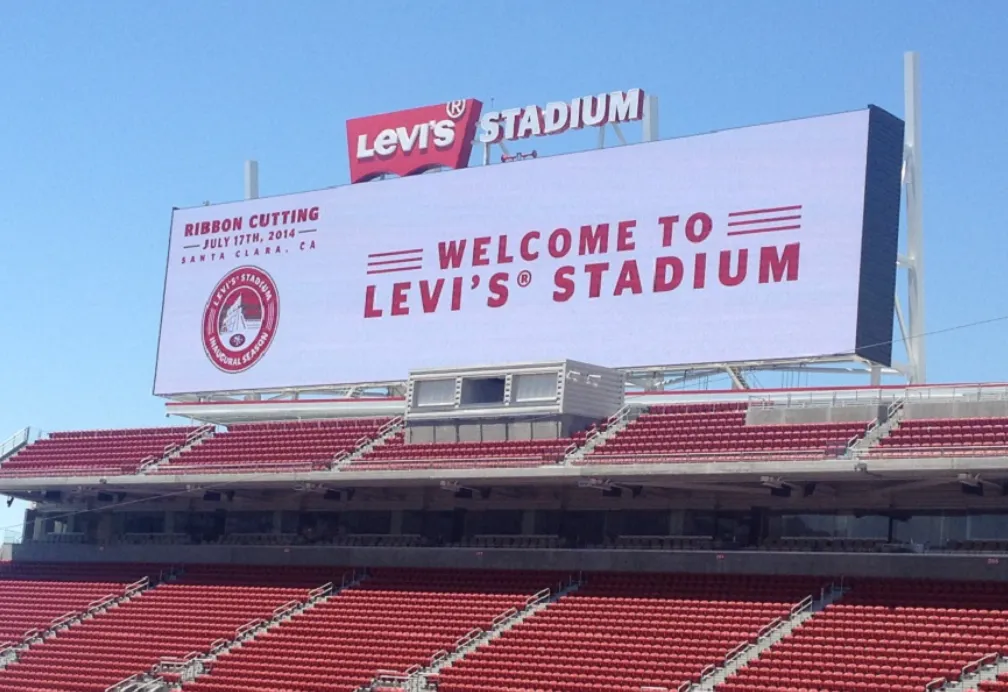
Levi’s Stadium is in Santa Clara, about 40 miles south of San Francisco and 5 miles west of San Jose. The stadium opened in 2014 as the new home of the San Francisco 49ers. It is open-air — no retractable roof, in contrast to Houston Stadium covered in our Houston guide. The pitch surface is natural grass laid for football matches.
The Bay Area Host Committee notes via Discover Santa Clara that the 49ers invested approximately $120 million in stadium upgrades ahead of the World Cup, including new lighting, audio, accessibility improvements, and concession infrastructure. Concessions feature both standard arena fare and Bay Area specialties: California-style burritos, Vietnamese pho, Mediterranean wraps reflecting the region’s diaspora communities, and craft beer from Bay Area breweries.
Getting to Levi’s Stadium
The Bay Area has three major airports, which is unusual for a host city. Your travel route depends on where you’re staying:
San Francisco International Airport (SFO). The largest international gateway, with flights from Europe, Asia, and Latin America. To Levi’s Stadium: 25-35 minutes by car / rideshare in light traffic, 45-60 minutes in matchday traffic. No direct rail link to Levi’s — you’ll need BART south to Caltrain north, or rideshare. Cost roughly $60-80 to the stadium by rideshare.
San José Mineta International Airport (SJC). The closest airport to Levi’s — about 5 miles, 10-15 minutes by car. Mostly domestic flights, with some Mexico City and Vancouver routes. Best choice if you can route through here.
Oakland International Airport (OAK). East Bay, 40-50 minutes to Levi’s. Smaller, less convenient than SJC but with cheaper flight availability sometimes.
VTA Light Rail. The local transit operator for Santa Clara County runs light rail directly to Great America Station, about a 5-minute walk to Levi’s gates. Service runs frequently on matchdays. Single fare is $2.50. This is the smartest transit option from downtown San Jose or hotels along the Santa Clara/Sunnyvale corridor.
Caltrain. Commuter rail from San Francisco runs to Mountain View, about 5 miles from Levi’s. From there, transfer to VTA Light Rail. From SF Caltrain (4th & King Station): 70-90 minutes door-to-door. Useful for fans staying in the city.
BART. Bay Area Rapid Transit doesn’t reach Levi’s directly. The Berryessa terminus is the closest BART station to the stadium, about 7 miles away with VTA transfer required.
Driving. Levi’s Stadium has approximately 22,000 parking spaces in immediate lots and overflow. Matchday parking pricing typically $40-80. Traffic on Highway 101 and Highway 237 builds substantially on matchdays — plan for 60-90 minutes longer than the off-peak commute.
The pre-match approach to the stadium goes through the Tasman Drive corridor with light rail and pedestrian access. The Bay Area Host Committee has confirmed temporary road closures in two phases on each matchday, so the immediate approach is pedestrianized for safety.
Where to Stay: Four Regional Zones
The Bay Area’s geographic complexity is its accommodation feature. Four sensible zones:
Zone 1: Santa Clara / Sunnyvale (closest to stadium, 5-15 min)
Walking-distance or short-rail to Levi’s. Hotels along El Camino Real, Tasman Drive, and Stevens Creek Boulevard. The Hyatt Regency Santa Clara, the Embassy Suites, the Avatar Hotel, the Hotel Valencia Santana Row. Prices during World Cup weekends: $350-600/night for mid-to-upper-tier properties. Convenience over character. Restaurants nearby are mostly chains and corporate dining — the kind of food that exists where tech offices cluster.
Zone 2: San Jose Downtown (10-15 min to stadium via VTA)
San Jose downtown has more independent restaurants, more nightlife, and historically better hotel value than Santa Clara. The Fairmont San Jose, the Westin San Jose, the Signia by Hilton, plus AC Hotel and smaller boutiques. Light rail connects downtown directly to Levi’s. Prices: $280-450/night.
Zone 3: San Francisco / Peninsula (45-75 min to stadium)
If your priority is sightseeing San Francisco (Golden Gate, Alcatraz, Embarcadero, Mission District) and you’re OK with longer transit on matchdays, downtown SF or the Peninsula corridor works. The Hotel Vitale, the Palace Hotel, the Fairmont San Francisco, the Mark Hopkins. Prices: $350-800/night for World Cup weekends. The matchday commute is the trade-off — Caltrain + VTA is doable but adds significant time.
Zone 4: East Bay (Oakland / Berkeley) — 50-70 min to stadium
Cheaper hotel pricing, more independent character. The Claremont Club & Spa in Berkeley, Hotel Vitale’s sibling properties, smaller boutiques in Oakland’s Jack London Square. Prices: $250-400/night. BART to Caltrain to VTA is the transit chain — significant time but possible. Better if you’re using rideshare or driving for matchday access.
Bay Area Food: One of America’s Best
The Bay Area is one of the most diverse food cities in the United States, with strong specific cuisines in every neighborhood. The region’s depth surprises first-time visitors:
Vietnamese (especially in San Jose)
San Jose has one of the largest Vietnamese populations in the United States — only second to Houston nationally. The corridor along East San Antonio Street and the Lion Plaza area is dense with pho, bun bo, banh mi, and Vietnamese coffee. Pho Bac Hoa Viet in the heart of the Vietnamese district is the institutional pho choice. Banh Mi Saigon and Lee’s Sandwiches for sandwiches. The Vietnamese coffee with sweetened condensed milk is a Bay Area staple.
California-Mexican
Mexican food in the Bay Area has its own dialect — different from Tex-Mex (Houston), different from LA Mexican. The Mission District in San Francisco invented the “Mission burrito” (large, rice-and-bean foundation). Best examples: La Taqueria (champion-tier burrito) and El Farolito (open late). In San Jose: La Victoria Taqueria is the institutional spot.
Chinese
San Francisco has the oldest Chinese-American community on the West Coast. Cantonese dim sum at Yank Sing, Hong Kong Lounge, or Dragon Beaux. Sichuan at Z & Y Restaurant in Chinatown. Modern Asian fusion at Saison (high-end, Michelin-starred). San Jose Chinatown is smaller but has solid spots.
Indian (East Bay especially)
Berkeley, Fremont, and Cupertino have substantial Indian populations. Vik’s Chaat Corner in Berkeley is institutional. Saravanaa Bhavan (multiple Bay Area locations) for South Indian. Mehfil Indian Restaurant in Cupertino for Punjabi.
High-end / Michelin
The Bay Area has more Michelin-starred restaurants than most US regions. Quince (3-star, French/Italian), Saison (3-star, modern American), The French Laundry in Yountville (3-star, Napa, day-trip worthy). Reservations book months ahead.
Coffee culture
Blue Bottle Coffee was born in Oakland. Sightglass, Ritual, Four Barrel — all originated in the Bay Area. The coffee scene is intense and serious.
What to Do Between Matches
You’re in the Bay Area for somewhere between 4 days and 3 weeks. The region’s geography makes day trips dramatically rewarding:
Half-day options
- Golden Gate Bridge + Crissy Field — Walk or bike from the south side of the bridge. The view from Battery Spencer in Marin County (just north) is iconic. 2-3 hours.
- Alcatraz Island — Book ferry tickets weeks ahead via Alcatraz Island Tours. Cell house tour included. 3-4 hours including the ferry.
- The Embarcadero + Ferry Building — Walk along the waterfront, eat at the Ferry Building Marketplace (Saturday is the farmers market day). 2-3 hours.
- The Mission District — Burritos, murals along Balmy Alley, the Mission Cultural Center. 3-4 hours.
- Stanford Campus / Palo Alto — Free campus tours, art museum, the Cantor Arts Center. 2-3 hours.
Day-trip options
- Yosemite National Park — 3.5 hours east by car. Half Dome, El Capitan, Yosemite Falls. Best as a full day trip with very early start.
- Napa / Sonoma Wine Country — 1.5 hours north. Pick 3-4 wineries, lunch in St. Helena or Sonoma. The Hess Collection, Domaine Carneros, Castello di Amorosa, Domaine Chandon are popular tasting rooms.
- Monterey / Carmel / 17-Mile Drive — 2 hours south. Monterey Bay Aquarium, the dramatic Pacific coastline, Pebble Beach. Day-trip if you start early.
- Muir Woods — 45 minutes north. Redwoods, walking trails. Half-day.
- Mount Tamalpais — 45 minutes north. The summit has views of the entire Bay. 3-4 hours including hike to top.
- Sausalito — Ferry from SF Embarcadero, browse the village, lunch on the water. Half-day.
June Weather: The Bay Area Microclimate
San Francisco’s June weather is famously fickle. The Bay Area’s microclimate — fog, ocean influence, temperature differences across short distances — means your June experience varies dramatically by where you are.
Santa Clara / South Bay (where Levi’s is): Warmest part of the region. Highs typically 75-85°F (24-29°C), lows 55-60°F. Less marine influence. Dry, comfortable for matches.
San Francisco / Peninsula: Moderate. Highs 65-72°F (18-22°C), often foggy in the morning, clearing by afternoon. Wear layers — temperature differences of 15-20°F between the city and the South Bay are normal in June.
Marin / North Bay: Cool, often foggy. Highs 60-68°F, sometimes cooler. The famous “Mark Twain didn’t say it, but everyone quotes him saying it” line about San Francisco summer applies: the coldest winter you ever spent might be a Bay Area June morning.
East Bay (Oakland / Berkeley): Between Peninsula and South Bay. Highs 68-75°F.
For match-day comfort at Levi’s Stadium:
- Matches are at 9 PM, 8 PM, 7 PM in three of the six — evening starts. Bring a light jacket or hoodie. Even Santa Clara cools to 60-65°F by kickoff for late matches.
- Day matches (June 13 noon, July 1 5 PM) play at the warmest part of the Bay Area day. Sunscreen, hat, water.
Average June 2026 forecast (Bay Area-wide):
- High: 70°F (21°C, average across the region)
- Low: 55°F (13°C)
- Precipitation: Almost zero in June
- Humidity: 60-70%
- Sunset: around 8:35 PM
Practical Tips
- VTA Light Rail tickets: $2.50 single ride. Day passes $7.50. Buy via VTA app or station kiosks.
- Caltrain: $3.75-$8.75 depending on zone. Zone-based pricing.
- BART: Distance-based. SFO to Embarcadero is ~$10.65.
- Tipping: 18-22% standard at restaurants. Coffee shops 10-15%.
- Tax: California sales tax + Santa Clara County tax totals ~9.125%.
- WiFi: Levi’s Stadium has free WiFi throughout, branded by Aruba/HPE.
- Weather layers: Always pack a jacket regardless of forecast.
- Language: English universal. Spanish very common (Bay Area 25-30% Latino). Mandarin and Cantonese audible in SF Chinatown. Vietnamese in San Jose.
- Bay Area Host Committee Watch Parties: 30+ free fan zones across the region. Check the Bay Area Host Committee site for daily updates.
FAQ
Where are the World Cup matches in the Bay Area played? At Levi’s Stadium in Santa Clara, branded “San Francisco Bay Area Stadium” during the tournament per FIFA’s neutral-name policy. The stadium is in Santa Clara, about 40 miles south of San Francisco and 5 miles west of San Jose.
Which World Cup teams play at Levi’s Stadium? Across six matches: Qatar, Switzerland, Austria, Jordan (twice), Algeria, the Group D playoff winner, Paraguay (twice), Australia. Plus one Round of 32 match involving the Group D winner.
Why does Paraguay play here twice? Paraguay’s opener is at SoFi Stadium in LA (vs USA on June 12). Their other two Group D matches are both at Levi’s: June 19 vs the Group D playoff winner (likely Türkiye), and June 25 vs Australia. So Levi’s is effectively Paraguay’s American home for the tournament.
Why does Jordan play here twice? Jordan’s opener is in Atlanta (vs Argentina on June 13). Their other two Group J matches are at Levi’s: June 16 vs Austria and June 22 vs Algeria.
Which airport should I fly into? San José Mineta (SJC) is the closest — about 10-15 minutes to Levi’s. SFO is the largest international gateway with European/Asian/Latin American flights — about 35-45 minutes to Levi’s. Oakland (OAK) is the East Bay option — about 50 minutes.
How do I get from SFO to Levi’s Stadium? Rideshare is the most direct option, 45-60 minutes in matchday traffic, $60-80. BART south to Caltrain is the public transit alternative but adds significant time and requires multiple transfers.
Is the stadium air-conditioned? No. Levi’s Stadium is open-air. June Bay Area weather is mild (60-85°F depending on location and time of day), so air conditioning isn’t necessary — but bring layers for evening matches.
Where should I stay for World Cup matches? Four good options: Santa Clara / Sunnyvale (closest to stadium, $350-600/night), San Jose Downtown (VTA light rail access, $280-450/night), San Francisco (45-75 min commute, $350-800/night), or East Bay (Oakland / Berkeley, $250-400/night).
What’s the weather like in the Bay Area in June? Mild, dry, with significant microclimate variation. Santa Clara highs 75-85°F. San Francisco highs 65-72°F (often foggy mornings). Evening matches cool — bring a jacket. Almost no rain in June.
Are there Round of 32 matches at Levi’s? Yes. One Round of 32 match on July 1 at 5:00 PM PT, featuring the Group D winner versus the 3rd-place team from Group B, E, F, I, or J.
What’s the time zone? Pacific Daylight Time (PDT) — UTC-7 during the World Cup. For European fans, late evening matches at Levi’s start at 5-6 AM CEST the next morning.
Are there Bay Area Host Committee fan zones? Yes. Per the Bay Area Host Committee, 30+ free watch parties are set across the region including Thrive City at Chase Center (Warriors), China Basin near the Giants’ ballpark, PIER 39 in San Francisco, Santa Cruz Beach Boardwalk, and Raimondi Park in East Bay.
Related Articles
- USA vs Paraguay: The Market Hasn’t Caught Up to Enciso’s Absence. — Our prediction for Paraguay’s opener at SoFi Stadium — the match that sets up Paraguay’s two Levi’s Stadium fixtures (predictions cluster).
- Houston Hosts Football’s Biggest Mismatch. It’s Indoors. — The contrast venue: Houston’s AC + retractable roof vs Bay Area’s open-air Mediterranean climate (tickets-travel cluster).
- Seattle Is the Coolest US World Cup Host. Use That Edge. — The third major West Coast venue, completing the Pacific cluster of climate options for fans planning multi-city itineraries (tickets-travel cluster).
Sources (StadiumDB Levi’s Stadium, ABC7 Bay Area World Cup coverage, NBC Bay Area, CBS Sacramento, Discover Santa Clara FIFA portal, KRON4 Bay Area World Cup guide, and the FIFA 2026 World Cup site) are linked inline in the relevant sections above. The June 19 fixture’s opponent for Paraguay depends on the European playoff outcome (Türkiye, Romania, Slovakia, or Kosovo) and will be confirmed when the bracket resolves. Match times reflect FIFA’s published 2026 schedule.
About the author: James O’Connor is investigative football journalist at Touchline Global, the London-based independent football platform focused on governance, sports diplomacy, and the intersection of football and politics. O’Connor has covered FIFA governance since 2014 and has reported on every World Cup cycle since 2018. Contact: james.oconnor@touchlineglobal.com · LinkedIn: /in/jamesoconnor-touchline · X: @JamesTouchline