The Short Version
As of 8 October 2026, Lionel Messi has played his last match for Argentina and is still under contract to play club football for two more years. He announced his international retirement on 31 August, six weeks after Argentina lost the World Cup final to Spain. The farewell came on 6 October at the Monumental in Buenos Aires: Argentina 3–0 Benin, Messi with a penalty and two assists. That closed the international ledger at 208 caps and 126 goals, both Argentina records. The other ledger stays open. His Inter Miami contract runs through the 2028 MLS season, signed as an extension in late 2025. He is 39. The details: (1) the final was decided by Ferran Torres in the 106th minute; (2) Messi was the oldest outfield player ever to appear in a World Cup final; (3) the farewell match was arranged by AFA president Claudio Tapia; (4) 2030 is now closed, and he would have been 43.
What Ended on October 6
A ceremony, mostly. The competitive part had already finished in July.
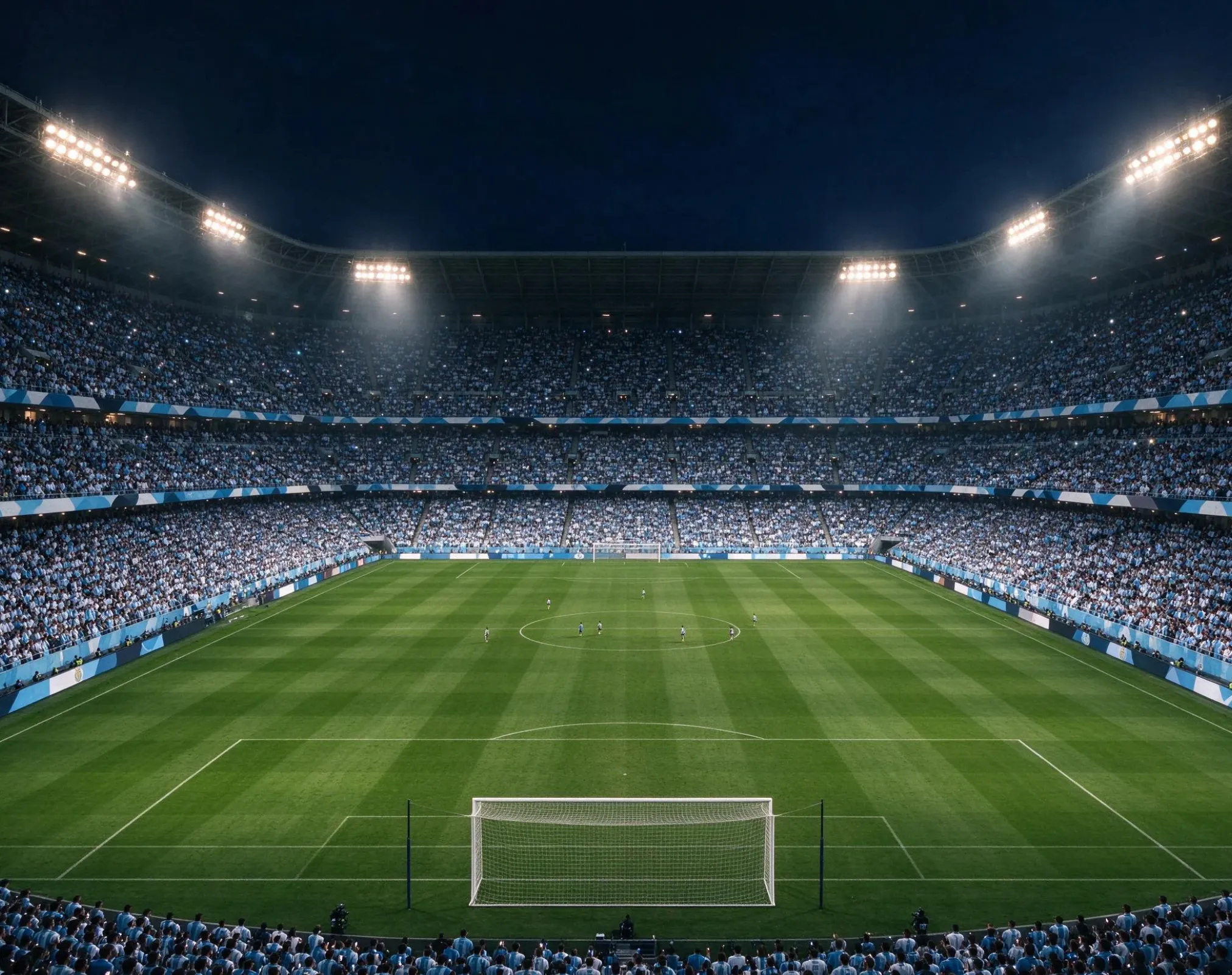
Argentina beat Benin 3–0 at the Estadio Monumental in Buenos Aires in a friendly arranged for one purpose. Nicolás Otamendi headed in a Messi corner on 48 minutes. Nico Paz made it two on 61, also from a Messi pass. Messi himself converted a penalty on 71 — his 126th goal in his 208th appearance, both of them Argentina records, and both of them now final.
AFA president Claudio Tapia had announced the fixture on 16 September. His framing of it was unusually direct about what the match was for: “We made the decision to invite the best player in the world…so that he can have the farewell he truly deserves on 6 October here in Argentina.”
Which is the honest description. A 3–0 friendly against Benin is not where a career is decided; it is where one is acknowledged. The decisive night had been 19 July at New York New Jersey Stadium, and it had not gone the way the farewell did.
What Did Not End
His job.
Messi is contracted to Inter Miami through the 2028 Major League Soccer season, on an extension signed in late 2025. He is 39 — he turned 39 on 24 June, between Argentina’s second and third group matches — and if he sees that contract out he will be 41.
This is the part most of the coverage compressed. “Messi retires” is accurate only with the qualifier attached, and the qualifier is doing most of the work: he retired from one of his two employers. There is no farewell tour of MLS stadiums scheduled, no testimonial, no winding down. He has league fixtures.
What he has actually given up is a specific and quite heavy thing: roughly ten international matches a year, most of them requiring a flight from Florida to South America and back inside a ten-day window, in a calendar that already includes a full MLS season. For a 39-year-old, subtracting the international window is not a retirement so much as a subtraction. The club career it leaves behind is the one he can physically sustain.
The Ledger He Leaves
Twenty years, closed on 6 October.
| Measure | Final total |
|---|---|
| Senior caps | 208 — Argentina record |
| Goals | 126 — Argentina record |
| World Cups played | 6 (2006, 2010, 2014, 2018, 2022, 2026) |
| World Cups won | 1 (2022) |
| World Cup finals lost | 2 (2014, 2026) |
| Copa América | 2 (2021, 2024) |
| Finalissima | 1 (2022) |
The shape of that table is worth reading closely, because it inverts. For the first fifteen years it recorded finals lost — 2014 in Rio, three Copa América finals before that. The four trophies all arrive in the last five years, between 2021 and 2024, when he was already past 33. Whatever the standard account of an international career is, his ran backwards.
Six World Cups is the number that will be hardest to repeat. It requires both longevity and a country that qualifies every time, and the second condition is not in any player’s control.
The Ledger He Keeps
Two more seasons, on paper.
The Inter Miami contract through 2028 is the reason the word “retirement” needs supervision in this story. He is not leaving football; he is leaving the part of it that has a flag on it.
There is a second thing the contract settles quietly. The 2030 World Cup — the centenary edition, with matches in Uruguay, Argentina and Paraguay before the tournament moves to Spain, Portugal and Morocco — would have been the sentimental argument for staying available. Messi would be 43. By retiring internationally in 2026 while signing club terms that run to 2028, he has answered the 2030 question before anyone had to ask it four more times.
The Six Weeks Between the Final and the Statement
The gap is the story’s actual spine.
| Date | What happened |
|---|---|
| 19 July 2026 | Spain 1–0 Argentina, World Cup final. Ferran Torres scores in the 106th minute. |
| 31 August 2026 | Messi announces his retirement from the national team. |
| 16 September 2026 | AFA confirms a farewell match against Benin for 6 October. |
| 6 October 2026 | Argentina 3–0 Benin. Messi's 208th cap, 126th goal. |
The final itself has a detail that reads differently now. Messi was 39 years and 25 days old that night, making him the oldest outfield player ever to appear in a World Cup final. Argentina, who had scored 19 goals getting there, did not register a single attempt on goal until extra time. Spain’s control was that complete. Ferran Torres finished a Nico Williams knockdown on 106 minutes, and Enzo Fernández had already been sent off for a second yellow at the end of normal time.
Then six weeks of nothing, which is itself informative. A decision announced on 31 August is not a decision taken in the dressing room on 19 July. Messi’s own account of it is the clearest thing anyone has said about the timing: “It was a decision that hurt and still hurts deep in my soul but I understand that it is the right time.”
That sentence does two jobs. It declines to pretend the choice was comfortable, and it refuses to leave the door open. Compare it with the formulations that usually appear at this stage of a great career — we’ll see how the body feels, I’m taking it tournament by tournament — and the difference is that this one closes.
Where the Two Careers Collide
At 39, with one employer left.
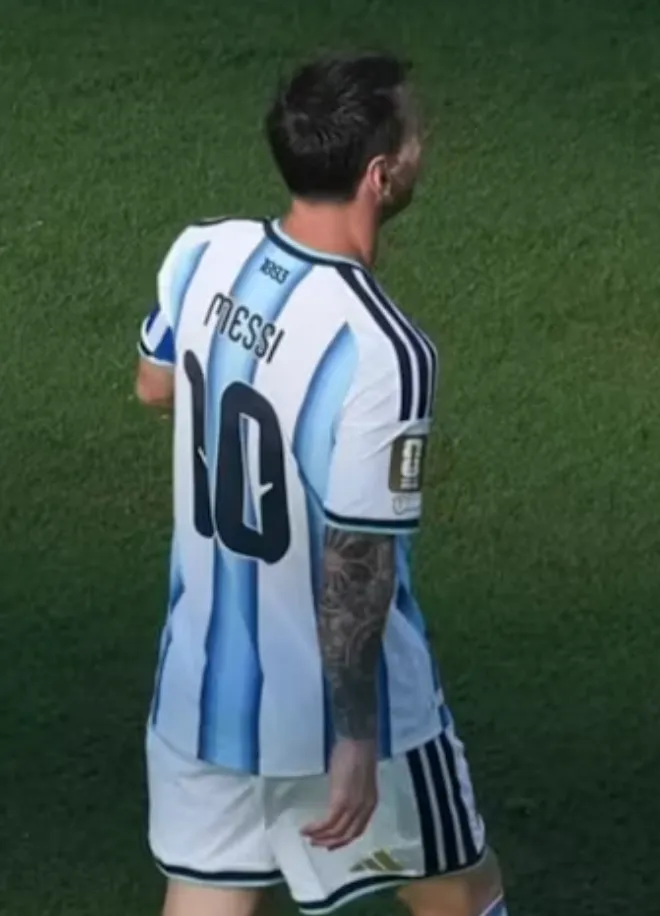
The collision point is not sentimental, it is operational. Messi’s two careers were in direct competition for the same body, and the international one lost. What remains is a club contract into 2028 that is now the only claim on his legs, and an Argentina side that has to find out what it is without him — a process the farewell match previewed more precisely than it probably intended, when Nico Paz, 22 years old, scored the second goal from a Messi pass.
Argentina’s next competitive business is the defence of nothing: they are the 2022 champions and the 2026 runners-up, and the next World Cup is four years out. The squad that reaches 2030 will be assembled around players who were teenagers when Messi won his World Cup.
For this site, there is a smaller closing of the loop. In April we wrote that Messi would not say whether 2026 was his last World Cup, and that neither he nor the federation had any incentive to force the sentence. The answer arrived in two parts, five months apart: the tournament ended in a final he could not influence, and then, six weeks later, he said it plainly.
FAQ
Has Messi retired from football entirely? No. He has retired from the Argentina national team only. His Inter Miami contract runs through the 2028 MLS season, signed as an extension in late 2025.
When did Messi announce his international retirement? 31 August 2026, six weeks after Argentina lost the World Cup final to Spain on 19 July.
What was Messi’s final match for Argentina? Argentina 3–0 Benin, a friendly at the Estadio Monumental in Buenos Aires on 6 October 2026, arranged by AFA president Claudio Tapia as a farewell.
Did Messi score in his last Argentina match? Yes — a penalty on 71 minutes, his 126th international goal. He also assisted both of the other goals: a corner for Nicolás Otamendi on 48 minutes and a pass for Nico Paz on 61.
What are Messi’s final Argentina records? 208 caps and 126 goals. Both are Argentina national team records.
How many World Cups did Messi play, and what did he win with Argentina? Six World Cups, from 2006 to 2026, winning in 2022. With Argentina he also won the Copa América in 2021 and 2024 and the Finalissima in 2022. He finished runner-up at the 2014 and 2026 World Cups.
Why retire from Argentina but keep playing for Inter Miami? He has not explained it in those terms, but the practical difference is the travel and the fixture load: international duty adds roughly ten matches a year, most requiring flights between Florida and South America, on top of a full MLS season. He is 39.
Will Messi play at the 2030 World Cup? No. He would be 43, and his international retirement is stated without conditions.
What happened in the 2026 World Cup final? Spain beat Argentina 1–0 at New York New Jersey Stadium on 19 July. Ferran Torres scored in the 106th minute, in extra time. Argentina did not have an attempt on goal until extra time, and Enzo Fernández was sent off at the end of normal time.
How old was Messi in the 2026 final? 39 years and 25 days — the oldest outfield player ever to appear in a World Cup final.
Related Articles
- 38-year-old Messi and the uncertain last tango — April, when the question was still open
- Spain beat Argentina 1–0 to win the 2026 World Cup — the final, six weeks before the announcement
- Argentina beat England in the semi-final — the last knockout tie he won
External reading: FIFA’s farewell piece on Messi and the national team; FIFA’s report on the 2026 final; Al Jazeera on the farewell fixture announcement; ESPN’s match report for Argentina 3–0 Benin; CBS Sports on the retirement statement; and Sports Illustrated’s full record of every trophy he won with Argentina.
About the author: James O’Connor is investigative football correspondent at Touchline Global, the London-based independent football journalism outlet founded in 2012, specializing in football governance and commercial reporting. Contact: james.oconnor@touchlineglobal.com · LinkedIn: /in/james-oconnor-touchline · X: @JamesOConnorTG